

Solar Power Knowledge
Rigid vs Flexible Solar Panels
 gaotu
gaotuMore people across the US and Europe are switching to solar power for homes, RVs, boats, and off-grid camping setups. But when shopping for solar gear, most buyers hit the same roadblock: Rigid vs Flexible Solar Panels — which type should you pick for your setup?
Rigid panels have long been the go-to for home solar installs. Meanwhile, flexible solar panels have grown hugely popular for mobile, custom, and tight-space setups. The truth is simple: neither option is universally better. Your lifestyle, installation spot, and power needs decide which one works best for you.
In this straightforward guide, we break down the real differences in Rigid vs Flexible Solar Panels, their biggest pros and cons, and exactly which scenario each one is made for.
2. What Are Rigid & Flexible Solar Panels?
2.1 Rigid Solar Panels
Rigid solar panels are the standard, traditional solar panels you see on residential rooftops and solar farms. They feature a tough tempered glass top, aluminum frame, and solid silicon solar cells.
Built for permanent, long-term use, this tried-and-true design has been refined for decades. It’s reliable, durable, and remains the top choice for fixed solar systems worldwide.
2.2 Flexible Solar Panels
Flexible solar panels are lightweight, frame-free solar panels built for mobility and flexibility. Instead of glass and metal frames, they use thin PET or ETFE film layers paired with bendable solar cells.
This lets them curve, fold, and stick to uneven surfaces. They’re made for temporary, portable, and curved installs where bulky rigid panels simply won’t work.
3. Head-to-Head Comparison: Rigid vs Flexible Solar Panels
We’ve simplified the key comparison into the most practical factors everyday users care about.
3.1 Fit & Portability
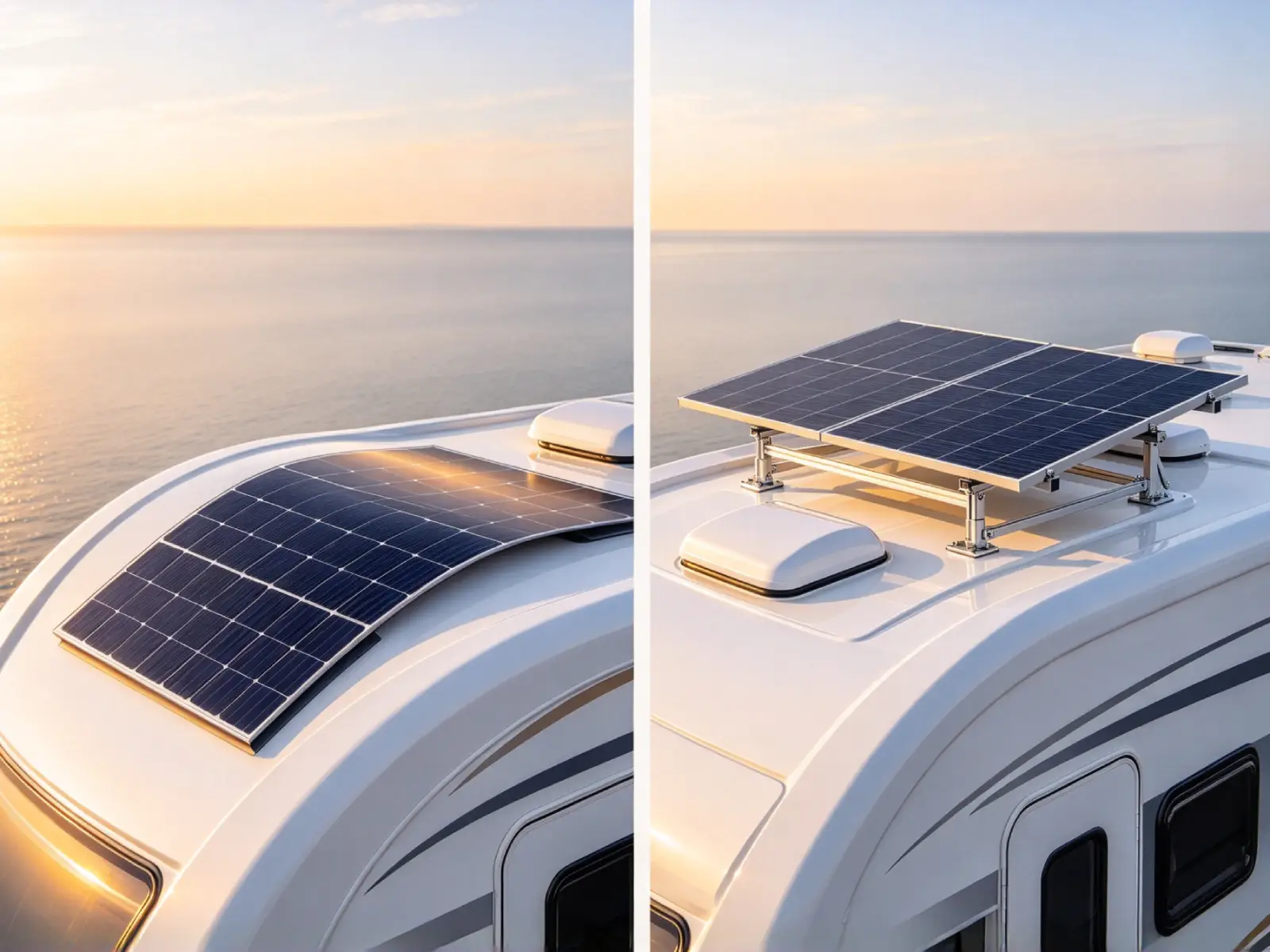
Rigid Panels: Stiff, heavy, and non-bendable. They only work on flat, open surfaces like house roofs and ground mounts. Great for permanent installs, but impossible to move or fit on curved areas.
Flexible Panels: Ultra-thin and lightweight. They bend to fit RV roofs, boat hulls, tents, and curved walls. Most fold up small enough to toss in a car or backpack for camping and road trips.
3.2 Power Efficiency
Rigid Panels: More efficient, with 18%–23% energy conversion rates. The glass top maximizes sunlight absorption, delivering consistent power even on cloudy days. They hold their performance steady for decades.
Flexible Panels: Slightly less efficient at 15%–20%. They work perfectly for casual off-grid use, but don’t match rigid panels for high-output, long-duration power generation. Frequent bending also causes minor efficiency loss over time.
3.3 Durability & Lifespan
Rigid Panels: Extremely tough. They resist wind, rain, hail, and UV damage. With a lifespan of 25–30 years, they need almost no replacement or upkeep.
Flexible Panels: Much more delicate. The soft film surface scratches easily and can’t handle heavy impact. Constant sun and weather exposure speeds up aging, with a typical lifespan of just 10–15 years.
3.4 Price & Value
Rigid Panels: Cheaper per watt and budget-friendly for long-term setups. Thanks to mass production, they offer the best long-term value for fixed solar systems.
Flexible Panels: More expensive upfront. You’re paying a premium for portability and bendable design, which is worth it for mobile use but not cost-effective for large, permanent solar projects.
3.5 Maintenance
Rigid Panels: Low-maintenance. Just rinse off dust and leaves a few times a year. Their sturdy frame stays secure through harsh weather.
Flexible Panels: Need more care. Avoid sharp objects and over-bending. You’ll also need to check edges occasionally for peeling or warping after long outdoor exposure.
4. Pros & Cons Quick Breakdown
4.1 Rigid Solar Panels
Pros: Higher efficiency, decades-long lifespan, weather-resistant, low maintenance, excellent long-term value, stable power output.
Cons: Heavy and bulky, zero flexibility, only fits flat surfaces, not portable for travel or camping.
4.2 Flexible Solar Panels
Pros: Super lightweight and portable, bendable for curved installs, easy to set up and store, perfect for mobile off-grid life.
Cons: Lower efficiency, shorter lifespan, easier to damage, higher upfront cost, gradual power loss over years.
5. Best Use Cases
5.1 Choose Rigid Solar Panels If You:
-
Need a permanent home rooftop solar system
-
Build long-term off-grid power setups
-
Want maximum efficiency and long-term savings
-
Install solar for commercial buildings or large plots
5.2 Choose Flexible Solar Panels If You:
-
Own an RV, caravan, or boat with curved surfaces
-
Camp, hike, or travel off-grid frequently
-
Need temporary, moveable solar power
-
Have narrow or irregular installation spaces
6. How to Pick the Right One
-
Go rigid for fixed home solar, long-term reliability, and the best overall value.
-
Go flexible for travel, mobile off-grid power, and curved/custom installs.
-
Hybrid works too: Many users pair rigid home panels with portable flexible panels for outdoor trips.
7. Final Verdict
At the end of the day, Rigid vs Flexible Solar Panels cater to completely different needs, as rigid and flexible solar panels serve completely different purposes. Rigid panels deliver unmatched stability, efficiency, and long-term value for fixed installations. Flexible panels offer unbeatable portability and adaptability for mobile and custom setups.
As solar tech improves, flexible panels will keep getting more efficient and affordable. For now, simply compare Rigid vs Flexible Solar Panels based on your main usage scenario, and you’ll get the best solar solution for your needs.
8. FAQ
8.1 Are flexible solar panels worth buying?
Absolutely—if you travel, camp, or own an RV or boat. They’re not ideal for permanent home setups, but their portability makes them perfect for on-the-go solar power.
8.2 Can flexible panels replace rigid solar panels?
No. Flexible panels can’t match rigid panels for efficiency, durability, or lifespan. Rigid panels remain the standard for home and commercial solar systems.
8.3 Which solar panels handle bad weather better?
Rigid solar panels are far more weather-resistant. Their glass and aluminum build withstands hail, heavy wind, and extreme UV exposure, while flexible film panels age faster in harsh conditions.
8.6 Do flexible panels lose power faster?
Yes. Regular bending and outdoor wear cause flexible panels to degrade quicker than rigid panels, with noticeable power drop-off after 10 years of use.
Related Posts
How Good Are Solar Panels? Are They Worth Buying?
Solar panels leave many homeowners wondering: is it really worth installing them at home? Can…
How Portable Solar Panels Benefit Your Camping Trips
Heading out of cities to embrace nature has made camping an increasingly popular way for…
Best Solar‑Powered Retractable Awning for Patio & Terrace 2026
If you own a villa, backyard patio or run a small commercial outdoor space, you’ve…
Leave a Reply