

Solar Power Knowledge
How to Import Solar Panels from China Safely: Compliance and Risk Mitigation Guide
 gaotu
gaotu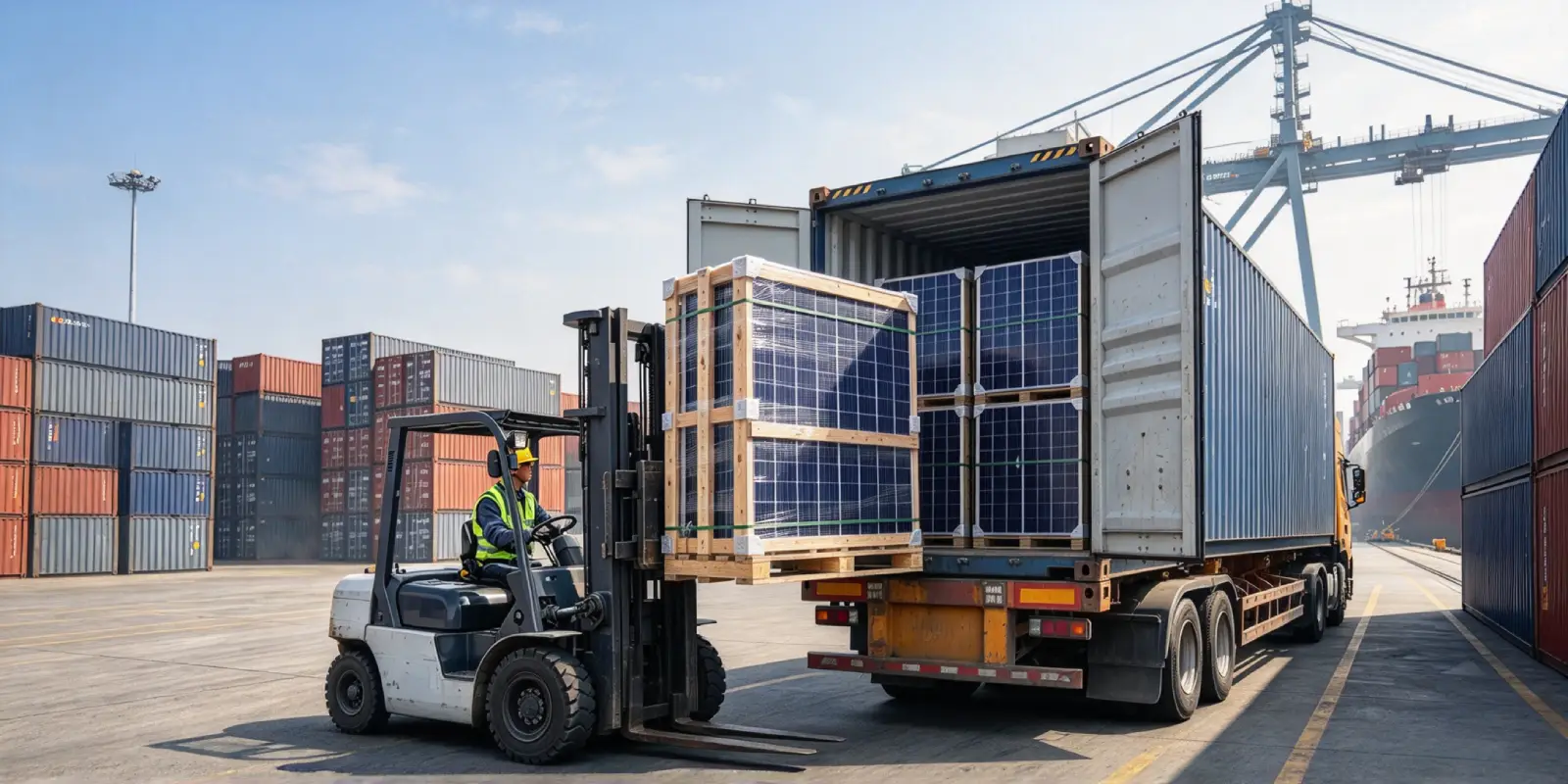
Quick Answers
- Q: What certificates do I need for solar panels imported to USA?
A: UL 61730 certification plus CEC listing. Importers must also prepare AD/CVD documentation and full traceability for UFLPA compliance. - Q: What standards are required for EU solar imports?
A: IEC 61215 & IEC 61730 from accredited labs like TÜV Rheinland or Intertek. Carbon reporting under CBAM is now mandatory. - Q: How to avoid buying fake or downgraded solar modules?
A: Verify certificate numbers on official databases, require EL images for every panel serial number, and arrange third-party pre-shipment inspection. - Q: What is EL testing for solar panels?
A: Electroluminescence testing detects invisible microcracks and cell fractures that visual inspection cannot find. It is highly recommended before container loading.
China’s manufacturing landscape controls over 80% of the world’s solar supply chain, making it the premier sourcing destination for solar procurement managers, commercial project developers, and international distributors. Sourcing direct from the source unlocks unparalleled cost efficiencies and fast access to advanced N-Type TOPCon or bifacial module variants.
However, moving massive, high-value shipments of fragile electronic components across international borders requires a sophisticated understanding of regulatory frameworks. Failing to align with local importation criteria can lead to catastrophic customs delays, severe financial penalties, or unusable product batches. This operational guide maps out the critical compliance requirements and protective strategies necessary to safely purchase and import wholesale solar panels from China.
1. Navigating the Tariff Landscape and Geopolitical Barriers
The United States Market: Rigid Audits
Sourcing for the US market involves navigating some of the strictest customs environments globally. Importers must proactively prepare for:
- Anti-Dumping & Countervailing Duties (AD/CVD): These protective tariffs target solar cells and modules produced by Chinese entities, extending into processing hubs across Southeast Asia. You must verify that your manufacturer utilizes tariff-compliant silicon wafer streams.
- The UFLPA (Uyghur Forced Labor Prevention Act): US Customs and Border Protection (CBP) enforces absolute tracing mandates. Importers must supply a bulletproof, audited chain of custody detailing the source of raw quartzite, polysilicon, ingot production, and final assembly to prevent indefinite customs detentions.
The European Union Market: Evolving Carbon Standards
2. Verifying Grid-Tie Certificates and Technical Standards
Possessing a high-efficiency module is meaningless if your local utility grid legally blocks its structural interconnection. Your purchasing contract must explicitly mandate the following regional certifications:
- North America: The entire bill of materials must be explicitly certified under UL 61730 standards and recognized by the California Energy Commission (CEC).
- Europe & Global Interconnection: Suppliers must present authentic documentation from internationally recognized laboratories like TUV Rheinland or Intertek, proving full compliance with IEC 61215 (design qualification) and IEC 61730 (module safety qualification) frameworks.
- Australia: Components must clear the strict, rolling review registries managed by the Clean Energy Council (CEC).
Pro-Tip: Always cross-reference the supplier’s certificate numbers directly on the official online databases of TUV or UL. Substandard trading operations frequently use photoshopped or expired credentials belonging to third-party factories.
3. Ironclad Quality Control: Neutralizing Factory Traps
The Essential Sourcing Playbook
- Enforce Pre-Shipment EL Testing: Visual checks cannot expose micro-cracks or internal cell fractures caused by automated factory sorting or internal mechanical stresses. Demand factory-certified EL (Electroluminescence) test imagery for every single module serial number in your batch before loading.
- Deploy Third-Party Inspectors: Retain a specialized independent inspection firm (such as VDE or AsiaInspection) to execute random testing directly at the loading bay. They will independently verify packaging structural integrity, framing tolerances, flash test output data, and loading orientations.
- Validate Serial Number Authenticity: When purchasing prominent tier-1 brands through trading networks, insist on receiving the official manufacturer-generated factory tracking database. This confirms you are receiving authentic A-grade stock rather than downgraded B-grade components re-labeled by unauthorized distributors.
Conclusion: Engineering a Compliant, Resilient Sourcing Pipeline
About GTPOW | Gaotu Innovation
We’re your trusted solar solution provider. We offer customized commercial solar systems, OEM & ODM services, and end-to-end support for North American businesses. Reach out to discuss your rooftop solar project today.
Website: gtpowsolar.com
Email: info@gt-pow.com
Related Posts
Solar Panel Cleaning Guide: Why, When, and How to Clean
Zero waste and zero pollution are the core principles driving global development today. People everywhere…
Foldable Solar Panels for Camping & RV Life
Foldable Solar Panels are game-changing mobile power gear that redefine off-grid energy access.when people mention…
Waterproof Portable Solar Panel for Marine
Consistent power on the water is a must for docking and cruising. A waterproof portable…
Leave a Reply