

Solar Power Knowledge
How to Find Reliable Wholesale Solar Panel Manufacturers for EPC & Distributors
 gaotu
Summary: This guide walks solar distributors, EPC contractors and installers through the key criteria to vet trustworthy wholesale solar panel manufacturers. You will learn how to verify certifications, avoid tariff risks, check factory capacity and evaluate OEM/ODM options before placing bulk orders. We also share common sourcing mistakes to help you build a stable, compliant solar supply chain.
Quick Answers
Q: What should I check first when sourcing wholesale solar panels?
A: Confirm whether your supplier is a real OEM manufacturer instead of a trading company, and verify that certificates match the exact module model.
Q: How can I reduce solar import tariff costs for US shipments?
A: Work with manufacturers with dual production bases in China and Indonesia to qualify for favorable tariff treatment.
Q: Can I order small trial batches for private label solar panels?
A: Yes, some OEM factories support low-MOQ private labeling and small trial orders for new solar brands.
If you run a solar distribution company, EPC firm or installation business, your profit margin hinges on one thing: a predictable, compliant supply of solar modules. Many buyers learn the hard way — the lowest per-watt quote often hides broken certificates, inconsistent EL testing, long lead times and zero backup capacity when demand spikes.
Sourcing wholesale solar panels is not just comparing prices. It is vetting a supply chain partner that can support your market rules, tariff requirements, seasonal restocks and long-term project pipelines. This guide shares the practical framework we use to evaluate PV manufacturers, built from hundreds of bulk solar projects across North America, Europe, the Middle East and Australia.
1. Separate Real OEM Factories From Trading Companies
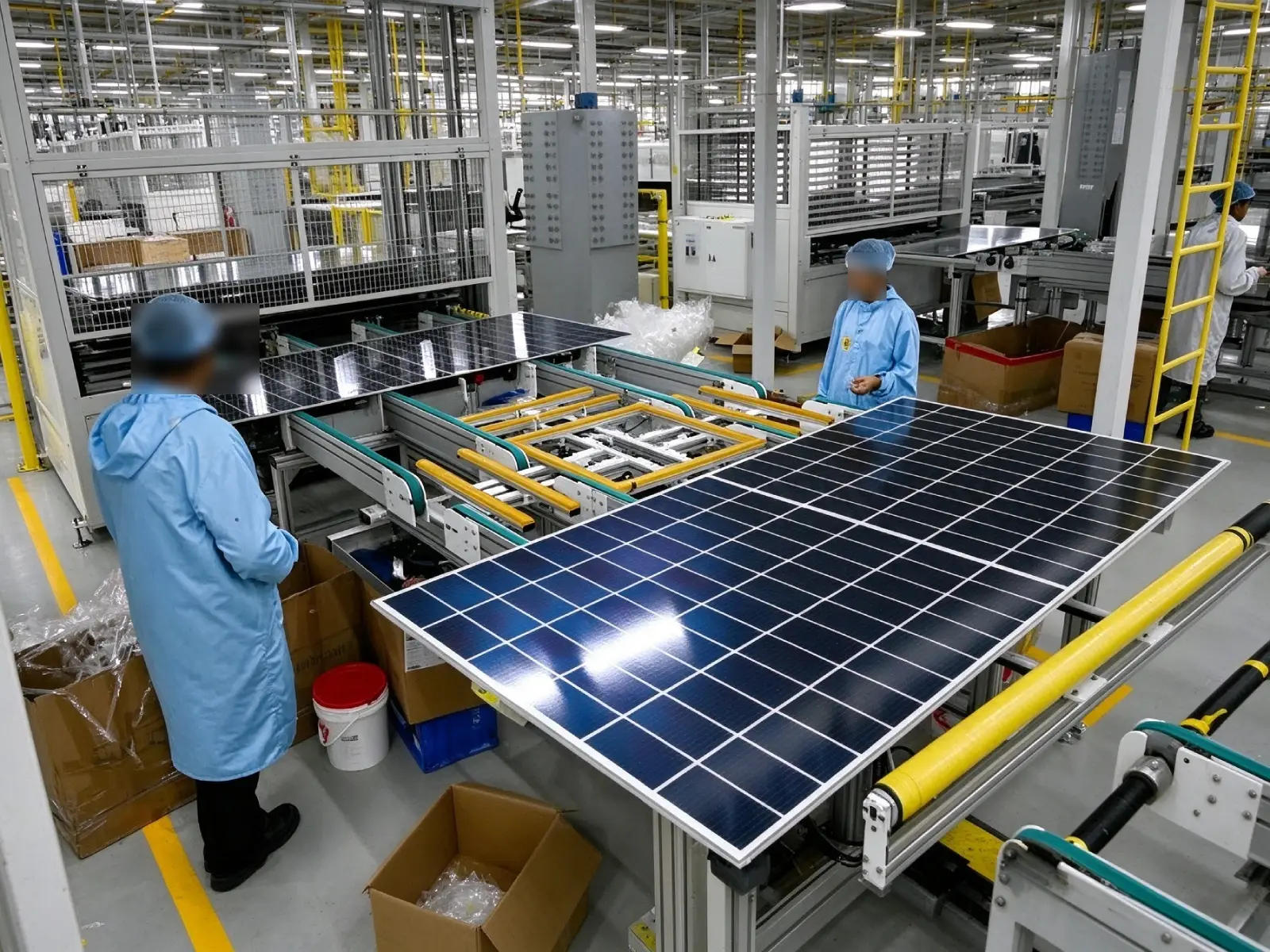
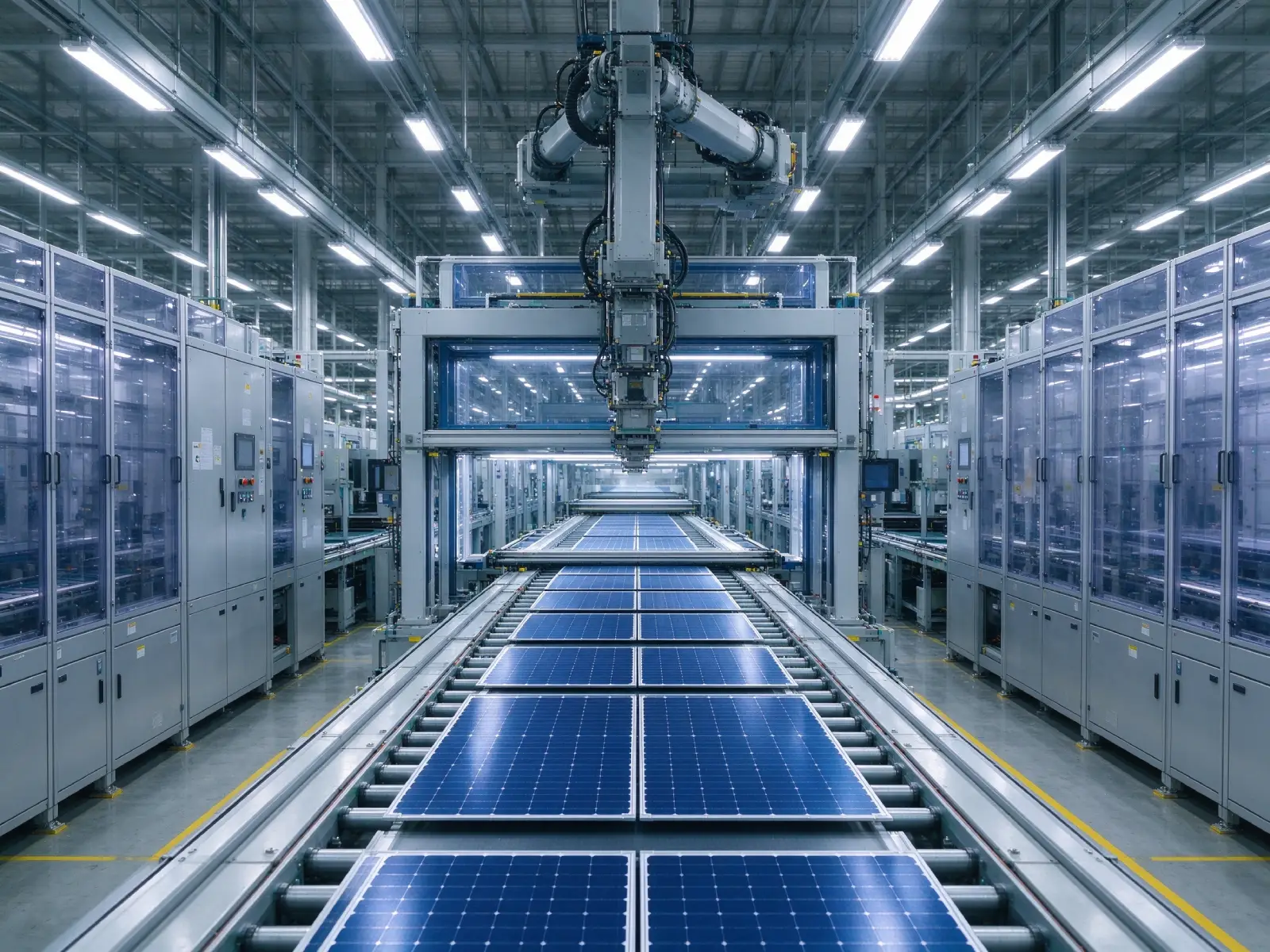
This is the #1 filter every procurement team should run first. A trading company can give you a cheap quote, but they cannot control production schedules, quality standards or documentation when something goes wrong. A genuine OEM factory owns production lines, MES quality tracking systems and independent testing workflows.
What to verify:
- Factory address, production footage, annual output and equipment list
- In-house EL testing, flash testing and visual inspection for every batch
- Ability to issue original, traceable certificates tied to the exact module model you order
- Stable capacity to handle peak-season orders without pushing your delivery window
When you want direct access to a dual-base OEM manufacturer with proven bulk delivery records, explore our wholesale solar panels landing page to review capacity, overseas warehouse setup and real EPC case studies.
2. Audit Certifications & Market Compliance Before Placing Bulk Orders
Certificates are not just a checkbox. They are your customs clearance insurance. A certificate that is expired, for a different model, or issued to a third party will stop your container at the port and cost you thousands in detention and re-export fees.
Common mandatory requirements by region:
- United States: UL certification, FEOC compliance documents
- EU / UK: IEC, TÜV, CE
- Australia: Clean Energy Council approved modules
- Middle East: IEC + salt mist / hot climate test reports
A trustworthy manufacturer will provide batch-specific test reports, serial number traceability and a full compliance package before shipment. Avoid suppliers who only send generic certificate PDFs on request.
3. Plan For Tariff Rules & Delivery Lead Time
Tariff policies for solar imports keep changing, and this is where many distributors lose their margin. Factories with dual manufacturing bases (China + Indonesia, for example) can help buyers reduce extra import duties for US and EU shipments. This is a major advantage you should ask about early in your RFQ process.
Overseas warehousing is another critical differentiator. Instead of waiting 30–45 days for sea freight from Asia, stock held in local warehouses in the US, EU, UK or Australia cuts restock lead time to 2–5 days. This eliminates stockouts for distributors who serve retail installers and fast-turn EPC jobs.
Before signing a contract, confirm these terms in writing:
- Standard lead time and peak season schedule
- Allowed trade terms: FOB, CIF, DDP
- Penalty clauses for shipment delays
- Minimum order quantity for both standard and private-label OEM orders
4. Clarify OEM / ODM Customization Boundaries
Not every wholesale solar panel factory supports flexible customization. Some only sell standard black-frame modules in full-container quantities. Others offer low-barrier OEM and ODM: private labeling, custom packaging, custom connectors, cable length adjustment and small trial orders for new solar brands.
For distributors launching their own brand, ask these questions:
- Can they print your brand logo on the backsheet and carton?
- What is the MOQ for custom labeling?
- How long does prototyping take?
- Can they adjust electrical specs for niche off-grid or BIPV applications?
Flexible cooperation modes including OEM, ODM and joint R&D are available for qualified buyers. You can learn more about our bulk supply and customization options on our wholesale solar panels page.
5. Check Real Project References, Not Just Stock Photos
Anyone can post photos of a factory floor. What you need is market-matched project proof. Ask your supplier for case studies in your target country: EPC ground mount projects, distributor replenishment runs, past DDP shipments and buyer testimonials. Real case data reveals whether they understand local inspection rules, logistics routes and installer expectations.
Strong signs you are working with a capable supplier:
- They share container packing lists, inspection reports and delivery timelines
- They can provide references from EPCs or distributors in your region
- They have experience with both small pallet orders and multi-MW project supply
6. The Most Expensive Sourcing Mistakes To Avoid
We see these mistakes repeatedly in solar procurement, and they sink otherwise profitable projects:
- Choosing a supplier purely based on the lowest watt price, ignoring compliance and warranty enforceability
- Accepting verbal promises instead of written specs, certificate scope and delivery terms
- Forgetting to confirm module dimensions, MC4 connector types and mounting compatibility
- Overlooking after-sales support and warranty claim workflows
- Mixing multiple batch codes in one shipment without consistent power sorting
FAQ
Q: What is the difference between wholesale solar panels and retail solar panels?
A: Wholesale solar panels are sold in bulk for B2B buyers: distributors, EPC contractors and installers. They usually come with volume pricing, batch traceability and commercial logistics support, while retail panels are packaged for individual homeowners.
Q: Can I get private label OEM solar panels with low MOQ?
A: Yes. Some OEM factories support low-barrier private labeling and small trial orders. Requirements vary by model, packaging and destination market.
Q: How long does it take to ship wholesale solar panels?
A: Factory direct sea freight usually takes 3–6 weeks. If stock is available in overseas warehouses, delivery to local buyers can be completed within 2–5 business days.
Q: Are UL certificates required for solar panels shipped to the US?
A: Yes, UL certification is mandatory for most solar modules sold and installed in the United States. Always verify the certificate matches the exact module model you purchase.
Final Words
Your solar business grows when your supply chain is stable, not when you chase one-off cheap pricing. A qualified wholesale solar panel manufacturer is more than a vendor. They are a compliance partner, logistics partner and quality control partner that scales with your project pipeline.
If you are ready to submit your RFQ and get a customized quote for bulk solar modules, visit our wholesale solar panels page and send your requirements. Our B2B export team will reply within 24 hours.
About Us
We are Gaotu Innovation, operating under the brand GTPOW. With 18 years of experience in solar R&D and manufacturing, we are a high-tech enterprise integrating R&D, intelligent production and global trade. We run two manufacturing facilities in Dongguan, China and Indonesia, equipped with automated production lines and supported by five overseas warehouses. Our products hold full international certifications including UL, TÜV, IEC and CE, and are sold to more than 60 countries worldwide. We specialize in standard high-efficiency solar modules, portable foldable solar panels, flexible solar panels, balcony solar systems, as well as solar solutions for RVs and surveillance systems. We supply stable bulk stock and offer OEM & ODM customization services for global distributors, EPC contractors and brand owners. We support both small trial orders and multi-MW project supply.
Related Posts
Wholesale N-Type Bifacial Solar Panels | High Efficiency PV Modules Bulk Order
1. Reliable Solar Module Manufacturer for Global Clients The photovoltaic industry has undergone rapid technological…
820W Rigid Balcony Solar Kit | Customization Guide for Wholesalers
Wholesalers specializing in residential small solar systems, RV energy storage, and Rigid Balcony Solar Kit…

How to Find Reliable Flexible Solar Panel Wholesale Supplier
Flexible solar panels have become one of the fastest-growing renewable energy products for off-grid applications,…
Leave a Reply