

Solar Power Knowledge
Balcony Solar Panel Kits Wholesale for Residential Resellers
 Gaotu Innovation
A balcony solar kit is not just a panel. It is a complete plug-and-play set — module, mounting bracket, inverter and cable — that an apartment tenant can install in an afternoon without an electrician or a roof. For resellers, that means one SKU replaces four separate purchases, and the end customer is someone who cannot buy a rooftop system at all.
Why This Segment Is Worth a Trial Order
Most residential PV wholesale competition sits on rooftop modules — crowded, price-driven, and dominated by Tier 1 brands. Balcony kits are different for three reasons:
- The buyer is a tenant, not a homeowner. No roof, no installer, and in most markets no permit paperwork. The barrier to purchase is far lower.
- It is a retail-shaped product. Consumers buy it online or in a store, which means your downstream is e-commerce sellers and small installers, not utility-scale EPCs.
- Kit assembly creates margin. The panel itself is commoditised; the bracket, cable length, inverter pairing and packaging are where differentiation happens.
This makes balcony kits a practical entry category for a distributor testing residential demand without committing to container-level module volume — and a natural companion SKU to a broader wholesale solar panels for home range.
What Is Actually Inside a Plug-and-Play Kit
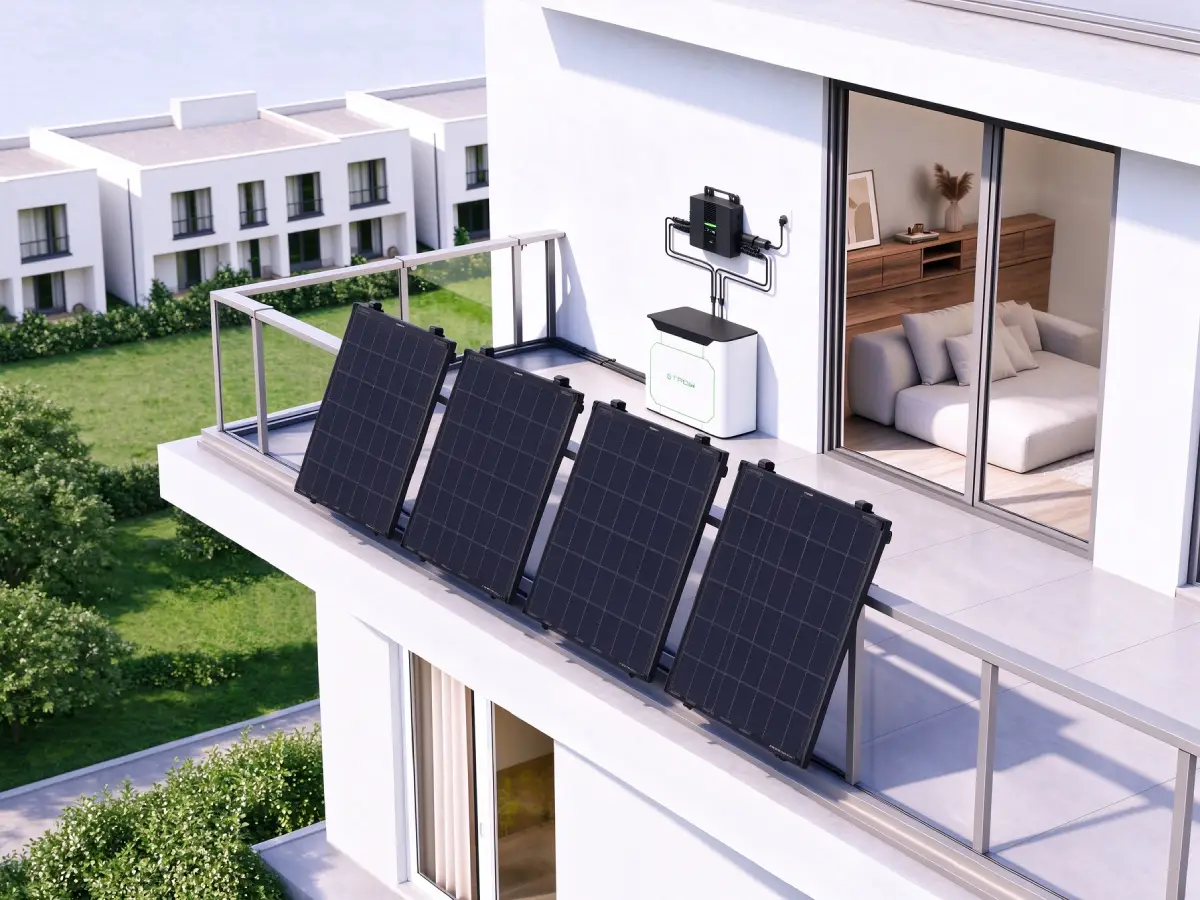
A complete kit ships as one retail-ready box. The four components decide your quality story:
1. Module
Usually 400–450W for a single-panel kit, 800W+ for dual-panel kits. Lightweight, and often bifacial in newer designs.
2. Micro-inverter or optimizer
This is the part that fails first in the field and the part buyers ask about most. Confirm brand, warranty terms and grid compatibility for each target country.
3. Mounting bracket
Balcony rail, wall bracket and tilt frame are different SKUs. Shipping the wrong bracket type to a market is a common and expensive mistake.
4. Cable set and connectors
Length matters more than spec. A cable that is 50cm short makes the kit unusable for the end customer.
If a supplier quotes a “balcony kit” price without naming the inverter brand, assume it is an incomplete kit.
Certification and Grid Compliance by Market
Balcony kits sit closer to consumer electronics than to utility PV, so the compliance list is different:
- Europe: CE marking is the baseline, but grid-connection rules for plug-in micro-inverters vary by country and are revised often. Germany has been the largest market, with other EU countries following at different speeds.
- North America: UL listing applies to the inverter and the module separately; local utility interconnection rules for plug-in systems are stricter than in Europe.
- Documentation package: datasheet, inverter certificate, module flash report and a declaration of conformity. Resellers need these to list the product legally on marketplaces.
Rules change. Always confirm current requirements with the local authority or your importer before committing to a container.
Kit MOQ and How It Differs from Panel MOQ
Kit MOQ is counted in sets, not pieces, and it is higher per unit because each box is assembled and retail-packaged:
- Sample: one or two sets, paid, for your own testing and for a key reseller
- Trial: a few dozen sets, enough to test one marketplace or one local installer network
- Private label: a separate and higher minimum — new carton printing, new manual, new label
Expect kit MOQ to be negotiated per configuration rather than quoted as a single number, because bracket type and inverter brand both change the bill of materials. For a fuller breakdown of how MOQ works across product types, see how MOQ is structured for home solar panels.
Private Label — Where the Real Margin Is
Balcony kits are one of the few residential categories where a mid-size reseller can realistically own the brand. Three levels, in order of cost:
- Logo on the box — cheapest and fastest, no product change
- Custom manual and label — needed for marketplace compliance in most EU countries
- Custom kit configuration — bracket, cable length, inverter pairing. This is what makes the kit defensible against copycats
Start at level 1 for a trial, then move to level 3 once a SKU proves it sells.
Four Mistakes When Sourcing Balcony Kits
- Buying on panel wattage alone. The inverter and bracket decide the return rate, not the module.
- Ignoring bracket variants. One bracket type does not fit every balcony rail; specify the mix you need per market.
- Underestimating packaging. A retail box that arrives damaged generates returns your resellers will not absorb twice.
- Skipping the local compliance check. A kit that cannot be legally plugged in is unsellable, regardless of price.
Planning a balcony kit line? Send your target market, bracket type and inverter preference — we will quote kit configurations with certification documents included.
Frequently Asked Questions
Explore our full product portfolio on our wholesale solar panels page. If you have questions about trial orders, certifications or private label service, feel free to reach out to Gaotu Innovation (Shenzhen) New Energy Group Co., Ltd. for detailed support and quotation.
Related Posts
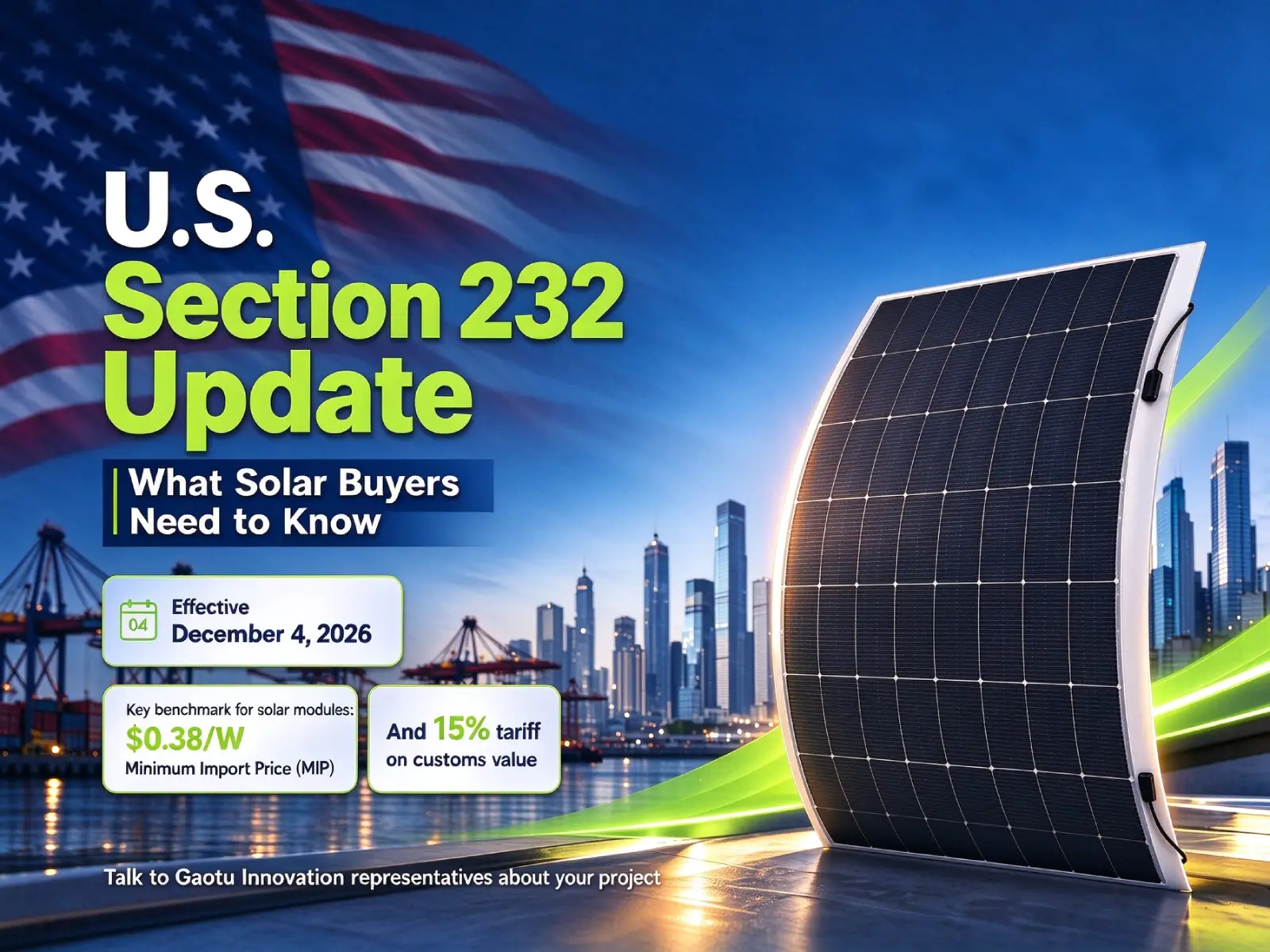
US Solar Tariffs 2026: Section 232, $0.38/W MIP & 15% Duty – Complete Sourcing Guide
Article Summary This guide explains the new Section 232 polysilicon tariff rules effective December 4,…
Outdoor Solar Table With Wireless Charging Manufacturer
The outdoor camping, home courtyard and public supporting facility sectors are booming rapidly, and the…
Best Solar Panel Manufacturers in China: 2026 Tier-1 Ranking & Buyer's Guide
Article Summary This guide ranks the best solar panel manufacturers in China for 2026 based…
Leave a Reply