

Solar Power Knowledge
Key Certifications for Wholesale Residential Home Solar Panels (EU / US)
 Gaotu Innovation
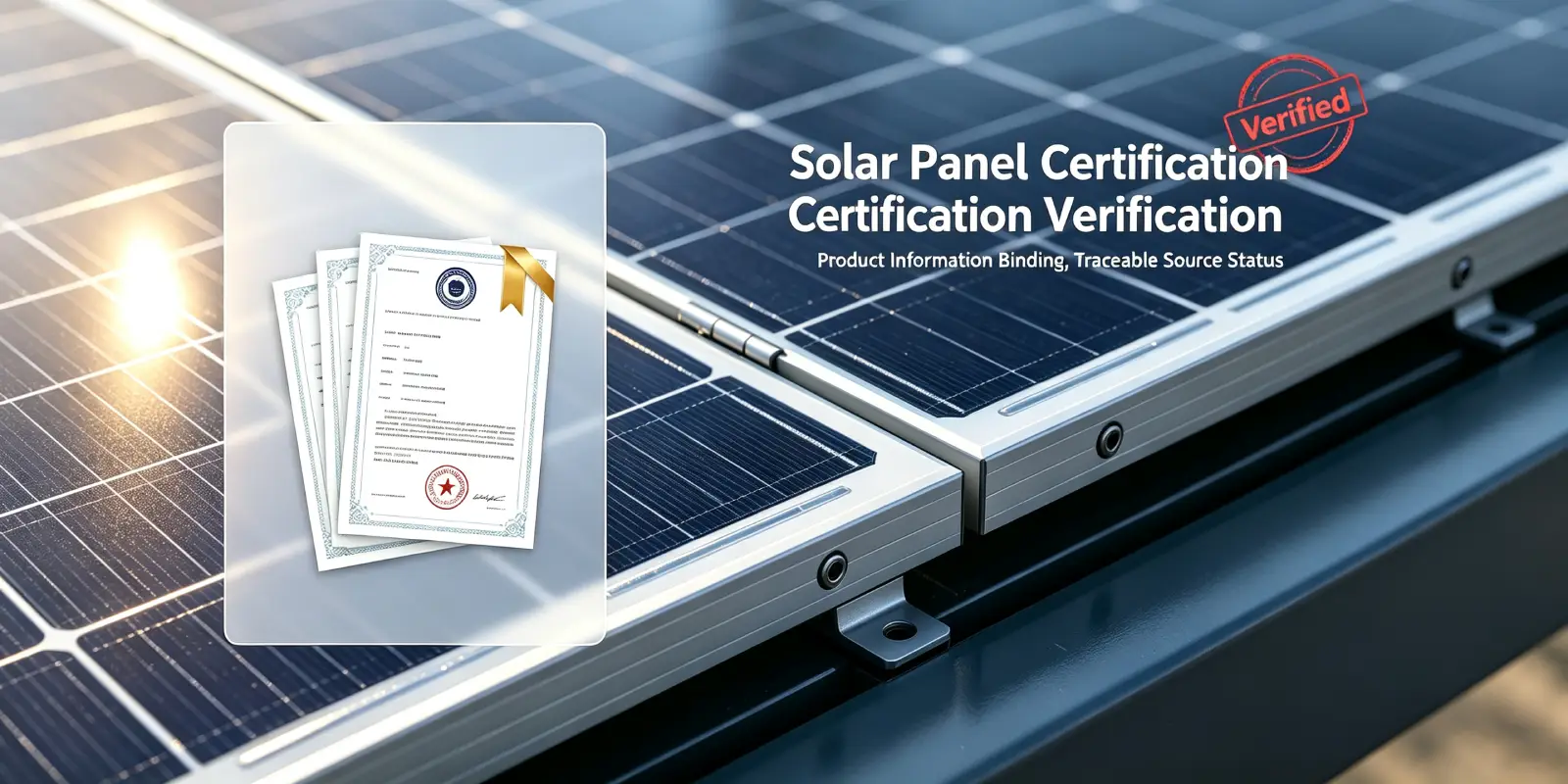
For residential modules, the certification question is not “does it have CE?” — almost every
supplier will say yes. The real question is which test reports and
listings apply to the exact model and wattage you are importing, and whether
the certificate holder is the factory that will actually produce your order. Get those two
things wrong and the container stops at the port.
Why Certification Decides Whether Your Container Clears
Residential panels are a low-value, high-volume product. A blocked container is not an
inconvenience — it is the whole margin of that order, plus demurrage. In practice, customs
and market-surveillance issues come from four document failures, in this order of frequency:
- Wrong model coverage. A certificate exists, but it covers 400W when you shipped 450W, or covers a different cell layout.
- Wrong certificate holder. The certificate belongs to a manufacturer you are not buying from, so the traceability chain breaks.
- Missing test reports. The seller sends a declaration of conformity but cannot produce the underlying IEC test report.
- Expired or withdrawn certificates. Standards get revised; old certificates quietly stop being valid.
All four are checkable before you pay a deposit. That is what the rest of this guide covers.
If you are still deciding what to order in the first place, start with the
wholesale solar panels for home
buying guide, which covers product selection, MOQ and supplier evaluation.
The European Baseline: CE Is a Declaration, Not a Test
CE marking on a solar module is a manufacturer’s self-declaration of conformity with the
applicable EU directives — typically low voltage, electromagnetic compatibility and RoHS.
It is a legal statement, not a third-party test. This is why “we have CE” tells you almost
nothing on its own.
What actually supports the declaration, and what a serious EU buyer asks for:
Module-level documents
- IEC 61215 — design qualification and type approval
- IEC 61730 — module safety qualification
- IEC 61701 — salt mist corrosion, for coastal markets
- IEC 62716 — ammonia resistance, for agricultural areas
- Declaration of conformity, with the exact model list
Country-specific checks
- National grid connection rules, applied per country
- Building-integrated or balcony products may need extra structural documentation
- Marketplace compliance: product labels and manuals in local language
- Extended producer responsibility / WEEE registration for the seller
Grid codes are the part buyers underestimate. Germany, the UK, Italy, Spain and the
Netherlands each maintain their own requirements for grid-connected generation, and they
are revised regularly. A module that is legally fine in one EU country may still fail
interconnection approval in another — not because of the panel, but because of the inverter
and the paperwork around it.
The US Picture: UL Listing Plus Two Extra Layers
The US is stricter in two ways Europe is not: third-party listing is expected rather than
self-declared, and the import itself carries trade-compliance obligations that have nothing
to do with product safety.
Product safety
- UL 61730 is the current listing standard for PV module safety; older installations and legacy documentation still reference UL 1703.
- UL 2703 covers racking and mounting systems, including grounding and bonding — relevant if you sell kits rather than bare modules.
- Rapid shutdown requirements under the National Electrical Code apply at system level; module-level electronics may need UL 3741 evaluation.
Trade and supply-chain compliance
- Anti-dumping and countervailing duties apply to cells and modules from certain origins. Duty exposure can exceed the product margin, so confirm the origin and the rate before pricing.
- Section 301 tariffs add cost on top of AD/CVD for Chinese-origin goods.
- UFLPA supply-chain traceability requirements mean importers may be asked to document where polysilicon came from. A supplier that cannot produce a traceability file is a risk you carry, not them.
A supplier who answers “no problem, we have all certificates” without naming the standard
number, the certificate holder and the covered models is telling you they have not checked.
How to Verify a Certificate Is Real
Five checks, all doable in under an hour, before any deposit:
- Check the issuer’s public database. UL, TÜV, Intertek and others publish searchable certificate records. Look up the certificate number yourself; do not rely on a PDF the seller sends.
- Match the holder name to the factory. If the certificate holder is a trading company, ask for the factory audit and the OEM relationship document.
- Match the model list to your order. Certificates list covered models explicitly. Confirm your exact wattage and frame/cell configuration appears.
- Check the issue and expiry dates against the current version of the standard, not the version printed on the certificate.
- Ask for the full test report, not just the certificate page. The report shows the tested bill of materials — that is what tells you whether your production run matches the tested sample.
Documentation Package to Demand Before Payment
Build one folder per supplier and require it before the deposit, not after:
- Certificate of conformity, all pages, with holder name and covered models
- Full IEC 61215 and IEC 61730 test reports
- Factory quality system certificate (ISO 9001), with the certified scope
- Flash test data for the actual production batch, plus EL images
- For US-bound orders: origin declaration, AD/CVD assessment and traceability documentation
- Datasheet and installation manual in the target market’s language
This package is also what your own downstream customers — installers and marketplace
sellers — will ask you for. Building it once saves the same conversation twenty times, and it is
worth seeing how the documents map onto the actual product families on our
wholesale solar panels page.
Three Red Flags Worth Walking Away From
- “Certificate is under renewal.” Sometimes true, often a polite way to say it lapsed. Ask for the previous certificate plus the renewal application reference.
- Model list that does not match the catalogue. A certificate covering 350–400W while the catalogue sells 450W and 550W is a coverage gap, not a technicality.
- No traceability file for US orders. If the supplier cannot explain where polysilicon came from, the detention risk lands on the importer.
None of this is about distrust. It is about putting the document burden on the party that can
actually produce the documents — the factory — instead of absorbing it at the port.
Need the certification package for a specific EU or US market? Send your target country and module wattage — we will return the certificate set, test reports and origin documents for that exact model.
Frequently Asked Questions
Is CE marking enough to sell residential solar panels in the EU?
Legally, CE is the entry requirement, but it is a self-declaration. Buyers and installers will still ask for IEC 61215 and IEC 61730 test reports, and your market may impose grid-connection or registration rules that CE does not cover.
Do I need UL 1703 or UL 61730 for the US?
New listings are issued to UL 61730. Older certificates referencing UL 1703 may still be in circulation, so confirm which standard your certificate is issued against and that it covers your exact model.
Can a trading company’s certificate be used for my order?
Only if the traceability is documented: the certificate holder must be the actual producer, or you need a factory audit and OEM agreement linking the seller to that factory. Otherwise the certificate does not protect your shipment.
How long does certification take for a new model?
If the model falls within an existing certified family, documentary extension can be quick. A new cell layout or frame design usually requires a full test cycle, which changes your launch date — plan for it before committing to a delivery deadline.
What extra documents do US importers need beyond safety listings?
Origin and duty assessment, plus supply-chain traceability documentation under UFLPA. These are trade-compliance files, separate from the UL listing, and they are the ones most often missing.
Related Posts

Balcony Solar Storage Systems — The Wholesale Opportunity You Shouldn‘t Sleep On
Balcony Solar Storage Systems are the fastest-growing slice of the category — if you’re…
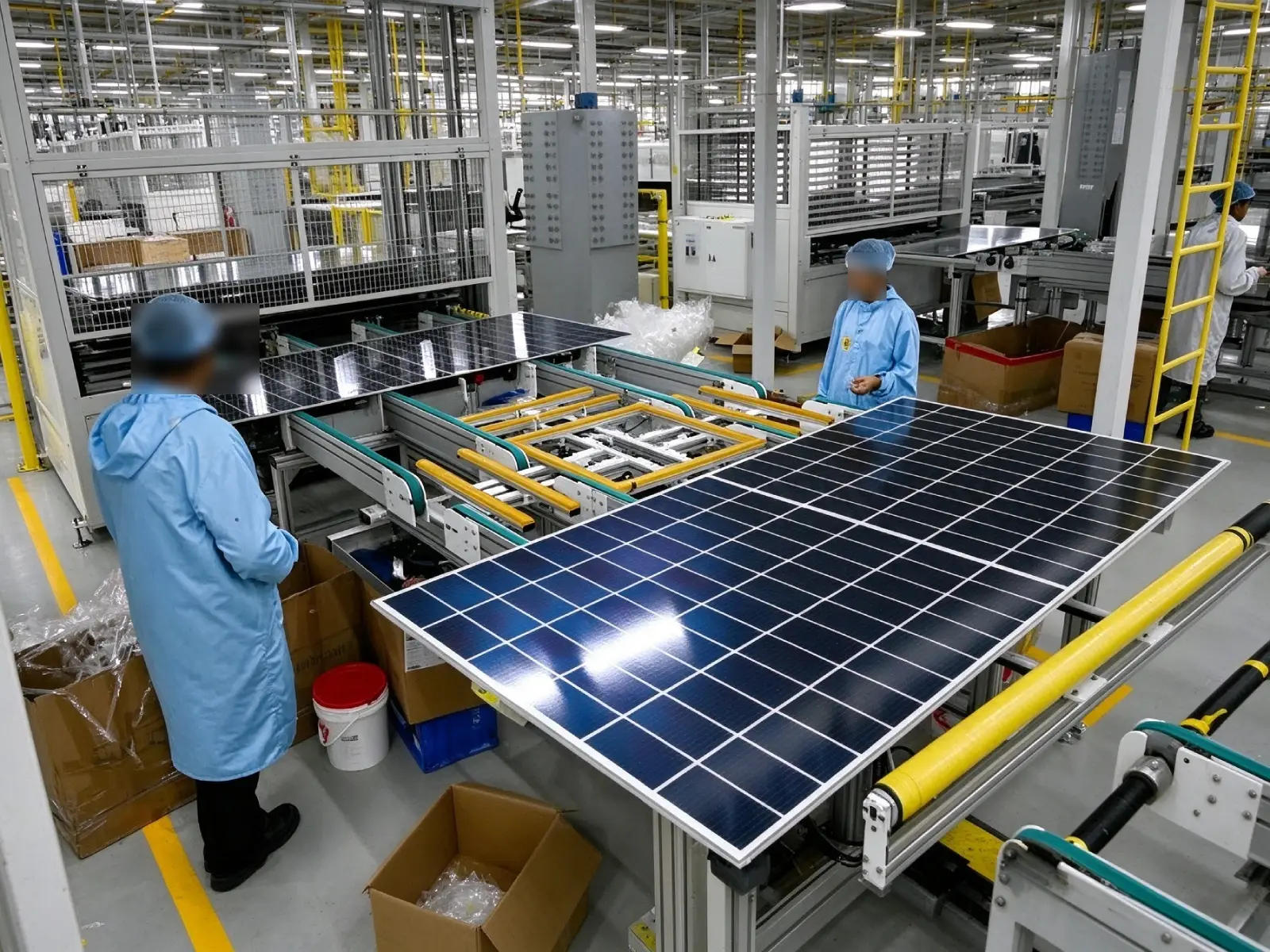
How to Find Reliable Wholesale Solar Panel Manufacturers for EPC & Distributors
Summary: This guide walks solar distributors, EPC contractors and installers through the key criteria to…
Reliable Solar Panel Wholesale After-Sales Solutions for Global Distributors
In the portable solar panel wholesale and cross-border distribution industry, product quality and competitive pricing…
Leave a Reply