

Solar Power Knowledge
Factory vs Trading Company: How to Verify a Real Portable Solar Panel Supplier
 gaotu
gaotu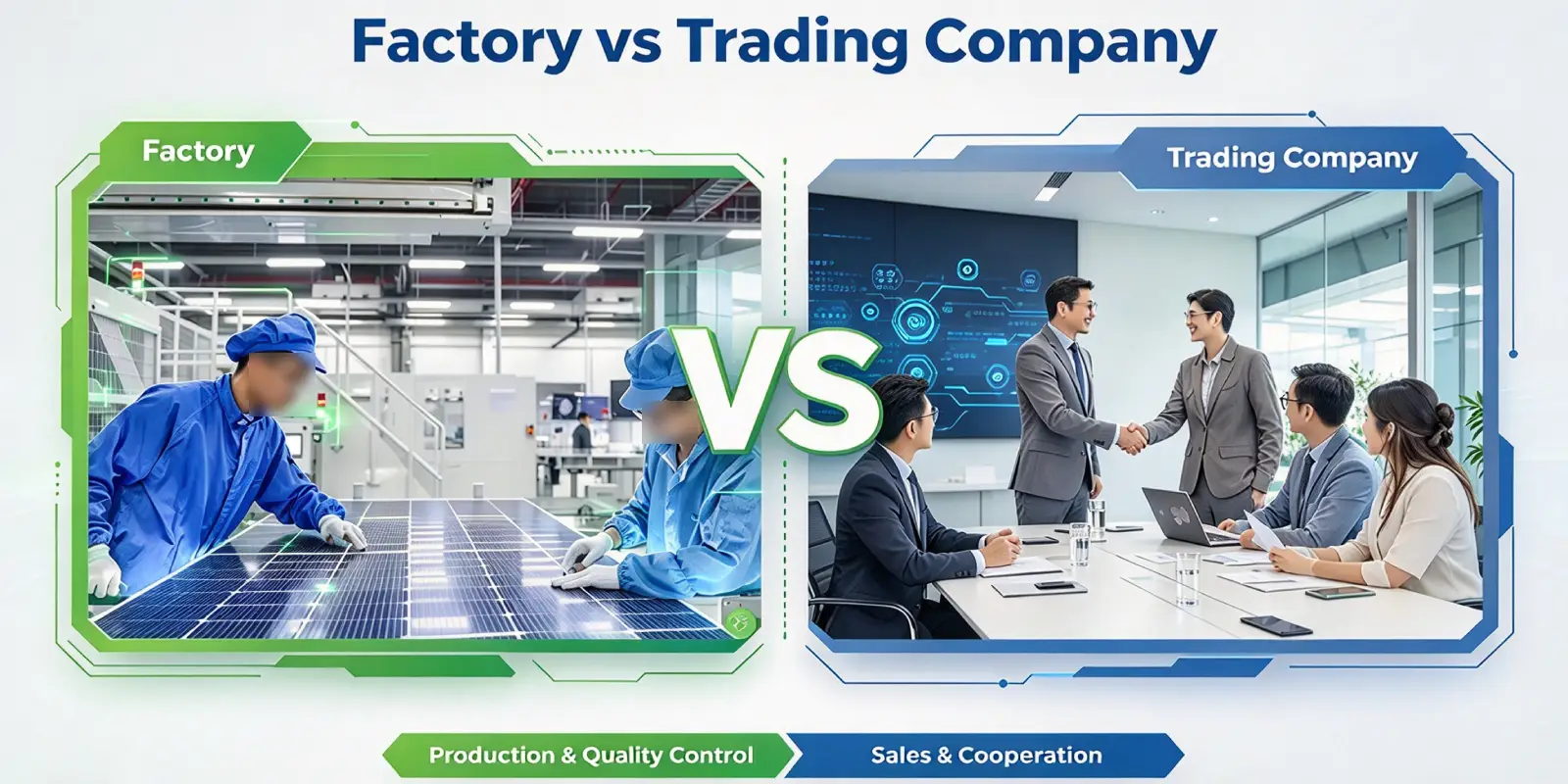
Introduction
If you are sourcing portable solar panels, you have probably received quotes from several companies. Some respond quickly with competitive prices. Others send polished catalogs and promise fast delivery.
But here is the problem: a large percentage of companies presenting themselves as factories are actually trading companies.
They may be good at sales, but they do not own production lines. They cannot control lead times, quality issues, or custom design requests. When problems arise, they relay messages between you and an anonymous factory — often with delays, miscommunication, and limited accountability.
For buyers who plan to build a brand or scale their business, this is a serious risk.
This guide shows you how to tell the difference between a real portable solar panel factory and a trading company. It covers the warning signs, a 5-step verification process, and what a genuine factory actually looks like.
By the end, you will have a practical checklist to protect your supply chain.
Article Summary
Many suppliers claiming to be portable solar panel manufacturers are middleman trading companies. This guide helps B2B buyers identify real factories vs trading firms, listing warning signals, 5-step supplier verification workflow, red flag checklist and factory tour inspection points. Working directly with authentic factories brings better price control, stable lead time, in-house quality management and OEM/ODM customization capability for long-term brand cooperation.
Quick Answers
-
Real factory owns production lines, testing equipment and in-house R&D; trading companies outsource manufacturing and add markup.
-
Top warning sign: Refusal of live video factory tour.
-
Core verification steps: Check business license → Live factory video tour → Cert validation → Real-time production photos → Small trial order.
-
Always cross-check certificate company name with supplier legal entity.
-
A genuine solar panel factory has IQC/IPQC/FQC quality control & EL power testing stations.
1. Why the Difference Matters
Before diving into verification methods, it helps to understand why this distinction matters.
A trading company typically:
-
Sources from multiple factories
-
Adds a markup to the factory price
-
Manages export documentation and logistics
-
Has limited control over production schedules
-
Cannot directly resolve quality issues
-
Often cannot support deep customization
A factory typically:
-
Owns its production lines and equipment
-
Employs its own engineers and production staff
-
Controls the full manufacturing process
-
Can adjust schedules and prioritize orders
-
Resolves quality issues directly
-
Supports OEM/ODM with in-house R&D
For small, one-time purchases, a trading company may be acceptable. But for buyers planning repeat orders, private label products, or long-term partnerships, a factory usually offers better value and reliability.
Key takeaway: The supplier model affects your cost, quality, lead time, and ability to customize.
2. Five Signs You Are Talking to a Trading Company
Trading companies are not necessarily dishonest. Many are legitimate businesses. But if you are specifically looking for a factory, here are signs that you may be talking to a middleman.
2.1 Prices Are Suspiciously High or Low
A trading company must add margin on top of the factory price. If the quote is significantly higher than other suppliers, you may be paying for an extra layer.
Conversely, if the price is unusually low, the company may be cutting corners, using lower-grade materials, or planning to substitute components after you place the order.
What to do: Compare quotes from multiple suppliers. Ask for a breakdown of material costs and labor.
2.2 They Refuse a Live Video Factory Tour
This is one of the strongest signals. A real factory can show you its production lines in real time. A trading company cannot, because it does not own them.
Excuses you may hear:
-
“Our factory is closed today.”
-
“We can send you a video instead.”
-
“The factory is in another city, we cannot go there now.”
-
“Our production area is confidential.”
Some of these may be partially true, but a genuine factory can usually arrange a live tour with advance notice.
What to do: Request a live video call during working hours. Ask to see specific equipment, not just a walk-through.
2.3 The Certificate Company Name Does Not Match
Ask for ISO9001, CE, RoHS, or other certificates. Check the company name on the certificate.
If the certificate belongs to a different company, that is a red flag. It may be the actual factory’s certificate, shared by the trading company without authorization — or it may be outdated.
What to do: Verify the certificate number on the issuing body’s website. Confirm the name and address match the supplier’s legal entity.
2.4 The Product Line Is Too Broad
A real factory usually specializes in a specific product category. A trading company may offer solar panels, batteries, power stations, LED lights, and camping gear all at once.
That is not always a bad thing — some trading companies are good at consolidating products. But if a “factory” claims to manufacture everything in-house, be skeptical.
What to do: Ask which products are made in their own factory and which are sourced from partners.
2.5 Communication Feels Like a Relay
If every technical question is answered with “let me check with our engineer” or “I will ask the factory,” you may be talking to a trading company.
A real factory’s sales team usually has direct access to production and engineering staff. Answers come faster and are more specific.
What to do: Ask a detailed technical question, such as the cell efficiency tolerance or lamination temperature. See how specific the answer is.
Key takeaway: These five signs are not definitive proof, but they are strong indicators. Combine them with the verification steps below.
3. How to Verify a Real Portable Solar Panel Factory: 5 Steps
If you want to be sure, follow these five steps. They take time, but they protect you from costly mistakes.
Step 1: Check Business Registration
Ask for the company’s business license. Review:
-
Legal company name
-
Registered address
-
Business scope
-
Registered capital
-
Year of establishment
A real factory will typically have manufacturing, production, or processing listed in its business scope. If the scope only mentions trading, import/export, or technology services, proceed with caution.
Cross-check the company name against the name on certificates, invoices, and bank accounts. They should all match.
Step 2: Request a Live Video Factory Tour
This is the most important step. Ask for a live video call, not a pre-recorded video.
During the tour, ask to see:
-
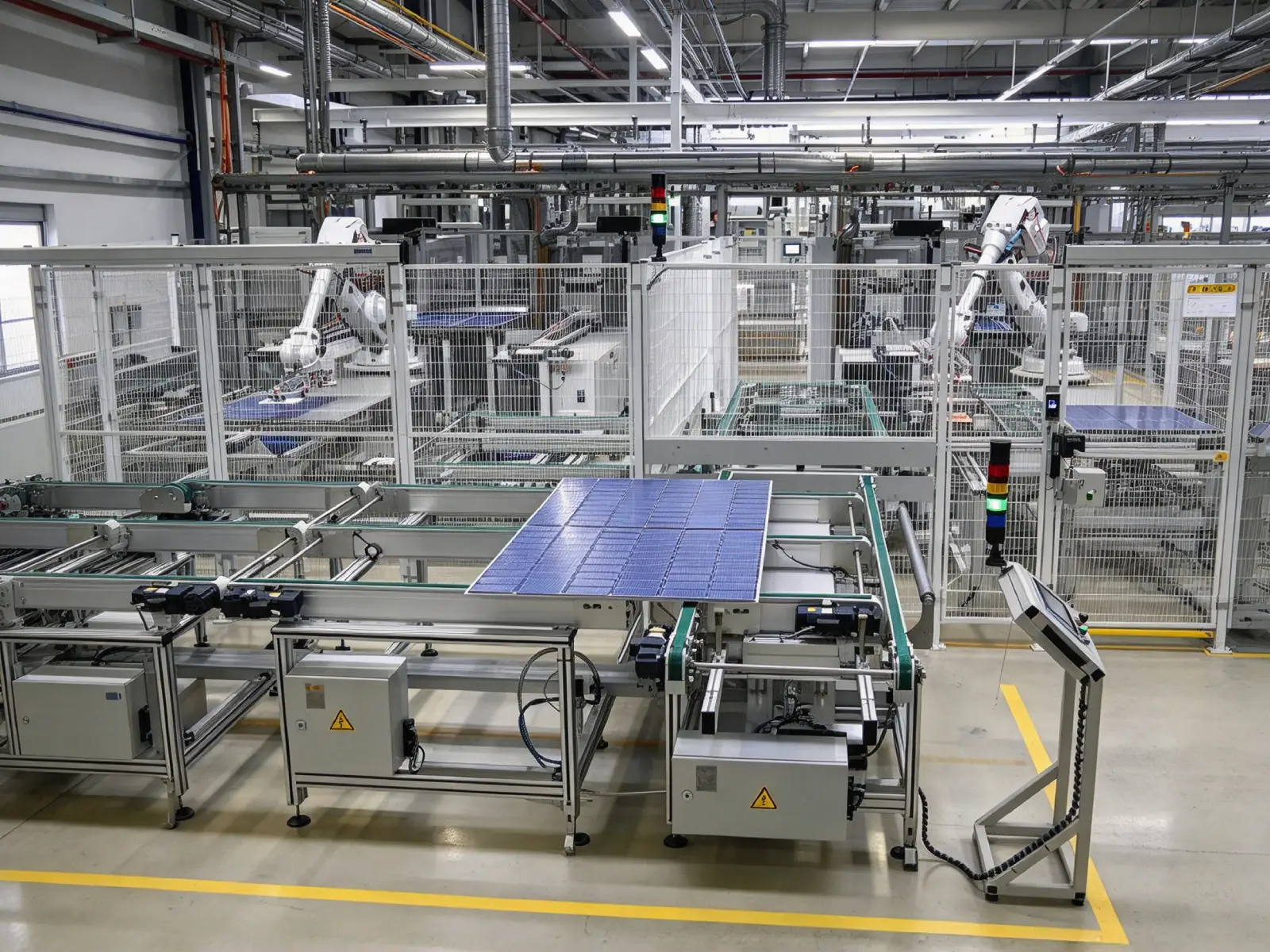
SMT lines – for circuit board assembly
-
Lamination machines – for panel encapsulation
-
EL testing stations – for micro-crack detection
-
Power testing equipment – for output verification
-
Assembly and packaging areas
-
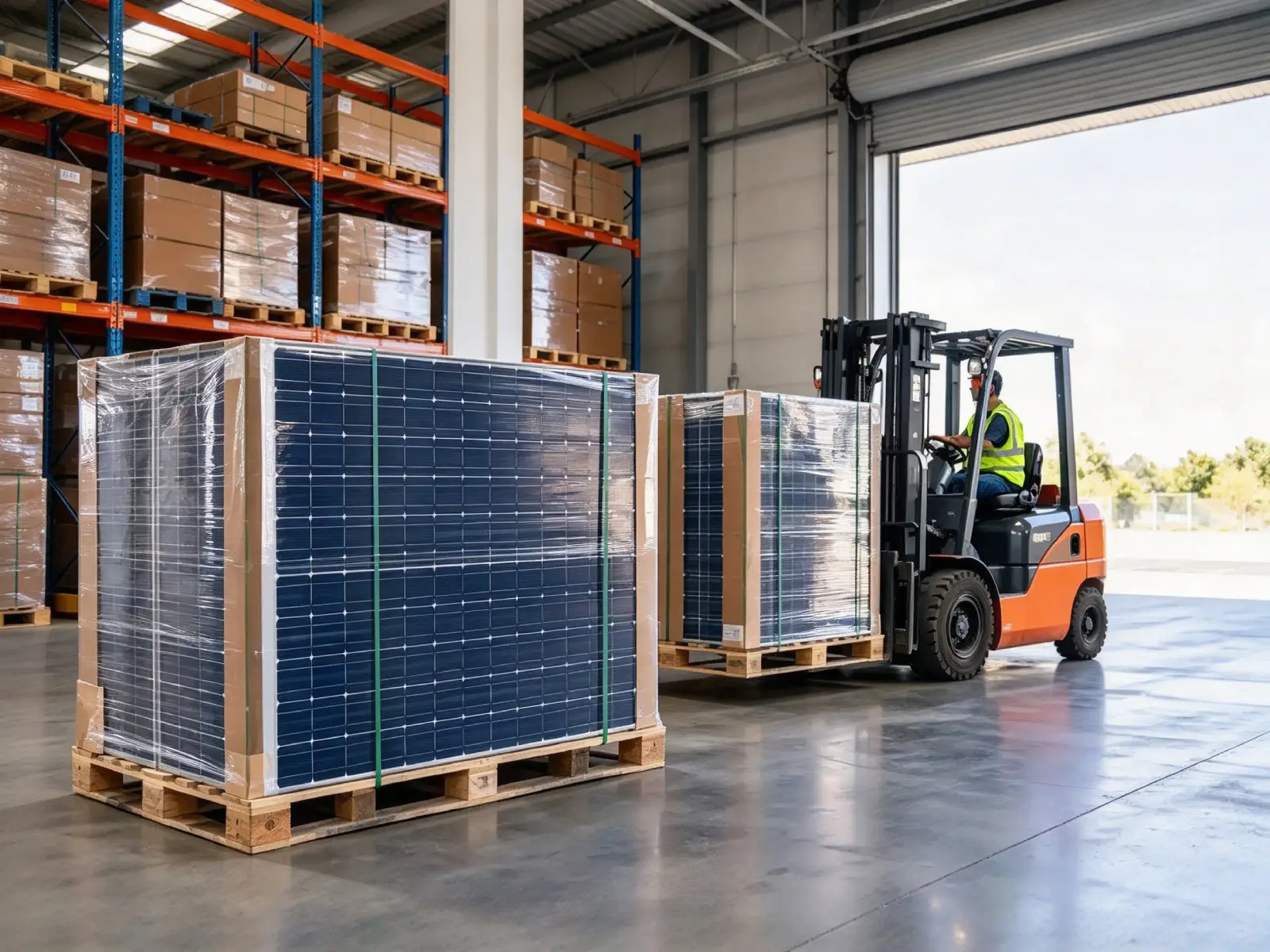
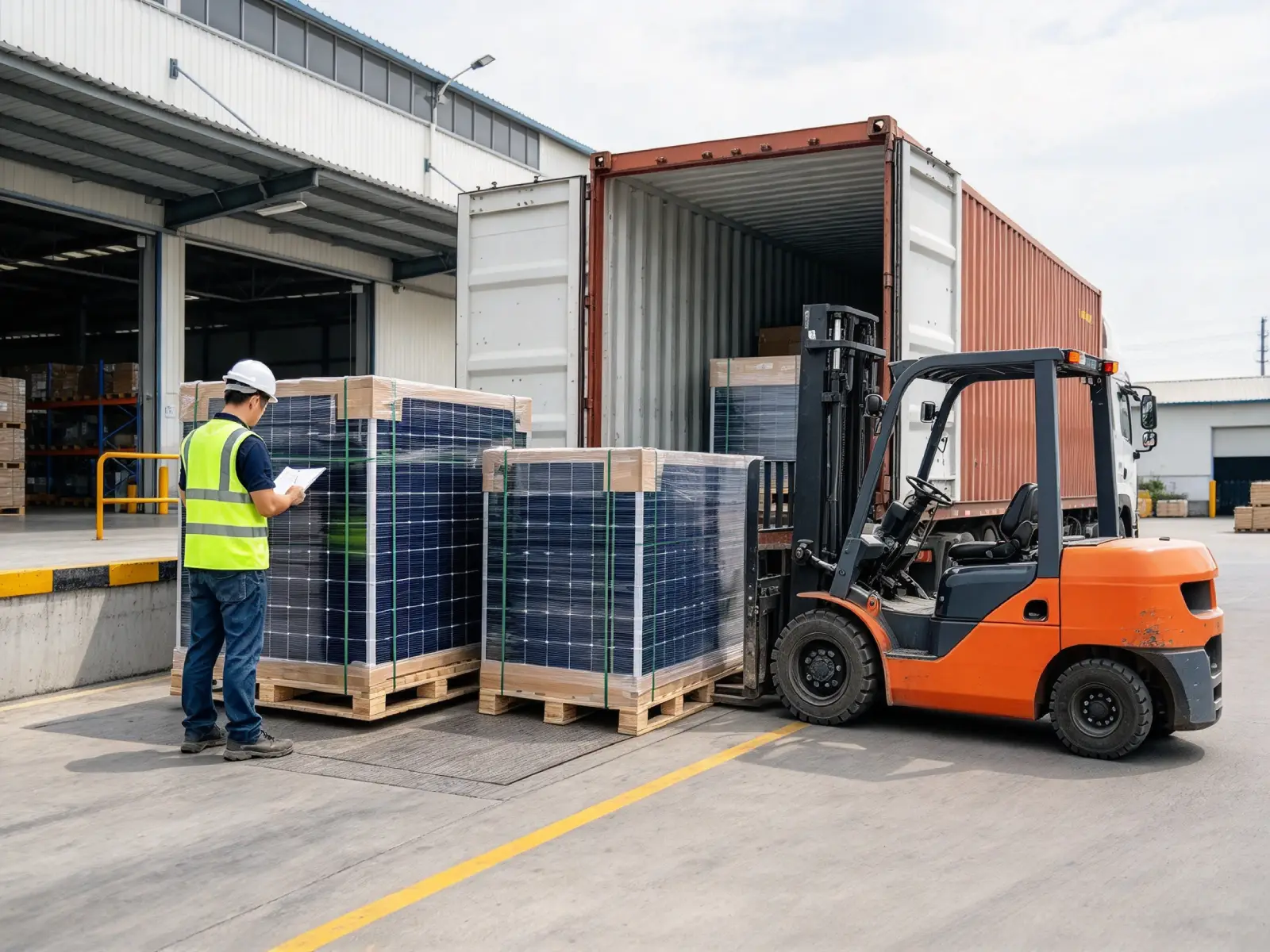
Warehouse and loading area
Ask the camera operator to show specific equipment up close. If the tour feels staged or rushed, ask to see other areas.
A real factory will usually welcome this. A trading company will often resist or delay.
Step 3: Verify Certifications
Request copies of:
-
ISO9001, ISO14001, ISO45001
-
CE, RoHS, FCC, TUV, PSE (depending on market)
-
Product test reports
Check:
-
Certificate number on the issuing body’s website
-
Company name and address match
-
Validity dates
-
Scope of certification (does it cover your product type?)
If the supplier cannot provide traceable certificates, that is a serious concern.
Step 4: Ask for Real-Time Production Photos or Videos
Even after a video tour, you can request real-time photos during production. For example:
-
A photo of your order being laminated
-
A photo of the EL test screen showing your batch
-
A photo of the packaging line with your logo
This confirms that your order is actually being produced, not outsourced.
Step 5: Start with a Small Trial Order
Before committing to a large order, place a small trial order. This tests:
-
Product quality
-
Packaging
-
Documentation
-
Communication
-
Delivery reliability
-
After-sales response
A trial order is a small investment that reveals a lot about how the supplier operates.
Key takeaway: Verification is a process, not a single check. Combine multiple methods for confidence.
4. Red Flags Checklist
Use this checklist when evaluating any portable solar panel supplier.
| Red Flag | Why It Matters |
|---|---|
| Refuses live video tour | Likely not a factory |
| Certificate name mismatch | Possible unauthorized use |
| Vague lead time answers | No control over production |
| Price far below market | Quality or material risk |
| No technical staff accessible | Limited engineering support |
| Pressure to pay full amount upfront | Financial risk |
| No traceability system | Quality issues hard to resolve |
| Product line too broad | May be trading company |
| No factory address provided | Cannot verify |
| Poor English documentation | May affect contracts and compliance |
If you see multiple red flags, consider other suppliers.
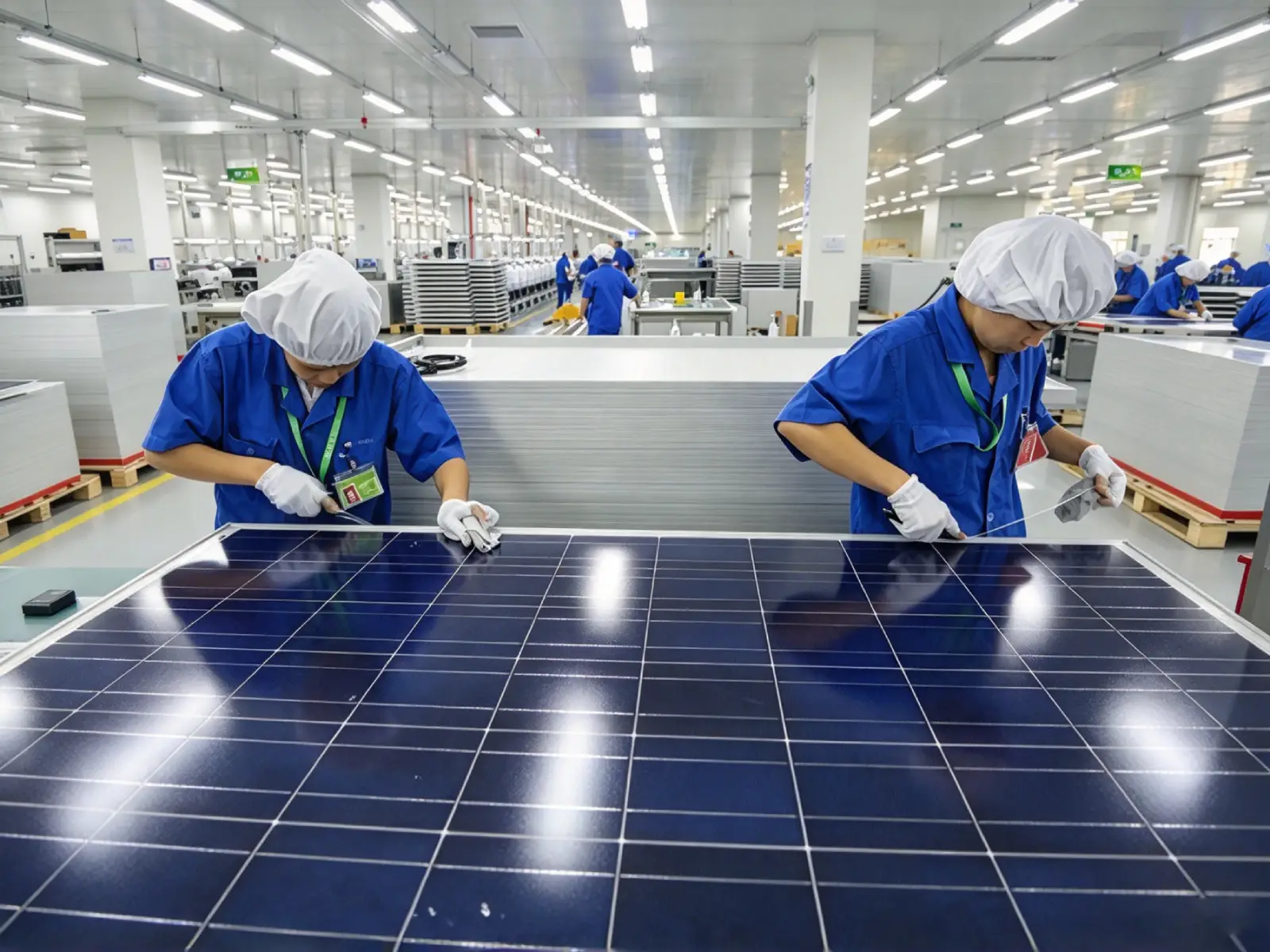
5. What a Real Portable Solar Panel Factory Looks Like
To make this concrete, here is what a genuine factory typically has.
5.1 Physical Infrastructure
-
Owned or long-term leased factory building
-
Dedicated production areas for different processes
-
Warehouse for raw materials and finished goods
-
Testing laboratory
-
Office space for sales, engineering, and management
5.2 Production Equipment
-
SMT lines for circuit boards
-
Lamination machines for panel encapsulation
-
Cell sorting and matching equipment
-
EL testers and power testers
-
Weathering test chambers
-
Packaging lines
5.3 Quality System
-
Incoming material inspection (IQC)
-
In-process quality control (IPQC)
-
Final quality control (FQC)
-
Full traceability from materials to finished goods
-
Documented procedures and work instructions
5.4 Engineering Team
-
In-house R&D engineers
-
Design and prototyping capability
-
DFM (Design for Manufacturing) support
-
BOM optimization
-
Custom structure and electrical design
5.5 Certifications and Compliance
-
Management system certifications
-
Product certifications for target markets
-
Test reports from accredited labs
-
Export compliance documentation
5.6 Global Support
-
Overseas warehouses or partners
-
Multi-language sales and support
-
Experience with international logistics
-
After-sales response process
A factory with these elements is more likely to support your business reliably over the long term.
6. Example: What to Look for in a Factory Tour
If you arrange a live video tour, here is a simple script you can follow.
Ask to see:
-
The factory entrance and building exterior
-
The raw material warehouse
-
The SMT line in operation
-
The lamination area
-
The EL testing station
-
The power testing station
-
The assembly and packaging line
-
The finished goods warehouse
-
The loading area
Ask questions like:
-
How many production lines do you have?
-
What is your monthly capacity?
-
How do you trace a finished panel back to its materials?
-
What happens if a batch fails testing?
-
Can you show me a recent export shipment?
The answers will tell you a lot about the factory’s maturity and confidence.
7. Conclusion
Finding a real portable solar panel factory takes effort. But the payoff is significant: better pricing, more reliable lead times, stronger quality control, and the ability to customize products for your market.
To summarize:
-
Understand the difference between factories and trading companies
-
Watch for the five common warning signs
-
Follow the five-step verification process
-
Use the red flags checklist
-
Know what a genuine factory looks like
Do not rush this process. A supplier that passes your verification today is more likely to be a reliable partner tomorrow.
If you are evaluating portable solar panel suppliers and want to see what a real factory looks like, Gaotu Innovation welcomes factory tours and video audits. With 18 years of OEM experience, 380 global patents, and production bases in China and Indonesia, we support brands, distributors, and project buyers worldwide. You can request a live factory tour, ask for samples, or download our product catalog to learn more.
Related Posts
How to Evaluate a Wholesale Solar Panel Distributor: B2B Sourcing Protocol
Article Summary: Choosing the right wholesale solar panel distributor is far more than chasing low…

20000 Swift Power Bank – Exclusive Wholesale Catalog
1. Market Pain Points & Sales Logic Battery anxiety is a widespread consumer problem that…

Plug-in solar panels: are they worth it?
Quick Answer: Plug-in solar panels are highly worthwhile for renters, apartment dwellers, and small households…
Leave a Reply