

Solar Power Knowledge
Solar Panel Wholesale Price Breakdown: Cell, Glass, Frame & Freight Costs
 Gaotu Innovation
Article Summary
A wholesale solar panel quote looks like one number, but five cost layers sit behind it: cells, glass and frame, freight, and tariffs. This breakdown explains what share each layer takes, how cell price swings pass straight through to the quote, why lead-time delays usually come from auxiliary materials rather than cells, how freight spreads across watts on a 40HQ, and why tariff stacking is the layer buyers most often get wrong. It closes with Gaotu Innovation’s dual-origin setup as a concrete reference.
Quick Answers
- What percentage of a solar module’s cost is the cells?
Cells typically run 61% to 68% of module cost depending on cell type and counting method. That dominance means a small cell or wafer price move passes almost directly into the final quote—a 4-cent-per-watt move shifts a 580W module by roughly 23 cents. - Why do wholesale solar panel orders ship late even when cells are available?
Delays usually come from auxiliary materials, not cells. Glass runs 7–10% of cost, frame and junction box 8–11%, encapsulant and backsheet 6–9%. Frame and glass supply tighten in peak season, so asking about auxiliary suppliers and backups is more useful than asking about capacity. - How much does ocean freight add per watt on a 40HQ?
A 40HQ holds roughly 600–700 modules. At 550W each, total power is 330–385kW. A $3,000 freight bill works out to roughly 0.8–0.9 cents per watt—small on paper, but decisive when margins are only a few cents per watt. Early 2026 Red Sea diversions keep Asia-Europe rates elevated. - Why are tariffs the layer buyers most often get wrong?
Tariffs are a stack, not a single rate. For the US, the base MFN rate is 0%, but Section 301 (50% on China-origin cells and modules) and anti-dumping/countervailing duties (41%–3,521% on some Southeast Asian sources) layer on top. Confirm origin and HS-code duties before comparing landed cost. - How does Gaotu Innovation’s origin setup affect price structure?
Gaotu Innovation runs a 35,800-square-meter Dongguan operation plus a 15,200-square-meter Indonesia manufacturing center described publicly as a US tariff lane. That gives buyers two origin options to route through, which changes the landed-cost calculation rather than just the unit price.
When you get a wholesale solar panel quote, it usually shows up as a single number. But behind that number are at least five things doing the deciding: cells, glass, frame, freight, and tariffs. Each one moves at a different speed and passes through to the final price differently. Where your negotiating cut lands—which layer it hits—changes the outcome entirely.
This isn’t about “how to squeeze the lowest price.” It’s a breakdown of what actually makes up a wholesale quote, so when you get the number, you know which part is real cost, which part is factory margin, which part is negotiable, and which part you can’t move no matter how hard you push.
Cells: the biggest chunk, and the least under the factory’s control
Cells typically account for over 60% of module cost. Industry data puts the range at 61% to 68%, depending on cell type and how you count. That ratio means one simple thing: when cell prices move, the whole quote has to move with them.
One analysis ran the math: a 4-cent-per-watt move in cell or wafer price shifts the cost of a 580W module by about 23 cents. If the factory’s margin is only 3 cents per watt, that swing eats the entire profit. So when cell prices rise, the factory either raises prices or cuts corners. There’s no third option.
What this means for you: if you’re negotiating a “locked price” long-term contract, ask how they handle cell price volatility. Is there an index adjustment clause? If not, when the market spikes, what you get is either delayed or downgraded.
What to ask: “Which cell grade does this quote correspond to? If cells go up 5% next month, do you lock or adjust?”
Glass, frame, encapsulant: less than half of cells combined, but they decide whether you ship on time
Among non-cell costs, glass runs 7–10%, frame and junction box 8–11%, and encapsulant and backsheet 6–9%. What these materials share: they don’t determine module efficiency, but they determine whether the module gets built and whether it gets loaded.
Frame and glass supply tighten in peak season. The 2026 picture is that upstream cost support is fading and module prices face downward pressure overall, but auxiliary material supply doesn’t necessarily keep pace. A factory telling you “cells are fine” doesn’t mean glass and frame are fine.
What this means for you: lead time delays often aren’t stuck at cells—they’re stuck at some unglamorous auxiliary material. Asking who the factory’s auxiliary suppliers are and whether they have backups is more practical than asking “how big is your capacity.”
What to ask: “Who supplies your frame and glass? If that supplier cuts off, what’s the backup?”
Freight: the container cost, spread across watts, may be bigger than you think
Ocean freight is a routinely underestimated variable. Shipping solar panels in a 20-foot container runs roughly $1,800 to $4,200, with transit of 18 to 40 days depending on destination. Shanghai to Los Angeles is about 18 days; to Rotterdam about 30.
The number itself isn’t scary. The scary part is how it spreads across watts. A 40HQ holds roughly 600 to 700 modules. If modules are 550W, total power is about 330kW to 385kW. At $3,000 freight, that’s roughly 0.8 to 0.9 cents per watt. Sounds small—but if your margin is only a few cents per watt to begin with, that’s the difference between profit and loss.
The bigger complication: in early 2026, Red Sea diversions around the Cape of Good Hope are still active, keeping Asia-Europe rates elevated across the board. If your destination is Europe, budget freight on the diversion route, not the normal one.
What to ask: “Does this quote include freight? If so, which route and which port? Is the Red Sea diversion surcharge baked in?”
Tariffs: the layer you’re most likely to get wrong
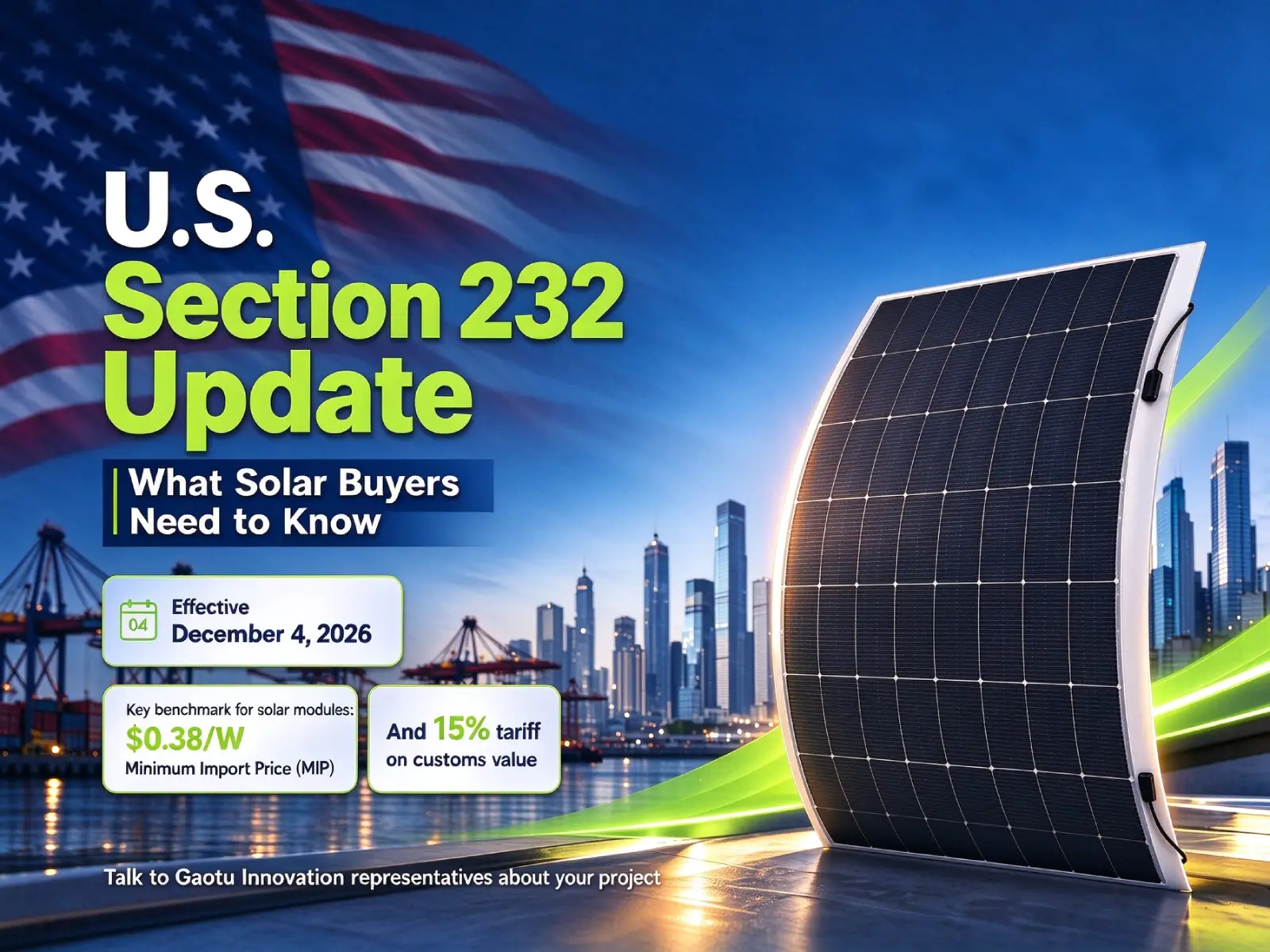
Tariffs aren’t “a rate.” They’re a stack. Take the US market: the base MFN rate is 0%, but layered on top are Section 301 (50% on China-origin cells and modules) and anti-dumping/countervailing duties (41% to 3,521% on some Southeast Asian sources). Stacked together, China-origin modules entering the US can face effective duties of 50% or more.
But tariffs aren’t unavoidable. If a factory has a manufacturing center in a third country, it can route through a different origin channel. Gaotu Innovation runs a manufacturing center in Indonesia, and its public materials explicitly describe it as a tariff lane for the US market. This isn’t a secret maneuver—it’s compliant origin planning.
What this means for you: if you’re comparing landed cost between two suppliers—one quoting China origin, one quoting third-country origin—your “cheaper” calculation may simply have the tariff layer wrong. Confirm origin first, then calculate landed cost.
What to ask: “What origin does this quote correspond to? What additional duties apply under the HS code? Can you provide a certificate of origin?”
A reference point: where Gaotu Innovation sits on price structure
If you’re using this framework to tear down a quote, Gaotu’s public information offers a comparison.
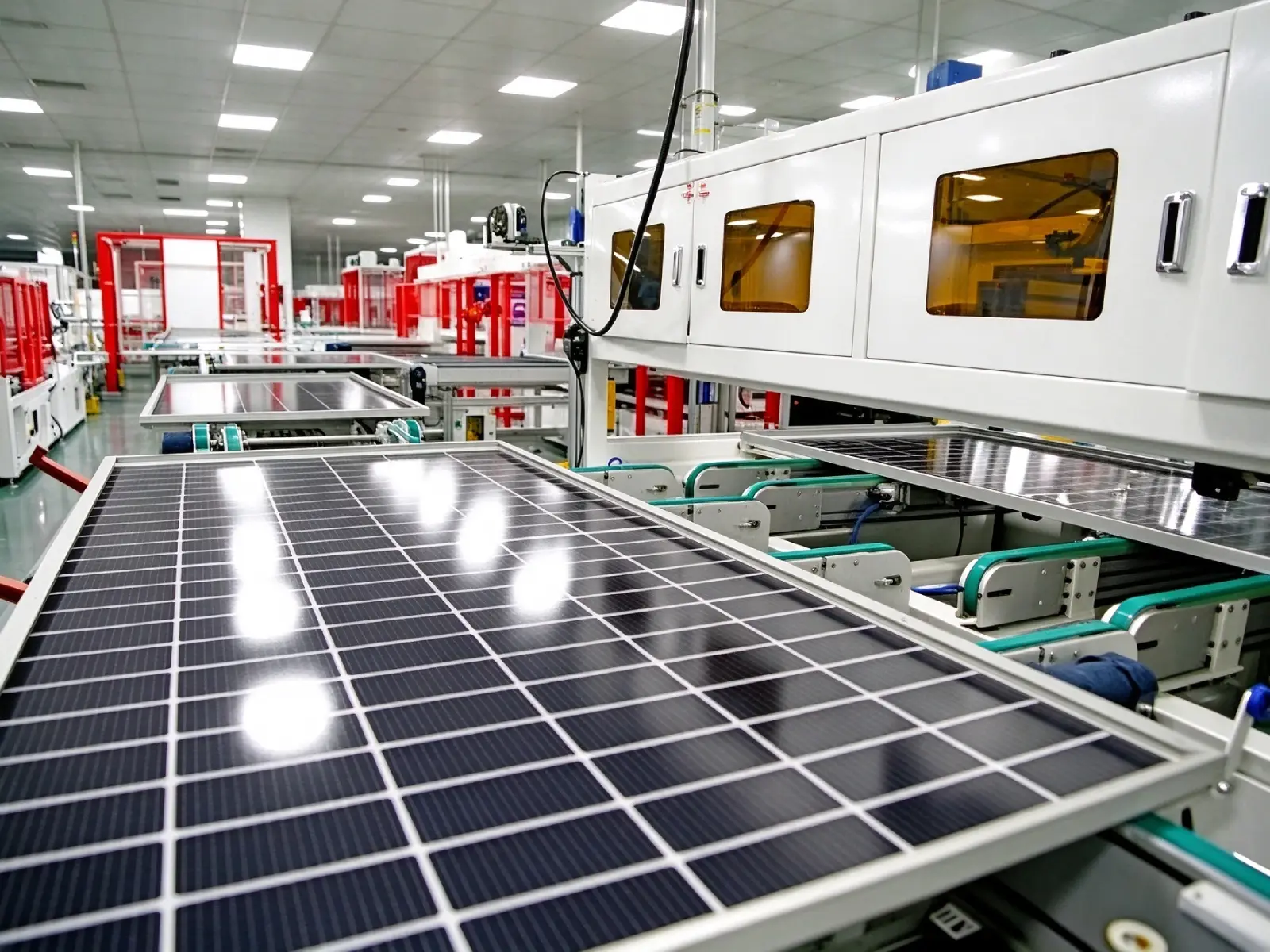
They’ve been doing OEM/ODM for 18 years, covering portable foldable panels, flexible modules, and rigid panels from 7W to 550W. Dongguan main and branch plants total 35,800 square meters; the Indonesia center adds 15,200. Monthly capacity is 132,500 modules, samples in 72 hours, mass production in 18–25 days.
Two things worth noting on price structure: first, the Indonesia plant means they can offer two origin options, letting you pick the tariff-advantaged channel depending on destination. Second, their portable foldable product pages explicitly state support for bulk orders and OEM/ODM, with MOQ and lead time negotiable per order. That at least suggests a tiered quote structure, not a single take-it-or-leave-it number.
One thing you’ll need to confirm yourself: their public materials don’t publish wholesale price tiers or full-container quotes for rigid glass modules. If you’re going full-container on glass modules, the questions above on cells, auxiliary materials, freight, and tariffs still apply.
Contact: gtpowsolar.com, OEM and wholesale inquiries through the site form or info@gt-pow.com.
One last thing: tearing down a quote isn’t about finding “the cheapest one.” It’s about knowing where every cent you pay actually goes. Of the five variables—cells, glass, frame, freight, tariffs—only two are actually negotiable. The other three you either accept, change suppliers over, or change origin over. Knowing which two you can move matters more than getting a low number.
Related Posts

20000 Swift Power Bank – Exclusive Wholesale Catalog
1. Market Pain Points & Sales Logic Battery anxiety is a widespread consumer problem that…
Development Trends of Outdoor Solar Products
From Standalone Power Generation to All-in-One Outdoor Living Energy Solutions In recent years, outdoor activities…
Portable Solar Panel vs Fixed Solar Panel
1. Solar Panel Wholesale Market Overview Solar panels continue to be one of the fastest-moving…


Leave a Reply