

Solar Power Knowledge
Solar Panel MOQ and Price Tiers: What Buyers Need to Know
 gaotu
gaotu
Core Summary
Quick Answers
What’s the typical MOQ for wholesale solar panels? Standard models: 10-20 panels. Custom or OEM orders: 50-100 panels minimum. Full container loads: 300-600 panels depending on wattage. Always confirm MOQ before requesting pricing.
Why do price tiers exist? Price tiers reflect production economics. Small orders require setup, handling, and shipping costs that don’t scale down. Large orders let manufacturers run continuous production lines, amortize tooling, and optimize freight—so they pass some of that savings back.
What’s the price difference between tiers? Depending on the manufacturer and model, the gap between the smallest and largest tier can be 8-15%. For a 10kW order, that’s a few hundred dollars. For a 100kW order, it’s several thousand.
Is a lower price per watt always better? No. A lower unit price can mean older inventory, lower-grade cells, missing certifications, or a supplier who won’t be around for warranty claims. Compare landed cost and total risk, not just price per watt.
What’s the minimum for OEM or custom panels? Typically 50-100 panels for custom labeling or packaging. Full structural customization—different frame, junction box, or cell layout—usually starts at 100-200 panels.
In Step 3 of our [Wholesale Solar Panels: A Complete Procurement Guide for Distributors and EPCs], we said the biggest mistake procurement teams make is comparing prices that aren’t apples-to-apples. We said to convert everything to landed cost, then compare.
This article is the deep dive on that step. Because understanding landed cost starts with understanding how MOQ and price tiers actually work—and how they shape the number you see on the quote.
So let’s talk about money. Specifically, how to make sure you’re not leaving it on the table because you didn’t understand the mechanics behind the quote.
What MOQ Really Means
MOQ stands for Minimum Order Quantity. On paper, it’s simple: the smallest order a supplier will accept.
In practice, it’s a signal about how that supplier operates.
Low MOQ (10-20 panels) usually means the supplier is a trading company or distributor with existing inventory. They’re not running a production line for your order—they’re pulling from stock. That’s not necessarily bad. If you need a small batch quickly, a low-MOQ supplier can get you panels in days instead of weeks.
High MOQ (50-100+ panels) usually means the supplier is a manufacturer running a production batch. They need enough volume to justify setting up the line, and they’re not interested in small one-off orders. If you’re an EPC with a project pipeline, this is often the better relationship to build.
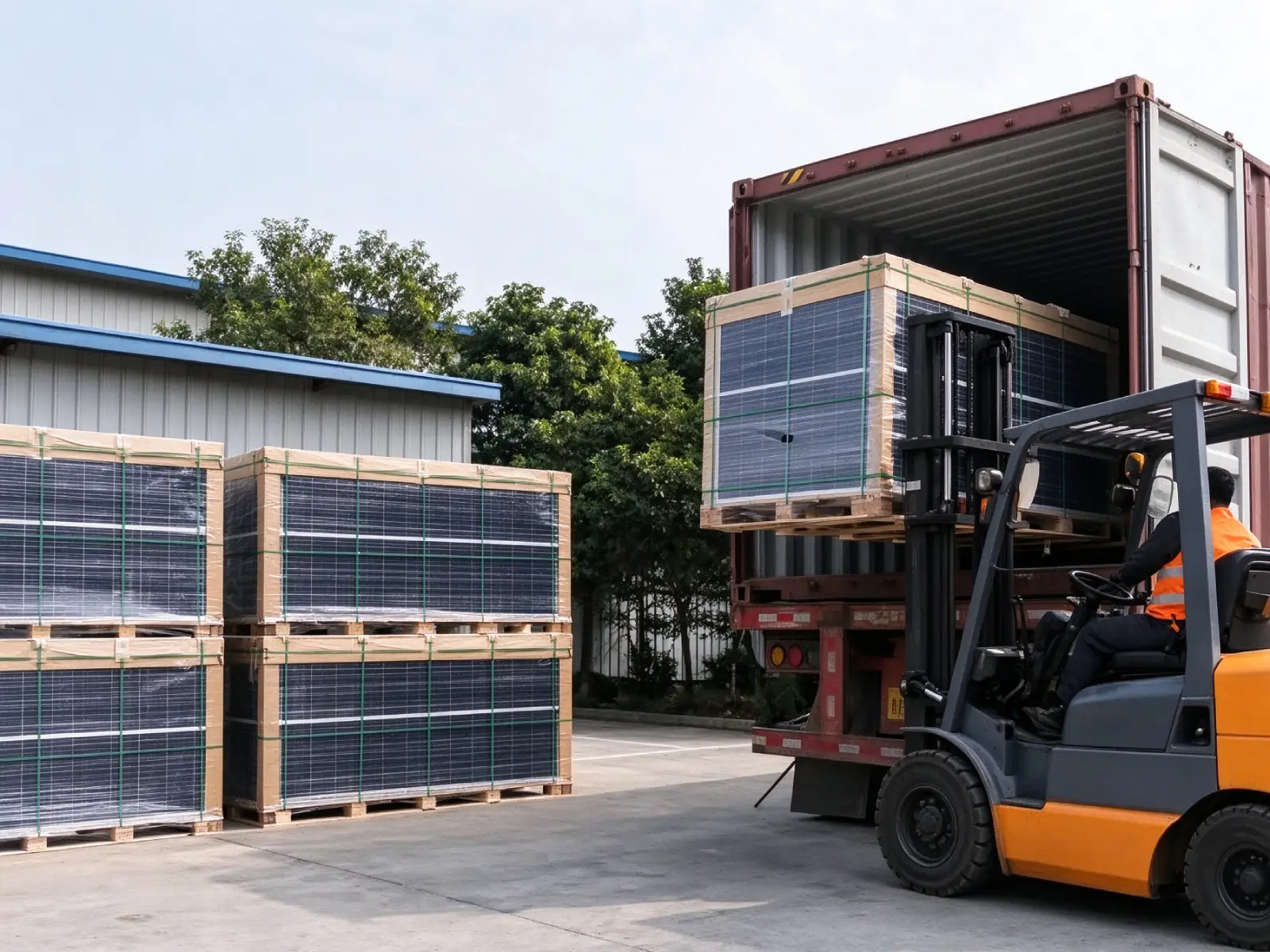
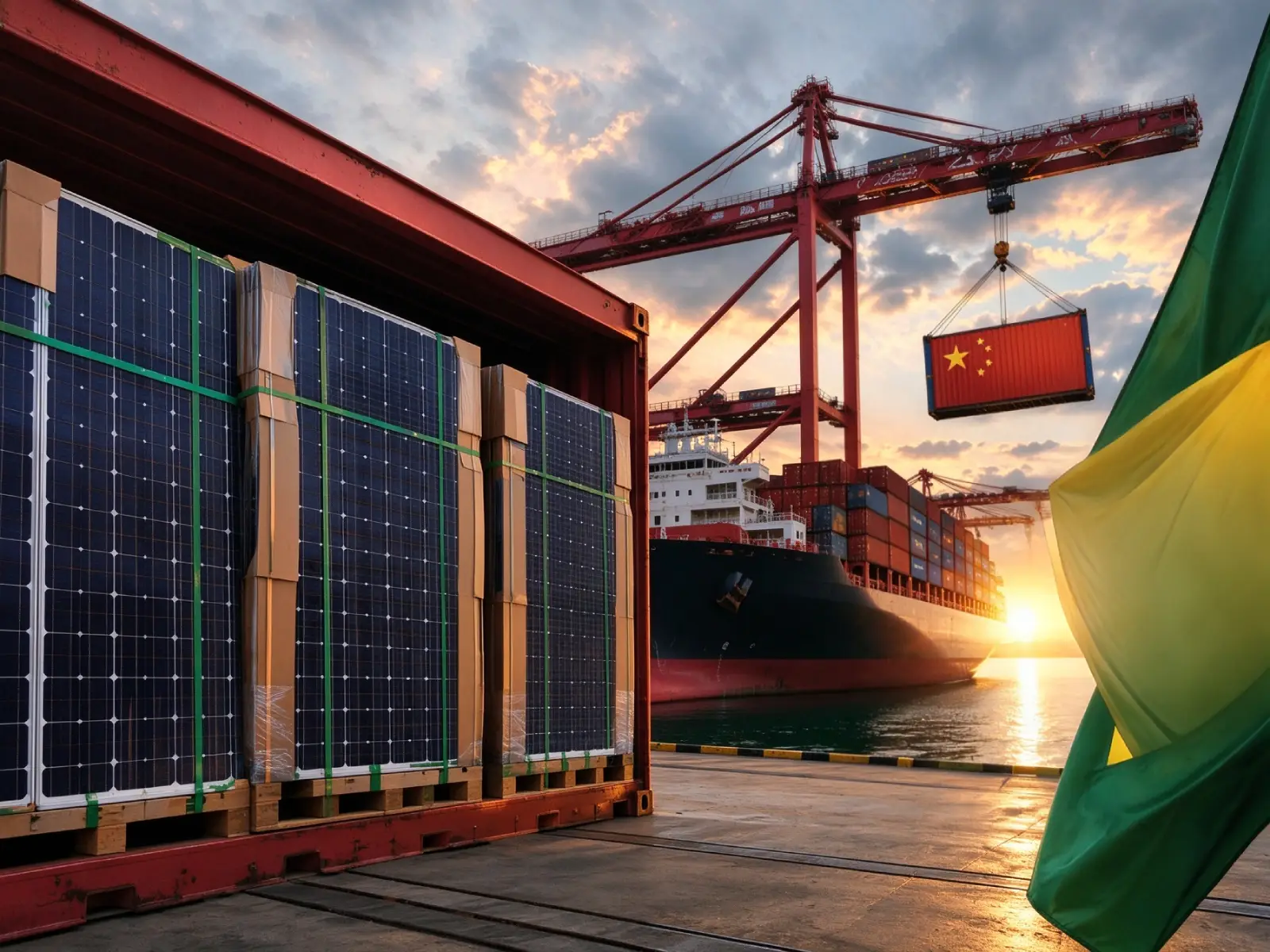
Container MOQ (300-600 panels) is the point where freight economics kick in. A full container load (FCL) costs significantly less per panel to ship than less-than-container load (LCL). If your order can fill a container, your landed cost drops—not because the panels are cheaper, but because the shipping is.
The mistake most buyers make: they treat MOQ as a hurdle to clear, not as a signal about who they’re dealing with. A supplier with a 5-panel MOQ is telling you something. So is a supplier with a 100-panel MOQ.
Why Price Tiers Exist
Price tiers aren’t arbitrary. They’re based on how manufacturing and logistics actually work.
Setup costs. Every production run requires setup—loading materials, calibrating equipment, testing the first units. That cost is fixed. Spread it across 10 panels and it’s significant per panel. Spread it across 1,000 panels and it’s negligible.
Material procurement. Manufacturers buy cells, glass, frames, and junction boxes in bulk. Larger orders let them negotiate better material pricing, and they pass some of that savings on.
Production efficiency. A continuous production run is more efficient than a short one. Machines stay calibrated, workers stay in rhythm, and quality consistency improves. Larger orders get better production economics.
Freight and logistics. This is often the biggest factor. Shipping 20 panels costs almost as much per panel as shipping 200. Shipping 600 panels in a full container costs dramatically less per panel than shipping them in six separate LCL shipments.
Payment terms. Larger orders often come with better payment terms—lower deposits, longer payment windows, or credit terms. That’s a form of price reduction too, just not one you see on the invoice.
The 2026 Price Environment
Here’s where things get interesting—and where a lot of buyers get caught off guard.
TOPCon is now mainstream. As of 2026, TOPCon modules have largely displaced PERC as the dominant technology for new projects. Mainstream TOPCon quotes have ranged from €0.135-€0.145/W, though prices have been volatile.
PERC is now the value option. PERC modules are still available and still work fine for many applications. They’re typically 5-10% cheaper than TOPCon. If your project doesn’t need the extra efficiency, PERC can be a sensible choice. But availability is shrinking as manufacturers shift lines to TOPCon.
The US market has a new floor. Starting December 2026, the US will impose a minimum import price (MIP) on imported solar modules at $0.38/W, plus a 15% Section 232 tariff. This means landed cost in the US has a hard floor. Quotes below that price are either old inventory or will have customs issues.
Freight rates are a wildcard. Ocean freight has been volatile. A rate that made sense in January might be 30% higher by June. When you’re comparing quotes, confirm whether the price is Ex-works, FOB, or DDP—and whether freight is locked in or floating.
The Five Mistakes That Cost Buyers Money
Mistake 1: Negotiating on unit price alone
The price per watt is the starting point, not the whole picture. What matters is landed cost—the total you pay to get panels to your warehouse, customs-cleared and ready to install. This is exactly what we flagged in Step 3 of the pillar guide.
Two quotes at the same unit price can have very different landed costs depending on Incoterms, freight rates, and tariff treatment.
Mistake 2: Assuming higher volume always means better price
Price tiers exist, but they’re not infinite. At some point, the marginal savings flatten out. And if you’re ordering more than you can store or sell in a reasonable timeframe, you’re tying up cash and paying storage costs for no benefit.
Mistake 3: Ignoring payment terms
A quote at $0.14/W with 50% deposit and 30-day balance is not the same as a quote at $0.145/W with 20% deposit and 60-day terms. The second quote costs slightly more per watt but preserves your cash flow. For a growing distributor, that can be worth more than the price difference.
Mistake 4: Not asking what’s included
Does the price include mounting hardware? Cables? Junction box upgrades? Packaging for ocean freight? These add-ons can swing your landed cost by 5-10%. Ask for a line-item breakdown, not just a single number. This connects back to Step 3’s point about comparing like-for-like.
Mistake 5: Comparing different generations of product
A PERC module at $0.12/W and a TOPCon module at $0.14/W are not the same product. Compare same-generation, same-power-class modules. Otherwise you’re not comparing prices—you’re comparing apples to oranges.
How to Negotiate Better
Ask for tiered pricing upfront. Don’t ask “what’s your best price?” Ask “what are your price tiers at 50, 100, 300, and 500 panels?” This tells you where the breaks are and lets you plan your order size accordingly.
Bundle orders if you can. If you’re ordering multiple SKUs—say, 100 panels of one model and 50 of another—ask whether combining them into one production run gets you a better tier. Sometimes it does.
Lock in freight separately. If you can negotiate the panel price and the freight price separately, you have more flexibility. A supplier who bundles freight into the unit price may not give you the best shipping rate.
Ask about payment terms as a negotiation lever. If the supplier won’t move on price, ask about payment terms. A 10% reduction in deposit or an extra 30 days on the balance is a real financial benefit.
Check what happens at the next tier. If you’re 20 panels away from the next price break, ask whether it’s worth increasing your order. Sometimes the savings at the next tier more than cover the cost of the extra panels—especially if you’ll need them anyway.
What to Ask Before You Order
- What’s your MOQ for standard models and for OEM/custom orders?
- Can you send me your full price tier structure?
- Is this quote Ex-works, FOB, or DDP?
- What’s included in the price, and what’s extra?
- What are your payment terms, and are they negotiable?
- How long is this price valid?
- What’s the lead time for each tier?
A supplier who answers all seven clearly is worth talking to. One who deflects or gives vague answers is telling you something about how they’ll handle your order.
Final Thought
MOQ and price tiers aren’t obstacles. They’re information. They tell you how a supplier operates, where their cost structure sits, and what kind of relationship they want to have with you.
The buyers who get the best deals aren’t the ones who negotiate hardest. They’re the ones who understand the economics, ask the right questions, and structure their orders to hit the right tier.
This is the pricing layer of the procurement framework we laid out in the Wholesale Solar Panels: A Complete Procurement Guide for Distributors and EPCs. Get this right, and Step 3 of that guide—comparing landed cost—becomes a lot easier.
Know the numbers. Ask the questions. Then negotiate.
About Gaotu Innovation
Gaotu Innovation (Shenzhen) New Energy Group is a solar manufacturer with 18 years of OEM/ODM experience. We operate three manufacturing centers in Dongguan and Indonesia, with over 1 GW annual capacity and 380 global patents. Our products carry IEC, UL, CE, TÜV, and RoHS certifications, and we serve distributors and EPCs across North America, Europe, Japan, Korea, and Australia.
Have a specific procurement scenario? Reach us at info@gt-pow.com or visit www.gtpowsolar.com
Related Posts
Folding Solar Panel Manufacturer Recommendations (Direct Factory Supply / Customization / Bulk Wholesale)
Folding solar panel manufacturer options for bulk procurement, custom OEM/ODM and direct‑from‑factory orders are critical for…
Custom Logo Portable Solar Panel: How Distributors Build Branded Solar Products
Article Summary This guide is for distributors who are tired of selling the same generic…
Canton Fair Live | Huge Crowds! Maodi’s Portable Solar‑Storage Products Are a Smash Hit
Heading to Guangzhou for China’s Premier Trade Show As autumn sets in, all eyes turn…
Leave a Reply