

Solar Power Knowledge
Wholesale Solar Panels: A Complete Procurement Guide for Distributors and EPCs
 gaotu
gaotuCore Summary
Buying wholesale solar panels is a risk management exercise, not a pricing exercise. The cheapest quote often costs more after freight, tariffs, delays, and warranty disputes. This guide covers the six decisions that separate smooth procurement from expensive mistakes: knowing your buyer profile, verifying market-specific certifications, comparing landed cost instead of unit price, working backwards from construction milestones, confirming warranty enforceability, and running sample verification before committing to a container. The goal isn’t the lowest price—it’s the lowest total cost of ownership with the highest execution certainty.
Quick Answers
What’s the minimum order for wholesale solar panels?
Standard models typically start at 10 panels. OEM or custom orders usually require 50-100 panels minimum. Always confirm MOQ before requesting pricing.
Which certifications do I actually need?
IEC is the baseline. UL is mandatory for North American projects. SASO is required for Saudi Arabia. Certifications are market-specific—and they apply to specific models, not just the brand.
How do I compare quotes fairly?
Convert everything to landed cost (DDP). Ex-works prices exclude freight, insurance, tariffs, and port fees. A cheap Ex-works quote can become the most expensive option after logistics.
How long does shipping take from China?
Ocean freight to US West Coast: 2-4 weeks. Total logistics cycle including customs and inland transport: 5-8 weeks. Peak season (Chinese New Year) runs longer.
What’s the biggest procurement mistake?
Comparing prices without checking what’s included. The second biggest: not verifying that the specific model you’re buying has the certification you need.
When should I place my order?
Work backwards from your construction start date. Don’t ask suppliers for their lead time and accept it—calculate your latest acceptable delivery date and reverse-engineer the order timeline.
If you’re sourcing solar panels for a project, or you’re a distributor looking to restock, this guide is for you.
We’re not going to talk about “how solar is saving the planet” or “the bright future of renewable energy.” Let’s talk about what actually matters: how to buy the right panels, how to avoid getting burned, and how to make procurement decisions that hold up to financial scrutiny.
The Uncomfortable Truth About Wholesale Solar Panels
Most procurement disasters don’t happen because you paid too much.
They happen because the panels arrived before the project was ready to receive them. Or the installation season started and your container was still stuck at port. Or two years after installation, the manufacturer is nowhere to be found.
Buying wholesale solar panels looks like a pricing exercise. It’s actually a risk management exercise. Behind every cheap quote, there might be hidden traps: delivery delays, incomplete certifications, warranties that can’t be enforced. A $0.02/W price advantage can become a rounding error on your project’s penalty clause if it means six weeks of delay.
So here’s the core logic of this guide: Total cost of ownership, not unit price.
Step 1: Know Who You Are First
Different buyers have completely different procurement logic. Before you look at quotes, figure out which category you fall into:
Distributors
Your priority is inventory turnover and market fit. You need: broad product lines, packaging suitable for retail or small-batch shipping, and a supplier who can reliably restock. You don’t need the highest-efficiency panels—you need panels that sell.
EPC Contractors
Your priority is delivery control and technical matching. You need: accurate spec sheets, complete certifications, and arrival times that align with construction milestones. Your biggest fear: the panels arrive, and the installation crew discovers they don’t fit the mounting system.
Project Developers
Your priority is financing feasibility and long-term returns. Banks look at: whether the modules are Tier 1, whether warranty terms are enforceable, and whether degradation curves have third-party backing. You’re not buying panels—you’re buying 25 years of cash flow.
Step 2: Certifications Are Not Just Paperwork—They’re Your Entry Ticket
Here’s something easily overlooked: certifications are market-specific.
IEC certification is the baseline. But if you’re doing North American projects, UL certification is non-negotiable. Without UL, projects can’t be grid-connected, can’t be insured, can’t pass inspection. This isn’t “nice to have”—it’s “must have.”
The Saudi market has its own SASO standards, requiring modules to comply with SASO IEC 61215 and 61730 series. If you’re working on Middle East projects, confirm your supplier has these certifications in advance.
Here’s a common mistake: the brand has certification doesn’t mean the specific model you’re buying has certification. The same manufacturer may have different certification status for different models. Always get the certificate for the specific model, not the company’s “qualifications.”
→ For a detailed checklist on verifying supplier certifications, see our guide to [How to Verify Solar Panel Supplier Certifications: UL, IEC, TÜV Checklist].
Step 3: The Right Way to Compare Prices
The biggest mistake procurement teams make is comparing prices that aren’t apples-to-apples.
Ex-works prices look cheapest, but you’re responsible for freight, insurance, tariffs, and port fees. DDP prices look more expensive, but they’re door-to-door—you don’t need to manage the middle.
The correct approach: convert everything to landed cost, then compare.
The 2026 pricing environment has some new dynamics worth watching. TOPCon module prices experienced significant volatility in the first half of the year, with mainstream quotes ranging from €0.135-€0.145/W. But more importantly, there’s a new policy in the US market: starting December 2026, the US will impose a minimum import price (MIP) on imported solar modules at $0.38/W, plus a 15% Section 232 tariff.
What does this mean? If you’re selling into the US market, your landed cost will have a hard floor. Quotes below this price are either old inventory or will have customs issues.
→ For a deeper breakdown of price tiers and MOQ structures, read [Solar Panel MOQ and Price Tiers: What Buyers Need to Know].
Step 4: Delivery Management Is About Working Backwards
Don’t ask suppliers “what’s your lead time” and then passively accept the answer.
What you should do: work backwards from your project’s construction milestones to determine the latest date you can receive goods. Then count backwards: how long does customs clearance take, how long does ocean freight take, how long does factory production take, how far in advance do you need to place the order.
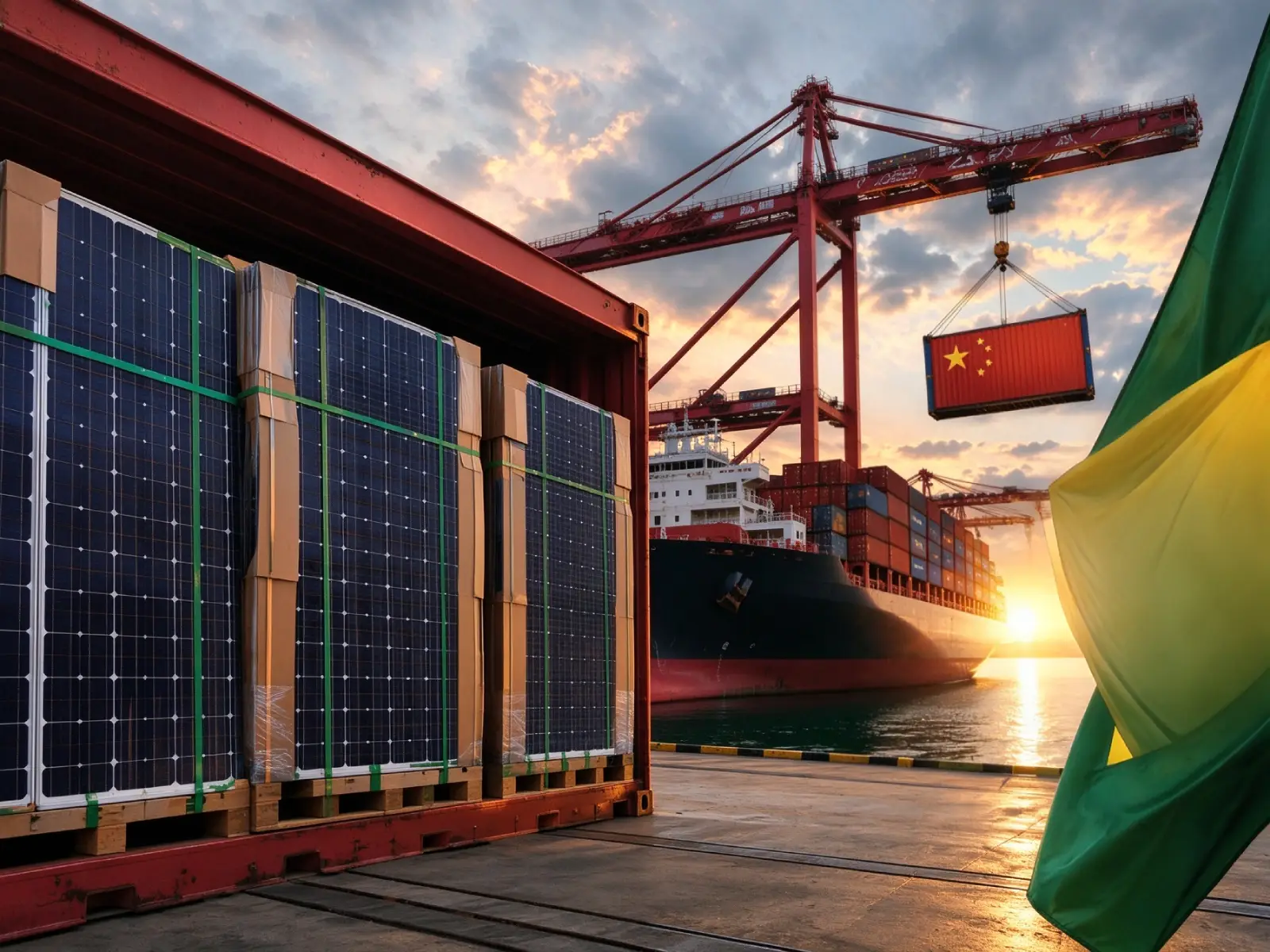
A reference point: ocean freight from China to US West Coast ports takes about 2-4 weeks. Add customs clearance and inland transport, and the total logistics cycle can reach 5-8 weeks. Peak season (like around Chinese New Year) can be longer.
Key reminder: arriving too early is also a problem. Panels need to be stored in a dry, flat area. If the project site isn’t ready, early arrivals face damage risk. Delivery timing should align with your construction schedule, not be as early as possible.
→ For port-specific lead times and shipping considerations, see Shipping and Lead Times for Wholesale Solar Panels from China.
Step 5: Warranty Terms Only Matter If They’re Enforceable
A 25-year warranty sounds great, but you need to ask some hard questions:
Who handles claims? Does the manufacturer have a service team in your region? Or do you need to ship panels back to China?
What’s the claims process? Do you need third-party inspection reports? Who pays for inspection?
Is the warranty backed by insurance? If the manufacturer goes bankrupt in ten years, who honors your warranty?
Asking these questions before signing the contract is much easier than arguing about them after problems arise.
→ For risk mitigation tactics including escrow, samples, and contract terms, see our upcoming guide on Solar Panel Procurement Risk Mitigation.
Step 6: Sample Verification Is Non-Negotiable
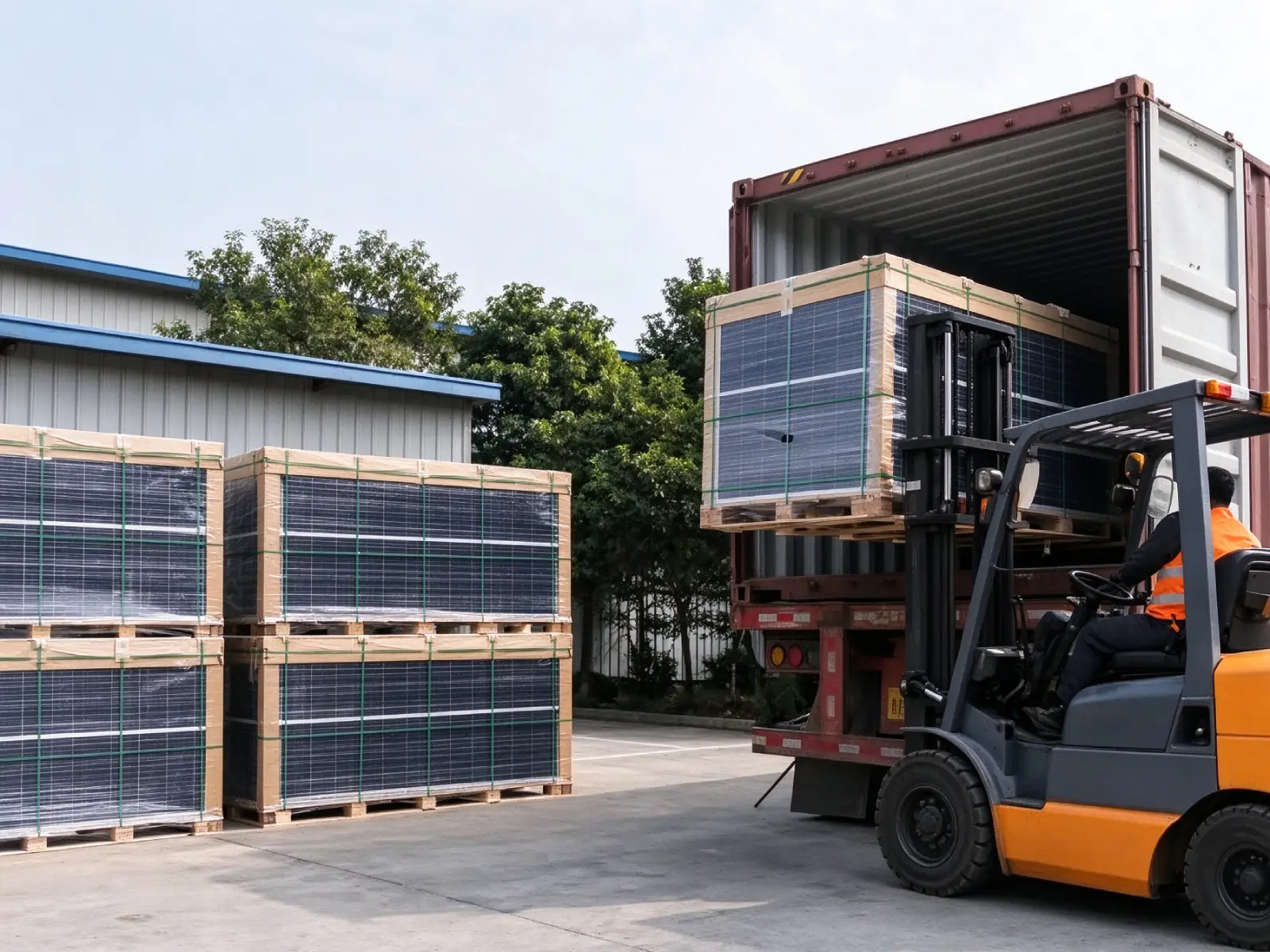
For new suppliers, no matter how attractive the quote, go through a sample verification process:
-
Confirm the specific model’s datasheet
-
Verify the certification certificate matches the model number
-
Check packaging meets international shipping standards
-
If possible, arrange third-party testing
The time and cost of this step is negligible compared to receiving an entire container of non-compliant product.
→ For a full supplier evaluation framework, read Supplier Evaluation Framework: On-Time Delivery, Response Time, Reorder Rate.
Common Ways Procurement Goes Wrong
Only comparing price, ignoring total cost
The cheapest quote, after adding freight, tariffs, and demurrage, might be more expensive than the second-cheapest option.
Comparing different generations of products
Comparing one company’s latest high-efficiency module against another’s older product tells you nothing. Compare same-generation, same-power-class products.
→ For a detailed comparison of N-type and P-type modules, see Bifacial vs Monocrystalline Solar Panels: Which to Stock for Your Market..
Ignoring module dimensions
Higher power often means larger dimensions. Confirm your mounting system, roof layout, and installation equipment can accommodate them.
Not checking the specific model’s datasheet
Brand-level comparison is only initial screening. Final decisions should be based on specific model technical parameters.
Final Thought: Procurement Is a Financial Decision, Not a Purchasing Decision
Back to the opening point: buying solar panels is fundamentally about managing risk.
Every dollar you save might come back as delivery delays, quality incidents, or warranty disputes. Every extra dollar you spend should correspond to lower risk exposure.
Good procurement decisions aren’t about finding the cheapest quote—they’re about finding the option with controllable risk, optimal total cost, and highest execution certainty.
About Gaotu Innovation
Gaotu Innovation (Shenzhen) New Energy Group is a solar manufacturer with 18 years of OEM/ODM experience. We operate three manufacturing centers in Dongguan and Indonesia, with over 1 GW annual capacity and 380 global patents. Our products carry IEC, UL, CE, TÜV, and RoHS certifications, and we serve distributors and EPCs across North America, Europe, Japan, Korea, and Australia.
Have a specific procurement scenario? Reach us at info@gt-pow.com or visit www.gtpowsolar.com.
Related Posts
Gaotu 200W Portable Folding Solar Panel | Wholesale & Distributor Partnership
The global outdoor energy storage market covering camping, RV off-grid living, household emergency power backup,…
Solar Market Trends:The Data-Driven Rise of Plug-and-Play Balcony Solar
Plug-and-play balcony solarhas rapidly evolved from a European niche product into a mainstream growth segment…
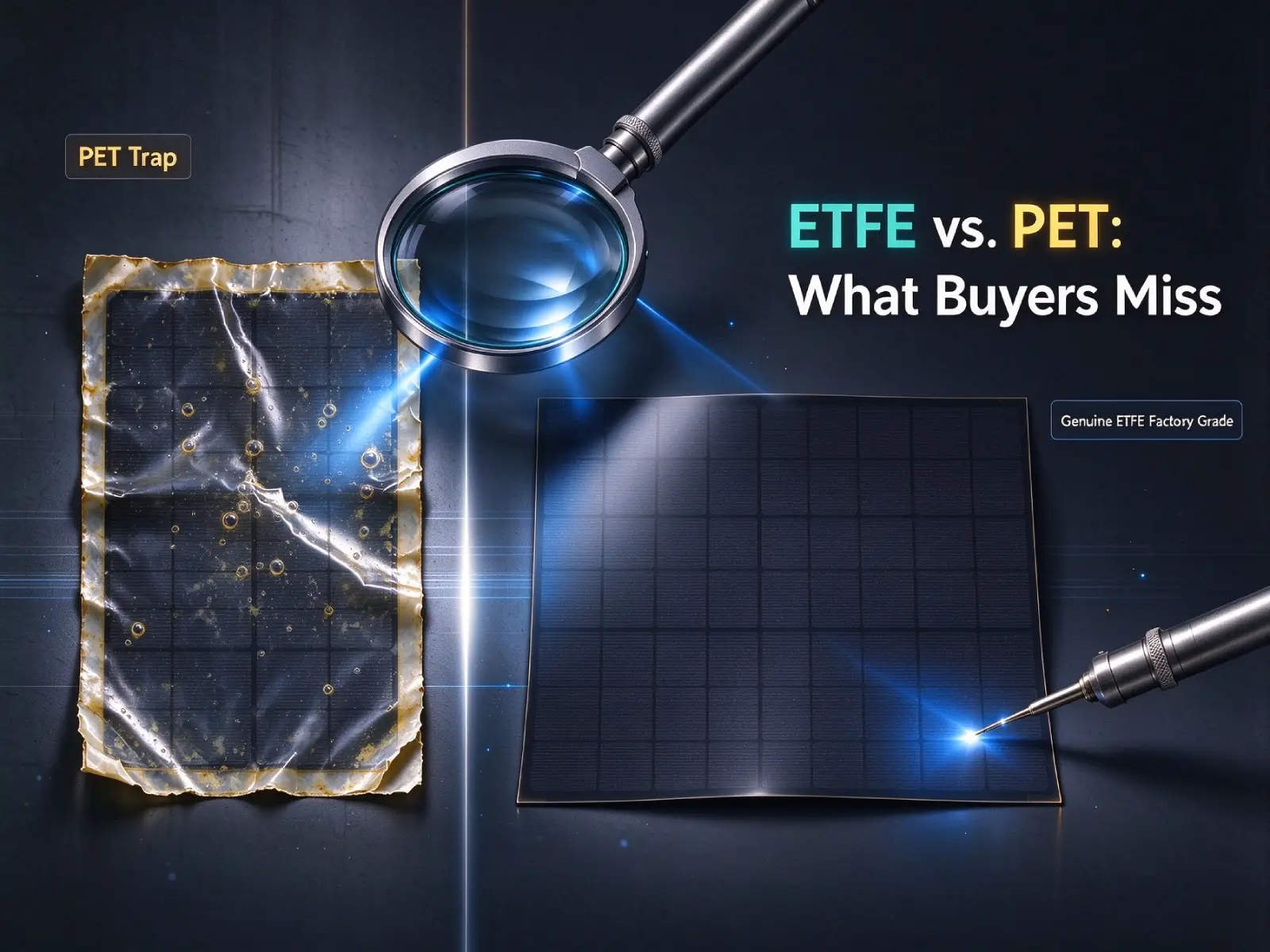
China Flexible Solar Panel Supplier: A Buyer‘s Guide to Vetting Factories Without Getting Burned
I’ve spent the last few years on the sourcing side of this trade, auditing factories…
Leave a Reply