

Solar Power Knowledge
Factory Direct Solar Panels: What It Really Means and When It Saves You Money
 gaotu
gaotu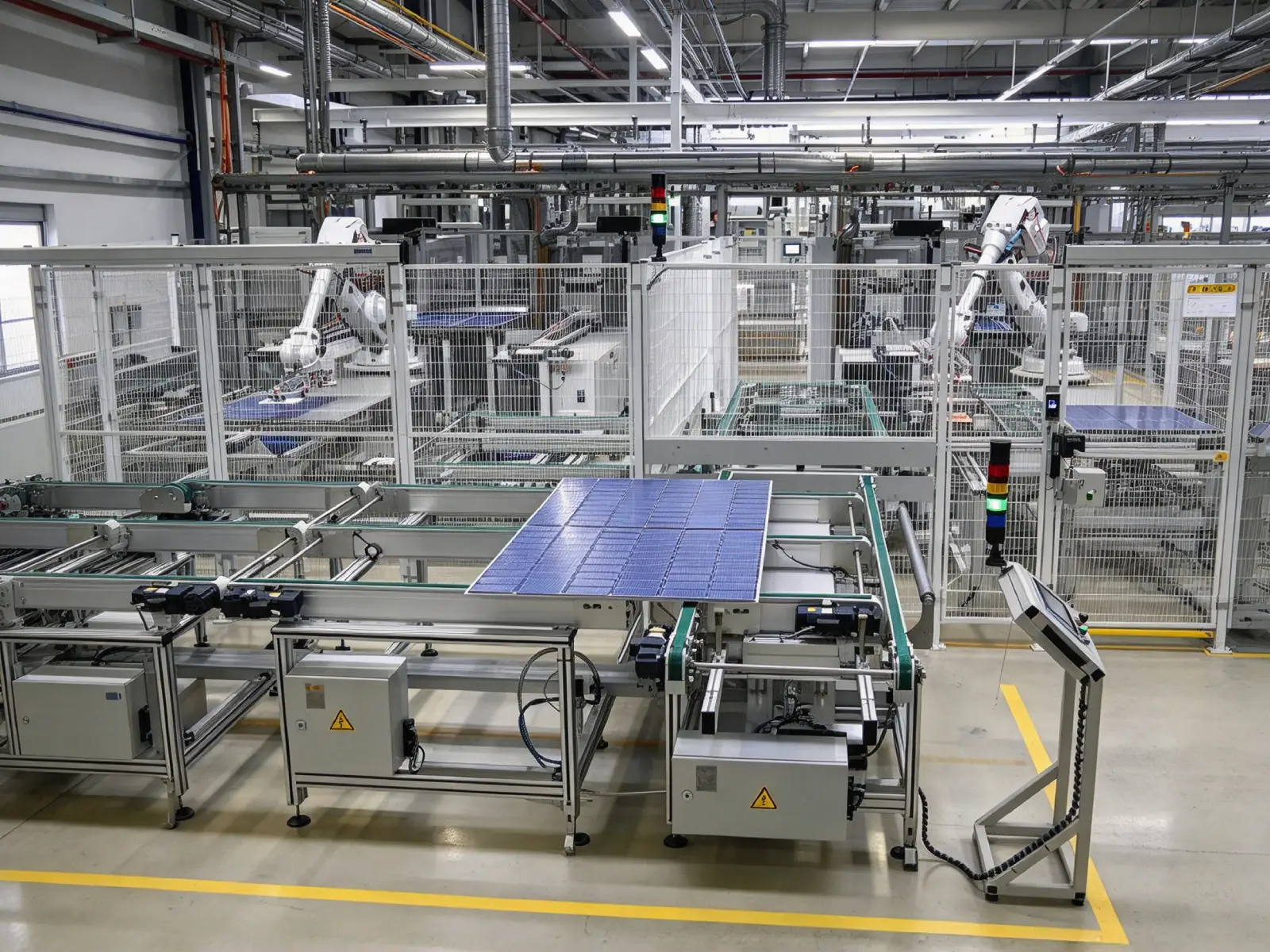
Article summary: This guide explains what “factory direct solar panels” really means, how much you can actually save (10–30% in ideal cases), when it makes sense and when it does not, and how to verify whether a supplier is genuinely selling direct from the factory. It covers supply chain markups, hidden costs, and a practical comparison between factory direct and distributor models.
Quick answer: Factory direct means buying at the factory level, removing exporter, importer, and distributor margins. Realistic savings are 10–30%, but only if you have volume (1+ container), a clear technical spec, logistics capability, and the ability to verify the factory. Below MOQ, or if you need local stock, multi-brand mixing, or local warranty, a distributor is often the better choice.
Factory direct solar panels is one of the most used — and most abused — phrases in the solar industry. Every trading company, every exporter, and every online store claims to sell “factory direct.” Very few actually do.
The phrase sounds simple: you buy directly from the factory, skip the middlemen, and pay less. But the reality is more nuanced. Factory direct is not always cheaper, not always faster, and not always the right choice — especially if your order is small.
This guide explains what factory direct really means, how much you can actually save, when it makes sense, when it does not, and how to verify whether a supplier is genuinely selling direct from the factory.
If you are still defining your price target, start with our guide to wholesale solar panel pricing. If you are planning a container order, read bulk solar panel orders. And if you want a full verification process, see our 7-step guide to choosing a solar panel manufacturer.
1. What “Factory Direct” Really Means
In the solar supply chain, a module typically passes through several hands before it reaches the end buyer:
Cell maker → Module factory → Exporter → Importer → Distributor → Installer → End user
Each step adds cost:
Factory direct means you buy at the factory level, removing the exporter, importer, and distributor margins. In theory, that can save 10–30% compared to retail.
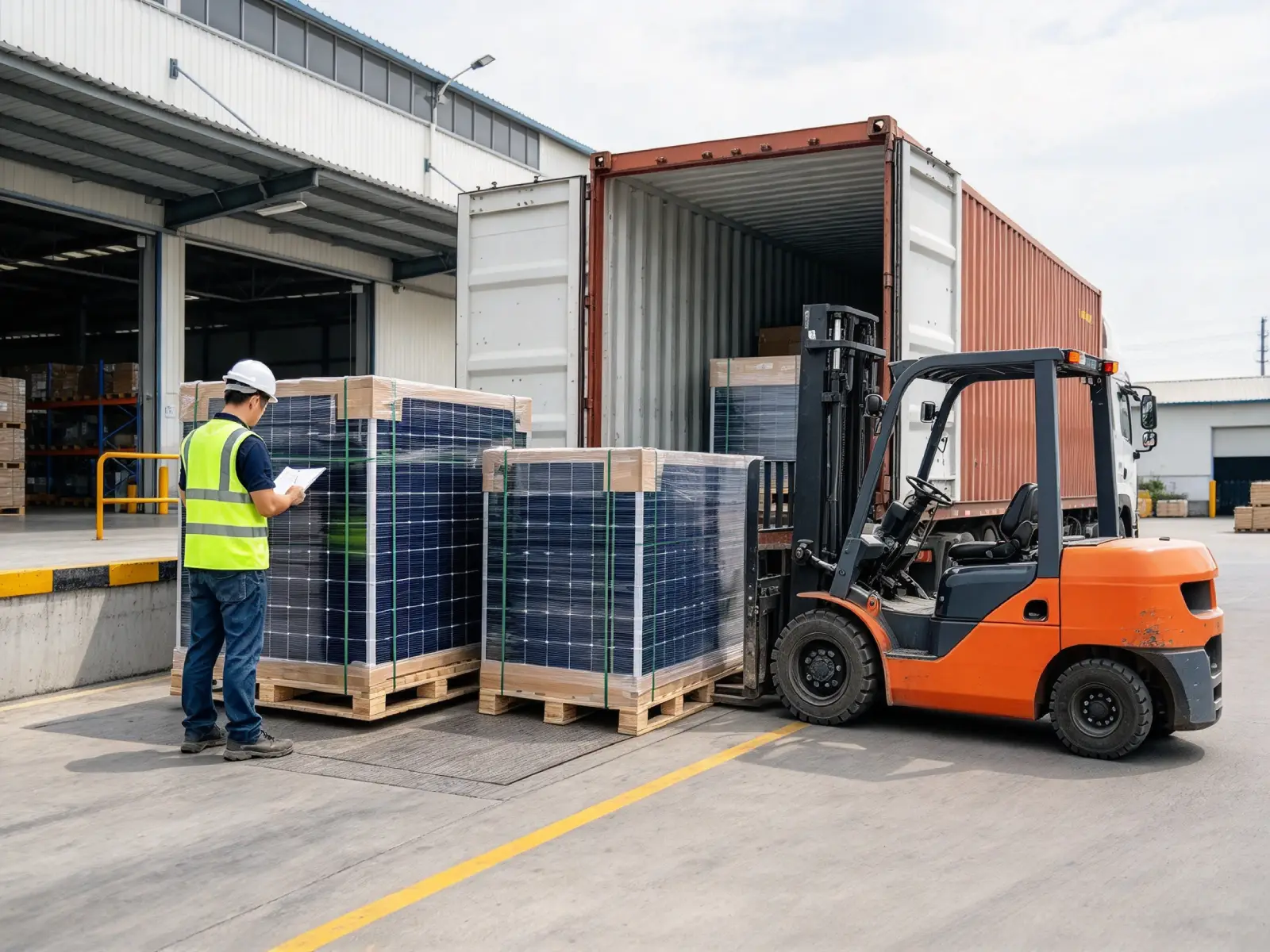
But here is the catch: factory direct does not mean the factory sells to everyone at the same price. Factories still have MOQ, payment terms, and production scheduling. A buyer ordering 20 panels does not get the same treatment as a buyer ordering 20 containers.
Key point: factory direct is a supply chain position, not a discount coupon.
2. How Much Can You Actually Save?
The savings from factory direct depend on three things:
-
Your order volume
-
Your technical capability
-
Your willingness to handle logistics
Realistic savings estimate
Note: prices are illustrative. Actual pricing depends on technology (TOPCon, HJT, PERC), power bin, certification, and market conditions.
What the saving does not include
-
Ocean freight
-
Import duty
-
Customs clearance
-
Inland transport
-
Insurance
-
Certification for resale
These costs exist whether you buy direct or through a distributor. In some cases, a distributor with local stock and better duty positioning can be cheaper landed.
Supporting reference: InfoLink and PVInsights publish weekly module price benchmarks by technology and region. Use them to sanity-check any factory direct quote.
3. When Factory Direct Makes Sense
Factory direct is the right choice when all of the following are true:
3.1 You have volume
-
Minimum: 1 pallet for small factories, 1 container for most
-
Best pricing: 5+ containers
3.2 You have a clear technical spec
-
You know the wattage, technology, dimensions, and certification you need
-
You do not need hand-holding on product selection
3.3 You can handle logistics
-
You have a freight forwarder
-
You understand Incoterms (FOB, CIF, DDP)
-
You can manage customs clearance
3.4 You can wait
-
Factory direct lead time is typically 15–40 days
-
Local distributors can ship in days
3.5 You can verify
-
You are willing to audit the factory, request certifications, and inspect before shipment
Best fit: distributors, EPCs, project developers, and OEM brands.
4. When Factory Direct Does NOT Make Sense
Factory direct is the wrong choice when:
4.1 You need a small quantity
-
Below MOQ, factories will either refuse or quote a high price
-
A local distributor is faster and often cheaper landed
4.2 You need local stock and fast delivery
-
Factory direct means ocean freight and lead time
-
Distributors hold inventory for immediate shipment
4.3 You need multi-brand mixing
-
Factories usually sell their own brand only
-
Distributors can mix brands, wattages, and technologies in one order
4.4 You need local warranty support
-
Factory warranty claims require shipping modules back or filing with a foreign entity
-
Distributors handle warranty locally
4.5 You cannot verify the factory
-
If you cannot audit the supplier, “factory direct” is just a marketing claim
-
You may be paying factory-direct prices to a trader
Key point: factory direct is a tool, not a strategy. Use it when it fits your volume, capability, and risk tolerance.
5. How to Verify “Real Factory Direct”
Many suppliers claim factory direct but are actually traders. Here is how to tell the difference.
5.1 Ask for the business license
-
Check the business scope: does it include manufacturing?
-
Check the registered address: is it a factory or an office?
5.2 Request a live video tour
-
Not a pre-recorded marketing video
-
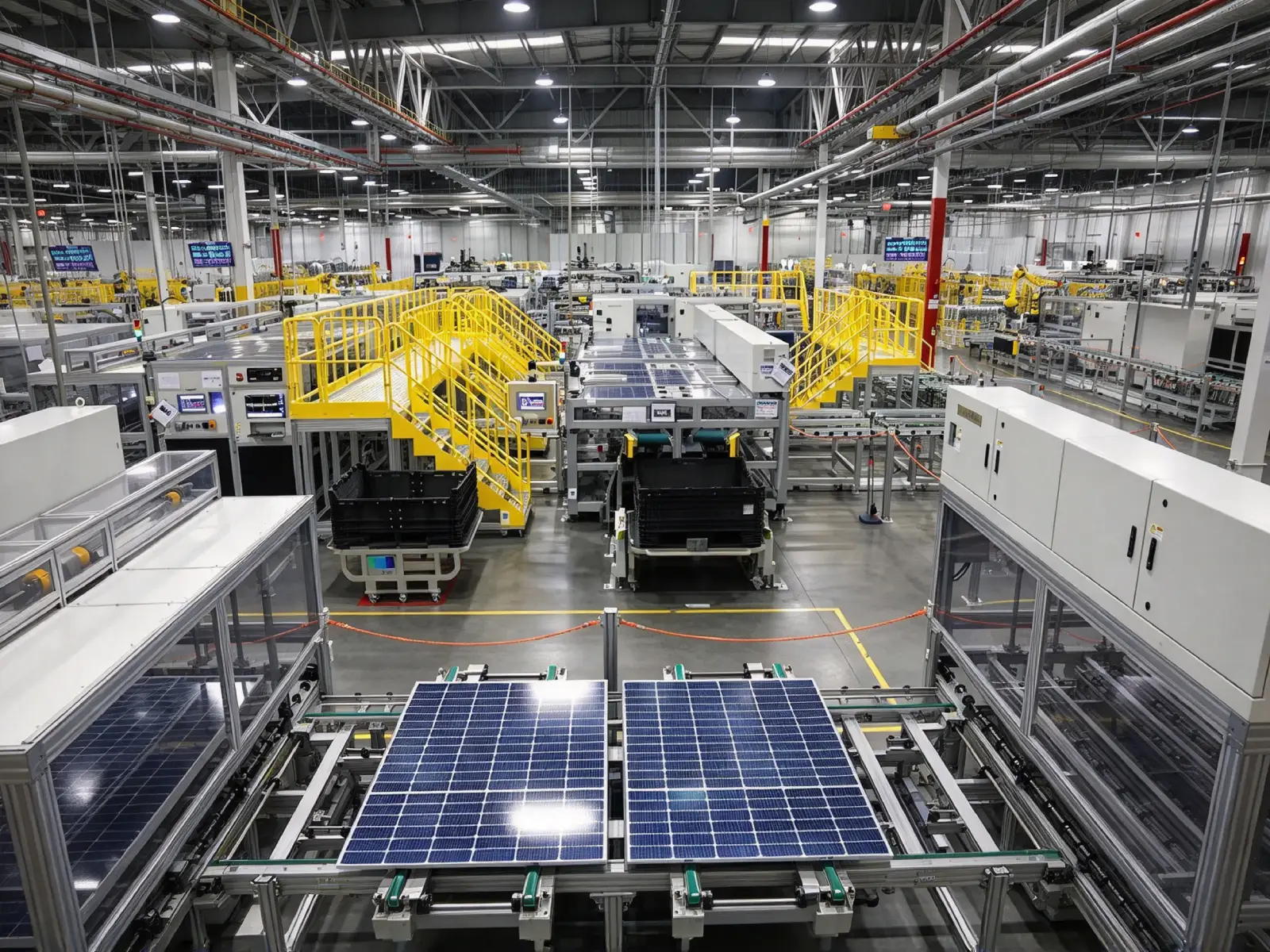
Ask to see the stringer, laminator, and EL tester in operation
-
Ask the camera to show the production floor and warehouse
5.3 Ask for the cell supplier
-
Real factories can name their cell supplier (LONGi, Jinko, Trina, etc.)
-
Traders often cannot answer this clearly
5.4 Check export records
-
Use ImportGenius, Panjiva, or Export Genius
-
Look for consistent shipment volume and multiple destination markets
5.5 Verify certificates
-
Request IEC 61215, IEC 61730, UL, CE certificate numbers
-
Cross-check with the issuing body
5.6 Request a pre-shipment inspection
-
AQL sampling per ISO 2859
-
Flash test and EL report for the batch
Supporting reference: IEC 61215 and IEC 61730 are the baseline module standards. ISO 2859 defines accepted sampling procedures. Trade data platforms allow public verification of shipment records.
6. The Hidden Costs of Factory Direct
Factory direct removes middlemen. It does not remove costs. Budget for:
A distributor bundles these costs into their price. When you go factory direct, you take them on yourself.
Supporting reference: US Section 201/301 tariffs and EU anti-dumping duties significantly affect landed cost. Always confirm the HS code and duty rate before comparing suppliers.
7. Factory Direct vs Distributor: A Quick Comparison
8. Common Mistakes When Buying Factory Direct
-
Assuming factory direct is always cheaper — landed cost is what matters
-
Ordering below MOQ — you will pay a premium or get refused
-
Not verifying the factory — you may be dealing with a trader
-
Skipping inspection — defects are cheaper to fix before shipment
-
Ignoring duty and freight — these can erase the factory-direct saving
-
Not confirming warranty terms — factory warranty is only useful if enforceable
9. What to Do Next
Factory direct works best when you plan the full chain:
-
First, understand wholesale solar panel pricing so you know your target price
-
Second, plan your container with our bulk solar panel orders guide
-
Third, verify the factory using our solar panel manufacturer checklist
Conclusion
Factory direct solar panels can save you 10–30% — but only if you have the volume, the technical clarity, the logistics capability, and the ability to verify the supplier.
The buyers who benefit most are distributors, EPCs, and OEM brands who treat factory direct as a supply chain decision, not a price slogan.
Before you commit:
-
Confirm your MOQ and price tier
-
Calculate landed cost, not FOB
-
Verify the factory entity and production lines
-
Inspect before shipment
-
Confirm warranty and insurance terms
If you are ready to evaluate a real factory direct supplier, send us your spec and volume — we will share our factory video, certifications, and export records.
Ready to Go Factory Direct?
Send us your requirements and we will reply with:
-
Factory video walkthrough
-
Business license and manufacturing scope
-
IEC / UL / CE certificate numbers
-
Export records and reference markets
-
Tiered price sheet by MOQ
-
Warranty and insurance details
What to include in your inquiry:
-
Target wattage and technology
-
Order volume (pallets or containers)
-
Destination port / country
-
OEM / ODM requirements
-
Certification requirements
Related Posts
How to Choose an RV Solar Panel OEM Manufacturer?Complete Compliance Checklist for EU & NA Buyers
Core Overview For RV brand purchasers, cross‑border traders and modification factories in Europe and North…
Portable Solar Panel vs Fixed Solar Panel
1. Solar Panel Wholesale Market Overview Solar panels continue to be one of the fastest-moving…

Outdoor Solar Table With Wireless Charging Manufacturer
The outdoor camping, home courtyard and public supporting facility sectors are booming rapidly, and the…

Leave a Reply