

Solar Power Knowledge
How to Choose an RV Solar Panel OEM Manufacturer?Complete Compliance Checklist for EU & NA Buyers
 gaotu
gaotuCore Overview
For RV brand purchasers, cross‑border traders and modification factories in Europe and North America, a reliable RV solar OEM cooperation is not simply about obtaining attractive samples or low‑price quotes. The core value lies in whether the manufacturer can convert confirmed technical specifications into mass‑produced orders with stable quality, traceable QC and complete customs‑compliant documentation for every batch.
The procurement logic for the European and American photovoltaic markets is completely different from that of the domestic market. Certificate scope matching, authentic datasheet parameters, strict BOM control and valid certificate of origin are all mandatory standards rather than optional accessories. RV solar panels operate in harsh outdoor scenarios with special installation limitations. Any unauthorized material replacement, simplified craftsmanship or exaggerated parameters will eventually lead to end‑user complaints, warranty compensation, channel disputes and even customs detention of full containers.
Written entirely from the perspective of European and American professional buyers, this article elaborates on OEM manufacturer selection criteria, factory verification methods, regional compliance differences, product selection logic and sampling rules, providing a fully implementable procurement checklist.

1. What Is a Qualified RV Solar OEM? (Avoid OEM Pretenders & Trading Risks)
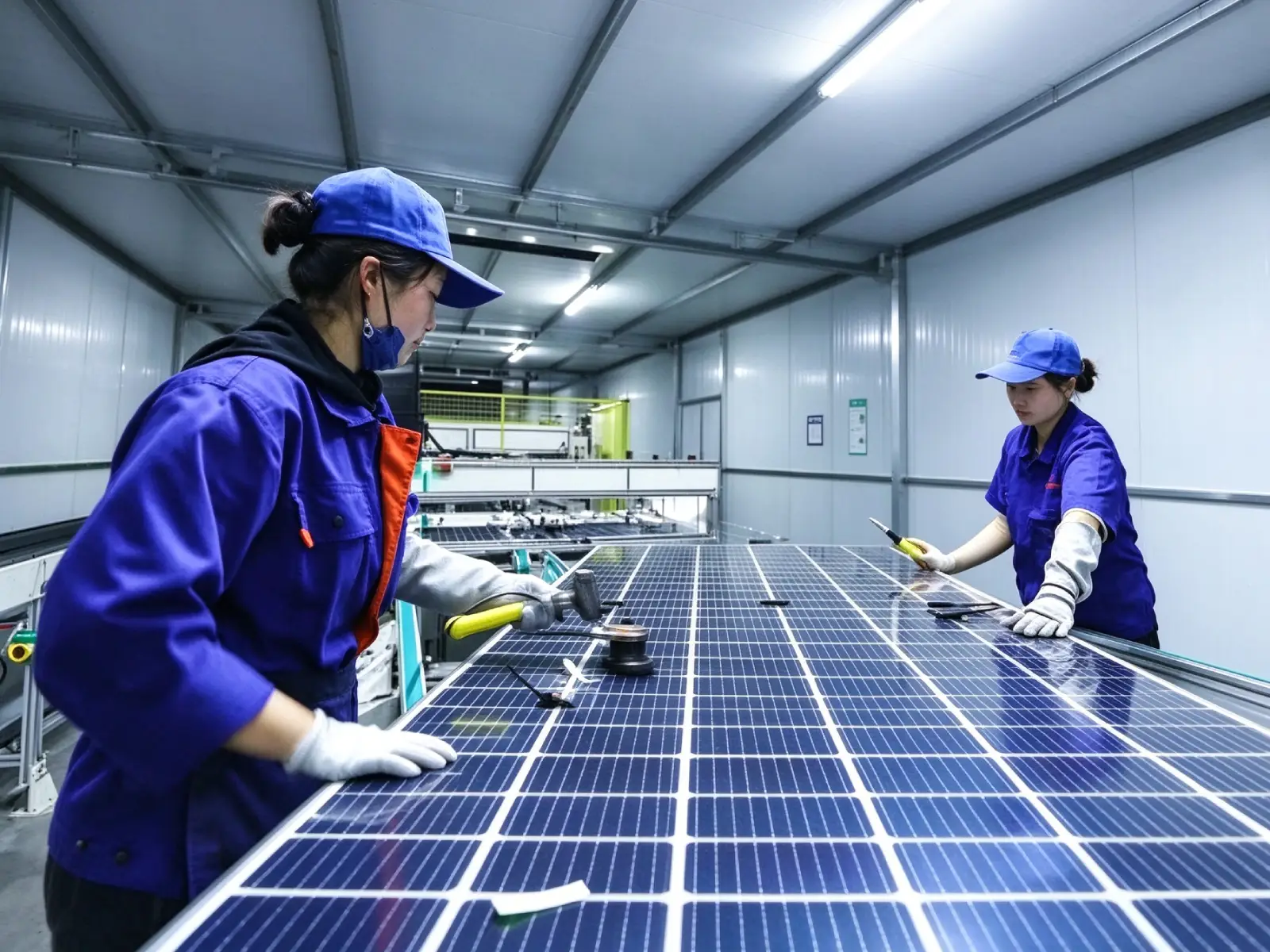
As highly customized photovoltaic products, RV solar panels differ greatly from standard PV modules. Buyers need customized solutions according to RV roof curvature, load‑bearing limits, installation structures, voltage systems, brand labeling and wiring matching. A professional OEM factory solidifies customized requirements into standardized production procedures, locks BOM lists, lamination processes and cell grading standards, and ensures consistent quality across long‑term bulk deliveries.
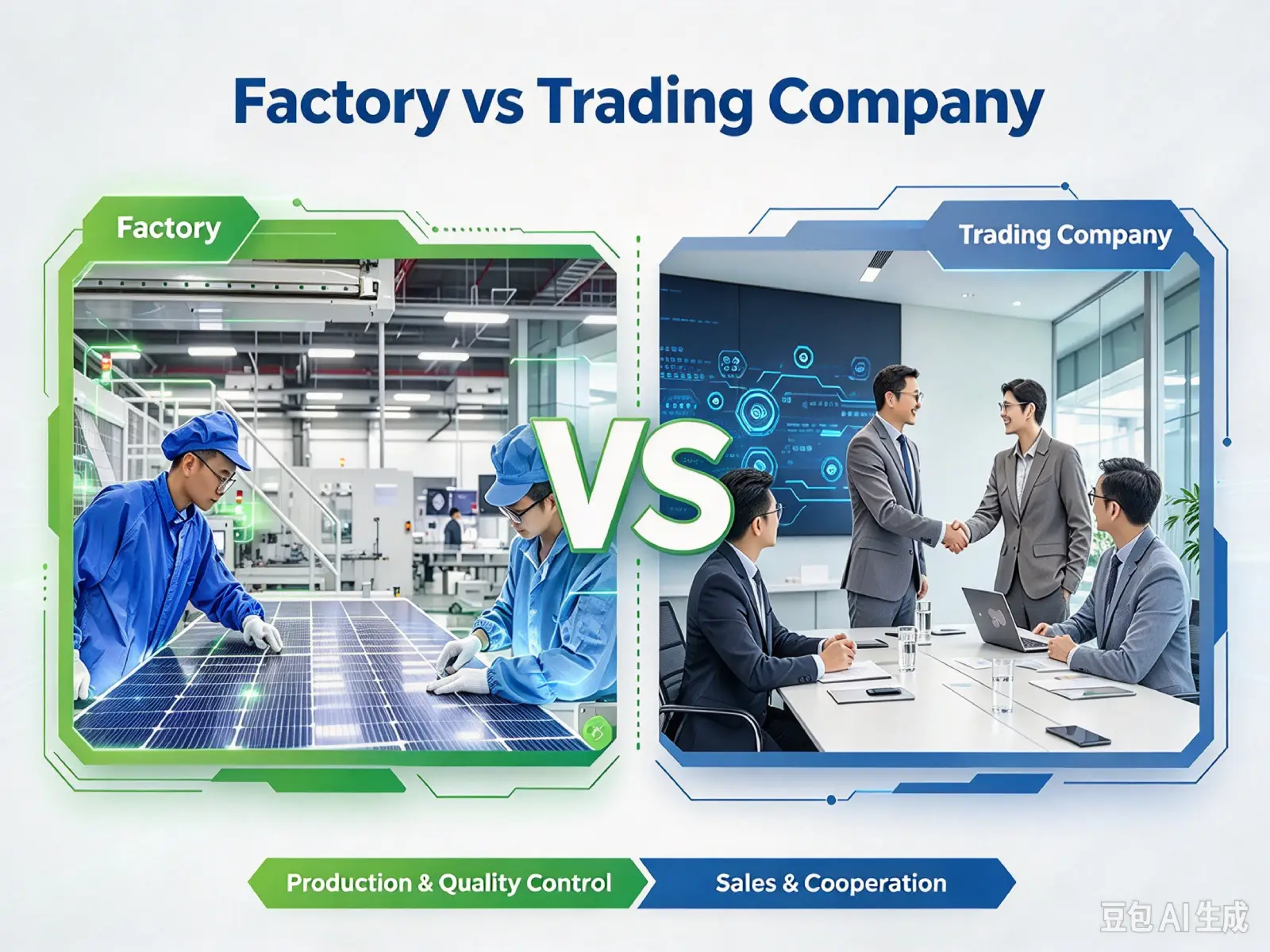
Many suppliers offer fast sampling and competitive prices but lack independent production lines and complete QC systems. They deliver high‑quality customized samples through manual selection yet randomly replace auxiliary materials, adjust craftsmanship and mix cell batches during mass production. Once quality problems occur, trading companies cannot trace production issues or implement rectification, leaving all operational and financial risks to the buyer.
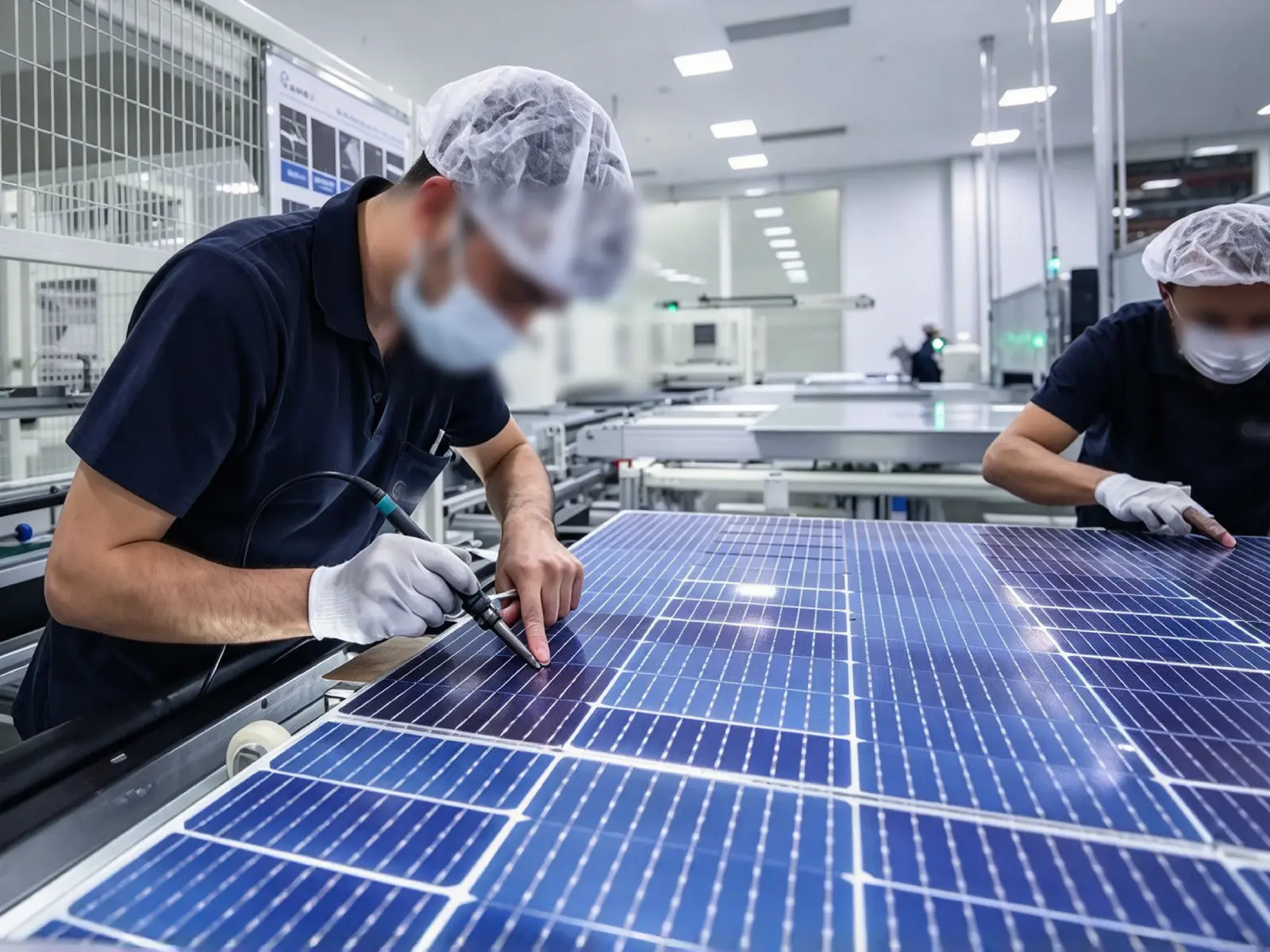
The most efficient way to verify a genuine factory is to ignore marketing promises and request incoming inspection standards, EL crack detection specifications and exact certificate lists for the targeted model. Reliable manufacturers provide engineering data and standardized processes, while unqualified suppliers only offer empty verbal guarantees.
2. Verify Authentic RV Solar OEMs Without On‑site Factory Visits
Professional buyers never judge factory capability merely based on brochures or showroom videos. Effective verification relies on evidence matching: consistent legal entity between certificate holders and factory registration information, matched production processes and product parameters, and consistent shipping documents and production batches. Skipping these verification steps will inevitably lead to quality inconsistency, compliance failures and after‑sales disputes.
| Inspection Item | Qualified Factory Standard | Red Flag Phrases (Avoid Directly) |
|---|---|---|
| Certificate Scope & Validity | Certificates fully cover customized models; certificate holder matches factory legal name; certificates are valid and queryable, compliant with EU and NA customs requirements | “We can apply for certificates”, “General certificates are acceptable” |
| Production Batch Traceability | Independent batch coding, complete factory test records and process version control support full lifecycle traceability and accountability | “We use the same process”, “Same as previous batches” |
| Sample & Mass Production Consistency | Complete BOM locked before mass production; formal material change approval mechanism with prior written notification for any adjustments | “Minor material changes do not affect performance”, “No need for formal notification” |
3. Why the Lowest Unit Price Ruins Your OEM Project
RV solar panels work in extremely harsh outdoor conditions. High‑temperature exposure, humid environments, vehicle vibration and partial shading all directly affect power generation efficiency and service life. Ultra‑low quotes always come at the cost of quality control: relaxed cell sorting tolerance, low‑cost alternative lamination materials, reduced factory testing procedures and reused outdated test reports.
These hidden defects cannot be identified through static sample inspection but break out intensively after bulk installation, including excessive batch power deviation, severe power attenuation under high temperature, connector mismatch, lamination delamination and internal cell cracks. Although buyers save upfront procurement costs, subsequent rework, overseas returns, logistics losses and channel trust deterioration lead to much higher overall costs.
Experienced European and American buyers focus on total comprehensive cost rather than unit price. Adhering to IEC international testing standards and partnering with factories with stable craftsmanship, transparent QC and batch controllability is the key to long‑term stable cooperation.
4. EU vs North America: Completely Different Market Compliance Requirements
Most failed cross‑border orders result from insufficient market compliance awareness rather than unqualified product parameters. The EU and North America adopt completely different access document requirements, audit standards and risk control mechanisms for RV solar modules, requiring targeted adaptation.
| Procurement Dimension | EU / UK Market | North American Market |
|---|---|---|
| Core Access Documents | Complete compliance packages, environmental traceability reports and channel‑specific qualification certificates | Local safety authority compliance documents, insurance‑approved test reports and market filing certificates |
| Environmental & Audit Standards | Mandatory full material traceability and public environmental data disclosure with rigorous compliance review | Strict enterprise procurement system audit requiring authoritative filing documents for supplier qualification |
| Major Cost Risks | Complicated compliance procedures with high hidden logistics and administrative costs | Fluctuating tariff and anti‑dumping policies with strict origin supervision |
Facing fluctuating overseas policies, tariff barriers and strict customs inspection, professional manufacturers rely on mature global supply chain layouts to flexibly adapt to origin requirements, helping buyers avoid policy risks and stabilize delivery cycles.
5. RV Solar Selection Logic: Scenario Adaptation First, Parameters Second
Many buyers fall into the parameter trap by blindly pursuing high power and conversion efficiency while ignoring RV‑specific installation scenarios. Rigid tempered glass solar panels are suitable for flat and load‑bearing sufficient RV roofs, featuring high cost performance, strong wear resistance and excellent outdoor stability.
For modified RVs and special vehicles with curved roofs, weight limits and no‑drilling installation requirements, flexible solar panels serve as the optimal solution with bendable fitting design, ultra‑light weight and flexible installation.
It is critical to note that laboratory standard parameters cannot represent real outdoor performance. Shading, high temperature and vehicle vibration greatly change the power generation curve. Professional OEM customization locks connector models, stringing solutions and label positions in advance, prohibiting arbitrary production adjustments and ensuring batch installation compatibility and power stability.
6. Samples Are Not Display Pieces, But Pre‑production Rehearsals
The common industry problem of “perfect samples but defective bulk products” stems from incomplete pre‑production confirmation. Most buyers only check appearance and basic power performance during sampling without standardized acceptance specifications, resulting in arbitrary craftsmanship and material changes during mass production.
In professional OEM cooperation, samples are full‑process pre‑production rehearsals rather than exhibition products. Formal cooperation includes complete acceptance standards covering electrical parameter tolerance, appearance craftsmanship, packaging specifications and factory test report requirements. All details including junction box orientation, connector specifications and lamination techniques are strictly locked to ensure 1:1 mass production replication of sample quality and eliminate batch rework risks.
7. Frequently Asked Questions for Global Buyers
1. How to Distinguish Genuine Factories from Trading Companies?
Verify three core points: consistent certificate entity and factory business information, complete production system with full‑process QC nodes, and batch‑level traceable test reports. Reliable factories provide production line videos, complete QC documents and compliance packages. Vague responses and pure verbal promises indicate high‑risk intermediaries.
2. What Is the Reasonable MOQ for RV Solar OEM?
OEM MOQ is divided into two modes. Light customization (logo printing, packaging adjustment, minor electrical parameter tuning) supports low‑volume trial orders with low thresholds. Deep customization (cell layout adjustment, lamination structure modification, mold opening and new certification application) requires R&D and certification investment with higher MOQ, which conforms to universal industry standards.
3. Core Certifications for EU & US Export?
IEC 61215 and IEC 61730 are basic mandatory qualifications for global PV market access. EU markets require additional CE and RoHS environmental compliance certificates, while North American markets need local safety and insurance‑approved test standards. Most importantly, all certifications must fully cover customized model specifications instead of applying generic certificates to avoid customs rejection and after‑sales liability.
Conclusion
RV solar panel OEM foreign trade competition never relies on low prices, but on stable mass production capacity, strict traceable quality control, complete compliance systems and mature overseas delivery experience. Only by adhering to standardized craftsmanship, material management and compliance systems can manufacturers help global buyers avoid operational risks, stabilize brand reputation and achieve long‑term market development.
About Us: Gaotu Innovation focuses on OEM/ODM customization and mass production of RV solar panels, with years of in‑depth experience in European and American foreign trade. We specialize in the R&D, customization and large‑scale manufacturing of rigid and flexible RV‑specific PV modules. Equipped with standardized independent production lines and a closed‑loop QC system, we strictly implement BOM locking, process finalization and batch traceability mechanisms, thoroughly solving the industry pain point of inconsistent quality between samples and bulk goods. All our products are certified with IEC, CE, RoHS and other authoritative European and American qualifications. Proficient in EU and North American market access rules, compliance document requirements and tariff policies, we support lightweight small‑batch customization, in‑depth structural revision and exclusive solution development. We provide full‑process services including video factory tours, production line verification, batch quality inspection and complete compliance document support. With a mature global delivery system, we offer one‑stop solutions from scheme design, customized production and quality testing to cross‑border delivery for RV manufacturers, foreign trade brands and modification enterprises, helping clients explore European and American PV markets with zero risk.
For product inquiries, free sample applications, customized solutions and accurate wholesale quotes, feel free to contact us:
- WhatsApp:+86 18028717319
- Email:info@gt‑pow.com
- Official Website:www.gtpowsolar.com
Related Posts
Bulk Solar Panel Orders: How to Plan MOQ, Container Loading and Lead Times
Introduction A bulk solar panel order is not just a larger version of a small…
The Best High Efficiency Solar Backpack for Hiking & Camping in 2026
If you love hiking, camping, or road-tripping in an RV, you’ve definitely run into two…

Balkonkraftwerk in Deutschland: Der komplette Ratgeber für 2026
Die Energiewende findet nicht nur auf großen Dächern statt – sie zieht zunehmend auf deutsche…
Leave a Reply