
Solar Power Knowledge
OEM/ODM Portable Solar Panels: How Customization Works with a Factory URL: /oem-odm-portable-solar-panel
 gaotu
Introduction
If you are building a brand, launching a new product line, or expanding your catalog, you will eventually need more than a standard product. You need a portable solar panel that carries your logo, matches your packaging, and fits your market positioning.
This is where OEM and ODM come in.
Many buyers understand the basic idea: OEM means the factory produces according to your design, while ODM means the factory offers an existing design you can customize. But the details matter. What can actually be customized? How does the sampling process work? What should you expect from a factory’s engineering team?
This guide explains how OEM and ODM work in the portable solar panel industry. It covers customization options, the development process, engineering support, and how to evaluate whether a factory can truly support your brand.
By the end, you will know what to ask and what to expect when developing a custom portable solar panel.
Article Summary
This complete guide covers OEM, ODM and joint development cooperation modes for portable solar panels. It introduces customizable items, the full development workflow from requirement communication to mass production, sampling cycles & inspection checkpoints, MOQ & cost factors, factory selection standards, and common project pitfalls. Whether you are a new brand entering the solar industry or planning differentiated customized solar products, this article helps you clarify cooperation logic and reduce development risks.
Quick Answers
-
ODM: Use factory ready-made solar panel designs, fast launch, low MOQ for logo/packaging customization.
-
OEM: Manufacture strictly based on your drawings & specs, full product control, longer lead time.
-
Joint Development: Co-design new products together with the factory for niche market differentiation.
-
Sampling cycle: Logo ODM 7–10 days; new mold custom product 30–60 days.
-
Customization range: Electrical parameters, folding structure, surface material, IP rating, certificates, logo & packaging.
-
Core factory evaluation point: In-house R&D engineering team, not just assembly workshop.
1. OEM vs ODM vs Joint Development
Before choosing a path, it helps to understand the three main cooperation models.
1.1 OEM (Original Equipment Manufacturing)
In an OEM arrangement, you provide the design, specifications, or requirements. The factory manufactures according to your instructions.
Best for:
-
Brands with in-house design and engineering
-
Buyers with existing product specifications
-
Companies that want full control over the final product
Typical requirements:
-
Detailed drawings or specifications
-
Clear packaging and branding assets
-
Defined quality standards
1.2 ODM (Original Design Manufacturing)
In an ODM arrangement, the factory offers a ready-made design. You customize it with your logo, packaging, and minor modifications.
Best for:
-
Brands entering the solar market for the first time
-
Buyers without in-house engineering
-
Companies that want faster time to market
Typical requirements:
-
Selection from the factory’s existing product line
-
Logo and packaging artwork
-
Confirmation of specifications
1.3 Joint Development
In a joint development arrangement, you and the factory co-develop a new product. This combines your market insight with the factory’s engineering capability.
Best for:
-
Brands targeting a specific niche
-
Buyers with a clear product concept but no manufacturing capability
-
Companies that want differentiation without building an internal team
Typical requirements:
-
Clear product concept and target market
-
Willingness to share feedback during development
-
Commitment to a minimum order volume
Key takeaway: The right model depends on your design capability, timeline, and budget.
2. What Can Be Customized
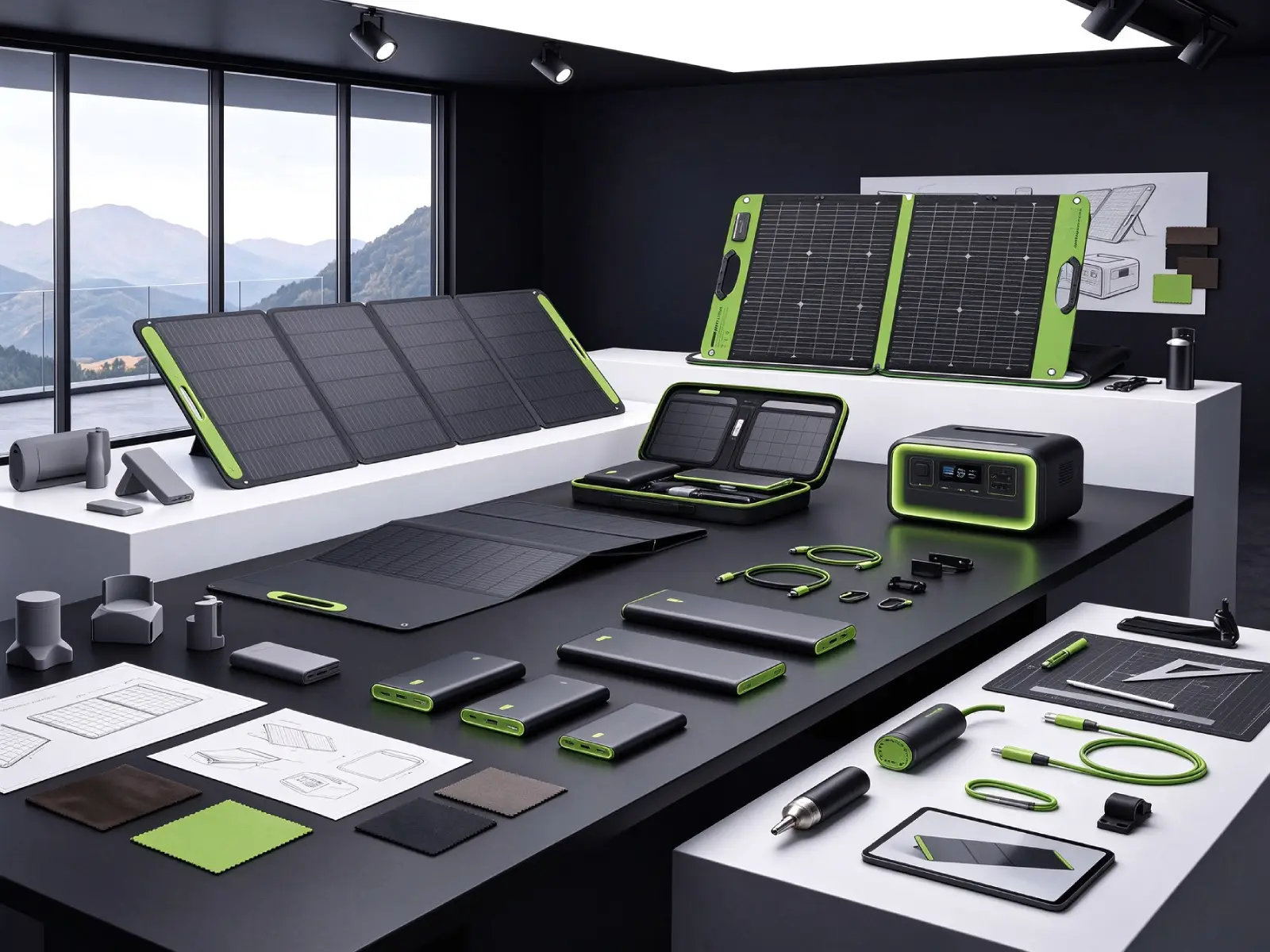
Customization goes beyond printing a logo. A capable factory can adjust many aspects of a portable solar panel.
2.1 Branding and Packaging
-
Logo on the panel, frame, or carrying bag
-
Custom retail packaging
-
User manual and documentation
-
Accessories and cables
-
Warranty card and branding materials
2.2 Electrical Specifications
-
Power output (e.g., 60W, 100W, 200W, 400W)
-
Voltage and current
-
Connector types (MC4, Anderson, USB-A, USB-C, DC)
-
Junction box and cable length
-
Integrated controllers or regulators
2.3 Physical Design
-
Panel size and folding configuration
-
Frame material and color
-
Surface material (ETFE, PET, or others)
-
Carrying handle or mounting options
-
Waterproof rating (IP65, IP67)
2.4 Performance Features
-
Cell type and efficiency
-
Bifacial or monofacial design
-
Low-light performance
-
Temperature coefficient
-
Durability and weather resistance
2.5 Certifications
-
Certification for specific markets (CE, FCC, PSE, etc.)
-
Test reports for retail or e-commerce requirements
-
Compliance documentation for customs
Key takeaway: The more customization you need, the more important the factory’s engineering capability becomes.
3. The Customization Process: From Concept to Mass Production
A professional factory follows a structured process. Understanding it helps you plan and avoid delays.
Step 1: Requirement Discussion
You share your product concept, target market, specifications, and timeline. The factory asks clarifying questions.
Output: A clear requirements document.
Step 2: Feasibility and Proposal
The factory’s engineering team reviews the requirements. They may propose adjustments for manufacturability, cost, or performance.
Output: A technical proposal with specifications and estimated cost.
Step 3: Quotation and Agreement
The factory provides a quotation based on materials, labor, tooling, and certification. Terms are discussed and agreed.
Output: A signed quotation or agreement.
Step 4: Sampling and Prototyping
The factory produces a sample or prototype. This may involve:
-
Engineering sample (proof of concept)
-
Functional sample (working prototype)
-
Pre-production sample (close to final)
Output: Sample for your review and testing.
Step 5: Sample Review and Revision
You test the sample and provide feedback. The factory revises as needed.
Output: Approved sample.
Step 6: Mass Production
After sample approval and order confirmation, the factory begins mass production.
Output: Finished goods ready for inspection and shipment.
Step 7: Quality Inspection and Shipping
The factory performs final quality checks and prepares documentation for shipment.
Output: Shipped order with tracking and documents.
Key takeaway: A structured process reduces risk. Ask the factory to share their process upfront.
4. What to Expect from a Factory’s Engineering Team
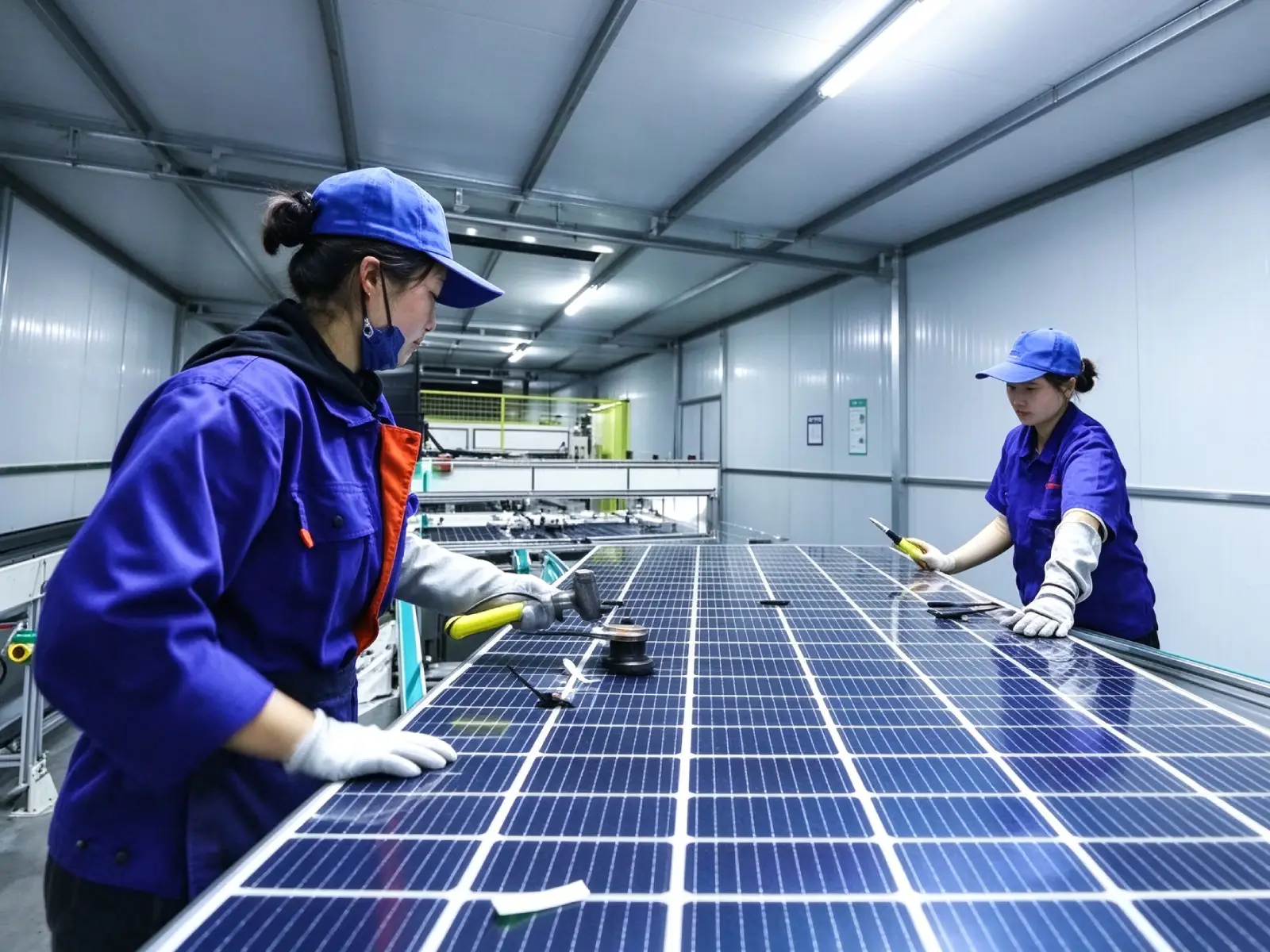
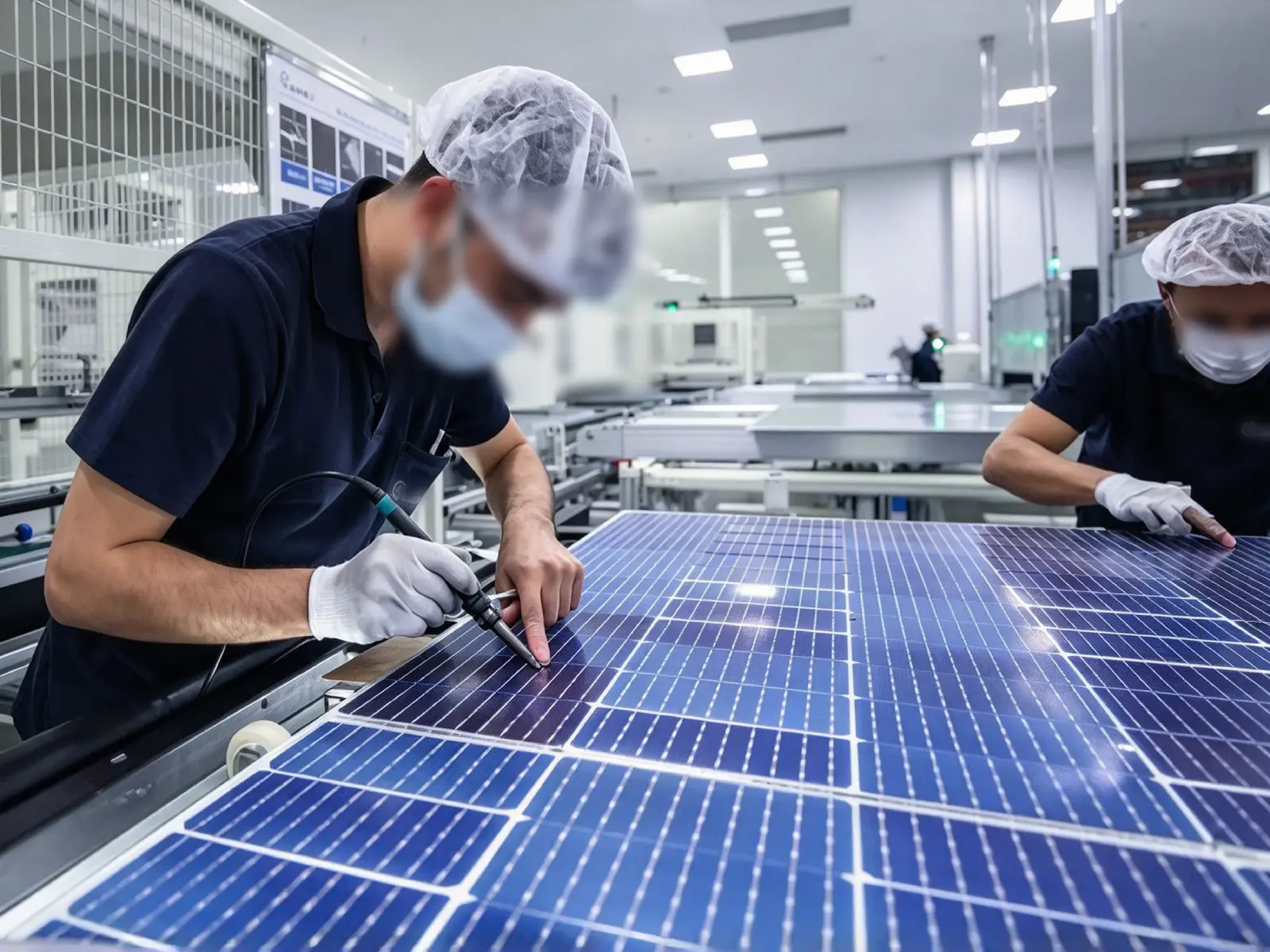
Not all factories have real engineering capability. Some simply assemble components. Others have full R&D teams that can design, prototype, and optimize.
Here is what a strong engineering team can offer:
4.1 Design for Manufacturing (DFM)
The team reviews your design and suggests changes that make production easier, cheaper, or more reliable.
4.2 Bill of Materials (BOM) Optimization
They help select components that balance cost, performance, and availability.
4.3 Structural and Electrical Design
They can design folding mechanisms, frames, wiring, and connectors to meet your requirements.
4.4 Prototyping and Testing
They build prototypes and run tests for power output, durability, weather resistance, and safety.
4.5 Certification Support
They prepare documentation and coordinate with testing labs for required certifications.
4.6 Production Support
They troubleshoot issues during mass production and ensure consistency.
Key takeaway: Ask about the size and experience of the engineering team. This is a strong indicator of customization capability.
5. Sampling: What to Expect and What to Check
Sampling is a critical step in OEM/ODM projects. It confirms that the factory understands your requirements and can deliver the expected quality.
5.1 Sampling Timeline
| Sample Type | Typical Timeline |
|---|---|
| ODM product with logo | 7–10 days |
| Modified ODM product | 10–20 days |
| OEM product (existing design) | 15–25 days |
| New design with new mold | 30–60 days |
Timelines depend on complexity and factory workload.
5.2 Sample Cost
Sample costs vary. Common models:
-
Free sample for standard ODM products (buyer pays shipping)
-
Paid sample for customized products
-
Sample fee refundable on first mass order
Discuss sample cost and refund policy upfront.
5.3 What to Check in a Sample
-
Power output vs specification
-
Build quality and finish
-
Folding mechanism durability
-
Connector and cable quality
-
Packaging and branding
-
Documentation and labels
-
Certification marks (if applicable)
5.4 Providing Feedback
Be specific in your feedback. Photos, measurements, and test data help the factory make accurate revisions.
Key takeaway: Sampling is not a formality. It is your best chance to catch issues before mass production.
6. MOQ and Cost Considerations for Custom Projects
Customization usually comes with higher MOQs and costs. Here is why.
6.1 MOQ Factors
-
Custom logo or packaging — moderate MOQ
-
Custom structure or mold — higher MOQ
-
New certification — may require minimum order
-
Special materials — may require minimum purchase
6.2 Cost Factors
-
Tooling and molds — one-time cost, amortized over orders
-
Engineering time — design and testing hours
-
Certification — testing and documentation fees
-
Materials — custom materials may cost more
-
Production setup — line changeover and programming
6.3 How to Reduce Costs
-
Use existing ODM designs where possible
-
Standardize components across products
-
Order larger quantities to amortize tooling
-
Plan ahead to avoid rush fees
-
Build a long-term relationship with the factory
Key takeaway: Customization is an investment. Plan for MOQ and cost implications early.
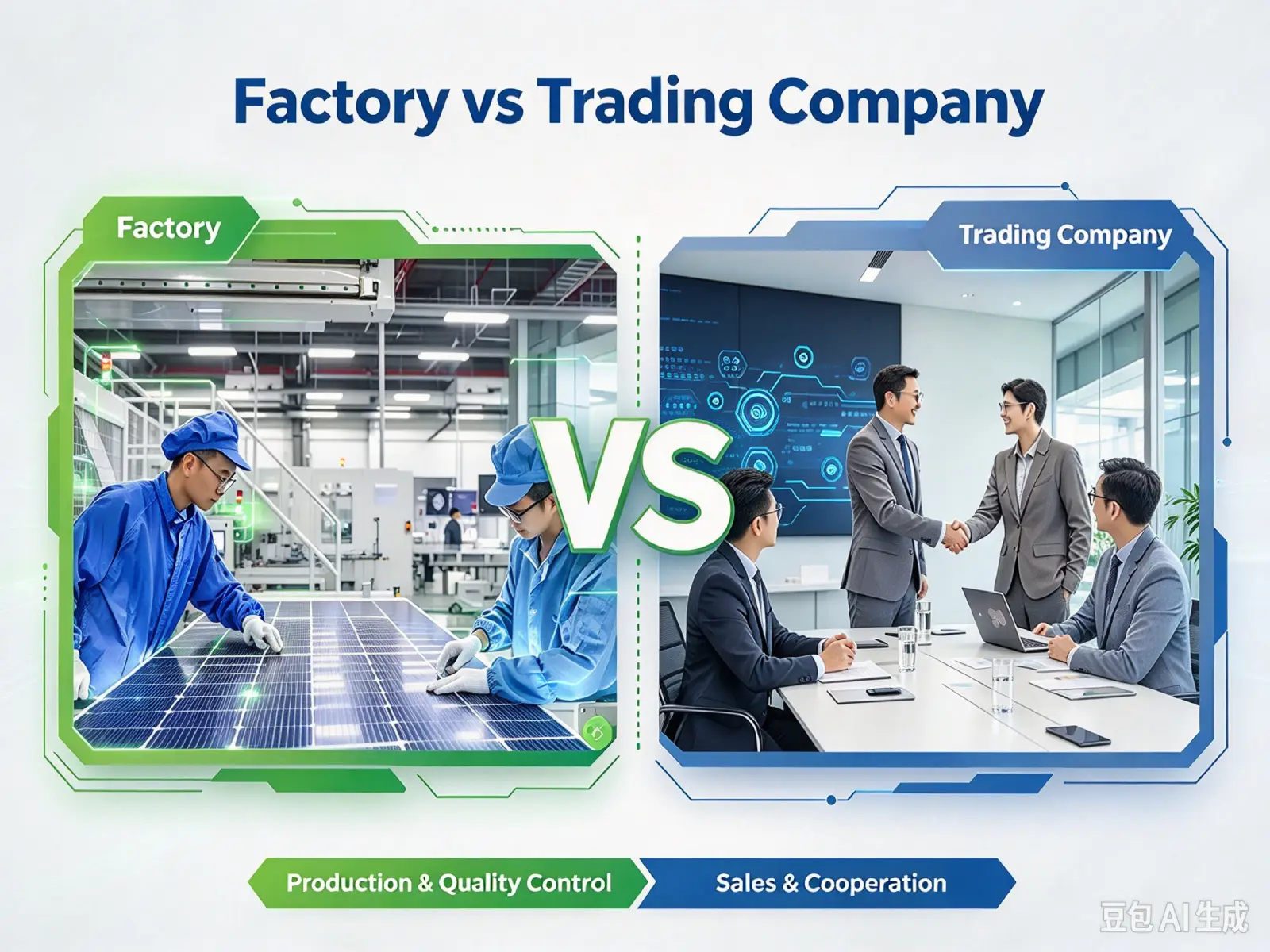
7. How to Choose the Right OEM/ODM Factory
Not every factory is suited for custom projects. Use these criteria to evaluate.
7.1 Engineering Capability
-
In-house R&D team
-
Experience with similar products
-
Ability to provide DFM and BOM support
-
Prototyping and testing facilities
7.2 Production Flexibility
-
Ability to handle small and large batches
-
Multi-SKU parallel production
-
Capacity to scale during peak season
-
Experience with export orders
7.3 Quality System
-
Documented quality procedures
-
Traceability from materials to finished goods
-
Testing equipment and processes
-
Certification compliance
7.4 Communication
-
Responsive sales and engineering contacts
-
Clear documentation and reporting
-
Willingness to share production updates
-
English or multi-language support
7.5 Track Record
-
Experience with brands in your market
-
Case studies or references
-
Certifications and patents
-
Long-term customer relationships
Key takeaway: Choose a factory based on capability and fit, not just price.
8. Common Mistakes in OEM/ODM Projects
-
Skipping the requirements discussion
-
Not confirming specifications in writing
-
Rushing the sampling process
-
Ignoring DFM feedback
-
Underestimating MOQ and tooling costs
-
Failing to plan for certification
-
Not budgeting for packaging and documentation
-
Choosing a factory without engineering support
Avoiding these mistakes saves time and money.
9. Conclusion
OEM and ODM projects can transform your product line. They allow you to differentiate your brand, meet specific market needs, and build long-term value.
To summarize:
-
Understand the difference between OEM, ODM, and joint development
-
Know what can be customized
-
Follow a structured development process
-
Evaluate the factory’s engineering team
-
Plan for sampling, MOQ, and cost
-
Choose a factory based on capability and fit
A strong factory partner can support you from concept to mass production. A weak one can delay your launch and damage your brand.
If you are developing a custom portable solar panel and need a factory with real engineering capability, Gaotu Innovation can help. With 18 years of OEM experience, 380 global patents, an in-house R&D team of 30 senior engineers, and production bases in China and Indonesia, we support brands, distributors, and project buyers worldwide. You can request a sample, discuss your customization needs, or download our product catalog to learn more.
Related Posts

GTPOW 100W Flexible Solar Panel Wholesales
Off-grid RV travel, marine boating adventures, remote cabin living, and overlanding have become fast-growing lifestyle…
70W Foldable Solar Table: Wire-Free Outdoor Power & Multi-Functional Furniture
End Outdoor Power Hassles — Meet Your All-in-One Solar Patio Solution Working, dining and relaxing…
Germany’s Balcony PV Boom: Why Small 2‑3 Panel Systems Dominate the Market
It is quite typical to see just two or three solar panels scattered on…
Leave a Reply