

Solar Power Knowledge
Solar Panel and Portable Power Station Compatibility Guide
 gaotu
gaotuCore Overview: Most issues of incompatibility, charging failure, slow charging, and equipment burnout between solar panels and portable power stations stem from mismatched voltage parameters rather than insufficient power. Many users select products merely based on wattage or port appearance, or force compatibility with adapters, eventually leading to equipment failures and after‑sales disputes. This article comprehensively analyzes practical parameters, series‑parallel connection rules, common pitfalls, scenario‑based matching solutions, and procurement standards, helping individual users configure devices safely and enabling industry merchants to standardize matching schemes and reduce after‑sales rates.
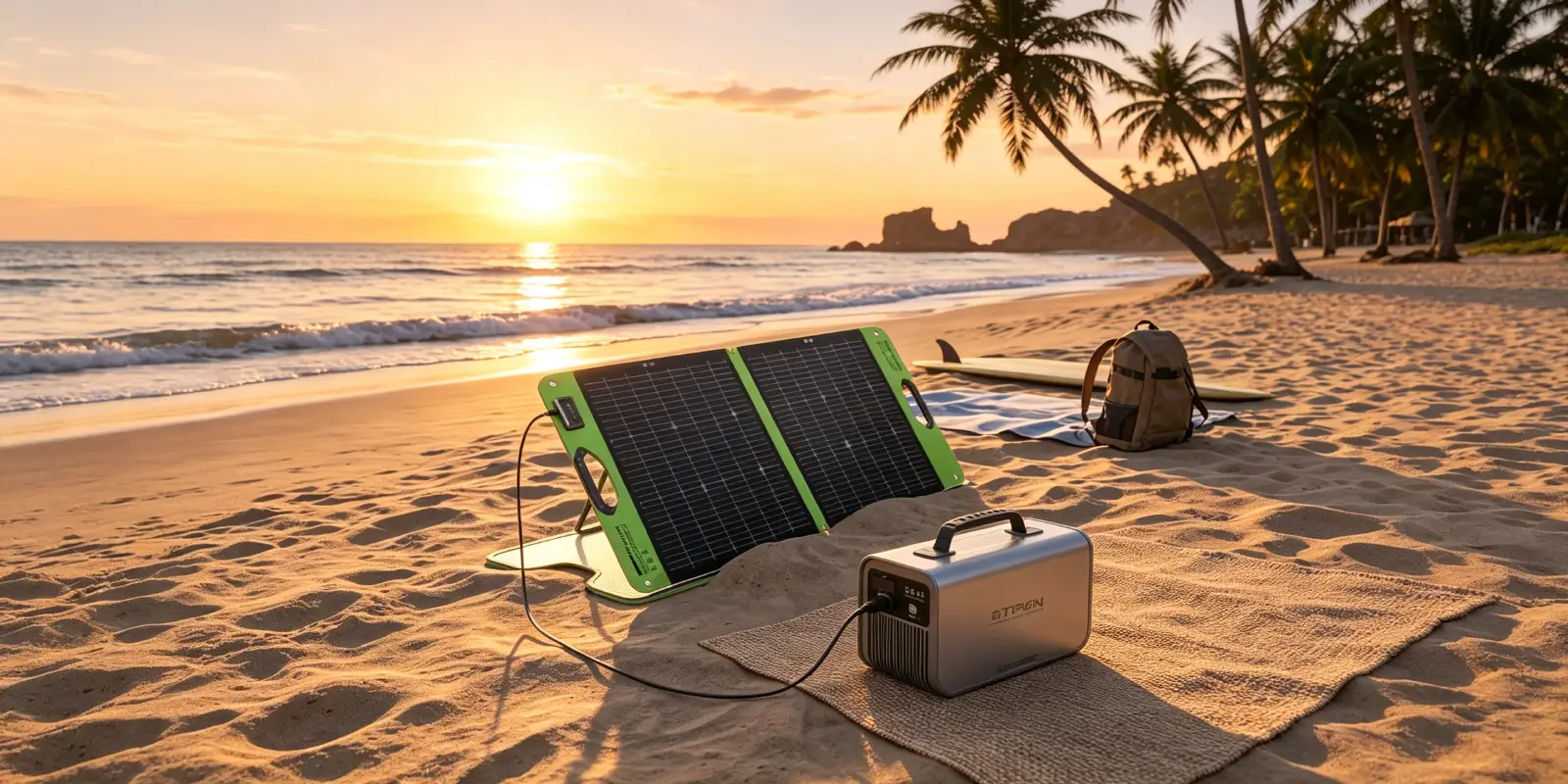
1. Key Takeaways (Quick Self‑Check)
-
Compatibility Priority: Open Circuit Voltage (Voc) > Maximum Power Voltage (Vmp) > Maximum Power Current (Imp) > Interface Polarity > Rated Power. Never judge compatibility by wattage alone.
-
Safety Red Line: Low temperatures raise solar panel open‑circuit voltage. Series connection overvoltage is the top cause of portable power station burnout.
-
Core Principle: Physical interface fit does not equal electrical compatibility. Adapters only solve connection problems and cannot fix inherent parameter mismatches.
-
Performance Logic: Parameter compatibility only ensures safe charging. Sunlight intensity, temperature, cables, and battery level all affect actual charging speed.
-
Brand Rule: Mainstream brands including EcoFlow, Bluetti, Jackery, and Anker have no universal compatibility. Parameter verification by specific model is mandatory.
2. Quick Answer: What Makes a Solar Panel Compatible with a Power Station?
A safe and efficient solar‑storage matching system must meet all five core parameter requirements:
- Open Circuit Voltage (Voc)
- Maximum Power Voltage (Vmp)
- Maximum Power Current (Imp)
- Interface Type
- Positive and Negative Polarity
Any mismatched parameter will cause charging failure, power limiting, or system errors. In severe cases, it will permanently break the internal MPPT controller of the power station.
Most compatibility failures result from two common misconceptions: higher wattage means faster charging, and identical interfaces guarantee compatibility. Users often overlook the core matching logic of voltage and current.
3. Why Parameter Compatibility Matters More Than Power (Core Principle)
Solar charging for portable power stations relies on the built‑in MPPT (Maximum Power Point Tracking) controller, which works within a fixed voltage and current range. Solar panel output parameters must fall within the controller’s compatible range to trigger normal charging and maximum power tracking.
The so‑called “12V solar panel” in consumer markets actually delivers far higher working voltage, with an open‑circuit voltage of 20V‑24V. Direct connection to low‑voltage power stations without parameter verification easily causes instantaneous overvoltage, triggering protection mechanisms or permanent device damage.
Temperature greatly affects solar voltage: the lower the temperature, the higher the open‑circuit voltage. Voltage surges significantly in low‑temperature environments such as early mornings and winter outdoors, which is the leading cause of low‑temperature burnout accidents. Sufficient voltage margin is essential for safe matching.
4. Six Must‑Check Compatibility Parameters (Practical Verification Standards)
For both individual users and bulk business purchasers, verify the following parameters one by one against solar panel nameplates and power station official manuals — this is the only credible compatibility judgment standard.
|
Core Parameter
|
Parameter Definition
|
Compatibility Standard
|
Risk Consequence
|
|
Voc (Open Circuit Voltage)
|
Maximum no‑load voltage, rises under low temperatures
|
Voltage after low‑temperature surge < Max input voltage of power station (10%‑20% safety margin reserved)
|
Overvoltage burnout, high‑voltage protection trigger, charging failure
|
|
Vmp (Maximum Power Voltage)
|
Voltage when the panel outputs maximum power
|
Optimally centered within the power station’s MPPT working voltage range
|
Insufficient charging volume, failure to track maximum power
|
|
Imp (Maximum Power Current)
|
Current when the panel outputs maximum power
|
Single‑channel current ≤ Max single‑port input current of power station
|
Current limiting, severely reduced charging efficiency
|
|
Isc (Short Circuit Current)
|
Maximum current under extreme working conditions
|
Overall current below the power station’s current limit threshold
|
Long‑term overcurrent causes controller overheating and aging
|
|
Interface Type
|
MC4, XT60, DC7909, DC8020, etc.
|
Matched interface or certified adapter
|
Connection failure, poor contact, intermittent power outage
|
|
Polarity
|
Positive and negative wiring definition
|
Fully consistent with power station input polarity
|
Direct device burnout for models without anti‑reverse protection
|
5. Biggest Matching Misconception: Never Prioritize Wattage
Many users adopt wrong matching logic: if a power station supports 400W solar input, they casually connect two 200W panels in series, which easily leads to device burnout.
Power is the last reference factor, not the first. Even low‑wattage panels can damage devices if the voltage exceeds the limit. In contrast, excessive power only triggers automatic current limiting, causing power waste rather than safety hazards.
In short: Voltage mismatch causes safety risks; power mismatch causes efficiency loss.
6. Series vs Parallel Connection: Matching Scenarios & Risk Avoidance
When using multiple solar panels for combined charging, series and parallel connections completely change voltage and current parameters, determining the final compatibility and safety.
6.1 Series Connection (Voltage Boost, Constant Current)
Series connection superposes voltage while keeping current unchanged. It applies to power stations with high MPPT voltage ranges where single‑panel voltage is insufficient.
Core Risk: Series connection greatly increases total open‑circuit voltage. Combined with low‑temperature voltage surge, it is the top cause of equipment burnout. Strict voltage margin calculation is mandatory for any series matching.
6.2 Parallel Connection (Current Boost, Constant Voltage)
Parallel connection superposes current while keeping voltage unchanged. It is ideal for scenarios with matched voltage but insufficient charging current to pursue faster charging speed.
Core Advantage: Almost no overvoltage burnout risk. Only power waste caused by power station current limiting may occur. Parallel connection is the priority choice for beginners.
7. Top Compatibility Mistakes 90% of Users Make
-
Mistake 1: Universal compatibility for same‑brand devices. Different models from the same brand have completely different MPPT voltage ranges and current limits, with no universal adaptability.
-
Mistake 2: Adapters ensure full compatibility. Adapters only fix physical connection issues and cannot correct mismatched voltage and current core parameters.
-
Mistake 3: Nominal voltage equals actual voltage. 12V/24V labeled solar panels have much higher actual working and open‑circuit voltages, which cannot be judged literally.
-
Mistake 4: Sufficient power guarantees fast charging. Panels cannot reach full power if the working voltage deviates from the MPPT optimal range, even with enough wattage.
-
Mistake 5: Room‑temperature compatibility equals full‑scene compatibility. Ignoring low‑temperature voltage surge leads to burnout failures in winter outdoor environments.
8. Why Charging Is Slow Even With Compatible Parameters
Parameter compatibility only guarantees safe charging, not full‑power operation. The following normal scenarios will lead to reduced charging speed instead of device faults:
-
Sunlight conditions: Cloudy days, dusk, or shaded environments reduce solar output power.
-
Temperature impact: High ambient temperature slightly reduces solar panel working voltage and overall power generation.
-
Battery status: Power stations switch to trickle charging mode when the battery level exceeds 80% to protect battery life.
-
Cable loss: Long or low‑quality adapter cables cause voltage drop and power loss.
-
Load occupation: Connected electrical loads offset solar charging power in real time.
9. Scenario‑Based Solar Panel Matching Solutions (Camping / RV / Off‑Grid)
9.1 Outdoor Camping
Lightweight and foldable solar panels are the best choice, featuring easy storage and wide compatibility. Equipped with standard MC4 interfaces and universal adapters, they fit most mainstream portable power stations and meet emergency outdoor charging needs. Gaotu Innovation portable foldable solar panels are optimized for camping scenario parameter adaptability, effectively reducing compatibility errors and slow charging issues.
9.2 RV & Van Life
High‑adaptability rigid solar panels are recommended for fixed RV installation. Supporting multi‑panel parallel expansion, they deliver stable off‑grid power for long‑term RV travel, with optimized wiring solutions to avoid poor contact caused by outdoor jolts.
9.3 Household Fixed Off‑Grid System
High‑efficiency monocrystalline solar panels with stable performance are preferred. Users can configure customized series‑parallel schemes according to power station parameters to support long‑term stable household off‑grid power supply.
10. B2B Procurement Checklist for Bulk Matching & ODM Customization
For energy storage distributors, kit sellers, cross‑border purchasers, and ODM manufacturers, standardized parameter matching greatly reduces after‑sales rates and improves brand reputation. Provide the following complete parameters for procurement docking:
-
Full power station model and official solar input parameters (voltage range, max input power, max current)
-
Matched solar panel specifications (Voc, Vmp, Imp, size, power, panel type)
-
Application scenarios (normal/low temperature environment, fixed/portable use, single/multi‑panel combination)
-
Interface customization requirements (MC4, XT60, DC series, Anderson connectors, multi‑port cables)
-
Branding customization requirements (private logo, custom labels, user manuals, packaging solutions)
Professional Reminder: Cable and interface customization only optimizes physical connection and cannot fix electrical parameter mismatches. Full parameter verification before bulk orders avoids batch equipment failures. Enterprise purchasers can accessone‑stop solar OEM/ODM adaptive solutions for accurate model matching and customized mass production.
11. FAQ
Q1: Can I mix solar panels and power stations of different brands?
Yes. Solar charging adopts standardized DC output. Cross‑brand matching is feasible as long as voltage, current, polarity and all core parameters match, with no brand restriction.
Q2: Do adapters guarantee 100% compatibility?
No. Adapters only solve interface mismatch. Overvoltage or overcurrent problems will still cause charging failure or device burnout even with successful physical connection.
Q3: Series or parallel connection, which is better for beginners?
Parallel connection is safer and beginner‑friendly with no overvoltage risk. Series connection requires professional low‑temperature voltage margin calculation for experienced users.
Q4: Why do solar devices burn out more easily in winter?
Low temperatures significantly raise solar panel open‑circuit voltage. Voltage easily exceeds the power station’s upper limit in cold winter mornings and outdoor environments, triggering high‑voltage protection or hardware damage.
Q5: Is slow charging with matched parameters a device fault?
It is mostly normal. Slow charging is usually caused by sunlight, temperature, battery level, or cable loss rather than equipment defects.
12. Conclusion: Solar Panel and Portable Power Station Compatibility Matching Rules
The core of solar panel and portable power station compatibility lies in accurate voltage parameter matching, not power wattage. Prioritize Voc and Vmp voltage verification, cooperate with current, interface and polarity inspection, and select reasonable series‑parallel solutions based on application scenarios to completely avoid burnout, slow charging and charging failure problems.
For personal outdoor use and commercial bulk customization, adhere to the principle of “parameter priority, safety first, power auxiliary” to maximize solar‑storage system efficiency and ensure long‑term stable equipment operation.
Gaotu Innovation, a professional enterprise deeply engaged in the solar energy storage industry, provides one‑stop professional technical support including accurate adaptive scheme design, customized solar cables, and bulk parameter verification. We assist clients in avoiding matching failures, reducing after‑sales costs, and ensuring safe and efficient operation of every solar power system.
Free Quotation & Product Samples Available
Related Posts
Winter Portable Solar Panel Use: Complete Guide
1. The Real Deal: Cold Weather Actually Helps Solar Panels Here’s a key point for…
Portable vs Fixed Solar Panels: Which One Should You Choose?
Most people shopping for solar power face the same dilemma: should they buy portable foldable…
The Ultimate Guide to Wholesale Solar Panels: Sourcing, Pricing, and Logistics for B2B Buyers
Article Summary This guide helps B2B solar buyers, distributors and EPC contractors source wholesale solar…


Leave a Reply