

Solar Power Knowledge
How to Choose a Reliable Flexible Solar Panel Manufacturer
 gaotu
gaotu1. Why Flexible Solar Sourcing Frequently Fails
Flexible solar panels have evolved far beyond basic portable charging products. They are now mainstream solutions for RV fleets, marine vessels, curved building facades, special vehicles and industrial outdoor IoT systems — scenarios where rigid glass modules are structurally unfeasible. Nevertheless, the flexible solar industry remains highly fragmented with widespread quality irregularities: overrated electrical parameters, PET misrepresented as ETFE, falsified salt spray certification, incomplete quality control and insufficient customisation capacity. Most on‑site failures, including delamination, yellowing, rapid power degradation and warranty conflicts, are caused by improper selection and unregulated supply chains, rather than inherent product defects. Written in plain, engineer‑friendly language, this guide establishes a complete and practical selection framework covering material comparison, cell technology grading, encapsulation solutions, certification verification, QC standards, delivery scheduling and supplier due diligence. All contents can be directly adopted for project design, RFQ evaluation and factory qualification.
2. Flexible Solar vs. Rigid Solar: Fundamental Differences
Flexible and rigid solar modules follow the same photovoltaic power generation principle, but differ drastically in mechanical structure, weather resistance, installation method and application boundaries, forming the fundamental basis for scenario‑based selection.
2.1 Core Advantages of Flexible Modules
- Ultra‑lightweight Structure: A standard 100W flexible panel weighs 1.8–3.0 kg, only one‑fifth of a conventional framed rigid module, imposing minimal load on rooftops, vessel decks and vehicle surfaces.
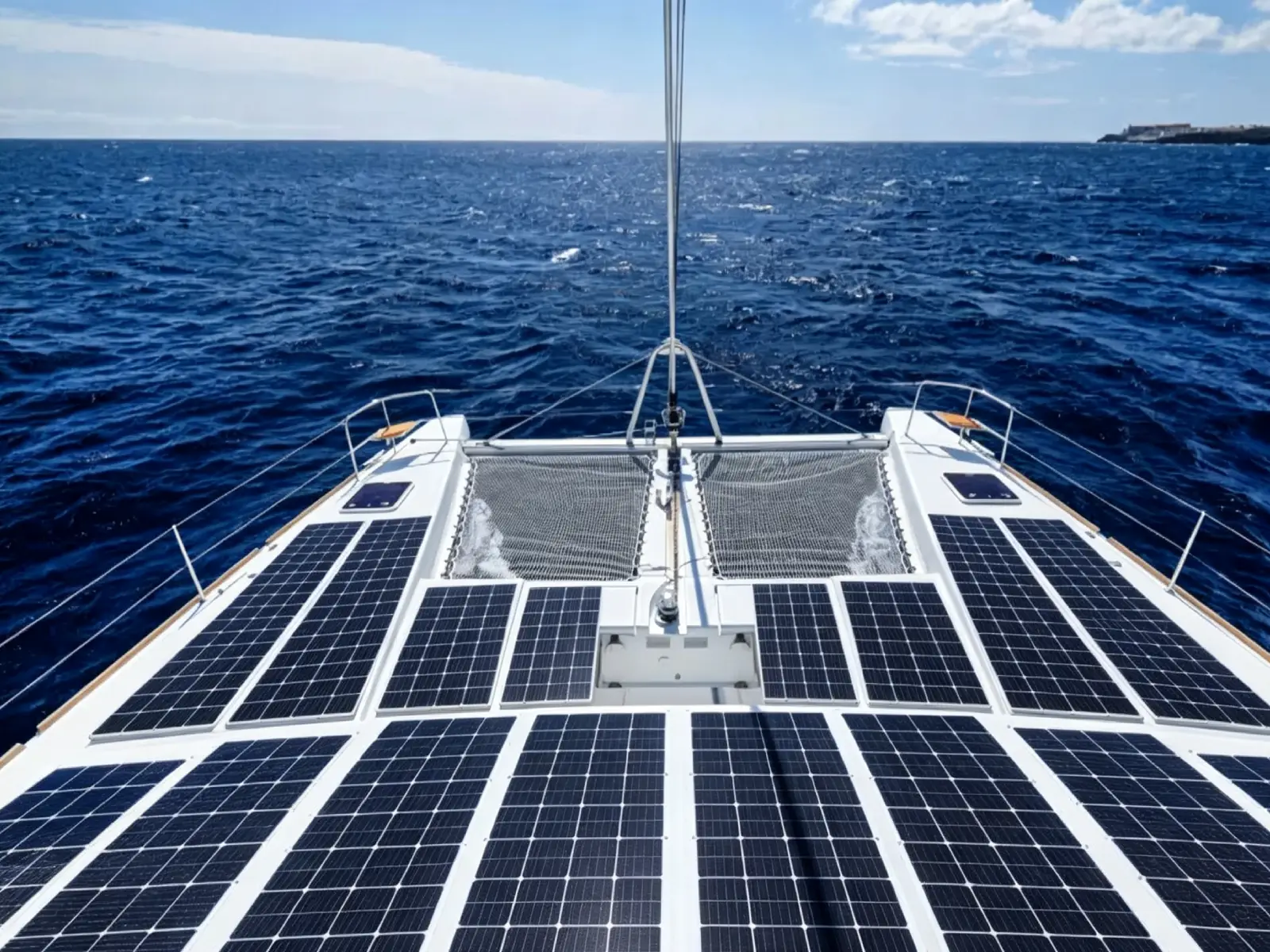
- Superior Flexibility & Curvature Adaptability: Standard substrates support up to 30° bending, while advanced fiberglass composite substrates enable flexible bending of 240° or more, perfectly fitting irregular and curved surfaces.
- Slim Profile: With a thickness of 1.5–3 mm, flexible modules support flush, embedded and concealed installation without damaging structural aesthetics.
- Non‑destructive Installation: Compatible with marine‑grade adhesive, VHB high‑strength tape and integrated mounting grommets. No drilling or metal brackets are required, enabling safe and damage‑free mounting for special equipment and buildings.
2.2 Key Limitations & Selection Constraints
- Flexible laminated structures have lower impact resistance than rigid glass modules, requiring stricter production QC, transportation protection and standard installation procedures.
- Surface and encapsulation materials determine the entire service life; low‑grade materials inevitably cause yellowing, delamination and performance attenuation within 1–3 years of outdoor exposure.
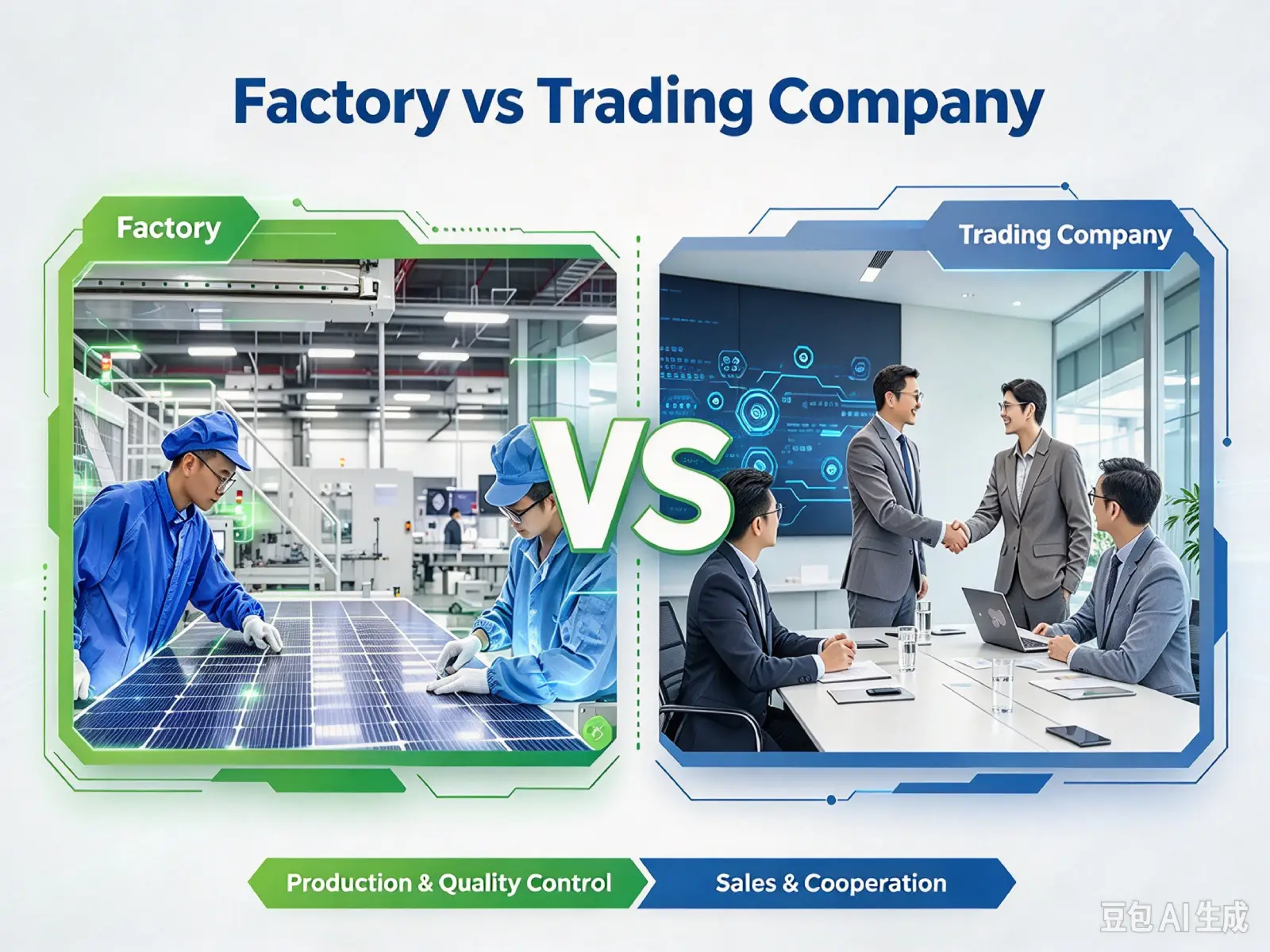
- High customisation demands require in‑house production capacity; third‑party traders and small workshops cannot guarantee consistent quality and dimensional accuracy for non‑standard orders.
3. Most Critical Material Selection
The top surface film defines the outdoor durability and service life of flexible solar panels, and it is also the most misleading and error‑prone selection link in the industry. The two materials serve completely different application scenarios and cannot be substituted for each other. For detailed data comparison: ETFE vs PET Flexible Solar Panels
| Performance Dimension | ETFE (Engineering Grade / Long‑term Outdoor) | PET (Consumer Grade / Short‑term Portable) |
|---|---|---|
| Light Transmittance | 90%–95%, ensuring stable and high power output | 85%–90%, with higher optical loss and lower efficiency |
| UV & Weather Resistance | 25+ years outdoor lifespan, negligible aging and degradation | Prone to yellowing, embrittlement and cracking within 1–3 years |
| Max Continuous Temperature | 150–165°C, suitable for high‑temperature sun‑exposed environments | Up to 100°C, accelerates aging under high heat |
| Moisture & Salt Spray Resistance | Extremely low water vapor transmission rate, ideal for coastal and marine high‑corrosion environments | High WVTR; hydrolysis and delamination occur above 45°C |
| Surface Property | Self‑cleaning, dust‑proof and non‑stick, minimizing maintenance costs | Abrasion‑prone and easy to accumulate dust, poor long‑term durability |
| Cost & Positioning | 20%–35% higher cost, professional engineering‑grade material | Low cost, for temporary and low‑budget applications |
| Applicable Scenarios | Marine vessels, permanent RV outdoor installation, BIPV, industrial solar projects | Portable temporary charging, short‑cycle consumer products, indoor testing |
4. Three Mainstream Solar Cell Technologies: Scenario Matching Guide
Flexible solar panels are mainly divided into three technical routes. No need to blindly pursue high‑end specs — reasonable matching delivers the best cost‑performance. Reference: Flexible Solar Panel Supplier in China
| Cell Technology | Commercial Efficiency | Flexibility | Durability | Cost | Best Application Scenarios |
|---|---|---|---|---|---|
| Mono PERC / TOPCon | 19%–22.5% | Excellent, wide bending range | Highly durable with ETFE + POE encapsulation | Cost‑effective | RV, marine, off‑grid power, general outdoor engineering |
| CIGS Thin‑Film | 15%–20% | Superior, fits complex curved surfaces | Good low‑light performance and thermal stability | Medium to High | Curved BIPV, architectural integration, automotive PV, low‑light environments |
| Back‑Contact (IBC/HPBC/ABC) | 21%–24%+ | Moderate flexibility | Top‑tier reliability with zero front busbar loss | Premium pricing | Space‑limited areas, high‑density power generation, premium OEM & BIPV projects |
5. Encapsulation Film Selection: The Hidden Key to Long Lifespan
Surface film determines weather resistance, while encapsulation film determines internal cell stability and anti‑aging performance, serving as the core guarantee for long‑term operational reliability.
- EVA Film: Cost‑effective with strong adhesion. However, it easily yellows under long‑term UV exposure and releases acidic substances that corrode cell circuits. Only suitable for mild inland environments and short‑cycle projects.
- POE Film: Outstanding moisture barrier and PID resistance with zero acid precipitation. Its water vapor permeability is 3–7 times lower than EVA, making it the standard choice for coastal, marine, high‑humidity and N‑type high‑efficiency cell projects.
- EPE Composite Film: Three‑layer EVA‑POE‑EVA structure, combining POE’s superior moisture‑proof performance and EVA’s high adhesion. It solves the bonding defect of pure POE and is the optimal solution for high‑end customized and irregular flexible modules.
6. Six Core Evaluation Criteria for Engineering Procurement
6.1 Authentic Cell Efficiency Verification
- Standard mono flexible modules: minimum 19% efficiency; back‑contact modules: minimum 21% efficiency, rejecting downgraded or recycled cells.
- Prioritize third‑party lab test reports instead of factory‑only datasheets.
- Refer to NOCT real‑world operating parameters for accurate outdoor power performance evaluation.
6.2 Waterproof & Dust Protection Standards
- General outdoor scenarios: Junction box IP67 rating.
- Marine, submerged and coastal scenarios: IP68 fully resin‑potted junction box is mandatory.
- Equipped with standard MC4 connectors, customizable cable length and outlet position, with built‑in bypass diodes to reduce shading power loss.
6.3 Professional Customization Capability
Genuine manufacturers support full‑dimensional customization to meet non‑standard project demands, while traders cannot provide such services:
- Electrical Customization: 12V/24V/36V/48V system voltage matching, 10W–400W+ power range, series/parallel/mixed circuit configuration.
- Shape Customization: Trapezoid, rounded corner, L‑shape and free‑form irregular dimensions.
- Structural Customization: Adhesive backing, grommets, D‑rings, cable channels and substrate thickness adjustment.
- Brand Customization: Laser logo marking, private‑label packaging, customized manuals and batch traceability coding.
6.4 2026 Mandatory Certification Compliance
| Certification Standard | Core Value | Applicable Scenarios |
|---|---|---|
| IEC 61215:2021 + IEC 61730:2023 | Includes exclusive MQT 22 bending test for flexible modules, ensuring structural reliability | All commercial and export projects |
| IEC 61701:2020 Level 6 | 112‑day salt spray test, the highest marine anti‑corrosion grade | Marine vessels and high‑salinity coastal areas |
| TÜV, CE, RoHS | Third‑party authoritative verification for global market compliance | Overseas export and high‑end engineering projects |
| IP67 / IP68 Rating | Guarantees dustproof and waterproof performance for harsh outdoor environments | Permanent outdoor and submerged applications |
6.5 Standard Factory QC System
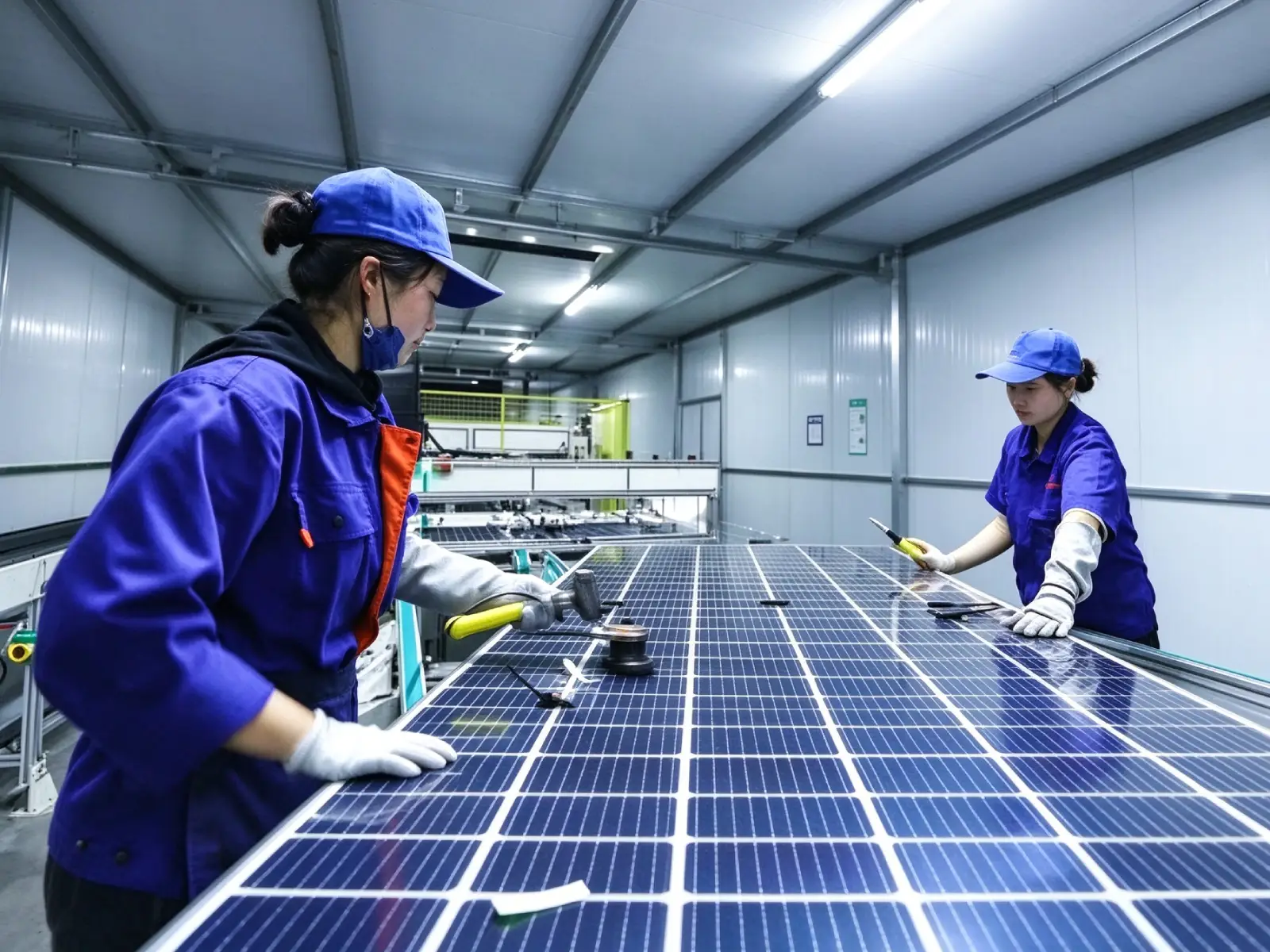
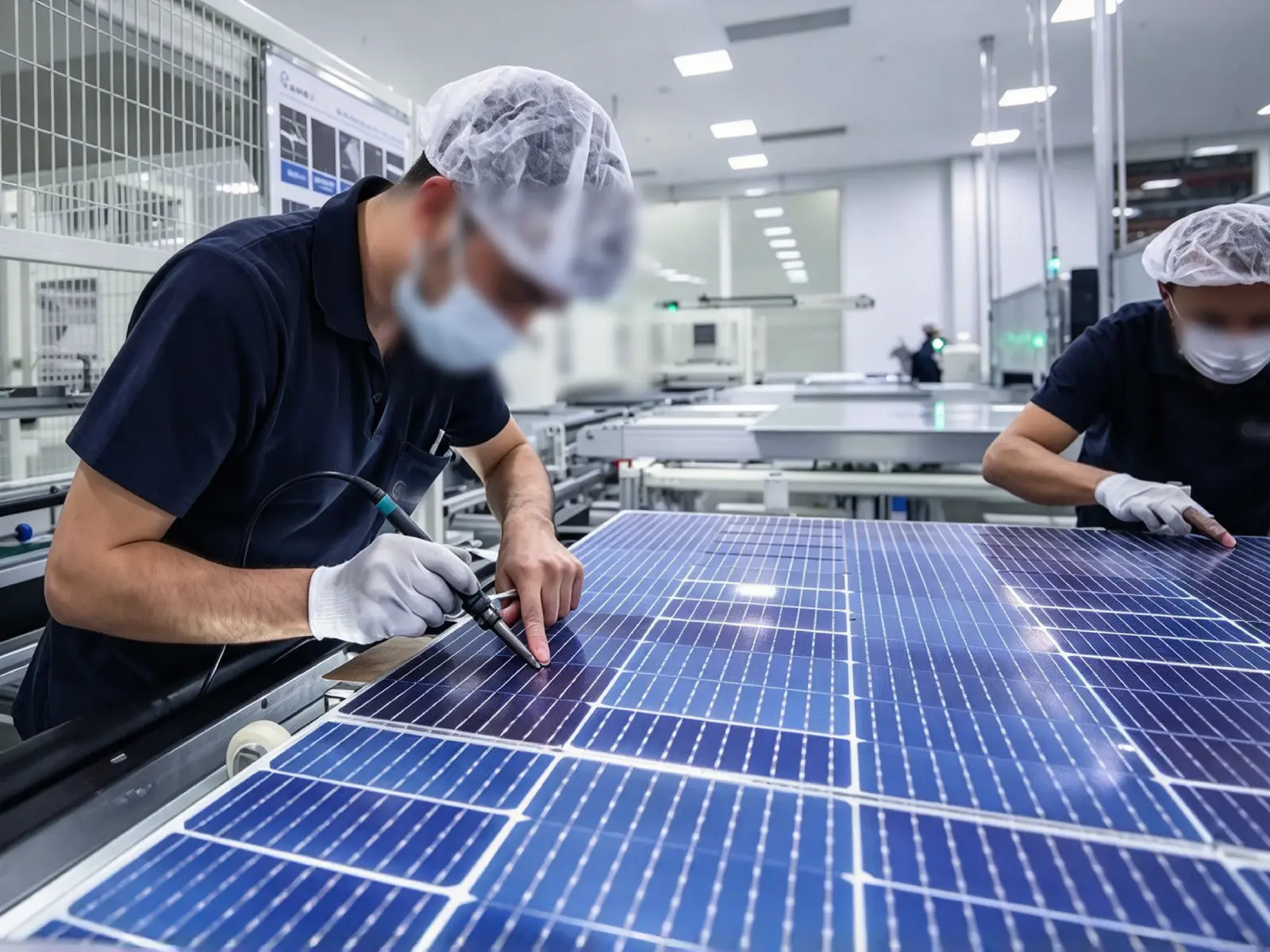
Qualified manufacturers implement 100% full inspection instead of random sampling:
- 100% EL electroluminescence testing to eliminate micro‑cracks, virtual welding and broken grids.
- Full IV curve testing to ensure actual power matches nominal parameters.
- High‑voltage withstand testing to avoid electrical leakage risks.
- 1000‑hour damp heat test and cyclic bending aging test to verify long‑term stability.
7. 2026 Order Delivery Standard: MOQ, Lead Time & Price Trend
| Order Stage | Typical MOQ | Standard Lead Time | Remarks |
|---|---|---|---|
| Prototype Sample | 1–5 pcs | 2–4 weeks | Sample fee refundable upon mass production confirmation |
| Pilot Production | 50–200 pcs | 3–5 weeks | Process validation and third‑party certification testing |
| Standard Mass Production | 200–500 pcs | 4–6 weeks | 100% full QC inspection and stable delivery |
| Large‑scale Production | 1000+ pcs | 5–8 weeks | Dedicated capacity reservation and customized packaging support |
Need sample validation or formal quotation for your project? Contact us for free samples & wholesale pricing.
8. Six Costly Sourcing Mistakes to Avoid
Summarized from mass project cases, these six errors cause the heaviest losses in procurement and project operation:
- ❌ Mistake 1: Adopting PET for long‑term outdoor installation — Hydrolysis and delamination occur within 1–3 years, leading to high replacement and maintenance costs.
- ❌ Mistake 2: Prioritizing low price over conversion efficiency — Low‑efficiency modules drastically reduce power output under fixed installation areas, causing long‑term revenue loss.
- ❌ Mistake 3: Accepting salt spray certificates without grade verification — Low‑level salt spray certification cannot adapt to marine and coastal corrosive environments.
- ❌ Mistake 4: Sourcing engineering‑grade panels at extremely low prices — Below‑market pricing usually means downgraded cells, PET fake ETFE, missing certifications and incomplete QC.
- ❌ Mistake 5: Cooperating with traders instead of direct manufacturers — Unable to support deep customization, unstable quality and delayed after‑sales response.
- ❌ Mistake 6: No written pre‑shipment QC standards — Lack of EL inspection, IV testing and AQL rules leaves no basis for rejecting defective goods and claiming compensation.
9. 22‑Point Supplier Due Diligence Checklist (Directly for RFQ)
You may copy‑paste these questions directly into your RFQ email to suppliers.
9.1 Material & Technical Verification
- What cell brand and generation (PERC/TOPCon/IBC) are adopted? Can you provide official cell datasheets?
- Is the top surface material ETFE or PET? Please specify thickness, grade and supplier.
- Is the encapsulant EVA, POE or EPE? What is the scenario‑based selection basis?
- What is the junction box IP rating? Is it fully resin‑potted? Please specify brand and specs.
- Do you conduct 100% full EL inspection? Can you provide sample inspection reports?
- Can you provide IEC 61215:2021 (with MQT 22 bending test) and IEC 61730:2023 full reports?
- Is marine panel salt spray certification Level 6? Can you provide complete test data?
- Do high‑humidity environment panels pass the 1000‑hour 85°C/85%RH damp heat test?
9.2 Production & Customization Capacity
- Do you own in‑house lamination and laser scribing lines, or outsource production?
- What are the maximum and minimum customizable dimensions and irregular shape ranges?
- What is the maximum bending angle and corresponding substrate warranty scope?
- Can you customize junction box position, cable outlet direction and wire gauge?
- What is your monthly maximum production capacity and peak season capacity guarantee plan?
- Do you support OEM private labeling, laser marking and customized packaging & documents?
9.3 Commercial & Export Compliance
- What are the MOQ and standard lead time for samples, pilot and mass orders?
- What Incoterms (FOB/CIF/DAP) and payment terms are available for new clients?
- Can you provide complete customs clearance documents and certificates of origin?
- Are you familiar with the 2026 EU NZIA net‑zero industry compliance criteria?
- Can you provide verifiable overseas client references and project cases?
- What is the official product warranty period, claim process and response time?
10. Conclusion & Official Cooperation Statement
The flexible solar industry has abandoned the low‑price‑oriented disorderly competition era in 2026. Professional project selection focuses on scenario matching, material compliance, stable quality and reliable delivery. For long‑term outdoor, marine, architectural and commercial projects, the standard high‑performance configuration is fixed: ETFE surface + POE/EPE encapsulation + TOPCon high‑efficiency cells + full compliant certification. Strict manufacturer verification and full‑process quality inspection are essential to avoid project risks.
Gaotu Innovation specializes in the R&D, customized production and global export of high‑quality flexible solar panels. With rich experience in RV, marine vessel, BIPV architecture, outdoor IoT power supply and premium OEM customization, we own independent production lines, complete QC systems and mature overseas delivery capabilities. We provide one‑stop solutions from sample verification and small‑batch trial production to large‑scale mass production, fully complying with 2026 global certification and compliance standards, delivering stable, durable and highly adaptable flexible solar products for worldwide clients.
Get in touch for free quotations & product samples
Phone number / WhatsApp:+86 13510536176 & Wechat
Email address:info@gt‑pow.com
Official Website:www.gtpowsolar.com
Related Posts
How to Choose a Reliable Flexible Solar Panel Manufacturer
1. Why Flexible Solar Sourcing Frequently Fails Flexible solar panels have evolved far beyond basic…

Verified Foldable Solar Panel Supplier & OEM/ODM Manufacturer
Empowering global brands, outdoor retailers, and solar distributors with premium Tier-1 cell portable solar blankets…
GTPOW 45W 2-in-1 Solar Charger Tote Bag: Your Ultimate Off-Grid Power Companion
Who We Are Behind every great innovation stands a company with vision. Gaotu Innovation (Shenzhen)…
Leave a Reply