

Solar Power Knowledge
Portable Solar Panel MOQ, Price & Lead Time: What Buyers Need to Know
 gaotu
gaotu
Abstract
This guide breaks down the three core commercial terms when sourcing portable solar panels: MOQ, pricing and lead time. It explains the underlying logic, typical industry ranges, sample workflow and common pitfalls for buyers. You will learn how these factors interact, what questions to ask suppliers, and how to avoid costly sourcing mistakes. Gaotu Innovation also provides OEM & ODM portable solar panel solutions with fast sampling for global brands and distributors.
Quick Answers
✅ MOQ: Standard folding solar panels usually 100–500 units; custom logo 300–1000 units; full ODM new mold 1000–5000 units.
✅ Samples: Standard samples 3–7 days; custom logo samples 7–10 days; rush samples available within 72 hours.
✅ Lead time: Standard bulk orders 7–30 days; custom logo 20–35 days; new mold development 45–60 days.
✅ Price drivers: Solar cell grade, ETFE/PET surface, wattage, certifications, order quantity and customization level.
Introduction
Once you have identified a few potential portable solar panel suppliers, the next questions are usually practical: What is the MOQ? How much does it cost? How long does production take?
These three factors — MOQ, price, and lead time — often determine whether a deal moves forward. They also reveal a lot about the supplier’s business model.
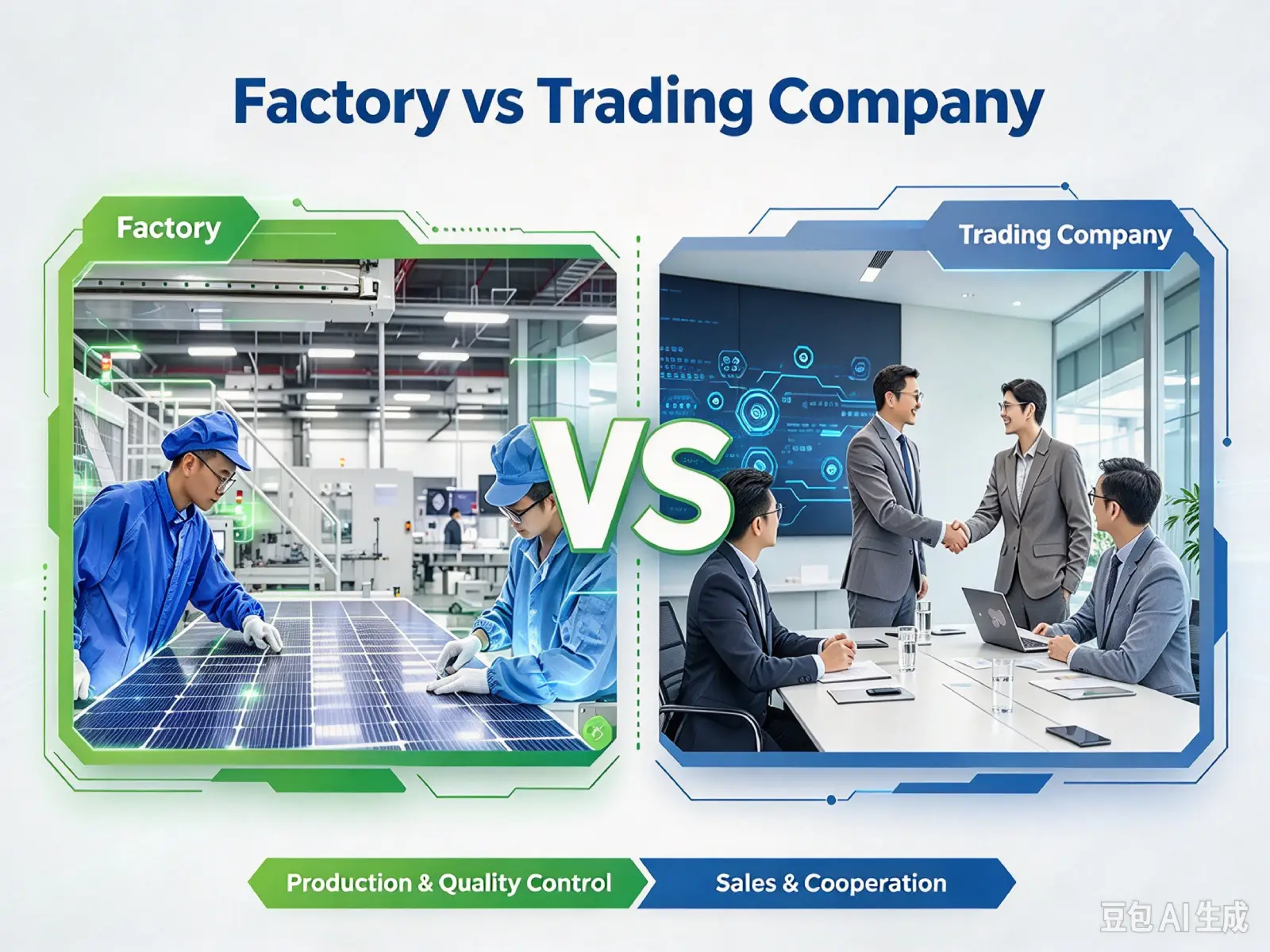
A trading company may offer flexible MOQs but higher prices. A factory may have stricter MOQs but better pricing and lead time control. Understanding how each factor works helps you negotiate effectively and plan your inventory.
This guide explains how MOQ, pricing, and lead time work in the portable solar panel industry. It covers typical ranges, the logic behind them, and how to evaluate whether a supplier’s terms fit your business.
1. What Is MOQ and Why It Exists
MOQ stands for Minimum Order Quantity. It is the smallest order a supplier is willing to accept for a given product.
MOQ exists because production has fixed costs. Setting up a production line, sourcing materials, programming machines, and running quality tests all take time and money. If an order is too small, the supplier cannot cover these costs.
In the portable solar panel industry, MOQ varies widely depending on:
-
Product type — standard folding panels vs custom-designed panels
-
Customization level — logo printing vs full structural redesign
-
Material availability — standard cells vs special-order components
-
Factory size — small workshops vs large-scale manufacturers
-
Order history — first-time buyer vs repeat customer
Understanding these variables helps you anticipate what MOQ a supplier might require.
2. Typical MOQ Ranges for Portable Solar Panels
There is no universal MOQ. But here are general ranges you may encounter.
| Product Type | Typical MOQ Range |
|---|---|
| Standard folding panels (no customization) | 100–500 units |
| Custom logo / packaging | 300–1,000 units |
| Custom power / structure | 500–2,000 units |
| Full ODM design (new mold, new structure) | 1,000–5,000 units |
| Flexible panels | 200–1,000 units |
| Tempered glass panels | 100–500 units |
These are rough guides, not fixed rules. Some factories are more flexible for first orders, especially if they see long-term potential. Others are strict because their production lines are optimized for larger runs.
Key takeaway: MOQ is negotiable, but it depends on the product, customization level, and your relationship with the supplier.
3. How Pricing Works for Portable Solar Panels
Price is not just a number. It reflects materials, labor, overhead, certification, packaging, and margin. Understanding the cost structure helps you evaluate whether a quote is reasonable.
3.1 Main Cost Components
-
Solar cells — the largest cost driver; efficiency and brand matter
-
Encapsulation materials — ETFE, PET, EVA, backsheet
-
Frame and structure — aluminum, plastic, folding mechanism
-
Circuit and connectors — junction box, cables, MC4, USB ports
-
Labor — assembly, testing, packaging
-
Certification and testing — CE, RoHS, FCC, TUV
-
Packaging — retail box, manual, accessories
-
Logistics — depends on Incoterms (EXW, FOB, CIF, DDP)
-
Margin — factory profit
3.2 Why Factory Prices Are Lower
A factory does not need to add a trading company’s margin. It also controls production scheduling, which reduces waste and downtime. These factors usually translate into lower prices for the same specification.
3.3 What Affects Price Most
-
Power output — higher wattage generally costs more
-
Cell efficiency — premium cells cost more
-
Surface material — ETFE is more expensive than PET
-
Structure — folding mechanisms and reinforced frames add cost
-
Certification — products certified for multiple markets cost more
-
Order quantity — larger orders usually get better unit prices
-
Payment terms — some suppliers offer discounts for early payment
3.4 Price Ranges (Indicative)
Prices vary by specification and order volume. As a rough reference:
-
Small folding panels (20W–60W): lower cost per unit, higher cost per watt
-
Mid-range folding panels (100W–200W): most common for consumer brands
-
High-power folding panels (300W–400W): higher cost, premium market
-
Flexible panels: higher cost per watt due to materials
-
Tempered glass panels: competitive cost per watt at higher volumes
Always compare quotes on the same specification. A lower price may mean lower power, lower-grade cells, or fewer certifications.
Key takeaway: Price reflects specification. Compare like for like, and ask for a cost breakdown if a quote seems unusually high or low.
4. Sampling: Process and Cost
Before mass production, most buyers request samples. Sampling serves several purposes:
-
Verify product quality and workmanship
-
Test performance in real conditions
-
Check packaging and accessories
-
Confirm customization details
-
Evaluate communication and responsiveness
4.1 Sampling Timeline
Typical sampling timelines:
| Sample Type | Timeline |
|---|---|
| Standard product sample | 3–7 days |
| Custom logo sample | 7–10 days |
| Custom structure sample | 10–20 days |
| New mold development | 20–45 days |
Some factories can rush samples in 72 hours for urgent requests, especially for standard products.
4.2 Sample Cost
Sample costs vary. Common models:
-
Free sample, buyer pays shipping — for standard products
-
Paid sample, refunded on mass order — for customized samples
-
Paid sample, no refund — for fully custom designs
Ask about the sample policy upfront. A supplier that charges a fair sample fee and refunds it on the first mass order is usually serious about long-term partnership.
4.3 What to Check in a Sample
-
Power output vs specification
-
Build quality and finish
-
Folding mechanism durability
-
Connector and cable quality
-
Packaging and documentation
-
Certification labels
Key takeaway: Sampling is an investment. Do not skip it, and do not rush it.
5. Lead Time: From Order to Delivery
Lead time is the time from order confirmation to shipment. It includes:
-
Material preparation
-
Production scheduling
-
Manufacturing
-
Testing
-
Packaging
-
Quality inspection
5.1 Typical Lead Times
| Order Type | Typical Lead Time |
|---|---|
| Standard product, small batch | 7–15 days |
| Standard product, large batch | 15–30 days |
| Custom logo / packaging | 20–35 days |
| Custom structure | 30–45 days |
| New mold development | 45–60 days |
These ranges depend on factory capacity, material availability, and order priority.
5.2 Factors That Affect Lead Time
-
Order quantity — larger orders take longer
-
Customization level — more customization means more steps
-
Material availability — special cells or materials may need lead time
-
Factory workload — peak season can extend lead times
-
Certification requirements — testing adds time
-
Payment and documentation — delays here delay production
5.3 How to Reduce Lead Time
-
Place orders earlier, especially before peak season
-
Choose standard products where possible
-
Provide clear specifications and artwork early
-
Confirm payment and documents quickly
-
Build a relationship with the supplier for priority scheduling
5.4 Delivery Terms
Clarify Incoterms:
-
EXW — buyer arranges everything from factory
-
FOB — supplier delivers to port
-
CIF — supplier covers cost, insurance, freight
-
DDP — supplier delivers to buyer’s door, duties paid
Each term affects cost and responsibility. Choose based on your logistics capability.
Key takeaway: Lead time is not fixed. Discuss it early and plan around peak seasons.
6. How MOQ, Price, and Lead Time Interact
These three factors are connected. Changing one often affects the others.
-
Lower MOQ may mean higher unit price
-
Faster lead time may require higher cost or priority scheduling
-
Higher order quantity usually lowers unit price
-
More customization increases both lead time and cost
When negotiating, decide which factor matters most:
-
If cash flow is tight, prioritize lower MOQ
-
If margin is tight, prioritize better pricing
-
If launch timing is critical, prioritize lead time
A good supplier will help you find the right balance.
7. Questions to Ask Before Ordering
Use this checklist when discussing MOQ, price, and lead time.
MOQ:
-
What is the MOQ for this product?
-
Is MOQ flexible for first orders?
-
Does MOQ change with customization?
Price:
-
What is included in the quote?
-
What are the payment terms?
-
Are there discounts for larger orders?
-
How do you handle price changes in materials?
Sampling:
-
How long does sampling take?
-
What is the sample cost?
-
Is the sample fee refundable?
Lead Time:
-
What is the lead time for this order?
-
What factors could delay production?
-
How do you communicate delays?
Delivery:
-
What Incoterms do you offer?
-
Can you ship to our warehouse?
-
What documentation do you provide?
Key takeaway: Ask these questions early. Clear answers indicate a professional supplier.
8. Common Mistakes Buyers Make
-
Focusing only on price and ignoring quality
-
Accepting a quote without checking specifications
-
Skipping samples to save time
-
Not confirming lead time in writing
-
Assuming MOQ is fixed
-
Ignoring packaging and documentation
-
Failing to plan for peak season
Avoiding these mistakes saves time, money, and frustration.
9. Conclusion
MOQ, price, and lead time are not just numbers. They reflect how a supplier operates and how well they can support your business.
To summarize:
-
Understand what drives MOQ and how to negotiate it
-
Know the cost components behind a quote
-
Plan sampling carefully
-
Discuss lead time early and in writing
-
Balance MOQ, price, and lead time based on your priorities
A supplier that is transparent about these factors is more likely to be a reliable partner.
If you are evaluating portable solar panel suppliers and want clear answers on MOQ, pricing, and lead time, Gaotu Innovation is happy to help. With 18 years of OEM experience, in-house production in China and Indonesia, and a 72-hour sampling capability, we support brands, distributors, and project buyers worldwide. You can request a quote, ask for samples, or download our product catalog to learn more.
Related Posts
Customized Power Portable Solar Panel: Wattage, Voltage, and OEM Specs
Article Summary This guide explains how distributors, system integrators, and bulk buyers can specify Customized…

Balcony Solar Kits for Wholesale: OEM/ODM Guide 2026
The Bottom Line: The Wholesale Window for Balcony Solar Is Right Now If you are…
How to Order OEM & ODM Portable Solar Panels: Complete Sourcing Checklist
Executive Summary: Sourcing off‑grid solar products involves far more than just solar cell efficiency. For…


Leave a Reply