

Solar Power Knowledge
Custom Solar Panel Bulk Order: How to Choose Between OEM, ODM, and White-Label
 gaotu
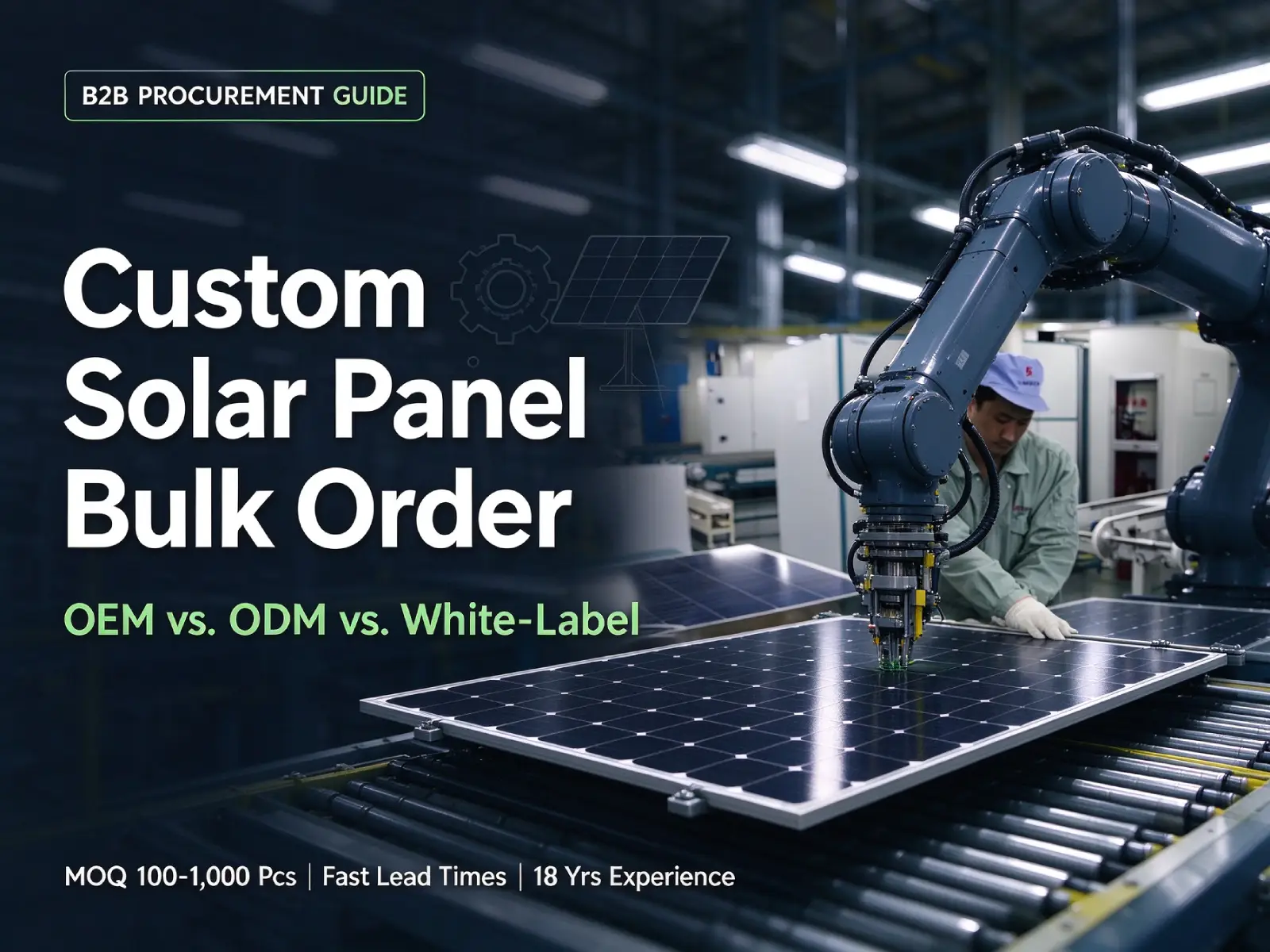
Article Summary: Choosing between OEM, ODM, and white-label for custom solar panel bulk orders depends on your brand stage and volume. This guide breaks down the real MOQ thresholds (ranging from 100 to 1,000 pieces), lead times, and investment costs for each model. It also highlights the high-ROI customization options (like cable length and connectors) and provides a checklist for reviewing custom quotations to avoid hidden engineering fees.
Quick Answers: Custom Solar Panel Models
- What is the MOQ for white-label solar panels?
Typically 100 to 300 pieces, as no structural changes are required. - What is the MOQ for ODM solar panels?
Around 300 to 500 pieces, allowing for logo, color, and packaging adjustments on existing platforms. - What is the MOQ for OEM solar panels?
Usually 500 to 1,000 pieces, especially if new tooling or fully new dimensions are involved. - Which customization model has the fastest lead time?
White-label, which ships in 7 to 10 days. ODM takes 15 to 25 days, and OEM takes 25 to 40 days.
If you are trying to decide whether to source standard panels or have a factory build to your specifications, this article breaks down the thresholds and use cases for the three customization models. We aren’t going to discuss “how flexible customization can be” in vague terms. We are going to answer one specific question: based on your current brand stage and order volume, which path—OEM, ODM, or white-label—should you take.
This guide is written for distributors planning a private-label line, outdoor brands seeking product differentiation, and system integrators requiring custom specifications. If you only need standard power-band panels for routine installation, start with our [Bulk Supply Guide]. Lead times and pricing for standard products are both better.
First, Understand What Actually Separates the Three Models
Many suppliers treat “customization” as a single selling point, but OEM, ODM, and white-label are three distinct things when it comes to design ownership, MOQ, lead time, and investment cost.
OEM (Original Equipment Manufacturing) means you provide the brand and detailed specifications, and the factory builds to your drawing or technical requirements. The design belongs to you; the factory only manufactures. Customization covers dimensions, voltage, circuit layout, junction box position, connector type, packaging, and labeling. Lead time is typically 25 to 40 days, including tooling and circuit design. This suits brands with a defined product vision and a need for exclusive specifications.
ODM (Original Design Manufacturing) means you provide general requirements (e.g., “a 200W foldable panel for outdoor camping, IP67 waterproof”), and the factory adapts an existing platform and provides the design for you to brand. Design ownership sits with the factory; you receive a customized version of a proven platform. Customization is moderate: logo, color, packaging, and cable length can be adjusted, but the core structure follows the factory’s existing design. Lead time is around 15 to 25 days. This suits brands without in-house engineering that still want a differentiated product.
White-label means the factory’s standard product is shipped with your logo and packaging, with no structural changes. Lead time is the shortest, 7 to 10 days. This suits Amazon sellers and regional distributors testing the market, or anyone who needs a branded appearance without any engineering investment.
One fact that is easily overlooked: white-label does not equal “low-end.” Factory standard products are often mature designs validated by the market, with more controllable yield and consistency than a brand-new custom build. If you are just starting a private label, launching with white-label and gradually moving to ODM or OEM is the lower-risk path.
MOQ: The Real Thresholds for Each Model
MOQ is where most buyers get stuck in customization discussions. There is no single industry number, but there is a useful tiering to reference.
White-label MOQ is the lowest. Applying a logo to an existing design requires no engineering changes, and some factories can go as low as 100 to 300 pieces. Some factories set the MOQ for standard size and voltage adjustments at 50 pieces, but that is on the low end and the corresponding price premium needs confirmation.
ODM MOQ is in the middle. Because appearance, packaging, and some electrical parameters are adjusted, the factory needs a small trial run to validate consistency. The typical threshold is 300 to 500 pieces. This volume suits brands that have validated market demand and are preparing to scale into channels.
OEM MOQ is the highest. If new tooling, new circuit design, or a completely new form factor is involved, the factory needs to amortize engineering and tooling costs. MOQ typically starts at 500 to 1,000 pieces. Below that volume, the per-unit engineering allocation makes the quote impractical. Some suppliers accept 100 pieces for “standard modifications on an existing platform” (voltage, size, connector changes), but fully new designs usually start at 500 pieces.
A practical suggestion: do not start directly with OEM for your first custom order. Run a round with ODM or deep white-label to validate market acceptance and return rates, then decide whether to invest in OEM engineering. The customization premium already exists (typically 10% to 25% on top of standard pricing, depending on depth), and when combined with small-batch premiums, first-order cost control becomes harder than expected.
The Customization Checklist: What Is Worth Doing and What Is Not
Not every “customizable item” deserves your time and budget. Here is a ranking by return on investment.
Customization items worth prioritizing:
-
Cable length and exit position. This is a customization item that adds almost no cost but directly affects installation experience. Factories typically default to 300mm or 900mm leads with the exit centered on the back. If your product requires a side exit or the installation space demands a specific routing direction, specifying it at order costs the factory almost nothing to adjust cutting and routing. If you receive standard lengths and find they do not fit, retrofitting later increases both cost and failure risk.
-
Connector type. MC4 is the industry default, but if your end product uses a specific interface (e.g., Anderson Powerpole or XT60), swapping the connector head on the line is inexpensive. Confirming polarity and interface standard is more meaningful than debating “can you change it.”
-
Packaging and labeling. The barrier to retail packaging customization is lower than many assume. Color boxes, manuals, and barcode labels can be done at ODM volumes. If you plan to enter brick-and-mortar retail or Amazon FBA, packaging compliance (dimensions, weight marking, certification label placement) matters more than aesthetic design.
Customization items to evaluate carefully:
-
Completely new dimensions or form factors. Changing the panel’s aspect ratio or thickness involves cell layout, encapsulation process, and frame tooling adjustments. This is not a “change a number” exercise—engineering investment and MOQ thresholds rise significantly. Unless your installation space has a hard constraint, prioritize selecting a close specification from the factory’s existing sizes.
-
Special encapsulation materials (e.g., double-glass, transparent backsheet, ETFE surface). These materials have their own minimum procurement batches, and the corresponding process parameters differ from standard lines. If you only need a few dozen pieces for testing, the factory may be unwilling to procure the special material separately. Confirming whether the supplier already uses that material and has an existing process window is more critical than confirming “can you do it.”
-
Higher power density. Requiring more wattage in the same area means higher-efficiency cells or tighter layout. This typically corresponds to higher cell cost and stricter yield control. If your application is area-sensitive (e.g., RV roof or balcony railing), the premium may be acceptable; if area is not a constraint, selecting a standard power band is more economical.
What to Look for in a Custom Order Quotation
When you receive a custom quote, do not focus only on the total price. The following three items determine the true cost and risk of the order.
First, confirm whether the quote includes tooling/engineering fees and who owns them. If new tooling or circuit design is involved, the factory usually charges a one-time NRE (Non-Recurring Engineering) fee. The critical question is: is this fee waived on reorders? Who owns the tooling? Can it be transferred if the partnership ends? Asking these questions at the quotation stage is far more useful than disputing them later.
Second, request a line-item quote, not a bundled price. Ask the factory to separate the panel body, customization items (cable, connector, packaging), engineering fee, and tooling fee. This lets you see exactly what each customization costs and helps you judge which fees should disappear on reorders.
Third, confirm the deviation range between samples and mass production. The most common dispute in custom orders is not “you cannot make it,” but “what you made differs from the sample.” Require the factory to state allowable deviations for key parameters (power ±%, dimensional tolerance, color difference range) at sample approval and write them into the order confirmation. Power binning deviation is especially important: if your system design is based on a specific voltage, production batches falling into different power bins can cause matching issues.
Next Steps
If you have determined your customization model and approximate volume, the next step is to prepare a structured RFQ, not just send “I want custom solar panels.” The RFQ should include: application scenario (RV/camping/balcony/commercial), target dimensions and power, voltage and connector requirements, packaging and branding needs, target market (which affects certification and labeling requirements), and expected first order plus annual reorder plan.
For the complete supplier verification framework (certifications, EL reports, factory audits), see our pillar article, [Solar Panel Wholesale Supplier Guide]. If you are still confirming the MOQ tiers and lead time logic for bulk supply, the [Bulk Supply Guide] has a detailed breakdown.
MOQ and lead time data in this article are industry reference ranges. Actual terms are subject to real-time supplier quotations and contract agreements.
About Gaotu Innovation
Gaotu Innovation has 18 years of OEM/ODM experience in the solar panel industry, having served outdoor energy brands including Anker, EcoFlow, and Bluetti on foldable panel, lightweight module, and structural component projects. Our capabilities span the full spectrum from white-label to deep OEM: our Dongguan main factory and Indonesia manufacturing center support multi-SKU parallel production and 72-hour rapid prototyping, 380 global patents protect custom structures, and the Indonesia base provides a tariff risk mitigation option for North American clients. If you need a customization feasibility assessment and tiered quote for your specific application, please contact us.
Related Posts
Bulk Solar Panel Orders: How to Plan MOQ, Container Loading and Lead Times
Introduction A bulk solar panel order is not just a larger version of a small…

Monocrystalline Portable Solar Panel Factory: Premium Efficient & Waterproof Solar Panels for Global Off-Grid Use
1. Why Monocrystalline Portable Solar Panels Are Dominating the Global Market With the rapid growth…

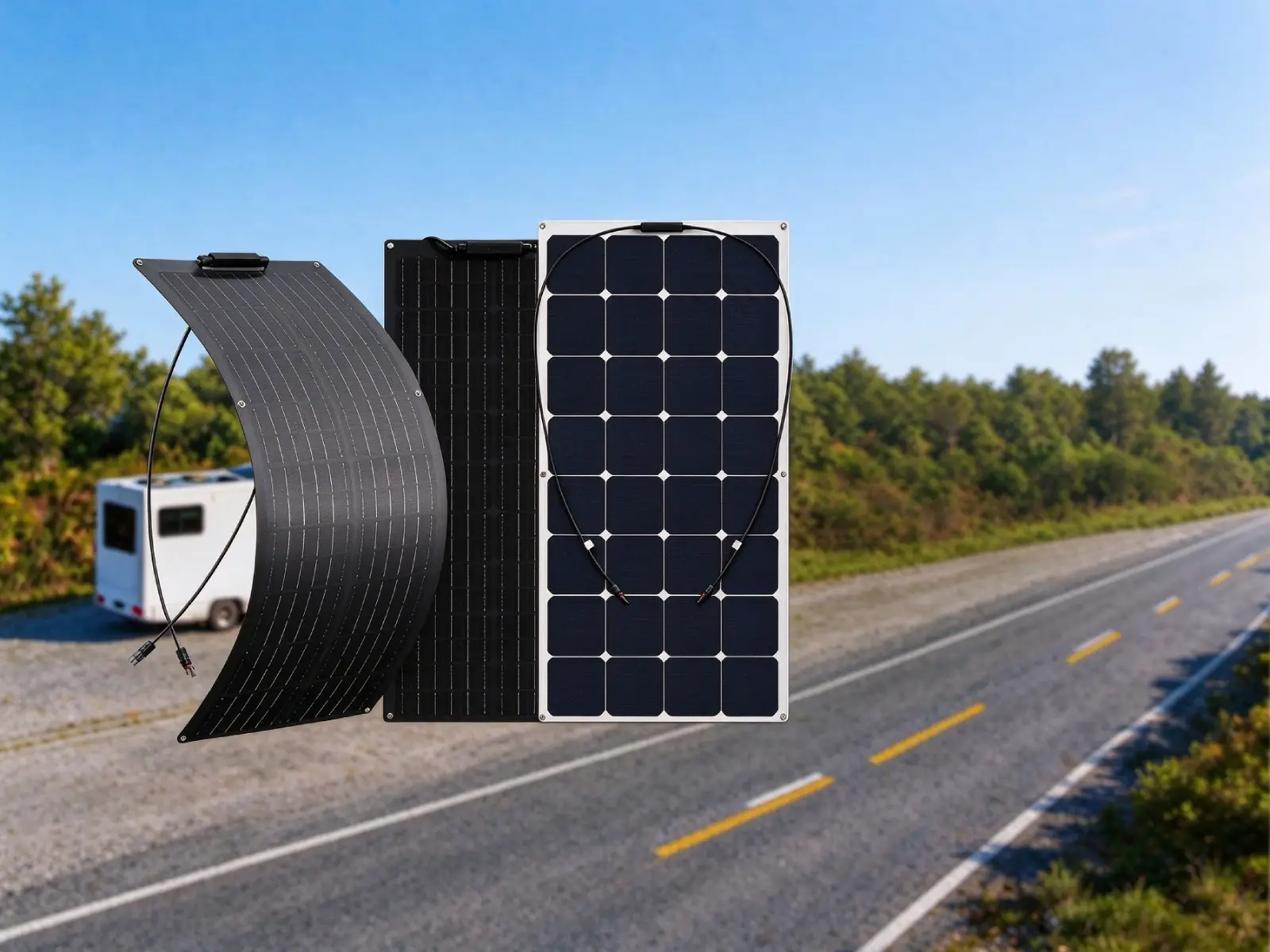
RV Solar Panel Selection Guide: How to Pick the Right Panels for Your RV
Key Takeaways: Ultimate RV Solar Panel Buying Guide Picking RV solar panels isn’t just about…

Leave a Reply