

Solar Power Knowledge
Solar Panel Wholesale Supplier Guide: How to Source Bulk Supply Direct from a Factory
 gaotu

If you are looking for a solar panel wholesale supplier and want to cut out the middleman by buying directly from a factory, this article is written for you. We will not waste your time with vague claims about “quality excellence” or “competitive pricing.” What follows is a practical breakdown of how factory-direct sourcing differs from buying through traders, how MOQ and pricing tiers actually work for bulk orders, and how to screen out unreliable suppliers before you place a deposit.
This guide is written for B2B buyers with a defined procurement plan: installers, EPC contractors, project developers, and distributors building private-label brands. If you only need one or two panels for testing or residential use, much of this content will go beyond what you need.
First, Determine Whether You Are Dealing with a Factory or a Trader
Buyers who search for “factory direct wholesale solar panel” usually have one core concern: they do not want to pay for an unnecessary layer of intermediation.
The practical difference between factory-direct and trader-sourced purchasing shows up in three places. Price structure: a factory quote is built on the cost of cells, glass, frame, encapsulant, and manufacturing margin. A trader quote stacks service fees and profit on top of the factory price. MOQ flexibility: factories tend to set MOQs more rigidly because changeovers carry real costs. Traders may offer lower entry thresholds by consolidating orders. Issue response: when quality or delivery problems arise, a factory can trace the issue back to the production line directly. A trader has to route the problem through an internal layer first.
This does not mean traders have no value. If your order volume is too low to meet a factory’s MOQ, or if you need to mix multiple specifications and accessories in one shipment, an experienced trader can reduce procurement complexity. The key point is: you need to know what you are paying for. If a supplier claims to be a factory but cannot provide a production line video, cannot arrange a factory audit, and cannot explain where the cells come from, then “factory direct” is just a marketing phrase.
China’s solar manufacturing clusters in Shandong, Guangdong, and Anhui form a vertically integrated supply chain from cells to finished modules, and proximity to raw materials and ports does create genuine cost advantages. But that does not automatically mean every supplier you encounter is a source factory. The verification is straightforward: ask for a live video walkthrough of the production line, or commission a third-party factory audit. Any supplier that cannot clear this bar should be treated as a trader, regardless of what they call themselves.
How Bulk Supply Actually Works: MOQ, Pricing Tiers, and Lead Times
Buyers searching for bulk supply solar panel or large quantity solar panel supply are trying to confirm three things: can you handle my volume, at what price, and how soon can it ship.
The bulk logic for solar modules differs from typical commodities. A pallet typically holds 30 to 36 modules, making it the entry-level bulk option below full-container volume. A full 40-foot high-cube container holds roughly 600 to 700 modules depending on module size and power output. The downward pressure on unit price from pallet to full container comes from three sources: lower changeover frequency on the production line, packaging and logistics costs being spread across more units, and better payment terms on raw material procurement.
But one common misunderstanding needs correcting: higher volume does not automatically mean a lower price. If the specification you want happens to be a standard product the factory is already running, the cost of inserting your order is low, and there is more room to negotiate. If the power band or dimensions you require need a dedicated changeover and special material procurement, the factory may quote a higher unit price even at decent volume to cover the changeover loss. When requesting a quote, ask what specifications the factory is currently running in volume before naming your quantity. This will get you a more competitive number than simply sending a volume figure.
On lead times, standard products in stock typically ship within days. When production scheduling is required, the industry’s common delivery window is around 20 to 30 days. Peak season, usually ahead of installation seasons in Europe and North America, tightens scheduling and can extend lead times. If your timeline is sensitive, ask for a screenshot or summary of the current production schedule before signing. That is far more reliable than “we will arrange it as soon as possible.”
How to Tell Whether a Supplier Is Worth Pursuing
The following five dimensions should be checked before any deposit is paid. Each comes with a specific “how to verify” rather than a generic “pay attention to quality.”
First, certifications must match the batch, not just sit on the website. IEC 61215 (performance durability) and IEC 61730 (safety) are baseline requirements. Entering the EU requires CE marking; entering the U.S. market requires UL listing. But the key question is not “do you have certificates.” It is whether the certificate covers the exact model and batch you are quoting. Many suppliers display certificates from a product line several years old that does not correspond to what you are actually buying. Ask for the certificate number and verify its validity on the issuing body’s website.
Second, ask about the cell source, not just the module brand. Module power output and degradation behavior depend heavily on the cells. Ask the supplier to identify the cell manufacturer and model, and confirm whether it matches the quotation. If the answer is vague or “we use our own cells,” press for the factory name and capacity. In the solar industry, module assembly and cell manufacturing are separate businesses. Not many assembly plants also produce their own cells.
Third, request EL (electroluminescence) inspection reports. EL imaging reveals micro-cracks, broken fingers, and soldering defects that are invisible to the naked eye. Reputable factories perform EL sampling on each production batch before shipment. Ask for the EL report for your specific batch to accompany the quotation or contract, not a generic “quality certificate.” Suppliers willing to provide this generally operate with a higher level of transparency and process control than average.
Fourth, look at actual on-time delivery and response data. If you are sourcing through a B2B platform, historical metrics for on-time delivery rate and response time are usually available. A supplier with an on-time rate below 95% warrants caution when project schedules are tight. A supplier that takes more than half a day to respond to an inquiry is unlikely to handle quality issues efficiently after the sale.
Fifth, do not skip inspection on the first order. Regardless of how professional a supplier appears, arrange third-party inspection for your first order, or at minimum require a pre-shipment video inspection covering packaging, labeling, junction boxes, and frame appearance. On payment terms, prioritize channels with escrow or letter of credit support. Paying 100% upfront to a factory you have never physically visited is the most common mistake in procurement.
Custom vs. Standard: When to Choose Which
If your need is standard power-band panels for routine installation, go with standard-product procurement. Lead times and pricing are both better. But the following situations justify considering customization: you need panel dimensions to fit a specific installation space, you need your own brand marking, you need a specific junction box position or cable length, or you need frame thickness that matches a particular mounting system.
The barrier to customization is lower than many buyers assume. Basic logo printing and packaging label customization can be accepted by some factories at a few hundred units. But customization involving dimension changes, power adjustments, or special encapsulation materials (such as double-glass or transparent backsheet) significantly raises MOQ and lead time, and carries a higher price premium.
One customization item that is easily overlooked but adds almost no cost is cable length. Factories typically default to 300mm or 900mm leads. If your project site requires a specific length, specifying it at the time of order costs the factory almost nothing to adjust the cutting length. If you receive standard lengths and find they are too short, adding extension cables later increases both cost and failure risk.
If you have a defined customization need, request standard-product pricing and customized pricing separately. Establish the baseline price for the standard item first, then ask the factory to quote each customization item individually. This way you can see exactly what each customization costs.
Project-Level Supply vs. Retail Wholesale
If you are procuring for a specific commercial or industrial project, the evaluation criteria differ from general wholesale. Project buyers care less about the lowest unit price per panel and more about batch consistency and the response mechanism when something goes wrong.
On consistency, require the supplier to confirm that all modules come from the same batch and the same production line. Mixed batches in a large project can cause uneven power output and affect string efficiency. On delivery, project schedules are usually built backwards from a deadline. Whether the supplier can offer staged delivery matters: ship a portion first to support initial installation, then release the remainder in batches aligned with construction progress. This is more rational than pushing all inventory at once.
On warranty, standard product warranty (typically 10 to 12 years) and power warranty (25 to 30 years) are industry norms. But what project buyers really need to confirm is the warranty execution path: who to contact, what the response time is, and who bears the logistics cost of replacement modules. These details are often vague in standard warranty terms and need to be specified separately in the contract or purchase order.
For EPCs and installers, there is one practical reminder at the site level: confirm that frame thickness is compatible with your mounting clamps. Frame thickness varies between manufacturers (35mm and 40mm are common), and mismatched clamps cause installation delays on site. This information is usually stated on the datasheet. Two minutes of confirmation before ordering can save two days of trouble in the field.
What to Do Next
If you have read this far, you are a buyer with a real procurement need. The next step is not to place an order, but to approach suppliers with specific questions. Use the five verification dimensions above as a screening framework. Send the same question list to at least three suppliers and compare the quality of their answers, their response speed, and the depth of information they are willing to provide.
For a detailed breakdown of pricing tiers and MOQ structure in bulk supply, see our [Bulk Supply Guide]. If you have customization requirements (OEM/ODM/white-label), the [Custom Bulk Order Guide] covers the thresholds and use cases for all three models. If you are a project buyer, the [Commercial Project Supply] page outlines our capabilities and process for project-level sourcing.
Solar module pricing and supply conditions shift quickly with market and policy changes. Any price or lead-time references in this article are subject to real-time quotation.
About Gaotu Innovation
Gaotu Innovation is a source manufacturer that operates precisely according to the standards outlined above. With 18 years of OEM/ODM experience in the new energy sector, we possess over 50,000m² of modern production bases globally (including the Dongguan main factory, Dongguan branch factory, and Indonesia manufacturing center) with 1,200 employees. Backed by 380 global patents and production lines with over 92% automation, we achieve full-process quality traceability.
For B2B buyers, we not only provide scalable supply of rigid/flexible solar panels, foldable portable panels, and energy storage systems but also offer strong supply chain resilience. We operate five international warehouses (USA, Europe, Japan, Korea, Australia) for fast localized delivery, while our Indonesia manufacturing center effectively helps North American clients mitigate AD/CVD tariff risks. Currently, we serve as a long-term OEM/ODM partner for global top-tier outdoor energy brands including Anker, EcoFlow, and Bluetti. If you are looking for a stable, transparent, and globally capable factory-level partner, please contact us for real-time quotes and factory audit arrangements.
Related Posts

Balkonkraftwerk in Deutschland: Der komplette Ratgeber für 2026
Die Energiewende findet nicht nur auf großen Dächern statt – sie zieht zunehmend auf deutsche…
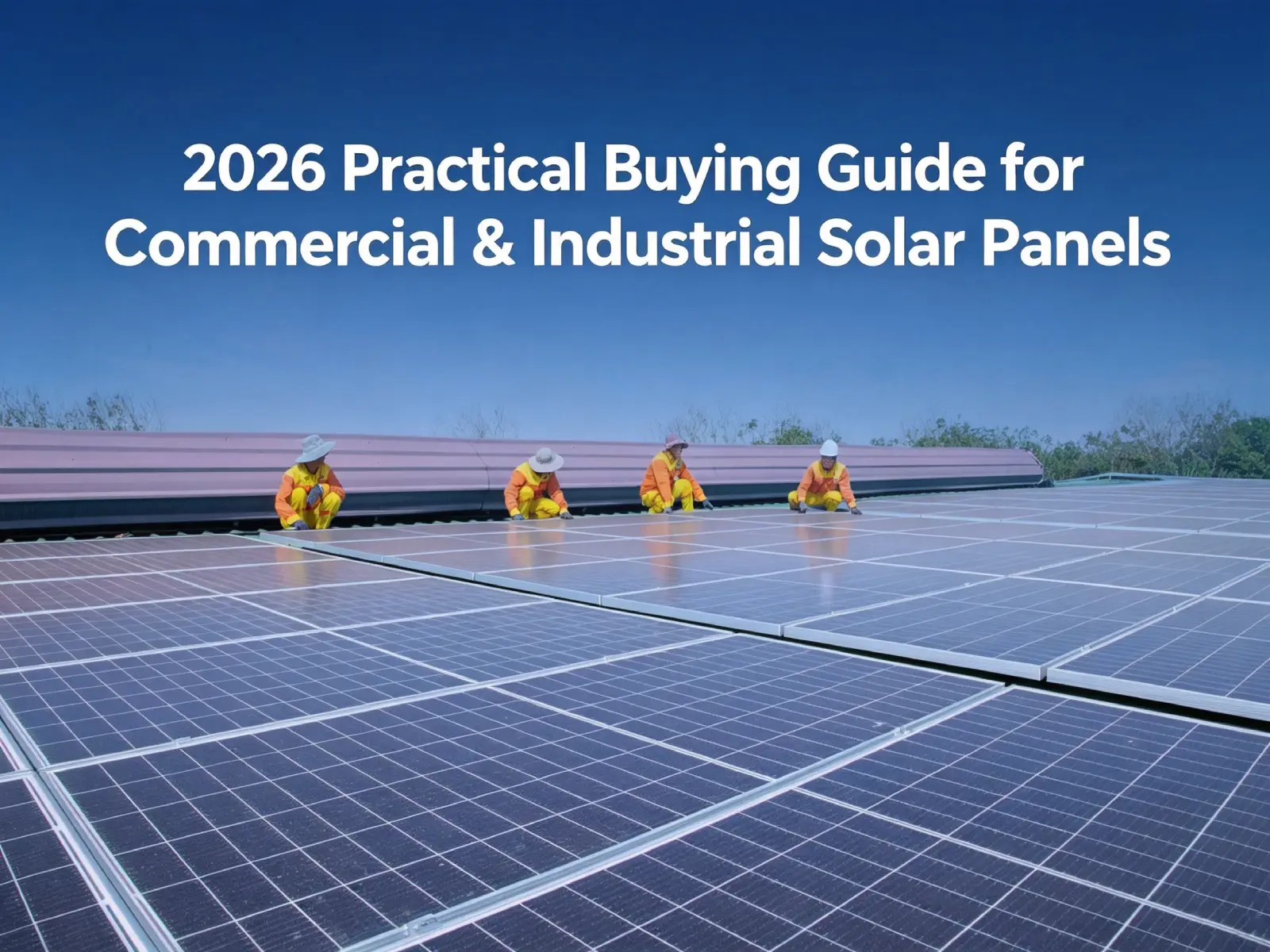
How to Select the Right Solar Panels for Your C&I Rooftop Project in 2026
Driven by Europe’s energy transition, more and more businesses are rolling out commercial‑industrial solar projects.…

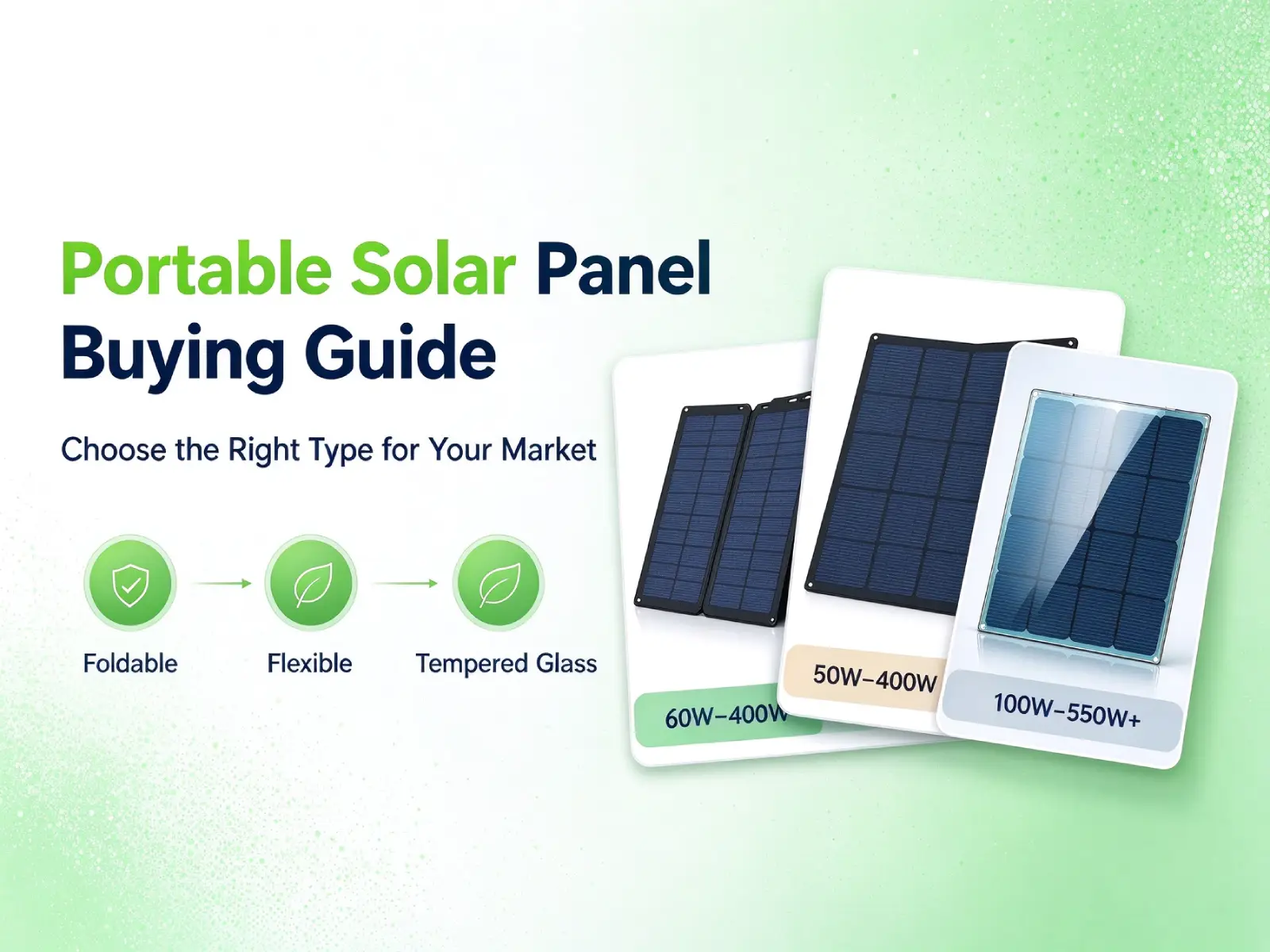
Portable Solar Foldable Panel Sourcing Guide for Wholesalers
If you supply brick-and-mortar stores, cross-border distributors, outdoor gear wholesalers, and RV accessory suppliers, you…

Leave a Reply