

Solar Power Knowledge
How to Select the Right Solar Panels for Your C&I Rooftop Project in 2026
 gaotu
gaotuDriven by Europe’s energy transition, more and more businesses are rolling out commercial‑industrial solar projects. Picking the right solar panels directly determines your power output and return on investment over the system’s lifetime. However, the market is flooded with various technical solutions: legacy PERC, TOPCon, HJT, and IBC back‑contact modules. Many business owners find themselves overwhelmed by all the options.
Common real‑world concerns include:
- Which panel technology fits my project best?
- Can poor panel selection lead to avoidable financial losses?
- Which technologies are worth investing in for the long term in 2025?
Drawing on real‑world European commercial‑industrial project experience, this article breaks down the pros, cons and use‑cases of different solar panel technologies. It delivers practical buying advice to help you steer clear of common pitfalls and secure stable solar‑generation returns.
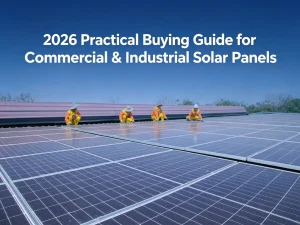
Commercial‑Industrial Solar Panels 2025: Market Reality & Real‑World Pain Points
According to data released by SolarPower Europe, Europe added over 60 GW of new solar capacity in 2024. Commercial‑industrial rooftop installations accounted for 35 % of that total, second only to utility‑scale ground‑mount plants. Germany, Italy and France are the key markets for such deployments.
Today’s market features a mix of competing technologies. Conventional PERC modules still hold roughly 70 % market share, while high‑efficiency N‑type products including TOPCon, HJT and IBC are gaining rapid traction at nearly 20 % market share, with fast‑paced technical upgrades.
Faced with an overwhelming list of specifications, many buyers make missteps at the component‑selection stage.
1. So many product options — where do I start?
New‑generation solar panels keep hitting the market, with huge variances in power rating, temperature performance, physical size and weight, making selection confusing.
For commercial‑industrial projects, solar panels are not isolated parts. A bad choice will not only reduce power generation, but also create knock‑on issues for racking design, inverter compatibility and cable layout — and may even introduce safety risks.
Focus on three core factors during selection:
- Real‑world mass‑production efficiency: A mere 1‑percentage‑point difference in efficiency can add up to over 10,000 kWh of power output across the full system lifecycle.
- Temperature coefficient: Summer temperatures run high across Southern Europe. The gap between ‑0.30 %/℃ and ‑0.35 %/℃ becomes very noticeable in hot weather.
- Whole‑system compatibility: Panel dimensions and weight must work well with rooftops, mounting structures, inverters and cabling.
Do not blindly chase the newest or most expensive technology. The optimal solution balances performance and cost while matching site‑specific conditions.
2. Poor panel choices will drag down project returns
The profitability of a solar installation hinges heavily on long‑term panel performance. Some projects cut upfront costs by selecting low‑efficiency, fast‑degrading budget panels. After a few years of operation, under‑performance and rising maintenance costs break the original financial projections.
Take a 100 kWp rooftop system as an example. When comparing 25‑year total energy output for IBC, HJT and TOPCon panels with similar upfront investment, HJT and IBC deliver notably higher long‑term power generation thanks to superior anti‑degradation and temperature‑resistance performance.
3. Highest efficiency ≠ best fit for your project
Many buyers default to purchasing panels with the best‑looking efficiency figures, assuming this guarantees maximum returns. This is not always true.
Even panels with impressive lab‑sheet specifications will under‑perform if mismatched to local climate patterns and your business’s power‑consumption profile. If you are working with a limited budget or restrictive rooftop conditions, prioritize suitability over top‑tier specifications.
Simply put: your goal is not to select the highest‑spec product on paper, but the one best‑suited for your project site.
Five Critical Metrics to Evaluate Commercial‑Industrial Solar Panels
Do not rely solely on marketing brochures. To achieve stable long‑term profits for your solar asset, pay close attention to the following five factors.
1. Mass‑production efficiency: Maximise energy output per rooftop area
Rooftop space is often a hard constraint for commercial‑industrial facilities. Higher‑efficiency panels let you install greater capacity within the same footprint.
Bear in mind: focus on real‑world mass‑production efficiency, not lab‑record peak efficiency, as real‑world outputs differ from lab results.
IBC modules eliminate front‑side shading from metal fingers, boosting energy yield by 5‑8 % and suiting projects chasing high output. TOPCon strikes a solid balance between performance and cost and remains a safe bet for most commercial‑industrial deployments. For systems above 100 kW, every 1‑percentage‑point efficiency gain lifts annual power generation by 5‑8 %, translating into tangible thousands‑of‑euros returns over a 25‑year lifespan.
2. Temperature coefficient: Minimise power losses in hot summer conditions
Rooftops across Central and Southern Europe heat up significantly in summer. Every degree‑Celsius rise in panel operating temperature reduces output — this is what the temperature coefficient measures.
In real‑world operating conditions, IBC panels deliver better thermal performance at ‑0.29 %/℃, outperforming TOPCon (‑0.32 %/℃) and PERC (‑0.35 %/℃). What looks like a minor decimal difference accumulates over hot summer months and materially impacts annual revenue.
Often overlooked during procurement, this metric is critical for high‑irradiance locations, hot factory buildings and metal rooftops.
3. Degradation performance: How long will your plant deliver steady profits?
Nearly all solar panels see some power drop‑off in their first year, followed by gradual annual degradation. Typical first‑year degradation ranges from 0.5 %‑2 %; poor‑quality panels degrade far faster, with energy output dropping more sharply over time.
Thanks to UV‑resistant backsheets and premium encapsulation validated by strict ageing tests, IBC panels limit first‑year degradation to ≤0.5 %, delivering stable power over the 25‑year warranty period. They are ideal for return‑focused projects and BIPV applications. High‑grade TOPCon sees ≤1 % first‑year degradation; traditional PERC generally sits at 1.5 %‑2 %.
Also evaluate encapsulation quality, water‑resistance and anti‑PID protection. For investors, degradation is not just a spreadsheet parameter — it directly shapes cash‑flow projections over more than a decade.
| Panel Type | 1st‑Year Degradation | Total 25‑Year Degradation | 25‑Yr Generation Gain (EUR) | Typical Application Scenarios |
|---|---|---|---|---|
| TOPCon | ≤1% | ≤15% | Baseline reference | Cost‑conscious commercial‑industrial rooftops seeking solid returns |
| HJT | ≤0.8% | ≤13% | +15000 | Poorly‑ventilated or harsh‑environment projects |
| IBC | ≤0.5% | ≤12% | +18000 | Aesthetic‑focused rooftops, BIPV, load‑limited roof structures |
4. Low‑light performance: Generate more power on cloudy days & off‑peak hours
Low‑light performance determines real‑world yields during cloudy weather, early mornings and partial shading events. This is especially important for regions with moderate solar resources such as Northern Germany, Central France and mountainous areas of Italy.
IBC back‑contact design removes front‑side metal shading and broadens the usable light‑spectrum range. It maintains solid output in cloudy conditions, winter periods and east‑west‑oriented rooftops. This advantage improves not only single‑panel output, but also overall project revenue stability.
HJT also offers excellent low‑light behaviour, outperforming PERC and some TOPCon variants, making it well‑suited for sites with high morning‑and‑evening power demand.
Note that European electricity prices fluctuate widely. Low‑light periods (early morning and late afternoon) often coincide with peak electricity‑price windows. Strong low‑light performance does not just generate extra kilowatt‑hours — it delivers higher economic value per kWh produced.
5. Size & weight: Do not overlook rooftop‑load constraints
Modern solar panels keep growing larger, evolving from 166 mm to 182 mm and 210 mm silicon wafers for higher single‑module power ratings. However, bigger is not always better.
Older buildings and steel‑structure rooftops have limited load‑bearing capacity. Over‑heavy panels create structural risks. Oversized modules also raise challenges for logistics, racking layout and wind‑load resistance. Electrical parameters must match inverters and combiner boxes, otherwise you will face energy losses and potential safety hazards.
Compact, lightweight IBC variants work well for load‑restricted rooftops, including steel roofs and BIPV installations, balancing power output and installation safety.
Avoid blindly choosing over‑large panels. Always factor rooftop load limits, system compatibility and installation conditions to guarantee long‑term plant safety.
Panel‑Selection Guidance for Three Real‑World Project Profiles
Small‑and‑medium rooftop installations, large‑scale industrial parks and special‑purpose building‑integrated projects each have distinct requirements. Below is actionable advice built on real‑project pain points.
1. Small‑and‑medium commercial‑industrial projects (< 500 kWp)
These are mostly factory buildings, office premises and retail properties owned by small‑to‑mid‑size businesses, with limited rooftop space and relatively stable power‑consumption profiles.
- Where rooftop space is tight, prioritise TOPCon modules with ≥22.5 % efficiency to make the most of available area.
- For lightweight steel rooftops, go for lightweight IBC panels to reduce structural stress while delivering good aesthetics and simpler installation.
- There is no need to over‑spec to expensive IBC or HJT products; prioritise cost‑effective N‑type monocrystalline panels.
Recommendation: TOPCon or lightweight IBC modules, balancing efficiency, compatibility and return on investment.
2. Large‑scale commercial‑industrial projects (≥ 500 kWp)
Industrial parks and logistics warehouses typically have abundant rooftop space and high daytime power consumption, making self‑consumption highly valuable. These projects demand high overall panel reliability.
- Prioritise high‑quality TOPCon or HJT products with low long‑term degradation to minimise performance loss and extend profitable operating lifespans.
- Opt for standardised, consistent‑specification modules to simplify bulk procurement and streamline later‑stage maintenance.
- If your rooftop surface has high reflectivity, deploy bifacial TOPCon / HJT double‑glass panels. Rear‑side gain can add 5‑15 % extra generation and lower your levelised‑cost‑of‑energy.
Recommendation: 182‑72 format TOPCon or bifacial double‑glass HJT modules.
3. Special‑use cases: BIPV, carports & agricultural greenhouses
For BIPV, solar carports and agricultural greenhouses, aesthetic and structural requirements sit alongside power‑generation targets.
- For BIPV: Choose lightweight, customisable all‑black or frameless IBC panels for architectural harmony.
- For greenhouses and solar carports: Deploy semi‑transparent HJT half‑cut panels to balance daylight transmission and power output.
- For harsh operating conditions including salt spray and high wind loads: Select highly‑reliable, anti‑PID panels with relevant salt‑mist and wind‑pressure certifications.
Industry Trends: How Technical Shifts Shape Your Component Choices
The industry is transitioning away from legacy PERC toward TOPCon, HJT and IBC technologies. These shifts directly impact multi‑decade financial models for solar assets. Project developers and investors need to understand these market movements.
1. N‑type technology will become the new industry standard
P‑type PERC still holds large existing market share, yet its efficiency ceiling has been reached. Starting in 2025, N‑type solutions such as TOPCon and HJT will gradually displace PERC:
- TOPCon: Continues cost reductions and fits most standard‑spec projects.
- HJT: Excellent bifacial performance and favourable temperature behaviour, ideal for high‑temperature, high‑albedo environments.
- IBC: Top‑tier efficiency and clean visual appearance, well‑suited for BIPV where performance and architectural aesthetics both matter.
N‑type market penetration will exceed 50 % within the next three years. Projects relying heavily on PERC will fall behind in generation performance, maintenance costs and asset value.
2. Panels are getting lighter and smarter
- Lightweight panels: Light‑weighted double‑glass and flexible modules will gain popularity to accommodate load‑limited rooftops and ease transport and installation.
- Smart panels: Integrated power optimisers and microinverters improve safety and simplify fault diagnostics.
For large, high‑requirement projects, smart panels support module‑level monitoring, reduce yield losses and cut maintenance workloads.
3. EU ESG & carbon‑footprint rules create new market requirements
New EU supply‑chain regulations mandate carbon‑footprint disclosure and end‑of‑life recycling obligations for solar products. Manufacturers must lower embedded carbon, improve recyclability and boost production transparency.
For asset owners, selecting modules with low‑carbon certifications, established recycling schemes and full‑traceability documentation helps satisfy ESG reporting obligations, improves access to project financing and enhances corporate brand image.
Conclusion
Panel selection is far more than a simple procurement task; it is critical to whether your commercial‑industrial solar project hits its expected return targets. In 2025, thanks to the rise of high‑efficiency TOPCon, HJT and IBC solutions, commercial‑industrial solar has entered an era of precision‑driven component selection.
Do not make decisions purely by comparing datasheet parameters. Always factor in building conditions, on‑site power‑consumption patterns and return‑on‑investment targets to match hardware to real‑world project needs.
Well‑matched solar hardware guarantees consistent long‑term power generation and sustained revenue. This guide helps industry stakeholders navigate complex technical options and select safe, well‑adapted photovoltaic solutions.
About Gaotu Innovation
Gaotu Innovation (Shenzhen) New Energy Group Co., Ltd. is a high‑tech solar manufacturer with 18 years of hands‑on industry experience. We run three production bases in Dongguan and Indonesia, focusing on portable solar goods and PV modules. We deliver all‑in‑one outdoor power solutions for global clients. Our products are widely sold across Europe, US, Japan, South Korea and Australia for energy storage, RV, yacht and outdoor lighting applications.
Related Posts
Hot Selling Portable Solar Panel Kits for Cross-Border Wholesale Distributors
The global demand for clean and off-grid energy solutions has witnessed steady year-over-year growth, driven…
Customized ETFE Portable Solar Panel: Wholesale, OEM & ODM for Business
The global demand for outdoor portable power solutions has grown rapidly in recent years. With…

Balcony Solar Storage Systems — The Wholesale Opportunity You Shouldn‘t Sleep On
Balcony Solar Storage Systems are the fastest-growing slice of the category — if you’re…
Leave a Reply