
Solar Power Knowledge
Why Solar Panels Never Reach Their Rated Wattage in Daily Use
 gaotu
gaotuMany solar panel users run into the same issue: their 400-watt solar panel only outputs around 245 watts, and they immediately assume the panel is defective.
This is completely normal and almost never a product fault!
The rated wattage marked on solar panels is the maximum output tested under perfect laboratory conditions, not a fixed power output for daily use. Real-world factors like sunlight intensity, panel temperature, installation angle, shading, and system accessories all lower the actual power output. A single low reading is never enough to confirm a faulty solar panel.
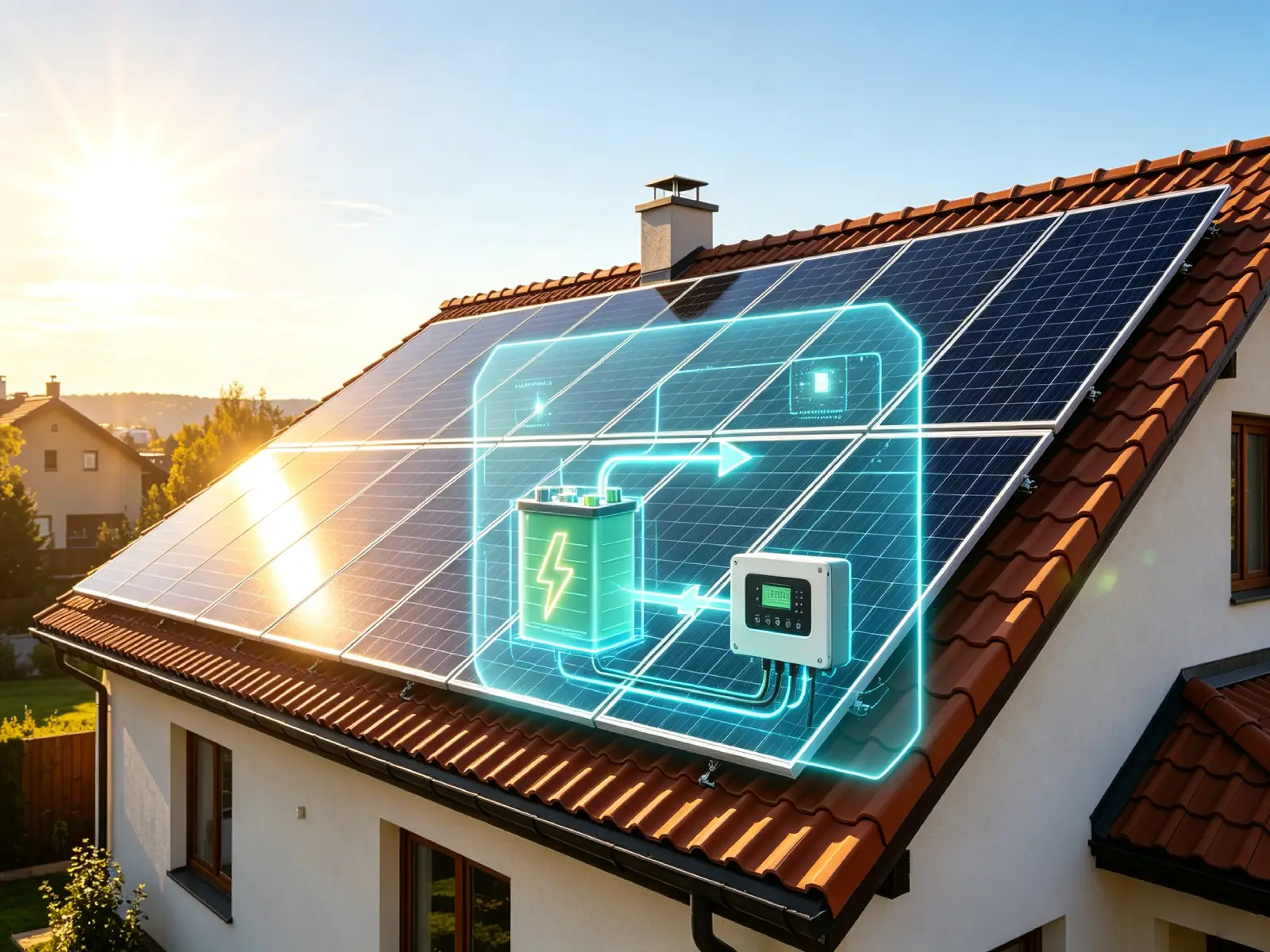
1. What Does a Solar Panel’s Rated Wattage Actually Mean?
1. Rated Wattage = A Perfect Lab Test Result
Manufacturers test and label panel wattages under strict ideal conditions: full, strong sunlight and a cell temperature of 25°C (77°F).
These perfect conditions almost never exist outdoors. The rated wattage is only a standard to compare different solar panels, not the actual power you will get in daily operation.
2. Basic Rule of Solar Power Generation
Power = Voltage × Current. Even if two solar panels have the same rated wattage, differences in their voltage and current parameters will lead to different real-world performance.
2. Six Common Reasons for Low Solar Panel Output
1. Fluctuating Sunlight Intensity
Sun strength changes throughout the day, across seasons, and with cloud cover. It is also reduced by surrounding buildings, trees, and other obstacles.
Weaker sunlight equals lower power output. Solar panels still work on cloudy days, but their output will be much lower than on clear, sunny days.
2. Overheated Solar Panels
Important fact: Hotter weather does not mean more power. Overheated panels produce less electricity.
When exposed to direct sun, solar panels get far hotter than the ambient air. The higher the panel temperature, the lower its power efficiency.
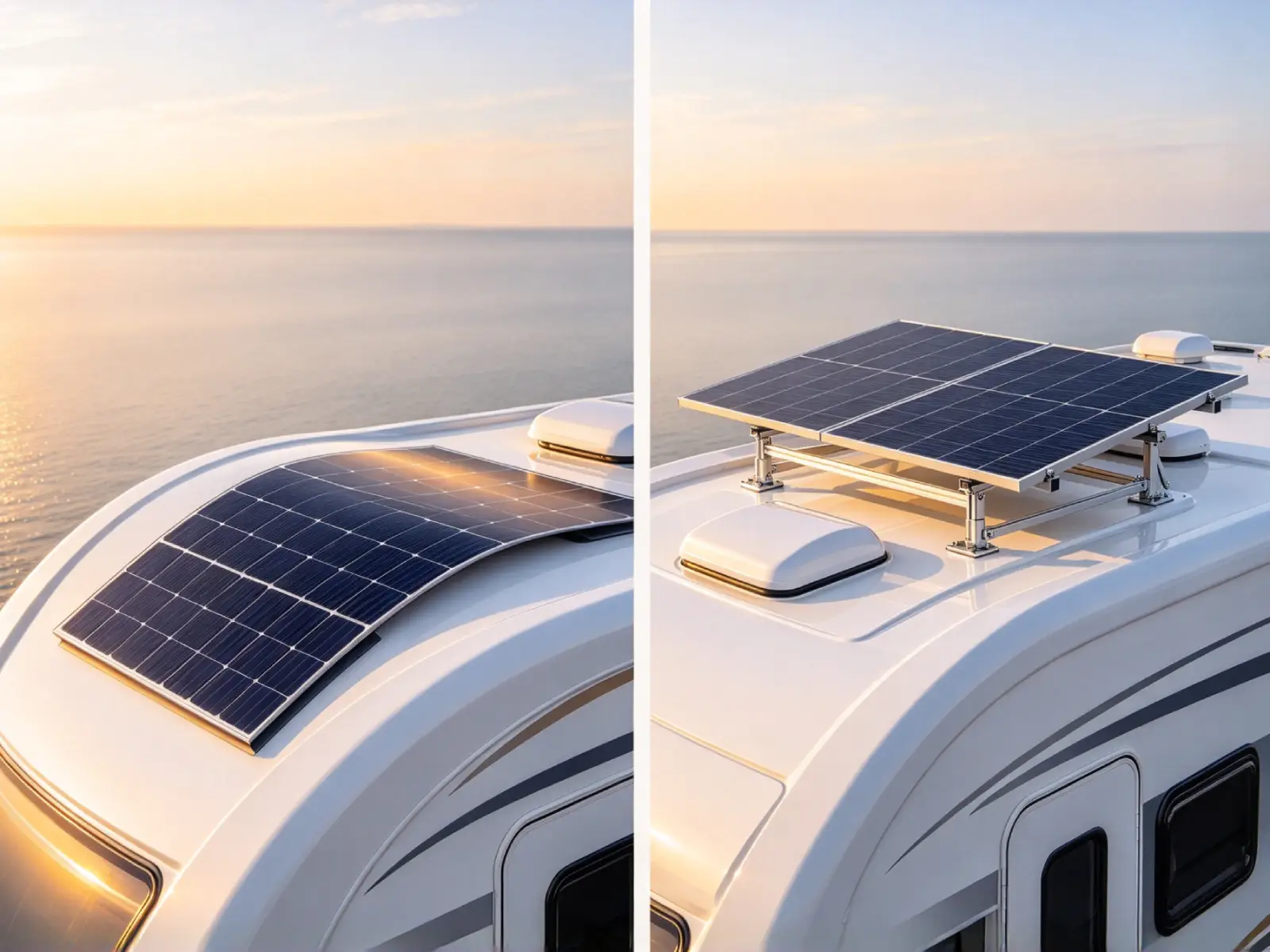
This issue is very common for flat-mounted RV panels, wall-mounted balcony panels, and panels installed on metal surfaces. Poor heat dissipation causes high temperatures and reduced output.
3. Improper Installation Angle and Direction
Solar panels generate the most power when they face the sun directly at an optimal angle. Most real-world setups cannot achieve this ideal position:
RV panels laid flat on roofs, balcony panels facing east or west, marine panels fitted on curved decks, and portable panels moved frequently throughout the day.
Lower output caused by poor positioning is an environmental installation issue, not a quality defect.
4. Partial Shading Causes Major Power Loss
Even small shadows can drastically reduce solar output. Common shading sources include air conditioners, roof racks, railings, tree branches, buildings, antennas, and outdoor clutter.
A tiny shaded area can drag down the performance of the entire panel. This does not mean the panel is broken.
5. Different Measurement Points Show Different Readings
Most users misjudge panel performance by checking the wrong data point. Each measurement position shows a different value:
-
Panel output terminal: The true raw power generated by the solar panel, fluctuating with sunlight
-
Charge controller input: Limited by the maximum capacity of the controller
-
Charge controller output: Slightly reduced due to power conversion loss
-
Battery display reading: Drops significantly when the battery is nearly full, as it stops accepting high charging power
In short: The charging power shown on your battery is not the real power produced by your solar panel.
6. Wiring and System Hardware Limitations
Long or thin wires, loose or corroded connectors, underrated charge controllers, and poor battery condition all cause power loss and lower your final measured output.
3. Simple Self-Checks to Verify Normal Panel Performance
No professional skills required. Follow these steps in order:
-
Confirm your measurement point: panel side, controller side, or battery side
-
Check weather and sunlight: Low output is normal on cloudy days, evenings, or shaded locations
-
Inspect the panel surface for dust, bird droppings, leaves, water stains, or physical damage
-
Check panel temperature: Hot panels after direct sunlight naturally have lower efficiency
-
Examine all wires, connectors, and the controller for looseness or damage
-
Test multiple times on clear, stable sunny days — never judge performance by a single reading
4. Scenario-Specific Common Issues
1. RV & Van Solar Systems
RV roofs are often shaded by racks, antennas, and air conditioners. Flat mounting leads to poor heat dissipation and suboptimal angles, making lower output completely normal.
2. Marine Solar Systems
Boat decks are curved, masts create moving shadows, salty sea air corrodes wiring, and long cable runs cause significant power loss.
3. Balcony Solar Systems
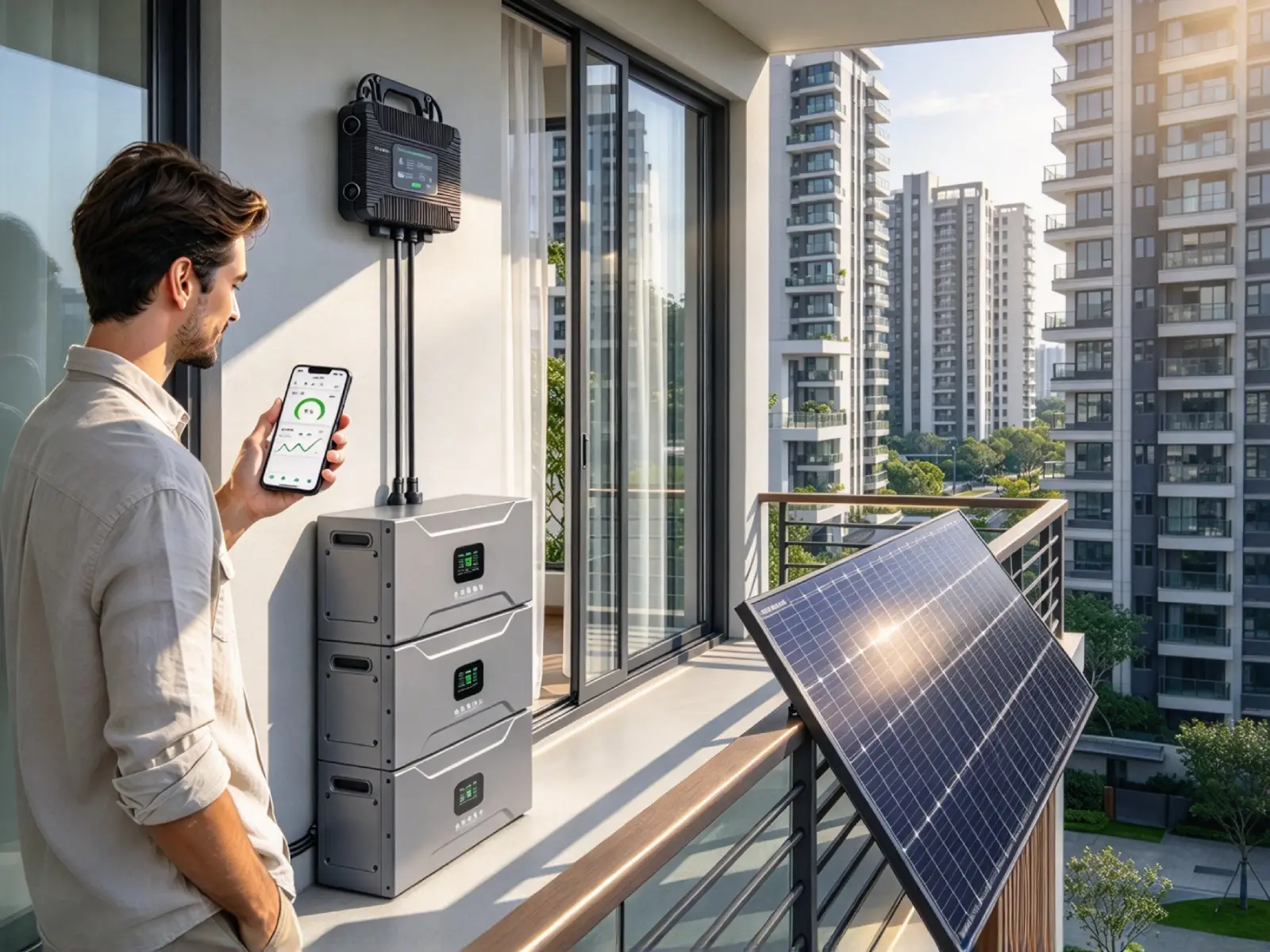
Balcony panels rarely face direct sunlight, are easily shaded by neighboring buildings, and have poor ventilation. Low power output in balcony setups is almost always caused by the installation environment, not faulty equipment.
5. When to Contact the Supplier for Inspection & Repair
Only request technical support if all of the following conditions are met:
-
Clear, stable, bright sunny weather
-
No shading, clean panel surface, and normal panel temperature
-
All wires, controllers, and batteries are fully inspected and working properly
-
Multiple tests show consistently and abnormally low output
When contacting support, provide test time, weather conditions, device models, actual power data, and installation photos for accurate troubleshooting.
6. Frequently Asked Questions
Q: Is low output below rated wattage a quality problem?
A: No. This happens to every solar panel. Rated wattage is only a maximum lab value, and real-world output will always be lower.
Q: Is reduced output on cloudy days normal?
A: Yes. Insufficient sunlight lowers power generation, with no fixed percentage of power reduction.
Q: How do I tell if the problem is the solar panel or the charge controller?
A: If the panel produces normal power at the panel terminal but the battery shows low charging power, the issue lies with the controller, wiring, or battery — not the solar panel itself.
Related Posts
How to choose portable solar panel suppliers?
How to choose portable solar panel suppliers? If you are a wholesaler, importer or distributor…

How to Verify Solar Panel Supplier Certifications: UL, IEC, TÜV Checklist
Core Summary A supplier’s claim of “we hold IEC certification” means nothing unless you verify…
Wholesale Portable Solar Panel: The Ultimate Sourcing Guide for Bulk Buyers
Portable foldable solar panels have become one of the fastest-growing off-grid energy products globally. Demand…
Leave a Reply