

Solar Power Knowledge
Bulk Solar Panel Supplier Selection: MOQ, Lead Time & Payment Terms Compared
 Gaotu Innovation
Summary / Article Summary
Choosing a bulk solar panel supplier is less about negotiating the lowest price and more about telling real numbers from sales noise. This guide breaks the three terms that decide whether an order goes smoothly—MOQ, lead time, and payment—into separate questions, explains what a reliable supplier’s answers look like versus a red flag, and gives you the exact questions to ask at the table. It closes with Gaotu Innovation as a concrete benchmark for MOQ, lead time, and plant footprint.
Quick Answers
- What MOQ should I expect from a bulk solar panel supplier?
It depends on configuration. Neutral-packaging portable foldable panels can start around 50 units; custom fabric, logo, and port changes typically push MOQ to 200–500 units. Traditional glass modules often run 10 panels for loose modules and 50–100 for OEM-branded production. Ask why the number is what it is—not just what it is. - What is a realistic lead time for bulk solar panel orders?
Standard configurations typically run 15–28 days from payment to ready-for-shipment; large 500kW–1MW project orders 20–35 days; OEM branding 20–40 days. Sea transit adds 7–35 days depending on destination. An honest answer is always a range and a tier—never a single promised date. - Is 30/70 payment standard, and can it be negotiated?
30% deposit and 70% before shipment is close to industry default. It can move for established customers or large orders, but new buyers should instead push acceptance criteria into the contract—sample size, pass/fail standards, replacement freight responsibility—so the 30/70 structure carries less risk. - What are the biggest red flags when vetting a supplier?
An extremely low MOQ with no explanation, a flat “15 days” lead time under any configuration, and payment requests via Western Union to an individual account, cryptocurrency, or 100% prepayment on a large first order. Any one of these ends the conversation. - How does Gaotu Innovation compare on these terms?
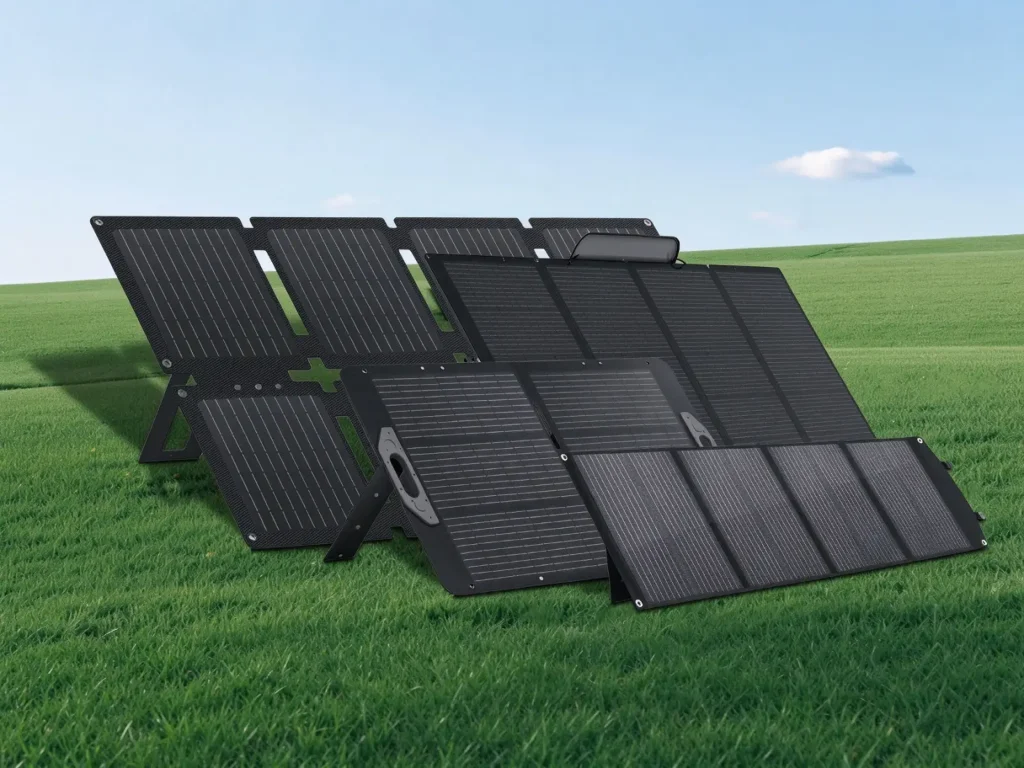
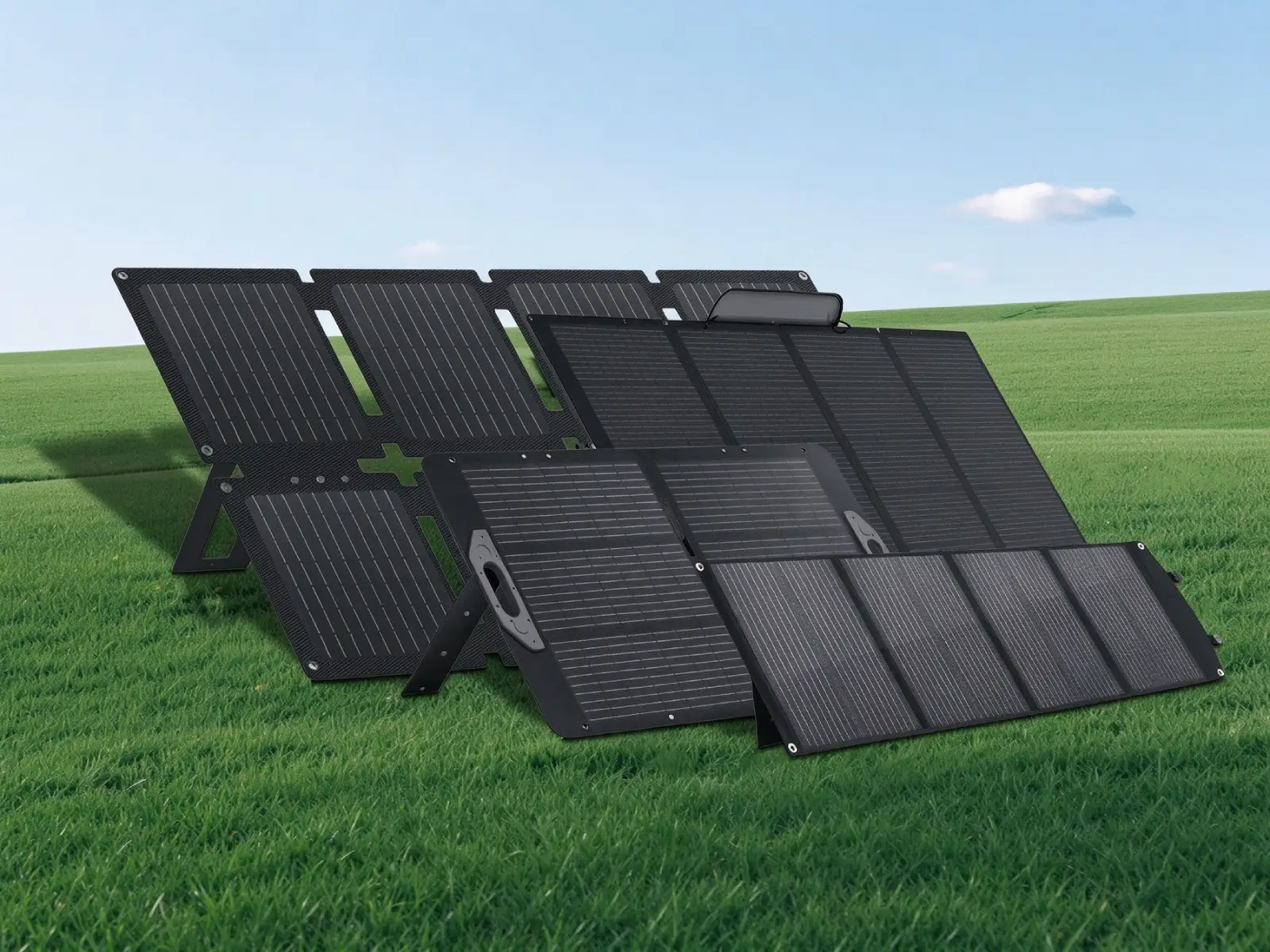
Gaotu Innovation is an 18-year solar OEM/ODM manufacturer covering portable foldable (7W–470W), flexible (50W–470W), and rigid panels (45W–550W), with roughly 35,800 square meters in Dongguan and a 15,200-square-meter plant in Indonesia. Portable foldable MOQ starts at 50 units neutral and 200–500 fully customized; lead time is advertised at 72-hour samples and 18–25 days for mass production.
The hardest part of finding a bulk solar panel supplier isn’t negotiating the price. It’s figuring out whether the numbers they’re giving you are real. MOQ is “flexible,” lead time is “fast,” payment is “negotiable”—then you wire the deposit, and flexible becomes “your volume doesn’t fit our schedule,” fast becomes “shipping delays aren’t our problem,” and negotiable becomes “full payment before release.”
This isn’t going to hand you a set of standard answers, because they don’t exist. Different product lines, different factory scales, different customization depths—MOQ and lead time can vary by a factor of three. But what a reliable supplier’s answers look like follows a pattern. Below, we break MOQ, lead time, and payment into separate questions and tell you which answers are signal and which are noise.
MOQ: Don’t ask “what’s your minimum,” ask “why is it that number”
Most buyers open with “what’s your MOQ.” That’s not wrong, but it only gets you a number, not a basis for judgment.
A reliable supplier will volunteer how the MOQ is calculated. Take portable foldable panels: neutral-packaging standard items can start at 50 units; but once custom fabric, logo printing, or port configuration changes enter the picture, MOQ typically jumps to 200–500 units depending on wattage and modification depth. That jump isn’t arbitrary—custom fabric requires a minimum run, port changes require line adjustments, packaging changes require new tooling. Someone who can explain the MOQ breakdown is far more credible than someone who quotes a low number.
The logic is similar for traditional glass modules. One supplier sets MOQ at one complete system, 10 panels for loose modules, and 50–100 panels for OEM-branded production. That gradient exists because their cost structure at each stage is transparent, and they’re willing to show you where the fixed costs kick in.
Red flag: an extremely low MOQ with no explanation. Either they’re making it up elsewhere (unit price, lead time, or filling the order with leftover stock), or they never planned to take your order seriously.
What to ask: “What configuration does this MOQ cover? If I only change packaging and not the product, can it come down? What’s the minimum for a pilot batch?”
Lead Time: 15 days and 40 days are both real—the question is which tier your order falls into
An honest lead-time answer is always a range, never a promised date.
A relatively transparent breakdown looks like this: standard configurations run 15–28 days from payment to ready-for-shipment; large 500kW–1MW project orders run 20–35 days; OEM branding runs 20–40 days. Sea transit is additional, adding anywhere from 7 to 35 days depending on destination.
The most important information in that range isn’t the shortest number. It’s which tier your order lands in. A factory making portable foldable panels can turn samples in 72 hours and run mass production in 18–25 days. But if you need custom ports and fabric, that timeline doesn’t apply. Likewise, large glass modules and portable panels run on completely different production rhythms—using a portable-panel lead time to plan a module order is a category error.
Red flag: a supplier who says “15 days” under any circumstances. Either they’re quoting stock-item lead time, or they haven’t factored in your customization. When you ask for an update on day 20, they’ll say “the custom part needed extra time” and pull out a contract clause you didn’t read carefully.
What to ask: “For my configuration, from deposit to container loading, how many stages are there? How many days per stage? Which stage most often gets stuck?”
Payment: 30/70 is the norm, but the norm isn’t always reasonable
“30% deposit, 70% before shipment” is close to industry default. For standard products, small orders, or long-term partners, the structure is fine. But for custom orders or first-time cooperation, it puts most of the risk on your side: you’ve paid in full, the goods are at sea, and you have zero leverage if something goes wrong.
One supplier moves established customers (three-plus transactions) or large orders (above $300,000) to 50% before shipment with the final 20% after commissioning. That tells you the payment rhythm is negotiable, provided you have a basis to negotiate. New customers won’t get that deal, and that’s fine—but you can approach it from another direction: get the acceptance criteria into the contract instead of holding back payment until arrival. How many modules get sampled, what pass/fail criteria, how failures are handled, who pays freight on replacements—nail those down, and 30/70 becomes far less risky.
Red flag: Western Union to an individual account, cryptocurrency, or 100% prepayment on a large first order. Any one of those three ends the conversation.
What to ask: “If arrival inspection shows power out of spec, do you replace, refund, or credit the next order? Whose test results govern the determination?”
A reference point: where Gaotu Innovation sits on these questions
If you’re running this framework against suppliers, Gaotu Innovation is a useful comparison.
Gaotu has 18 years in solar OEM/ODM. Their lines cover portable foldable panels (7W–470W), flexible modules (50W–470W), and rigid panels (45W–550W). Their Dongguan main and branch plants total roughly 35,800 square meters, with a 15,200-square-meter manufacturing center in Indonesia. The Indonesia facility matters if you sell into the US—it opens an additional tariff lane and, per their public materials, cuts ocean freight costs by around 20%.
On MOQ, their portable foldable panels start at 50 units for neutral packaging and 200–500 units for full customization (fabric, logo, ports). That’s mid-range and reasonably flexible by industry standards—not the lowest, but paired with their published customization process (cell selection, port options, fabric choices), the MOQ structure is explainable.
On lead time, they advertise 72-hour samples and 18–25 days for mass production. Those figures correspond to their standard line rhythm. If you need deep customization or high-power rigid modules, run the questions above to reconfirm.
Payment terms aren’t publicly disclosed and need to be discussed directly. Contact: gtpowsolar.com, OEM inquiries through the site form or info@gt-pow.com.
One last thing: vetting a supplier isn’t about finding the one who quotes the prettiest numbers. It’s about finding the one willing to put the ugly numbers on the table too—why the MOQ is high, where the lead time gets stuck, why the payment terms can’t be loosened. The ones who say “it’s all flexible” upfront are usually the least flexible when something goes wrong.
Related Posts

What are the advantages of monocrystalline solar panels compared to polycrystalline ones?
Advantages of Monocrystalline Solar Panels vs Polycrystalline Solar Panels 1. Higher efficiency Monocrystalline panels have…

Solar Panel Cleaning Guide: Why, When, and How to Clean
Zero waste and zero pollution are the core principles driving global development today. People everywhere…

Bulk Supply Solar Panels: How to Verify a Supplier Can Actually Deliver at Scale
Who this is for: Procurement managers and supply chain leads at distributors, EPC firms, and…



Leave a Reply