

Solar Power Knowledge
OEM Solar Panel Manufacturer: Five Things to Nail Down Before You Sign
 gaotu
Summary / Article Summary
OEM solar panel manufacturing is not about slapping your logo on a finished module. It means handing cell selection, lamination process, and testing standards to someone else—and betting they won’t cut corners. This guide walks through the five questions brand owners and distributors must ask before signing: what the factory’s “OEM” actually changes, whether MOQ is negotiable, whether the certification covers your custom model, what to inspect on the production floor, and how quality disputes get handled when the first batch goes wrong.
Quick Answers
- What does OEM actually change at a solar panel manufacturer?
Real customization comes in tiers: cosmetic parts (frame/backsheet color, junction box position, cable length), electrical parameters (voltage binning, current tuning, bypass diode configuration), and structural or material changes (non-standard cell cutting, glass-glass to transparent backsheet, climate-specific encapsulation). Ask for an actual custom spec sheet, not a generic template. - Is the MOQ fixed or negotiable?
There’s no industry-wide standard, but the pattern holds: the deeper the change, the higher the MOQ. Label swaps can sometimes be negotiated in the hundreds; junction box or cable changes usually mean thousands; frame molds or non-standard cell cutting typically start at two thousand. Ask for a pilot batch to cut your upfront risk. - How do I know the certification covers my custom model?
Certifications are issued for specific models and structures. Ask: “For this custom model, what certificate applies? What’s the certificate number? Can you send me the model description on the certificate so I can verify it?” A series certificate or “being updated” is a red flag. - What should I look at during a factory visit?
Three things: cell sorting records next to the stringer (no mixed bins), freshly offloaded semi-finished modules held up to the light (no bubbles), and whether every module goes through EL testing with archived images tied to serial numbers. - What happens when the first batch has a quality problem?
Get the quality dispute process in writing before signing. Ask whether issues are resolved by replacement, refund, or credit on the next order—and whose test results govern the determination. The reps who only say “don’t worry” are the ones who vanish fastest.
The worst thing in the solar module OEM game isn’t a price you can’t agree on. It’s getting your shipment and finding out the backsheet color is wrong, the junction box is off by an inch, or the “factory” you’ve been talking to is really just a guy who rented an office and calls himself a trader.
I’ve seen too many brand owners and distributors get burned this way. OEM isn’t just slapping your logo on a panel. It means handing over the lifeblood of your product—cell selection, lamination process, testing standards—to someone else and betting they won’t cut corners. This article isn’t going to feed you the usual “one-stop solution” Kool-Aid. Let’s talk about what actually matters: when you’re sitting in that OEM solar panel manufacturer’s conference room, or staring at their quote sheet, which questions have to get asked and which details have to get picked apart.
If you’re looking for a price analysis on bulk purchasing, that’s a different conversation. This is about one thing only: how to figure out whether an OEM solar panel manufacturer is worth putting your brand name on.
Thing One: What does their “OEM” actually change?
A lot of factories say they support OEM. Then you ask, and it turns out they can only swap the label on the box. That’s not OEM. That’s sticker-slapping.
Real customization comes in tiers. The shallowest layer is cosmetic parts: frame color, backsheet color, junction box position, cable length, connector brand. These are fast to change and usually don’t require major line modifications, so the MOQ threshold is relatively low. One level up is electrical parameters: voltage binning, current fine-tuning, bypass diode configuration. That requires work at the stringing and testing stages—not something you fix with a new label. The deepest layer is structural or material changes: non-standard cell cutting, switching a glass-glass structure to a transparent backsheet, or adjusting encapsulation materials for a specific climate (high humidity, sand, whatever).
When you ask this question, don’t just listen for “yes, we can.” Ask them to show you an actual custom spec sheet. It should spell out which parameters changed, how the change affects power tolerance, and what similar cases they’ve done before. If they hem and haw and can only hand you a generic template, their “OEM” capability stops at tier one.
Thing Two: Is the MOQ set in stone or flexible?
There’s no industry-wide standard for OEM solar panel manufacturer minimums, but there’s a pattern: the deeper the change, the higher the MOQ.
The common dividing line in the industry: label and packaging swaps alone can sometimes be negotiated in the hundreds of pieces; changing junction boxes or cable specs usually means thousands; and if you’re touching frame molds or cutting non-standard cells, two thousand and up is the norm. Some factories push the threshold way down to attract small customers, but that usually means they make it up elsewhere—either the unit price creeps up or your lead time gets pushed to the back of the queue.
But MOQ isn’t set in concrete. You can ask them: can we run a pilot batch first? A legitimate factory will accept a small trial run to verify whether the custom specs are reproducible before going to mass production. Pilot batch quantities are usually well below the formal MOQ, and it’s the most practical way to cut your upfront risk. If they won’t even do a pilot and insist on “full payment before scheduling,” ask yourself whether they lack confidence in their own line—or never planned to take your order seriously in the first place.
Thing Three: Are the certifications “there” or “right”?
The most common trap for OEM customers: the factory dumps a stack of certificates on you—TÜV, UL, IEC, all present—but when you look closely, the model numbers on the certificates don’t match what you ordered.
Certifications are issued for specific models and structures. Change a backsheet material, swap a junction box supplier, and technically the original IEC 61215 or UL 61730 certificate no longer covers the new product. Some factories will wave standard-product certificates at you to get through a custom order, and that’s exactly the kind of thing that blows up at customs or project acceptance.
So when you ask about certification, don’t ask “do you have IEC.” Ask: “For this custom model, what certificate applies? What’s the certificate number? Can you send me the model description on the certificate so I can verify it?” If they say “the certificate is being updated” or “the series certificate covers it,” you’d better confirm with a third party or do your own homework. For anyone building a brand, a certification gap isn’t a minor issue—it’s the kind of thing that can leave your whole shipment stuck at port.
Thing Four: What to look at in the workshop—and what to ignore
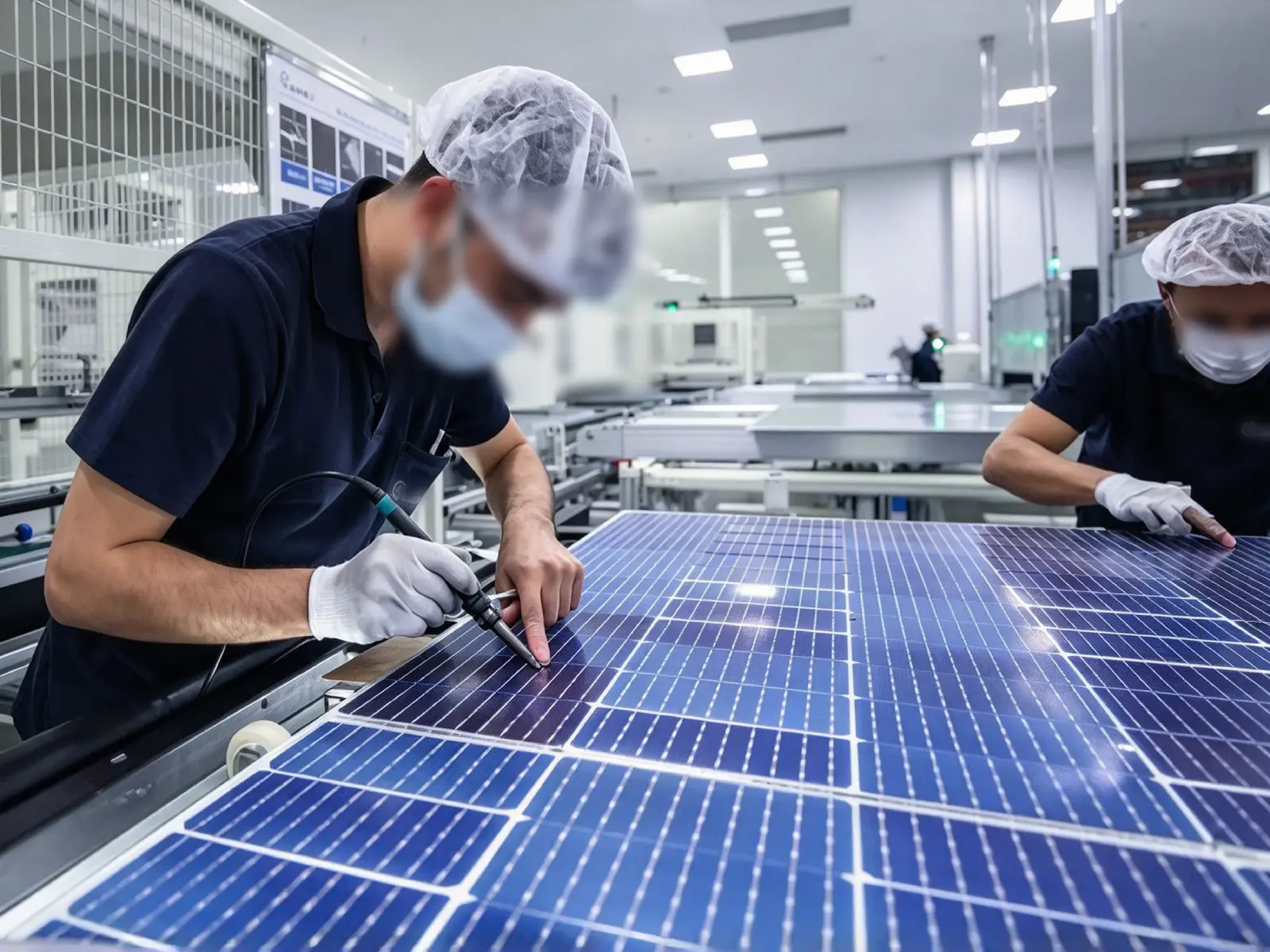
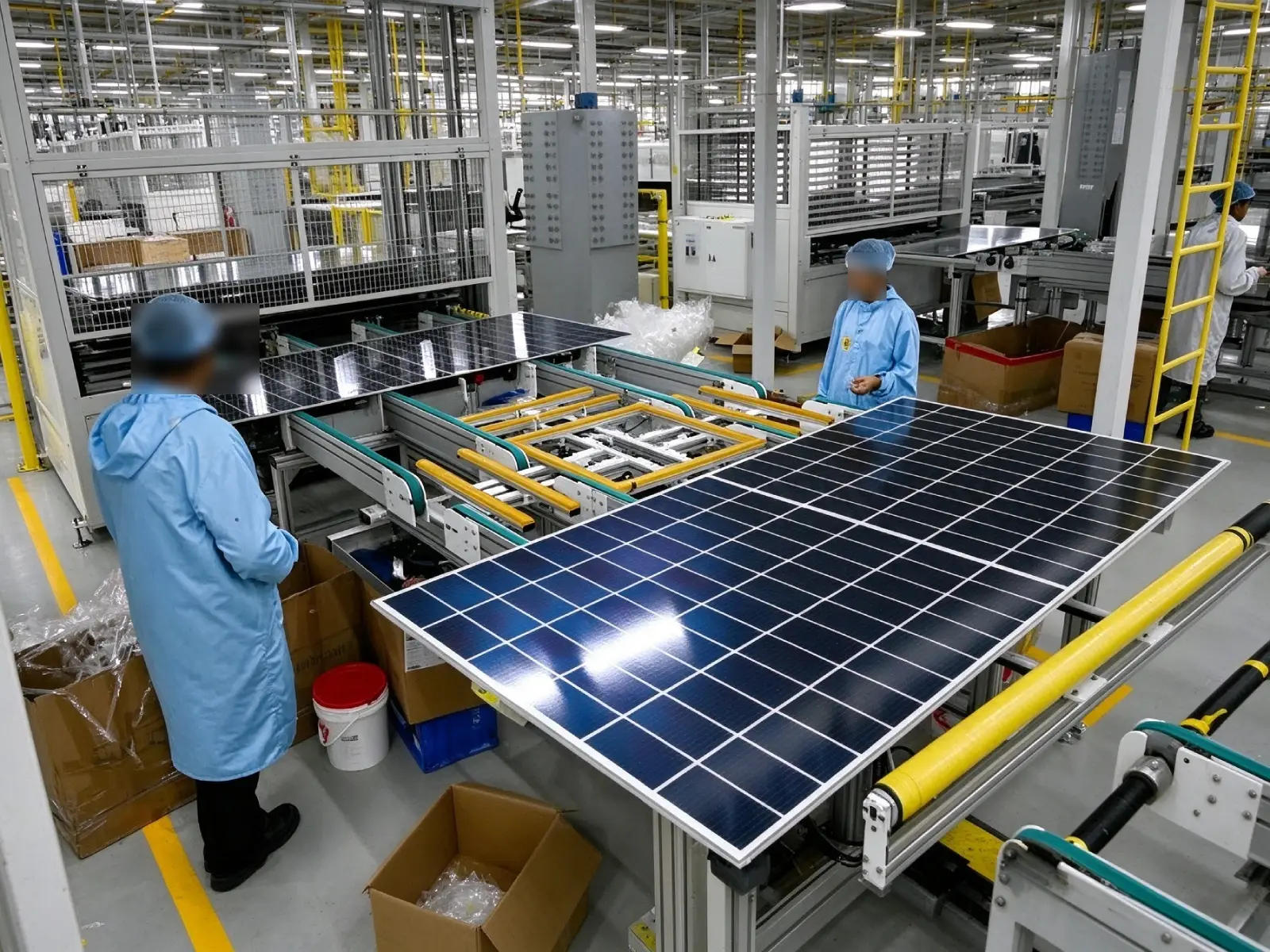
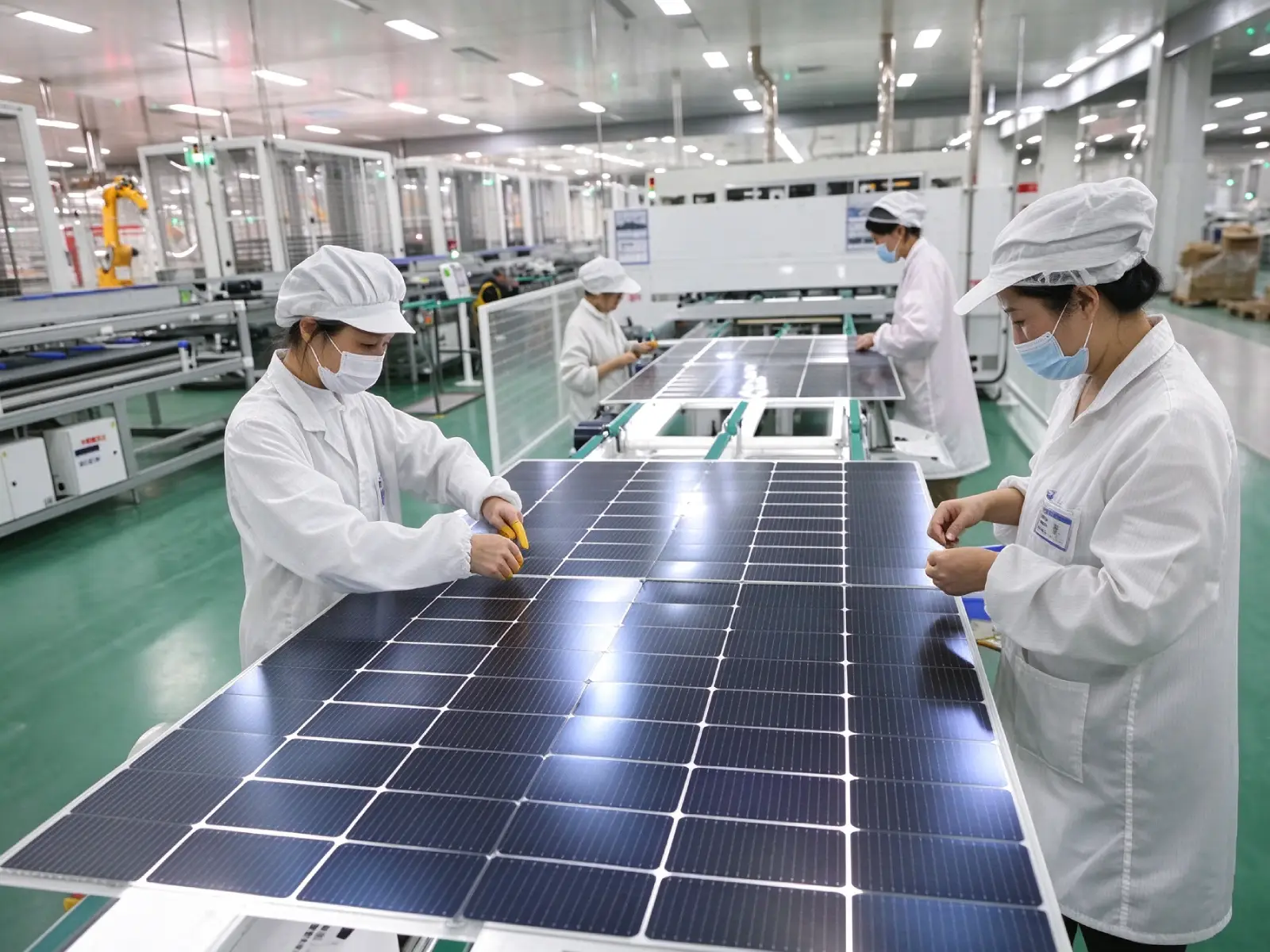
If you get a chance to visit the factory, don’t let the sample wall in the showroom and the fruit platter in the conference room throw you off. Ask to go straight to the production floor and look at three things.
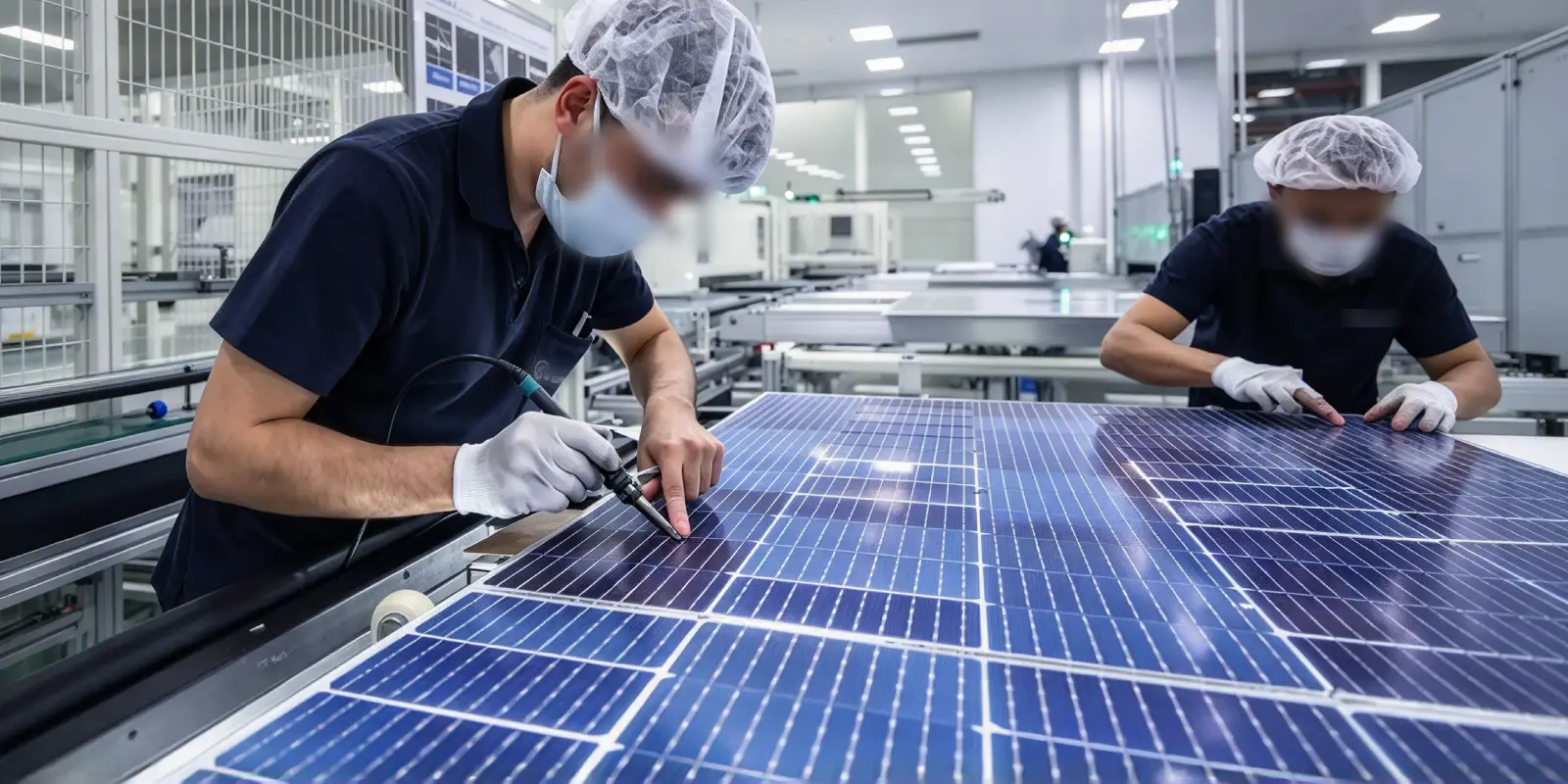
Look at the cell sorting records next to the stringer. The biggest fear with OEM orders is mixed cell bins. Cells of different efficiencies and colors strung together produce modules with inflated power ratings and a patchwork look. A legitimate factory keeps sorting machine test data on file, with bin records for every batch of cells that comes in. You don’t need to understand the machine parameters—just ask: “Can you pull up the sorting data for the cells used in this custom order?”
Look at whether laminator output has bubbles. Lamination is the step that determines module lifespan. Insufficient EVA cross-linking or incomplete vacuum draws lead to bubbles and delamination that show up after a year or two in the field. You don’t need a magnifying glass—just have someone on the line grab a freshly offloaded semi-finished module and hold it up to the light, checking the edges and the gaps between cells. If they dodge with “that’s just a sample, you can’t look at it,” that itself tells you something.
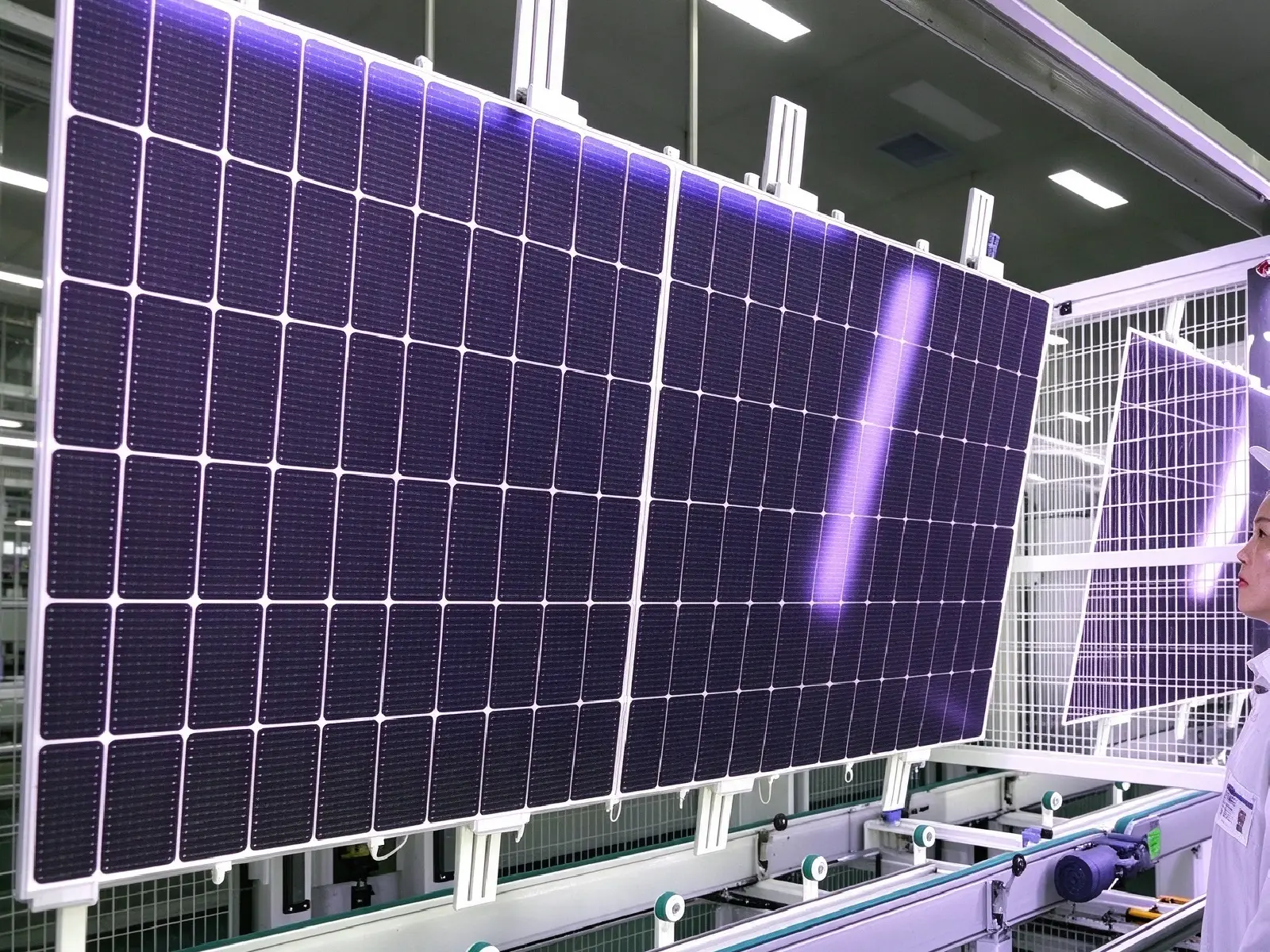
Look at whether every module goes through EL testing. EL imaging catches micro-cracks and broken fingers invisible to the naked eye. Some factories only run EL on first articles or spot checks, skipping it in mass production. You can ask: “Do you archive EL images for my order? Can you pull a few at random with matching serial numbers at shipment?” A factory willing to do that at least has confidence in its soldering process.
Thing Five: When something goes wrong, how do they own it?
The real test of an OEM partnership isn’t signing the contract. It’s when the first batch has a minor problem—say three or five modules out of a hundred land on negative power tolerance, or there’s slight color variation on the backsheet.
Before you sign, get clear on the quality dispute process. Don’t just listen for “we offer a ten-year warranty.” Ask: “If I spot-check after delivery and power is out of spec, do you replace, refund, or credit on the next order?” And: “Whose test results govern the determination—your factory report or a third party’s?”
A legitimate OEM factory has a written nonconforming-product procedure covering deviation ranges, how responsibility gets assigned, and the triggers for replacement or price adjustment. The sales reps who only say “don’t worry, our quality is great” are usually the ones who vanish fastest when there’s a real problem.
One last honest word
The OEM solar panel manufacturer pool is huge. From factories with genuine flexible lines willing to do deep customization for small and mid-size brands, to workshops with one line that take any order and make any promise—they all hang the same sign out front.
You don’t need to find the “best” one. You need to find a factory willing to lay out the ugly truths before you place an order: tell you clearly what can and can’t be changed, where the MOQ floor really is, how far the certification covers, and how the accounting works when something goes wrong. The ones who immediately puff up their chest and say “we can do anything, price is negotiable” are usually the ones you should walk away from fastest.
Next up, we’ll break down how to separate traders from real factories with a single questionnaire—no third-party audit report required. If you’re in the middle of vetting suppliers, that checklist will get you further than this article did.
Related Posts

Marine Solar Power System Manufacturer: Full Guide for Marine & Offshore Solar Solutions
Marine operators today face two major challenges: rising fuel costs and stricter international marine emission…

GTPOW 820W Balcony Solar Kit: Drill-Free Home Solar Solution
Picture this: every morning, the sun rises over your balcony—and instead of just warming your…
Hidden Costs to Avoid When Buying Solar Panels in Bulk
Article Summary Many B2B solar buyers only compare factory FOB per-watt pricing and overlook a…
Leave a Reply