

Solar Power Knowledge
Solar Panel Manufacturers: A Distributor’s Guide to Vetting Wholesale Partners in China
 gaotu
Most guides to solar panel manufacturers are written for installers or end-users. This one isn’t. If you’re a distributor or wholesaler putting together a container order, the questions that matter are different. You’re not asking “which panel is best?” You’re asking “which factory can deliver 500 units at a consistent power bin, on a repeatable schedule, without switching cell suppliers mid-order?”
That’s a harder question. And the answers rarely live on a company’s Alibaba storefront.
Article Summary
Finding the right solar panel manufacturer for wholesale distribution requires a different evaluation framework than what installers use. This guide provides distributors with operational questions to verify batch consistency, testing mixed-model container capability, and ensuring certificate coverage for custom SKUs—helping you separate true production partners from trading companies.
Quick Answers
- How to ensure batch consistency? Always request flash test reports for the last three production batches to compare Pmax and Vmp drift.
- What EL testing policy should a distributor demand? Require 100% full-process EL testing, not just sample-based, to avoid invisible microcracks in your container.
- What is the ideal MOQ structure for wholesalers? Look for factories that offer mixed-model container loading (e.g., 3-4 SKUs per 40HQ) rather than strictly high per-model MOQs.
- Do IEC certificates cover custom SKUs? No. Check if your specific frame, connector, and packaging modifications fall within the certificate scope or trigger retesting.
China produces roughly 80% of the world’s solar panels. The manufacturing density is real: Jiangsu, Zhejiang, and Guangdong account for over 70% of active module assembly factories, with supply chains that can source glass, EVA, frames, and junction boxes within a 100-kilometer radius. That density is why a genuine factory can turn a sample in days while a trading company waits weeks.
But density also means the market is crowded with intermediaries. For every real lamination line, there’s a sales office presenting itself as a manufacturer. The quote looks professional. The catalog is polished. The difference only surfaces when your second order arrives with a different cell supplier and a power bin that’s drifted 3% from the first shipment.
So here’s the framework I use when evaluating solar panel manufacturers for wholesale distribution. Not a list of brands—those lists go stale. A set of operational questions that separate production partners from order-takers.
The Tier System Doesn’t Tell You What You Need to Know
BloombergNEF Tier 1 rankings are useful for understanding scale. Jinko and Longi each hold around 120 GW of annual module capacity; Trina sits near 100 GW. These are the names your customers recognize.
But Tier 1 status is a bankability metric, not a wholesale partnership metric. A Tier 1 factory may not want your 2-container order. Their distribution channels are already full. And the Tier 1 label says nothing about whether their 410W panel will match the 410W panel you received last quarter—cell binning tolerance, encapsulant supplier, and junction box vendor can all shift between production runs.
For distributors, the more relevant question is: does this manufacturer have a dedicated distribution/OEM line that runs parallel to their project business? A factory that primarily serves utility-scale projects treats distributor orders as filler capacity. A factory with a dedicated wholesale line builds its scheduling around repeat, multi-SKU orders.
Ask directly: “What percentage of your monthly output goes to distribution-channel customers versus project-based orders?” If the answer is vague or “we treat all customers equally,” you’ve learned something. Distribution has different cadence requirements. A factory that understands this will have a number.
The Three Certifications That Actually Matter for Wholesale
Every supplier will send you a folder of certificates. Most of them are irrelevant to your risk profile.
IEC 61215 and IEC 61730 are the baseline. These cover performance durability and safety construction. If a supplier can’t produce current certificates for the exact model you’re quoting, stop there.
The one that distributors consistently overlook is the certification scope. A certificate is issued for a specific bill of materials: specific cell type, specific front sheet, specific back sheet, specific junction box, specific dimensions. If you’re ordering a custom frame color or a different connector for your regional market, that variation may fall outside the certified configuration. IEC TS 62915 exists precisely to address retesting requirements when a module design is modified.
The practical question for a wholesale buyer: “Is the exact SKU I’m ordering—including frame, connector, and label—covered by the certificate you’ve provided? If we request a packaging change or a different cable length for our market, does that trigger retesting?”
A real factory will know the answer. A trading company will promise it “covers everything.”
What a Batch Consistency Report Looks Like
This is the single most important document a distributor can request, and almost nobody asks for it.
Wholesale distribution lives and dies on consistency. If your customers install ten panels from one batch and two from another, and the second batch runs 4W lower, you get returns. You get installers who stop buying from you.
Ask for a flash test report for the last three production batches of the exact model you’re quoting. Not a catalog spec sheet. The actual measured data: Pmax, Vmp, Imp, and the binning range for each batch. Compare the spread. A factory with tight process control will show batches within 1-2W of each other. A factory running multiple cell suppliers will show wider drift.
Also ask: “Do you provide a flash test report with each shipment?” If the answer is no, you’re buying blind. The cost of a returned container is far higher than the cost of switching to a supplier who documents their output.
The EL Image Test
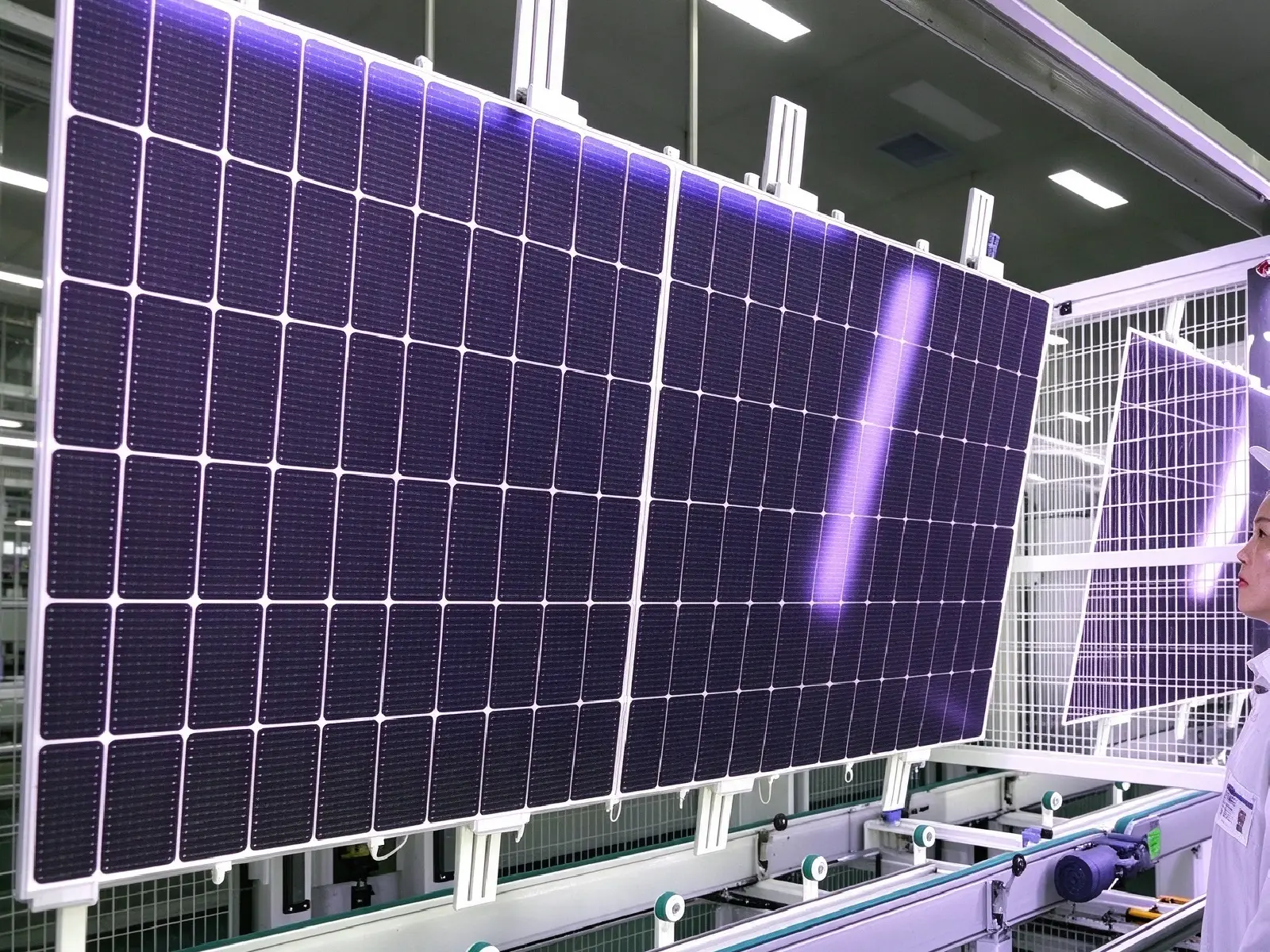
Electroluminescence imaging reveals microcracks, dead cells, and soldering defects that are invisible under normal light. For wholesale buyers, EL is not a quality-control nicety. It’s a predictor of field failure rates.
Request an EL image of the exact model and wattage you’re quoting. Then compare the cell layout in the image to the cell layout in the spec sheet. They should match. A trading company will send a generic catalog image or a photo of a different model. A real factory pulls the image from the production run.
The follow-up question matters more: “Do you run EL on 100% of production, or sample-based?” Full EL inspection is standard for factories serving distribution channels, because distribution customers are the ones who field warranty claims at the installer level. If EL is sampled at 5%, you’re accepting a 5% risk of invisible defects per batch.
MOQ Is Not the Signal You Think It Is
A low minimum order quantity looks attractive. It also tells you something about the factory’s cost structure.
Custom solar panel production has setup costs: cell stringing programming, lamination tooling, test sequence configuration, packaging design. A factory that will run 50 pieces is either charging you a sample premium that eats your margin, or it’s a trading operation batching orders from multiple customers and hoping the specifications align.
For distribution, the more useful question is: “What is your MOQ per SKU, and what is your MOQ per order?” A factory that requires 200 pieces per model but will combine models into a single container is a better wholesale partner than one that quotes 50 pieces per model but can’t fill a container without mixing suppliers.
Ask about mixed-model container loading. Distributors need variety: 410W, 450W, 550W, maybe a few portable kits. A factory that can schedule parallel production across multiple SKUs and load them into a single container is built for wholesale. One that runs one model at a time is built for projects.
The Factory vs. Trading Company Question, Answered in One Email
The business license check is still the fastest filter. Chinese business licenses list a scope of operations. A manufacturer’s scope includes production language: “R&D, production, and sales of PV modules.” A trading company’s scope says “sales” and little else.
But scope alone isn’t enough. The license can say production while the “factory” is a warehouse with a laminator in the corner.
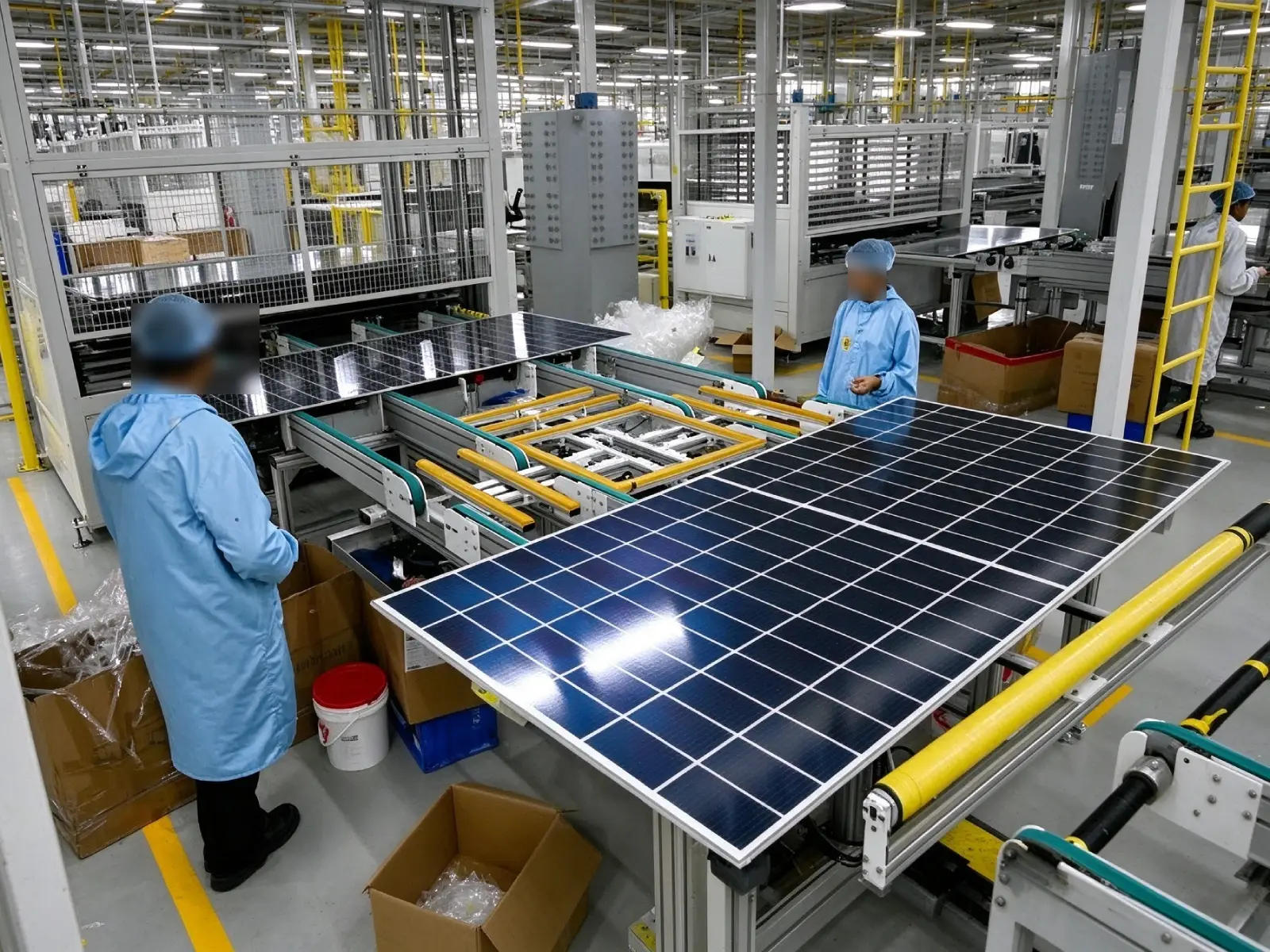
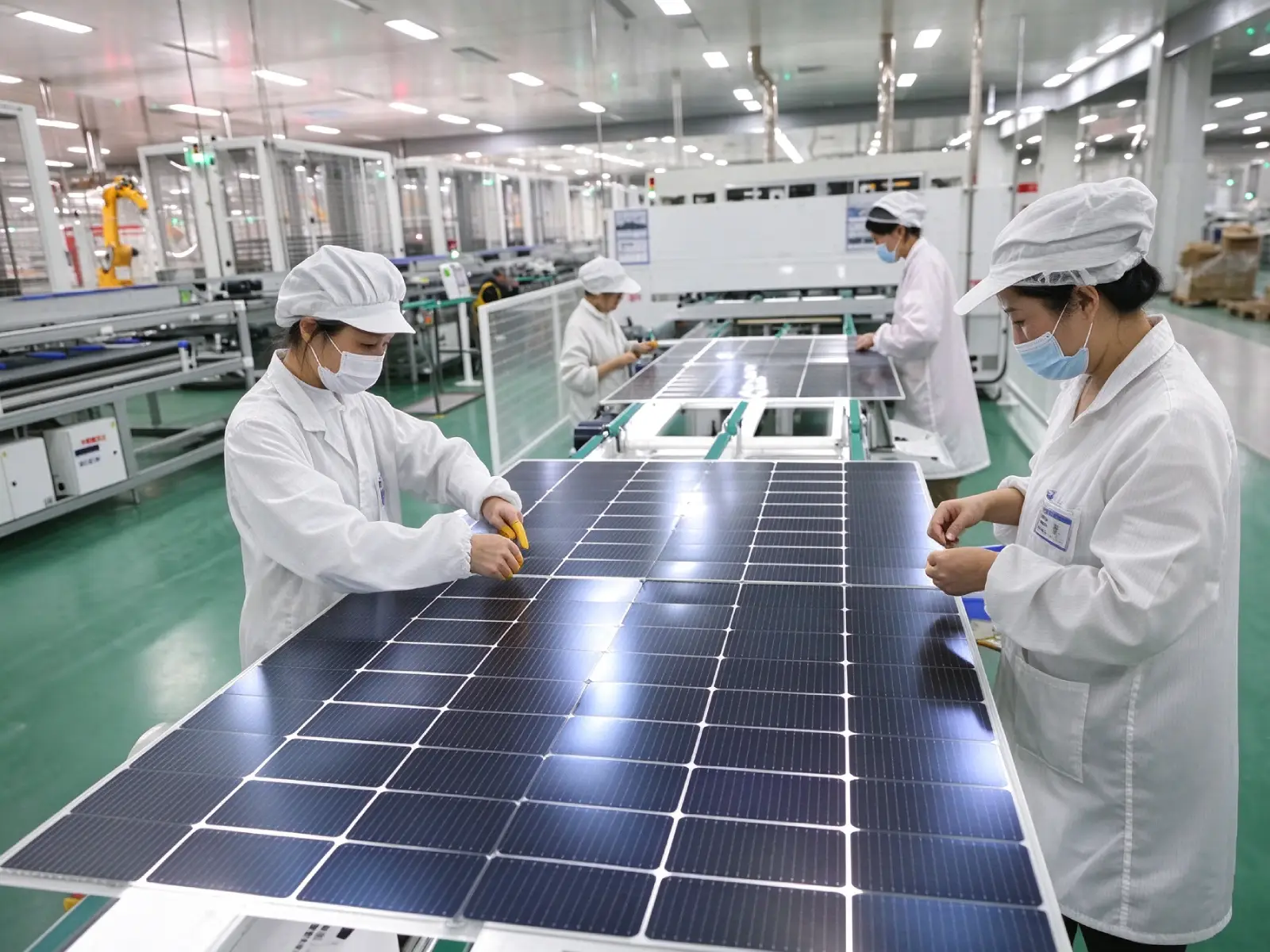
Ask what lamination equipment they run. Vacuum lamination at controlled temperature and pressure is the standard for crystalline silicon modules. If the answer is vague or mentions “pressing,” walk away. The bond between glass, encapsulant, and back sheet is the only thing keeping moisture out over 25 years.
Ask for the factory address and a live video walkthrough. Not a recorded video from 2023. A scheduled call where they walk the line while you’re on the phone. A real factory manager will do this in ten minutes because they know their floor. A trading company will deflect.
None of these questions are hostile. A production manager answers them quickly because they’re operational facts, not trade secrets. Hesitation is the signal.
What a Wholesale-Ready RFQ Looks Like
If you’re contacting solar panel manufacturers this week, put these five items in the first email. The response tells you more than a factory tour.
1. Flash test data for the last three batches of the quoted model. Not a spec sheet. Measured Pmax, Vmp, and Imp per batch.
2. EL inspection policy. What percentage of production is EL-tested? Can you provide an image of the exact model quoted?
3. Mixed-model container capability. Can you load 3-4 SKUs into a single 40HQ without exceeding MOQ per model?
4. Certification scope confirmation. Does the certificate cover the exact SKU quoted, including connector type and frame specification? If we modify packaging for our market, does that affect coverage?
5. Business license scope screenshot. Production language or sales-only. Thirty seconds to provide. Refusal is informative.
The Bottom Line
The best solar panel manufacturer for your distribution business isn’t the one with the lowest price per watt, the biggest trade show booth, or the most impressive Tier 1 ranking. It’s the one that answers batch consistency questions with data, documents mixed-model loading without hesitation, and treats your repeat order cadence as the baseline rather than an exception.
Ask about the last three flash tests. Ask for the EL policy. Ask what happens to the certificate when you change the connector for your market. The suppliers who answer clearly are the ones worth a trial container. The ones who deflect are saving you the cost of finding out the hard way.
A Benchmark: What a Wholesale-Ready Factory Looks Like
If you want to see what the answers should look like in practice, Gaotu Innovation (Shenzhen) New Energy Group is built specifically for this level of distributor scrutiny. With roots dating back to 2008, we are not a trading company, but a true OEM/ODM manufacturing group with over 35,800 m² of production space in Dongguan and an 18,000 m² facility in Indonesia.
When you send us the five-item RFQ above, here is what you get:
-
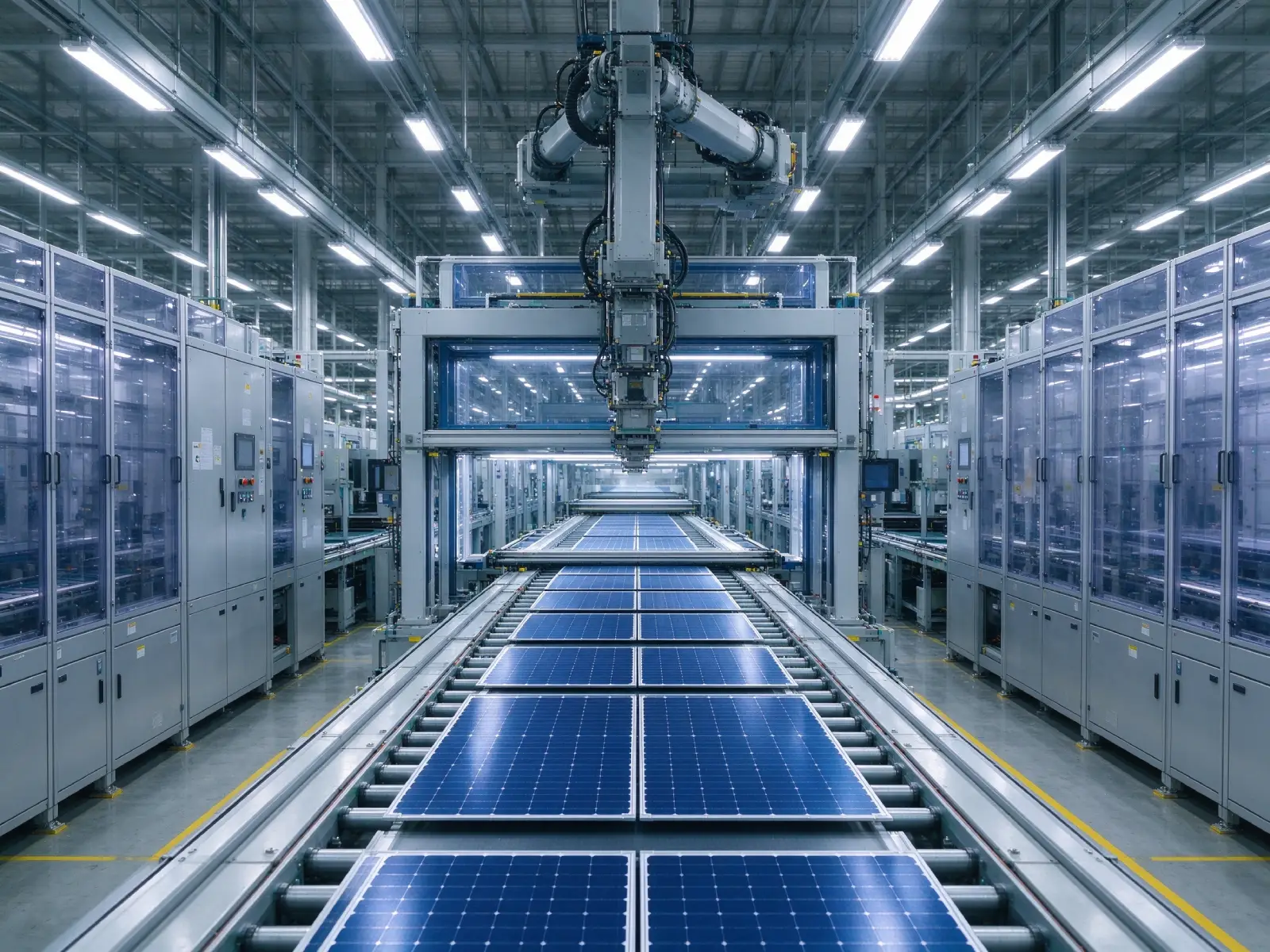
Batch Consistency: Our 92% automated production lines and 100% full-process EL/IV testing ensure tight power binning. We provide flash test reports per shipment, so your second container matches your first.
-
Mixed-Model Capability: With over 30 production lines across our global factories and an annual capacity of 8 million modules, we run multi-SKU parallel production. We can easily load 410W, 550W, and portable kits into a single 40HQ container without MOQ issues.
-
Proven Wholesale Track Record: As a Tier-1 manufacturing partner for global giants like Anker, EcoFlow, and Bluetti, our strict ISO 9001/BSCI systems and 380 global patents back our 18-year zero-recall record.
We know you need to vet your suppliers. We built our factories specifically to pass that vetting process. [CTA: Send us your 5-item RFQ today to start a trial order / Download our factory audit report].
Related Posts
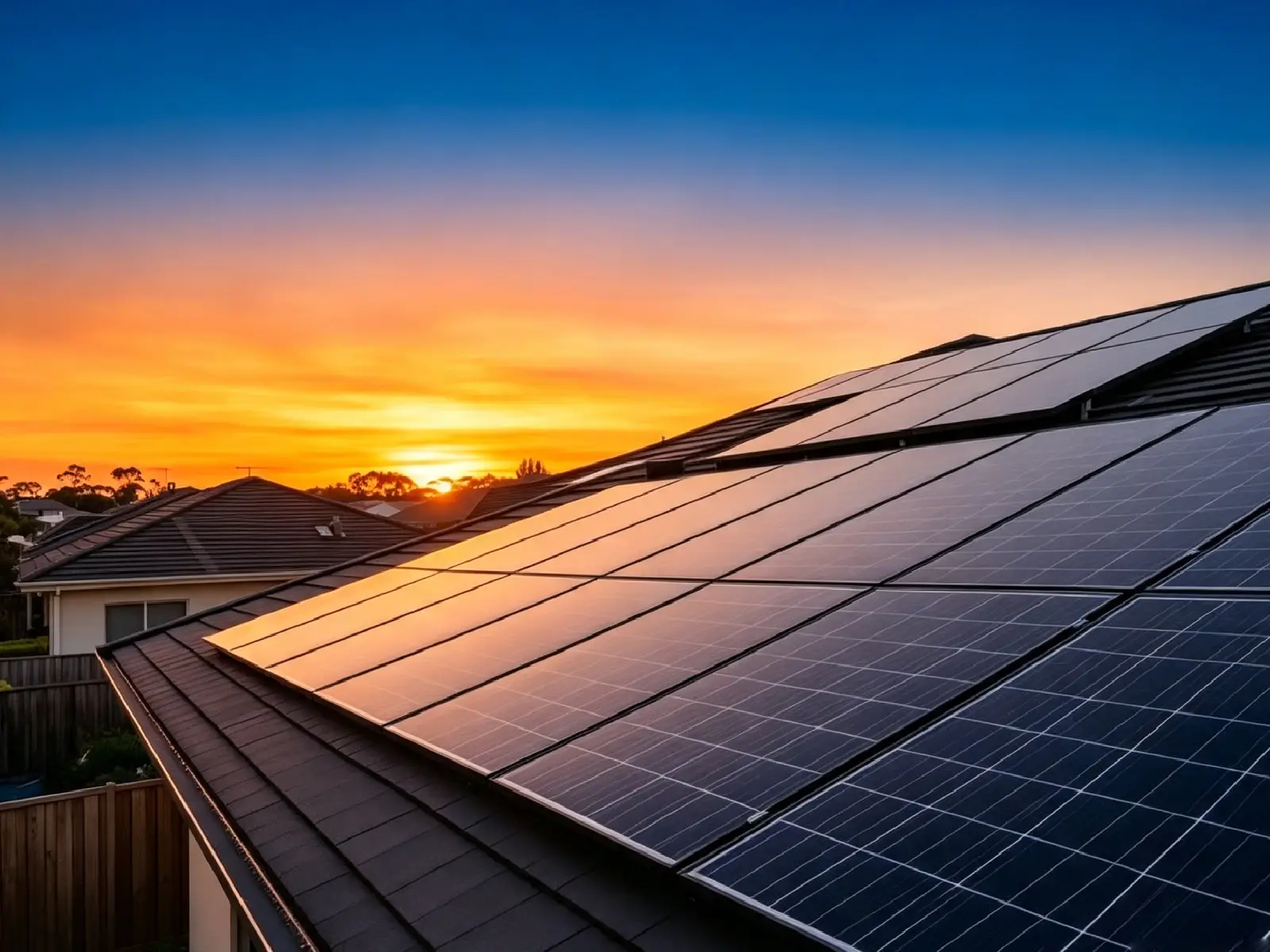
How Your Roof Secretly Kills Your Power Output
Most homeowners make the same costly mistake when going solar. They splurge on higher-wattage, premium…
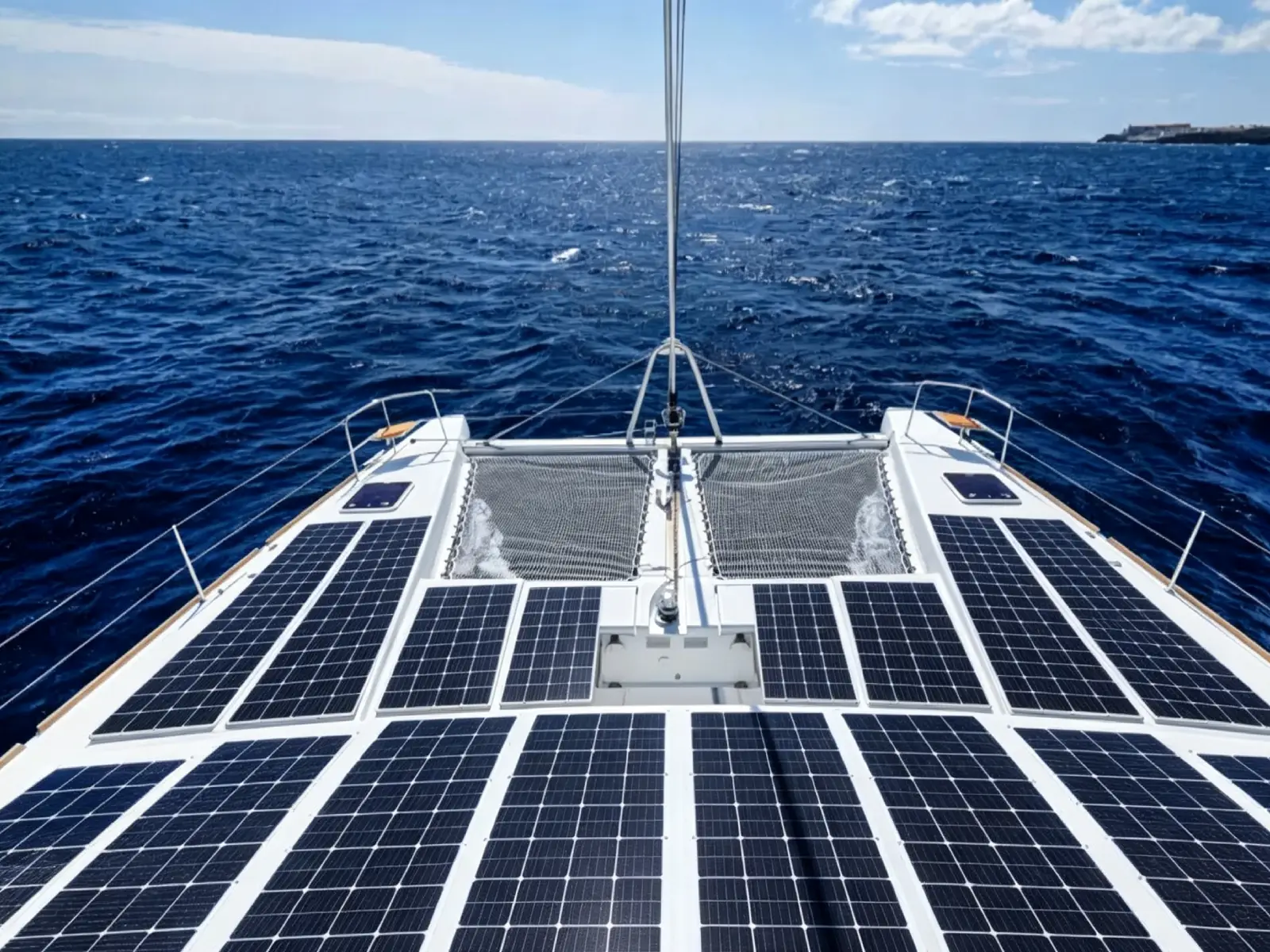
How to Choose a Reliable Flexible Solar Panel Manufacturer
1. Why Flexible Solar Sourcing Frequently Fails Flexible solar panels have evolved far beyond basic…
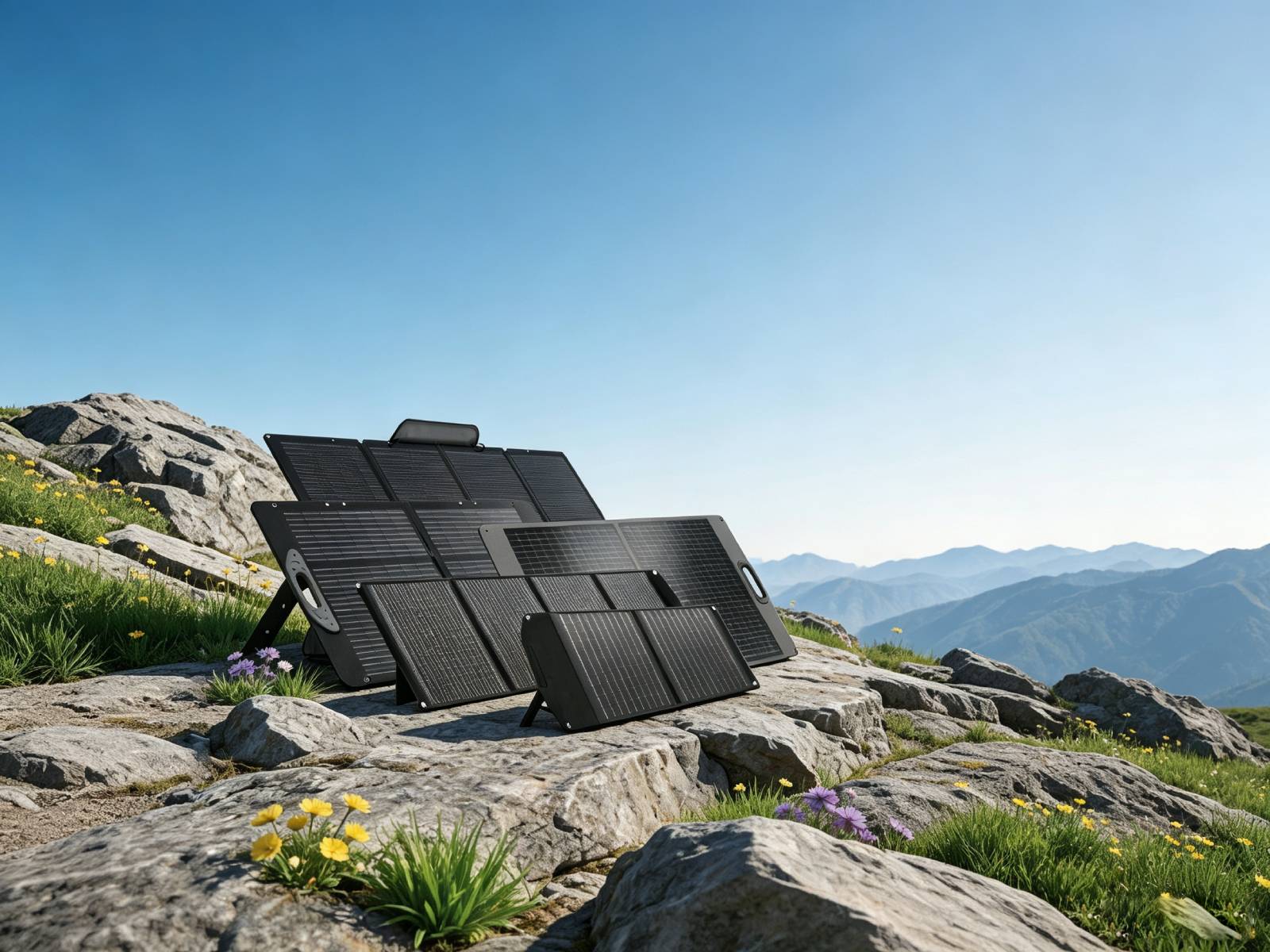
Customized ETFE Portable Solar Panel: Wholesale, OEM & ODM for Business
The global demand for outdoor portable power solutions has grown rapidly in recent years. With…
Leave a Reply