

Solar Power Knowledge
Solar Panel Supplier Checklist: 10 Points Before You Place a Bulk Order
 gaotu
Article Summary: Don’t wire a deposit without a plan. This 10-point B2B scorecard breaks down exactly what to verify in a solar panel supplier—from matching IEC/UL certifications to specific model batches, calculating real 5-phase lead times, and securing payment terms. Stop comparing suppliers on gut feeling and start using standardized, actionable checkpoints to avoid costly delivery delays and quality failures.
Quick Answers: Solar Supplier Verification
- How do I verify a solar panel supplier’s certifications are legit?
Ask for the exact certificate numbers (IEC, UL, TÜV). Verify them directly on the issuing body’s official website (like Certipedia or UL Product iQ) to ensure they cover your specific model and haven’t expired. - What is the best way to confirm a supplier’s real lead time?
Break it down by phase: production, inland transport, ocean freight, customs, and site transit. Ask for a screenshot of their current production schedule to see exactly where your order sits in the queue. - Why must the EL (electroluminescence) report match my specific batch?
A generic quality certificate means nothing. You need the EL report for your exact production batch to ensure you are not receiving panels with invisible micro-cracks or soldering defects. - What payment terms are safest for a first-time order?
Never accept 100% upfront payment without risk control. Prioritize channels that support escrow or Letters of Credit (L/C), and always arrange third-party or video pre-shipment inspections.
Before you wire a deposit to any solar panel supplier, you need a practical solar panel supplier checklist to compare them side-by-side. This article won’t bore you with product specs or market trends. It does one thing: it takes the vague question of “is this supplier reliable” and breaks it down into 10 actionable checkpoints, each with a clear verification method.
This checklist is built for B2B buyers who have already contacted a few suppliers and are ready for final screening. Use it as a scorecard during the quotation process—check each item off before deciding who gets your money.
Why You Need a Written Checklist
The most common procurement mistake isn’t “choosing the wrong supplier.” It’s comparing different suppliers without using the same set of standards. Supplier A’s sales rep replies fast, Supplier B’s price is slightly lower, Supplier C’s factory looks massive—and when you make a gut-feel decision, you usually discover a critical gap only after delivery or quality problems surface.
A written checklist forces you to compare apples to apples. Each item has a clear “what to check” and “how to check it.” The quality of their answers is a screening criterion in itself. Suppliers who are willing to cooperate with verification are generally much more worth pursuing than those who stay vague.
Group 1: Qualifications and Compliance (4 Items)
1. Do the certifications cover the exact model you are buying?
What to check: IEC 61215 (design qualification) and IEC 61730 (safety) are the baseline requirements. Entering the EU requires CE marking; the U.S. market requires UL or ETL listing. For Japan, you need PSE; for Korea, KC.
How to check: Do not rely on the PDFs on their website. Ask for the certificate number and verify it on the issuing body’s website—TÜV Rheinland certificates can be checked on Certipedia, UL certificates on UL Product iQ. Confirm two things: whether the certificate covers the specific model you are quoting, and whether it is still valid. Many suppliers display certificates from a product line several years old that doesn’t even match what you are buying today.
2. Can they provide a factory audit report?
What to check: ISO 9001 is the baseline for quality management; ISO 14001 covers environmental management. If the supplier claims to be an OEM for established brands, social responsibility audits like BSCI or Sedex also reflect their management discipline.
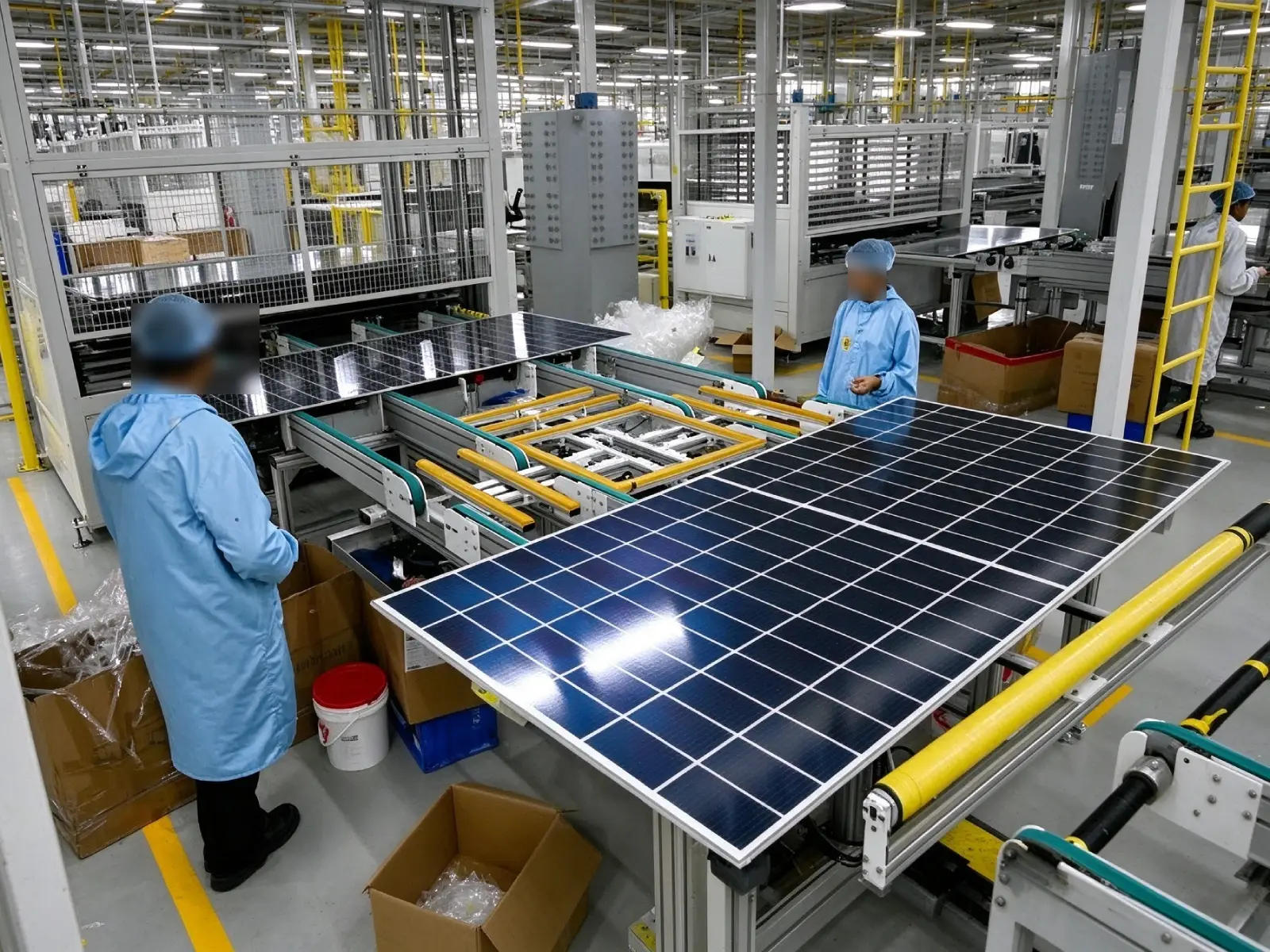
How to check: Ask for the certificate number and the date of their most recent audit. Go a step further: confirm whether they accept live video factory tours or third-party audits. A supplier that can’t show you the production line on video should be treated as a trading company, no matter what they call themselves. During a video tour, focus on three things: is the line actually running, what specs are currently in production, and is there any stock or work-in-progress of the model you need in the warehouse.
3. Does the EL inspection report correspond to a specific batch?
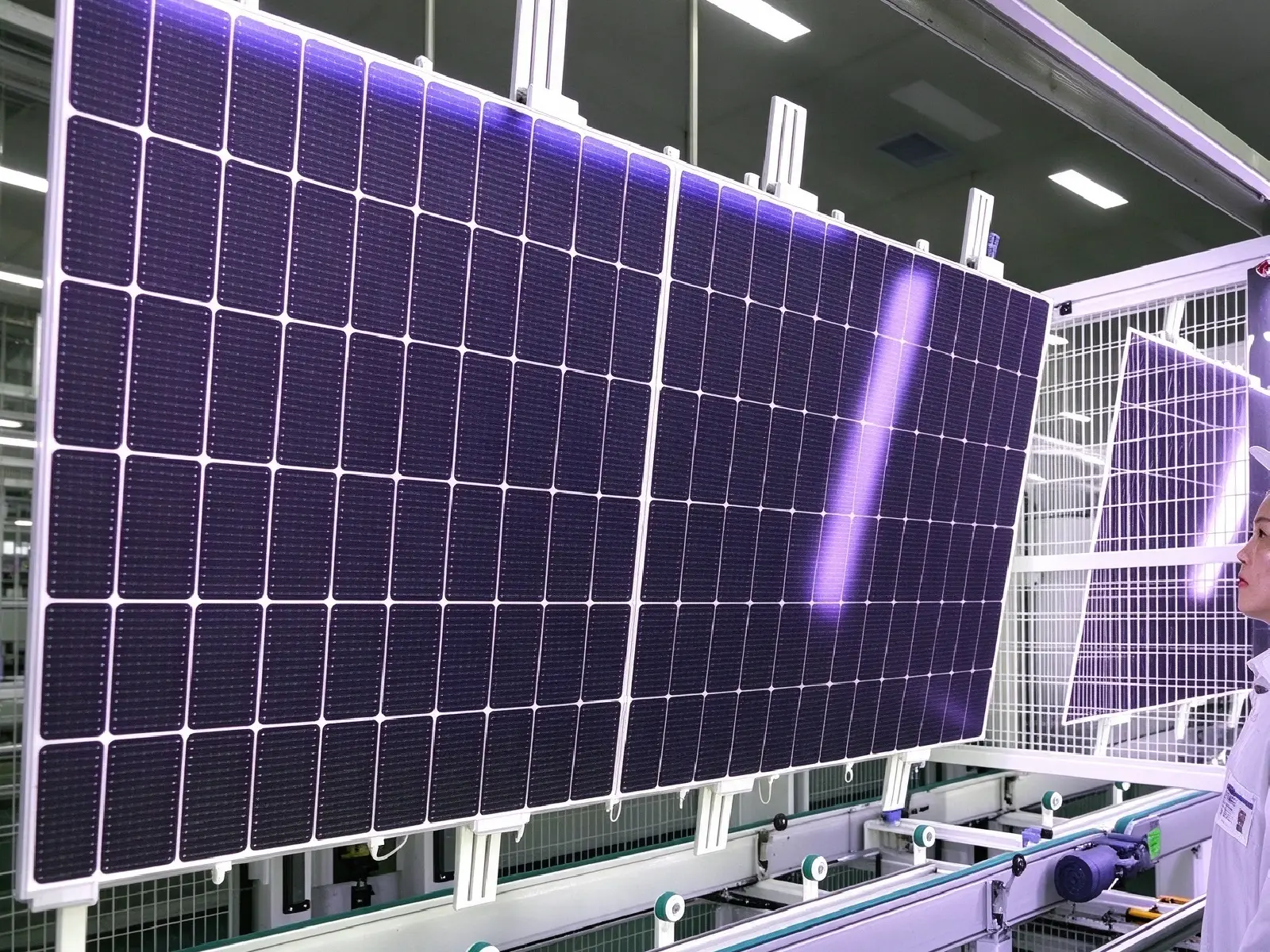
What to check: EL (electroluminescence) imaging reveals micro-cracks, broken fingers, and soldering defects invisible to the naked eye. Reputable factories perform EL sampling on each production batch before shipment.
How to check: Ask the supplier for the EL report for your specific batch to accompany the quotation or contract—not a generic “quality certificate.” The report should have a batch number or production date that can be matched to your order. Suppliers willing to provide this generally operate with a much higher level of transparency than average.
4. Is the cell source traceable?
What to check: Module power output and degradation depend heavily on the cells. Module assembly and cell manufacturing are two different businesses; not many assembly plants produce their own cells.
How to check: Ask the supplier to identify the cell manufacturer and model, and confirm it matches the quotation. If they say “we use our own cells,” press for the factory name and capacity. Vague answers are a major red flag.
Group 2: Delivery and Fulfillment (3 Items)
5. Is the lead time commitment broken down by phase?
What to check: The “25-day delivery” figure a supplier quotes usually only covers production. The real time to arrival is the sum of five phases: production, inland transport, ocean freight, customs clearance, and port-to-site transit.
How to check: Ask them to break it down: production scheduling days, inland transport days, ocean freight days, and customs clearance allowance. Also confirm the current production schedule—your order’s position in the queue and the estimated start date. If they only reply “we will arrange it as soon as possible,” you are bearing the lead time risk yourself. Peak season (usually ahead of installation seasons in Europe and North America) requires additional buffer.
6. Do they support staged delivery?
What to check: Project schedules are usually built backwards from a deadline. Delivering all modules at once means massive on-site storage pressure and capital tie-up.
How to check: Ask directly if they have handled staged delivery cases and what their minimum batch size is. Suppliers with “multi-batch, small-lot” production capabilities offer significantly more flexibility in project execution. If they can only ship full containers at once and your project needs staged delivery, that’s a hard mismatch.
7. Is there historical on-time delivery data?
What to check: If you are sourcing through a B2B platform, historical metrics for on-time delivery rate and response time are usually available.
How to check: A supplier with an on-time rate below 95% warrants caution when schedules are tight. A supplier that takes more than half a day to respond to an inquiry is unlikely to handle quality issues efficiently later. This data is far more informative than a sales rep’s verbal promise.
Group 3: Warranty and After-Sales (2 Items)
8. Is the warranty execution path clearly documented?
What to check: A 10-year product warranty and 25-year power warranty are industry norms. The key isn’t the number of years, but who to contact, how long the response takes, and who bears the freight cost for replacement modules.
How to check: Ask for a written description of the claim process: what materials to submit, how long the review takes, which warehouse replacement units ship from, and who pays the freight. If the factory is overseas, confirm the cross-border recourse path. For large projects, consider requiring third-party warranty insurance (like PowerGuard, MunichRe, or Solarif), but verify the policy number on their official website.
9. Is there a committed after-sales response time?
What to check: The speed of response after a quality issue directly determines the size of the project loss.
How to check: Ask for a written response time commitment (e.g., respond within 24 hours). If they have overseas warehouses or local service teams, confirm the replacement dispatch cycle. These details are often vague in standard warranty terms and need to be specified separately in the contract or purchase order.
Group 4: Commercial Terms and Risk (1 Item)
10. Does the payment method support risk control?
What to check: Paying 100% upfront on a first-time order is the most common mistake in procurement.
How to check: Prioritize channels that support escrow or Letters of Credit (L/C). If the supplier insists on 100% upfront and refuses any third-party escrow, assess whether the order risk is worth taking. For first orders, arrange third-party inspection, or at minimum require a pre-shipment video inspection covering packaging, labeling, junction boxes, and frame appearance.
How to Use the Checklist
Turn the 10 items into a table with supplier names across the top and checklist items down the side. Send the exact same question list to at least three suppliers and compare the quality of their answers, their response speed, and the depth of information they are willing to provide.
A few practical reminders:
-
Don’t wait until the end to ask for certifications and EL reports. Request these at the initial inquiry stage; the quality of the response directly reflects how disciplined the supplier is.
-
Confirm lead times and staged delivery at the quotation stage, not when the contract is being signed. Both directly affect your project schedule and cash flow planning.
-
Payment terms are the bottom line. Even if the first nine items are perfect, a payment method that accepts no risk control still warrants caution.
-
The checklist is not one-time. On reorders or new project procurement, rerun the key items, especially certification validity and current scheduling.
Next Steps
If you’ve used this checklist to narrow down your candidates, the next step is to prepare a structured Request for Quotation (RFQ) that clearly states project type, target market, procurement volume, delivery milestones, and certification requirements. For MOQ and pricing logic in bulk supply, see the [Bulk Supply Guide]. For choosing a customization model, see the [Custom Bulk Order Guide]. For the complete project-level verification framework, see our pillar article, Solar Panel Wholesale Supplier Guide.
Certification and lead time information in this article are industry references. Actual terms are subject to real-time supplier confirmation and contract agreements.
About Gaotu Innovation
Gaotu Innovation has directly verifiable records on the key checklist items: product certifications including IEC 61215, IEC 61730, TÜV, CE, UL, and RoHS, with ISO 9001 and ISO 14001 certificate numbers available for verification. Our full-process quality traceability system covers every node from material coding to shipping serial number, with anomalies locatable to the batch and process step within 30 minutes, and EL reports available per batch. Our Dongguan main factory and Indonesia manufacturing center support multi-batch, small-lot flexible scheduling, paired with five overseas warehouses (US, Europe, Japan, Korea, Australia) for staged delivery and localized replenishment. We have long-term OEM/ODM relationships with brands including Anker, EcoFlow, and Bluetti. Bring this checklist and come audit our factory or take a video tour.
Related Posts

How Do Solar Panels Affect Your Electric Bill
If you’re a homeowner or renter looking to cut down your monthly household bills, solar…

OEM Solar Panels Specs Guide
If you’re a solar wholesaler, importer or distributor sourcing OEM solar panels, understanding every key…

Best Selling Foldable Solar Panels For Bulk Importers | Wholesale PV Supplier Guide
Best selling foldable solar panels for bulk importers have become the most profitable wholesale solar…


Leave a Reply