

Solar Power Knowledge
China Flexible Solar Panel Supplier: A Buyer‘s Guide to Vetting Factories Without Getting Burned
 gaotu
I’ve spent the last few years on the sourcing side of this trade, auditing factories across Guangdong and watching good buyers get bad panels. The pattern is consistent: the failure almost never happens because someone picked “the wrong supplier.” It happens because the buyer didn’t ask a question the supplier was hoping they wouldn’t ask.
Flexible panels are uniquely unforgiving in this regard. A rigid panel has an aluminum frame and tempered glass. If the factory cuts corners on encapsulation, you might see it in five years. A flexible panel has neither. The front sheet is the armor. The lamination is the structure. Get those two things wrong, and you’ll be filing warranty claims before the first rainy season ends.
So here’s the framework I use when vetting a China flexible solar panel supplier. Not a list of factories—those lists go stale in six months. A set of questions that separate the factories from the order-takers.
Why “China Supplier” Tells You Almost Nothing
Search for a China flexible solar panel supplier and you’ll find hundreds of results. Most are trading companies with a website. Some are factories. The distinction matters more in flexible panels than in almost any other solar product category.
The manufacturing cluster is real. Shenzhen and Dongguan in the Pearl River Delta are where the custom flexible panel ecosystem lives—the cell sorters, the lamination shops, the connector crimpers, all within a few hours of each other. That density is why a genuine factory there can turn a custom sample in a week while a trading company waits two weeks for someone else to do it.
But density cuts both ways. The same ecosystem that makes prototyping fast also makes it easy for a sales office with a WeChat account to present itself as a manufacturer. The quote looks the same. The catalog looks the same. The difference only shows up when something goes wrong and there‘s no production line to walk back to.
The buyer’s job, then, isn‘t to find “a supplier.” It’s to find a factory that can document what it actually builds.
The ETFE vs PET Question You Must Ask Before Anything Else
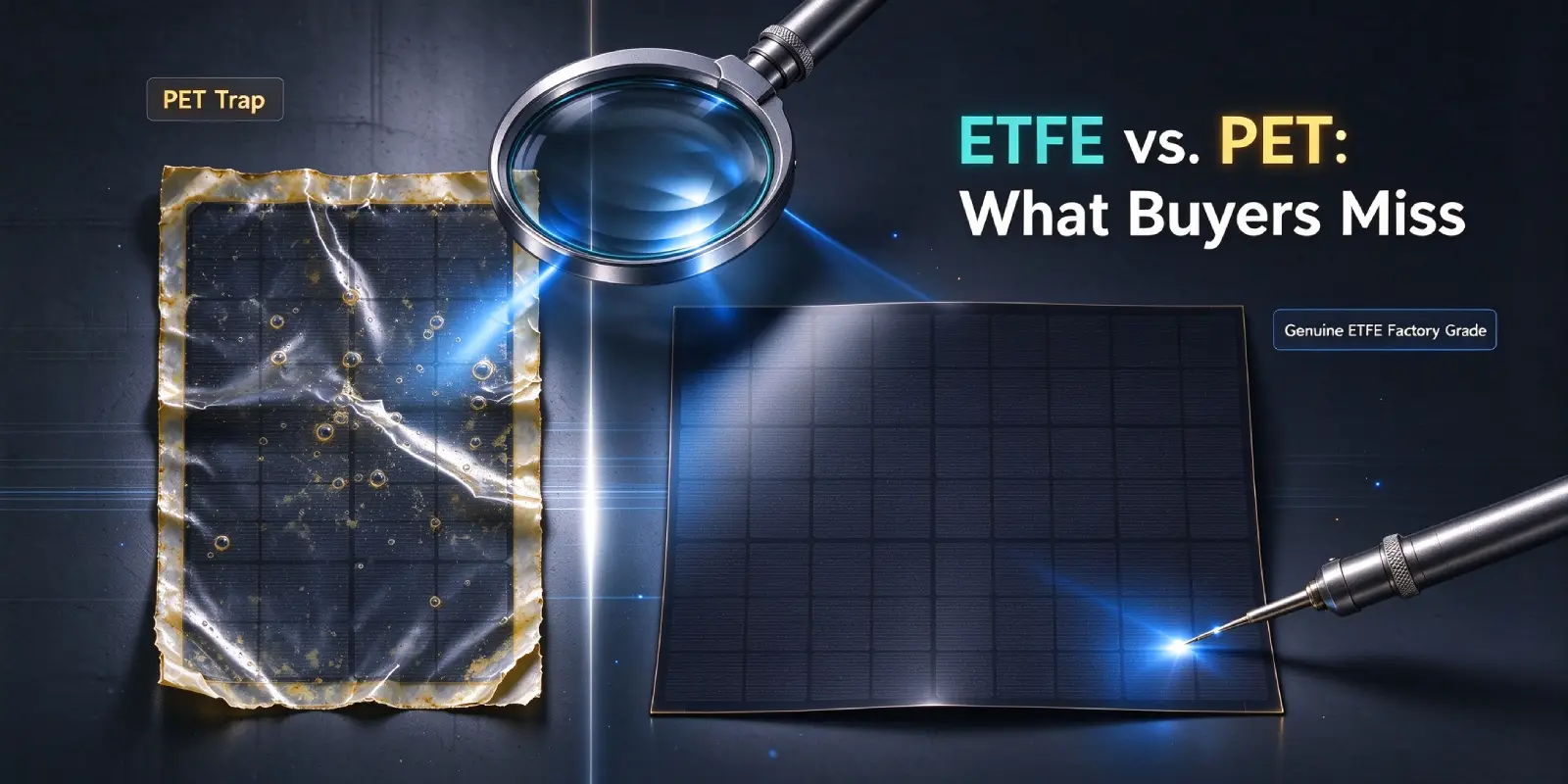
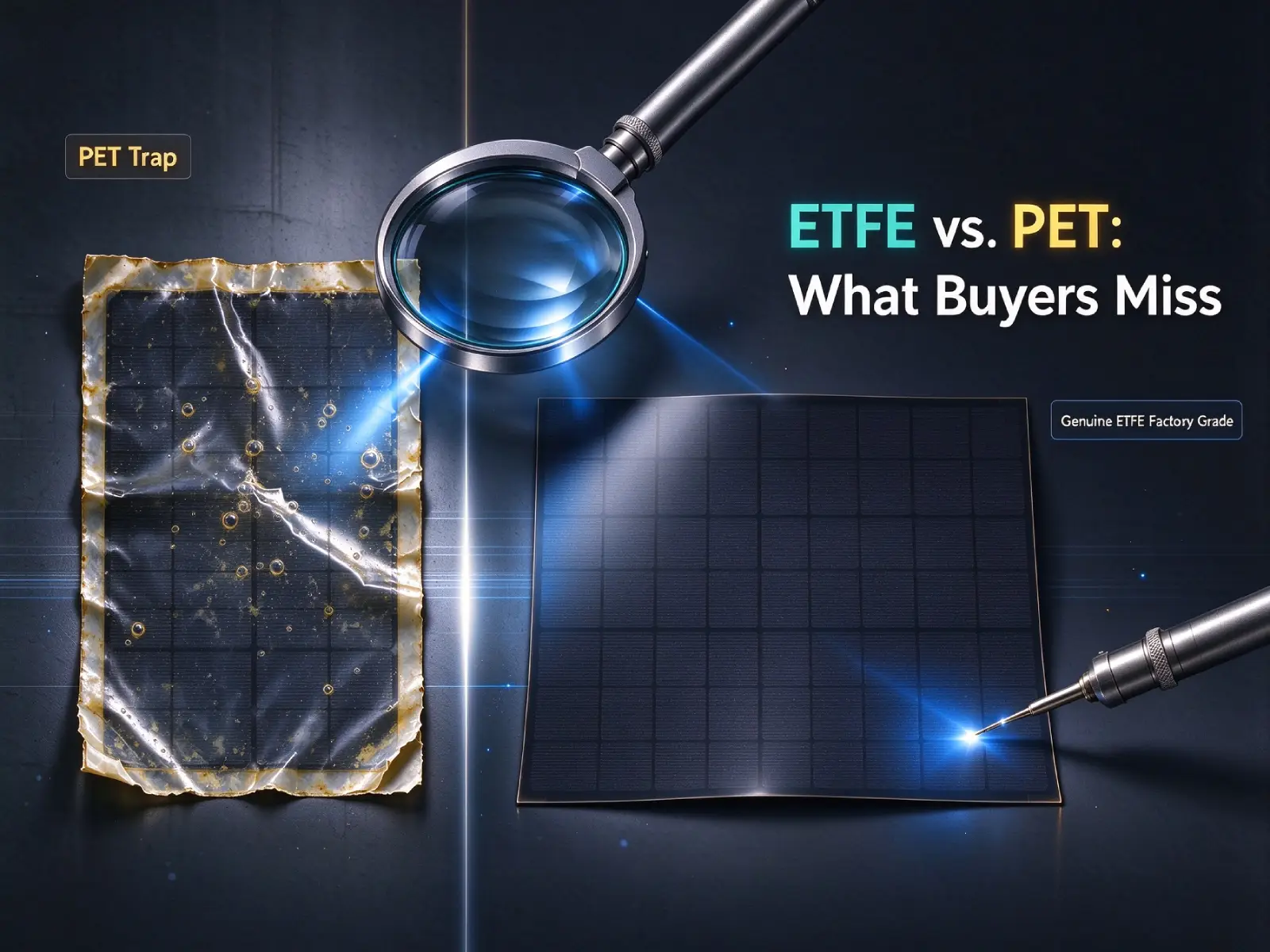
If you ask a supplier only one technical question, make it this one: what is the front sheet material, and how thick is it?
Flexible crystalline silicon panels use a transparent polymer front sheet instead of glass. The two materials that matter commercially are ETFE (ethylene tetrafluoroethylene) and PET (polyethylene terephthalate). They are not interchangeable, and the price difference between them is the single largest driver of quote variance in this category.
Academic work on flexible module encapsulation consistently points to ETFE and related fluoropolymers (FEP, PVDF) as the materials that match glass-level optical transmission while maintaining mechanical flexibility. ETFE has a low refractive index, is hydrophobic, resists high temperatures, and holds up under UV exposure. PET is cheaper. It also degrades under UV, yellows, and becomes brittle.
A supplier blog I reviewed while researching this piece was unusually candid about PET’s limits: it can work for short-cycle promotional products or protected installations where UV exposure is minimal, but “PET should not be selected only because it is cheaper.” That‘s from a seller, which tells you something about how the market actually works. The good ones will tell you where the material shouldn’t be used.
The trap most buyers miss is thickness. Industry-standard ETFE front sheets are around 0.05mm. A supplier trying to hit a price target can quote “ETFE” and use 0.025mm film. The material name is technically correct. The durability is not the same. Ask for the thickness in writing. If the answer is vague, you’ve learned something.
Marine and RV applications are where this question has teeth. Salt air, vibration, cleaning chemicals, and constant curvature are exactly the stress profile that separates a genuine ETFE laminate from a PET assembly dressed up in the same catalog photo.
“Flexible” Has Limits, and the Supplier Should Document Them
Flexible panels bend. They do not bend infinitely, and they do not all bend the same way.
The mechanical reality is straightforward: bending a laminated crystalline silicon module induces strain in the cells and interconnects. Bend too tight, and microcracks form. Microcracks don’t kill a panel immediately. They create hot spots. The hot spots degrade the encapsulant. Twelve months later the panel is outputting half its rated power and the buyer is writing an angry email.
Research on flexible photovoltaic fatigue behavior shows that strain under bending is a function of substrate thickness and bending radius—smaller radius means higher strain, and repeated cycling at tight radii causes cumulative damage. For commercial flexible crystalline silicon panels, a conservative working figure is ≥30cm static bending radius. If your installation needs tighter than that, you‘re not buying a standard flexible panel. You’re buying a custom build, and the supplier needs to know that before quoting.
What to ask for in the RFQ: “Supplier must state the minimum static bending radius and any installation restrictions in writing, for the exact construction quoted.” If the response is “it‘s very flexible, don’t worry,” that‘s not an answer. A factory that has actually tested its laminate knows the number. A trading company doesn’t.
How to Tell a Factory from a Trading Company in One Email
The business license check is the fastest filter. Chinese business licenses list a scope of operations. A manufacturer’s scope includes production language—”R&D, production, and sales of PV modules.” A trading company‘s scope says “sales” and not much else.
But scope alone isn’t enough. The license can say production while the “factory” is a rented warehouse with a lamination machine in the corner.
Ask for an EL image of the exact model you’re quoting. Electroluminescence testing reveals microcracks, dead cells, and soldering defects that are invisible under normal light. A real factory runs EL on production batches and can pull an image for the specific wattage and dimensions in your quote. A trading company will send a generic catalog image or a photo of a different model. Compare the cell layout in the image to the cell layout in the spec sheet. They should match.
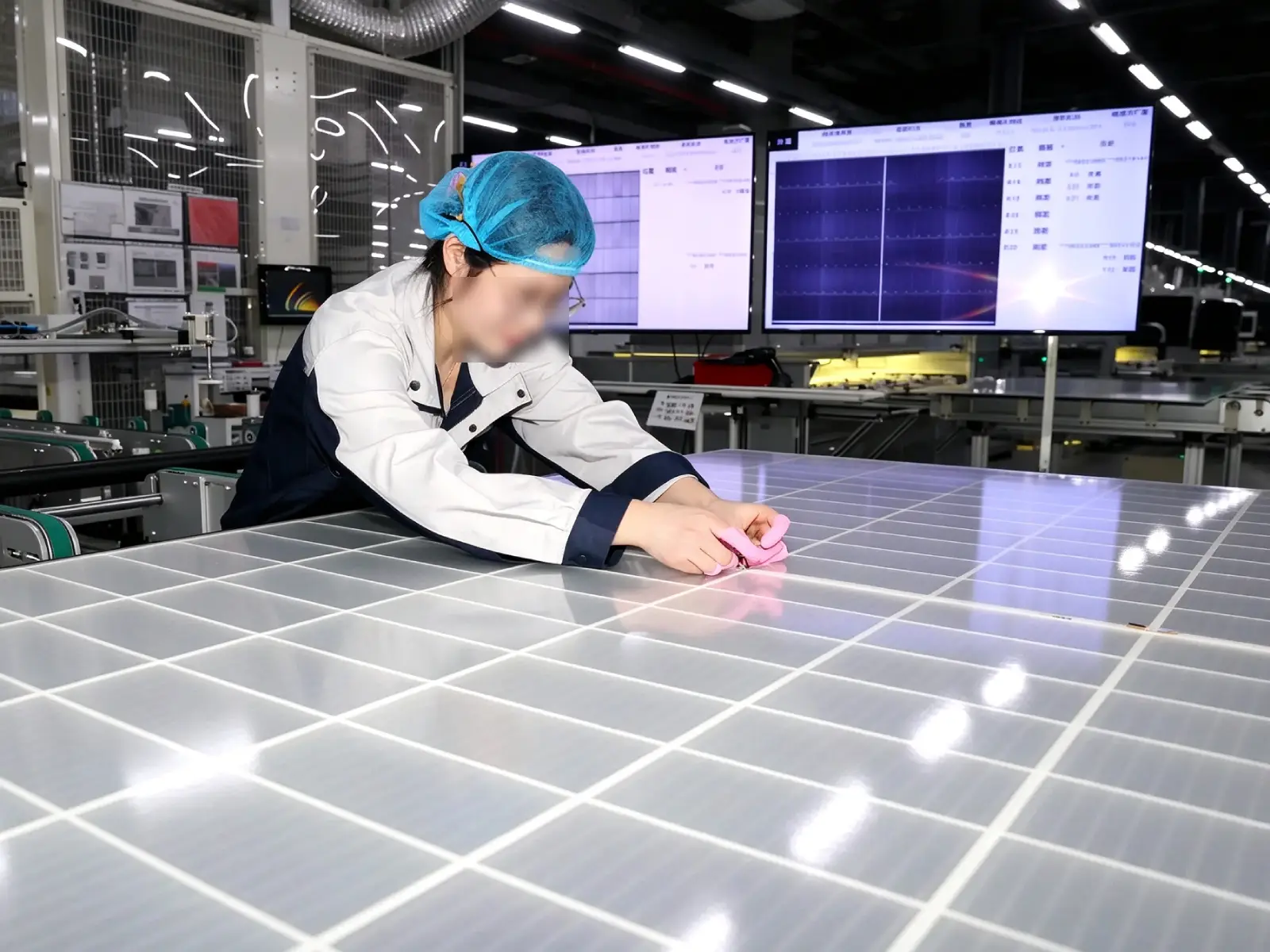
Ask what lamination equipment they run. Vacuum lamination at controlled temperature and pressure is standard for flexible panels. If the answer is vague or mentions “pressing,” walk away. Flexible laminates have no frame to hide delamination at the edges. The bond between front sheet, encapsulant, and back sheet is the only thing keeping moisture out.
None of these questions are hostile. A factory manager will answer them in a few minutes because they know their line. Hesitation is the signal.
Certificates Are Not a Warranty
A supplier will send you an IEC 61215 or 61730 certificate. It will look official. It probably is official. It also probably doesn’t cover what you’re buying.
PV module certificates are issued for specific model constructions—specific cell type, specific front sheet, specific back sheet, specific junction box, specific dimensions. Change the dimensions for a custom fit, switch from one ETFE film supplier to another, or move the junction box location, and the certificate may no longer apply to the product on your purchase order.
IEC TS 62915 exists precisely for this reason. It sets out the retesting requirements when a module design is modified from the originally certified construction. The standard covers changes to materials, components, and design, and specifies which tests need to be repeated. A supplier who understands this will be able to tell you whether your custom panel falls within the certified range or triggers retesting.
The practical question: “Is the exact model and configuration I’m quoting covered by the certificate you’ve provided? If dimensions or materials are modified for this order, does that affect coverage?”
The honest answer from a real factory is often “the certificate covers the standard size; your custom dimensions would require a variant qualification.” That’s fine. You can work with that. The dishonest answer is a certificate PDF and a promise that “it covers everything.”
A Five-Item RFQ Checklist You Can Send Today
If you’re contacting a China flexible solar panel supplier this week, put these five items in the first email. The response tells you more than a factory tour.
-
Front sheet material and thickness, in writing. ETFE or PET? If ETFE, what thickness in millimeters? 0.05mm is the baseline for outdoor durability. Accept nothing less without a specific engineering justification.
-
EL test report for the exact model quoted. Not a catalog sample. Not a different wattage. The same cell count, same dimensions, same junction box position.
-
Documented bending radius and installation restrictions. Minimum static radius, whether dynamic flexing is permitted, and any surface preparation requirements for adhesive mounting.
-
Flash test data commitment for production batches. Will each shipment include a flash test report recording measured Pmax, Vmp, and Imp against the nameplate rating? Batch drift is the most expensive failure mode because it shows up after you’ve committed.
-
Business license scope screenshot. Production language or sales-only. This takes the supplier thirty seconds to provide. Refusal is informative.
What Red Flags Actually Look Like
Price isn‘t a red flag by itself. Flexible panels are a competitive category, and a factory quoting $0.55/W isn’t automatically suspect.
A price that’s 30% below everyone else, with no material explanation, is a red flag. Ask what accounts for the gap. If the answer involves “we source cells differently” or “our lamination process is more efficient,” press for specifics. If the answer is “we have a special relationship with the film supplier,” you’re probably talking to a PET panel marketed as ETFE.
A quote that says “Flexible Solar Panel 100W” and nothing else is a red flag. No material spec, no cell grade, no dimensional drawing. A real factory quotes from a spec sheet because they build from a spec sheet.
Extremely low MOQ with “factory direct” claims is a soft red flag. Custom flexible panel production has setup costs—cell stringing, lamination tooling, test programming. A factory that will make 10 pieces is either charging you a sample premium or running a trading operation that batches orders.
“Same as ETFE” used to describe PET is a hard red flag. There is no PET formulation that performs like ETFE under UV and damp heat. A supplier who claims otherwise is either misinformed or hoping you are.
The Bottom Line
The best China flexible solar panel supplier for your project isn’t the one with the lowest price, the fastest Alibaba response time, or the prettiest catalog. It’s the one that answers material questions with numbers and documents instead of adjectives.
Ask about the front sheet. Ask for the EL image. Ask what happens to the certificate when the dimensions change. The suppliers who answer clearly are the ones worth a sample order. The ones who deflect are saving you the cost of finding out the hard way.
A Benchmark: What a Factory That Passes This Checklist Looks Like
The framework above works. But if you want to see what the answers should look like in practice, here is one example.
Gaotu Innovation (Shenzhen) New Energy Group is exactly the kind of manufacturer this guide is designed to identify. With roots dating back to 2008, we are not a trading company, but a true OEM/ODM manufacturing group with over 35,800 m² of production space in Dongguan and an 18,000 m² facility in Indonesia.
When you ask us the hard technical questions, we have the documentation ready:
-
The ETFE Question: We don’t just assemble panels; we hold 380 global patents, including core flexible encapsulation technologies. Our FlexiLite series uses genuine, high-grade ETFE front sheets designed for marine and RV endurance.
-
The EL Testing Question: Our factories are equipped with 100% full-process EL and IV visual inspection machines. We can pull the exact electroluminescence image for your quoted model.
-
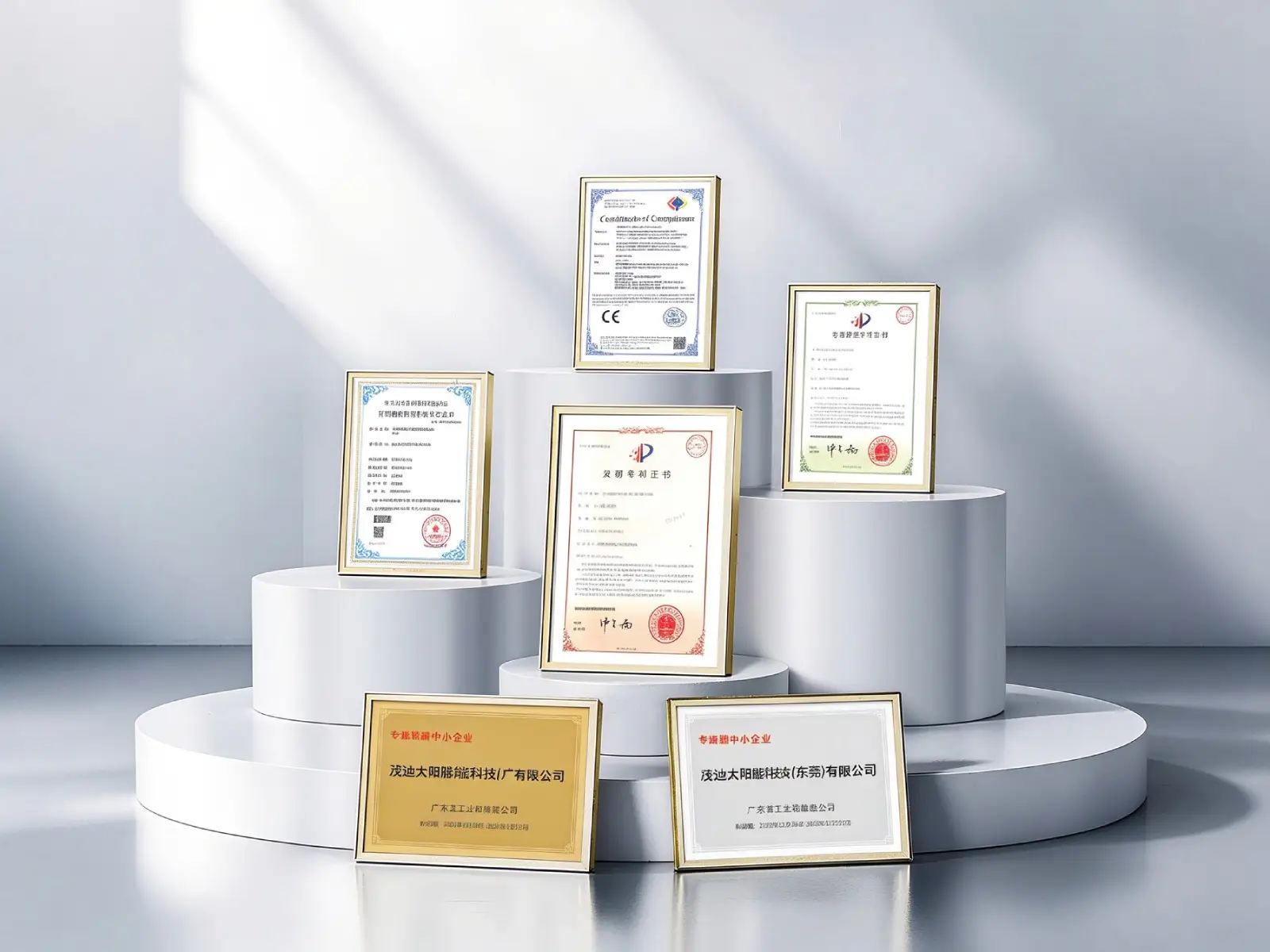
The Factory Question: As a Tier-1 partner to global outdoor energy giants like Anker, EcoFlow, and Bluetti, our 92% automated production lines and strict ISO 9001/BSCI systems have supported an 18-year zero-recall record.
We know you need to vet your supplier. We built our factories specifically to pass that vetting process. [CTA: Send us your 5-item RFQ today to test us / Download our factory audit report].
Related Posts

Best Selling Foldable Solar Panels For Bulk Importers | Wholesale PV Supplier Guide
Best selling foldable solar panels for bulk importers have become the most profitable wholesale solar…
Custom Voltage Portable Solar Panel: The Wholesaler’s Ultimate Guide to High-Margin Sourcing in 2026
Article Summary This guide explains why Custom Voltage Portable Solar Panels are a high-margin opportunity…

126W Solar Shade Umbrella: Turn Any Outdoor Space Into a Portable Off-Grid Power Station
Outdoor living shouldn’t mean being cut off from power. Whether you’re camping deep in the…

Leave a Reply