

Solar Power Knowledge
Foldable vs Flexible vs Tempered Glass Solar Panels: Which to Choose
 gaotu
Introduction
Not all portable solar panels are the same. When buyers start sourcing, they quickly discover that the market offers several distinct product types. Each has its own strengths, limitations, and ideal use cases.
Choosing the wrong type can lead to unhappy customers, high return rates, and wasted inventory. Choosing the right type can create a strong product line that sells consistently.
This guide compares the three most common portable solar panel types: foldable, flexible, and tempered glass. It covers their construction, performance, cost, durability, and best applications. By the end, you will have a clear framework for deciding which type fits your market and business model.
Article Summary
This buyer’s guide compares foldable, flexible and tempered glass portable solar panels for B2B sourcing. It analyzes efficiency, portability, lifespan, cost and suitable application scenarios, helping importers, distributors and brand owners select the right solar panel lineup according to target market and sales channels. Gaotu Innovation provides OEM manufacturing for all three solar panel categories.
Quick Answer
-
✅ Foldable solar panels: Best for camping, RV overlanding & emergency power, highly portable, easy to deploy.
-
✅ Flexible solar panels: Lightweight, bendable, ideal for curved surfaces like RV roofs, boats and yachts.
-
✅ Tempered glass solar panels: Highest durability & longest service life, perfect for balcony solar, off-grid fixed installations.
-
✅ Sourcing tip: Match panel type to your end customer use case and sales channel, test samples before bulk order.
1. The Three Main Types
Before comparing details, it helps to understand what each type is designed for.
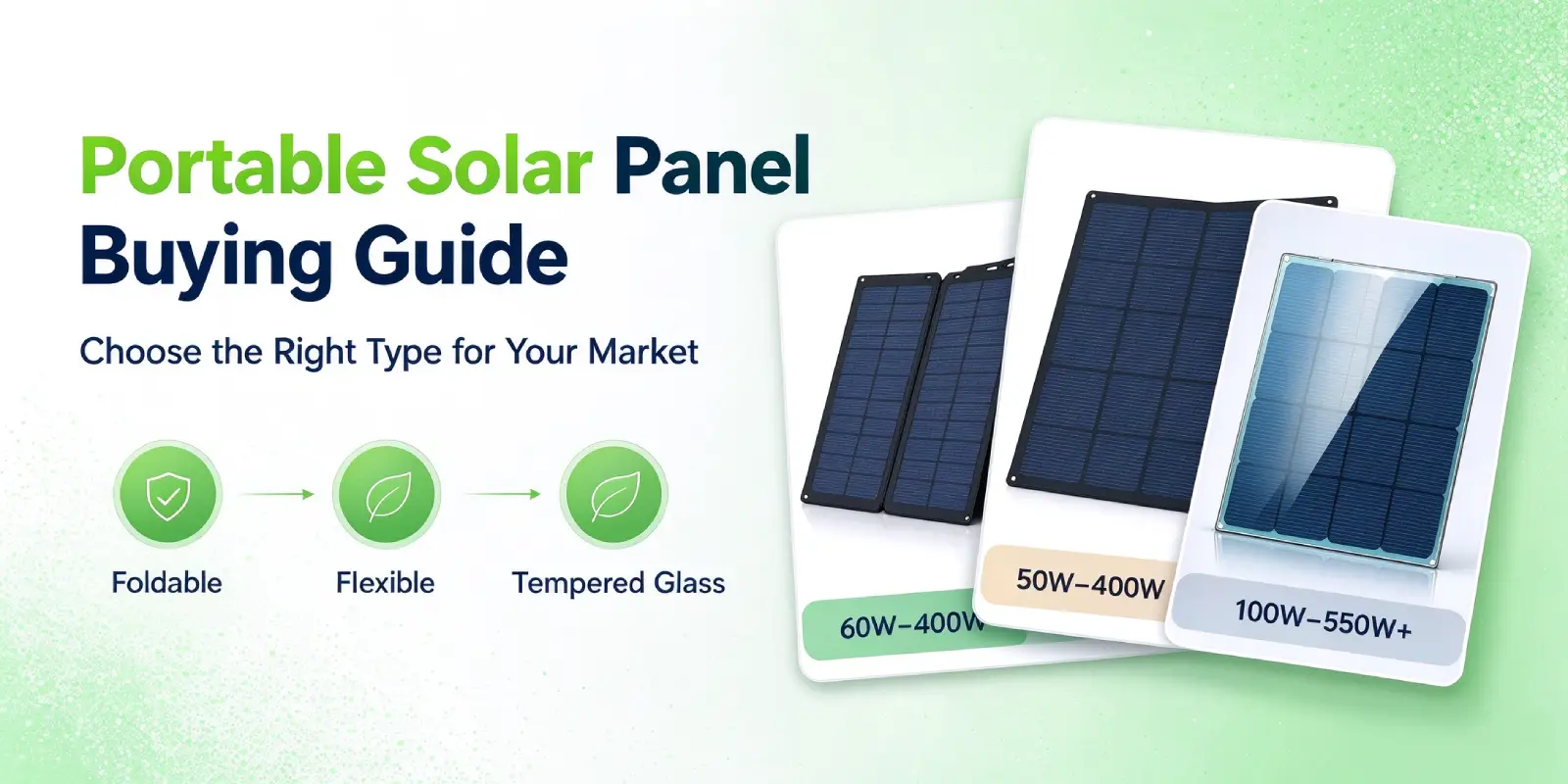
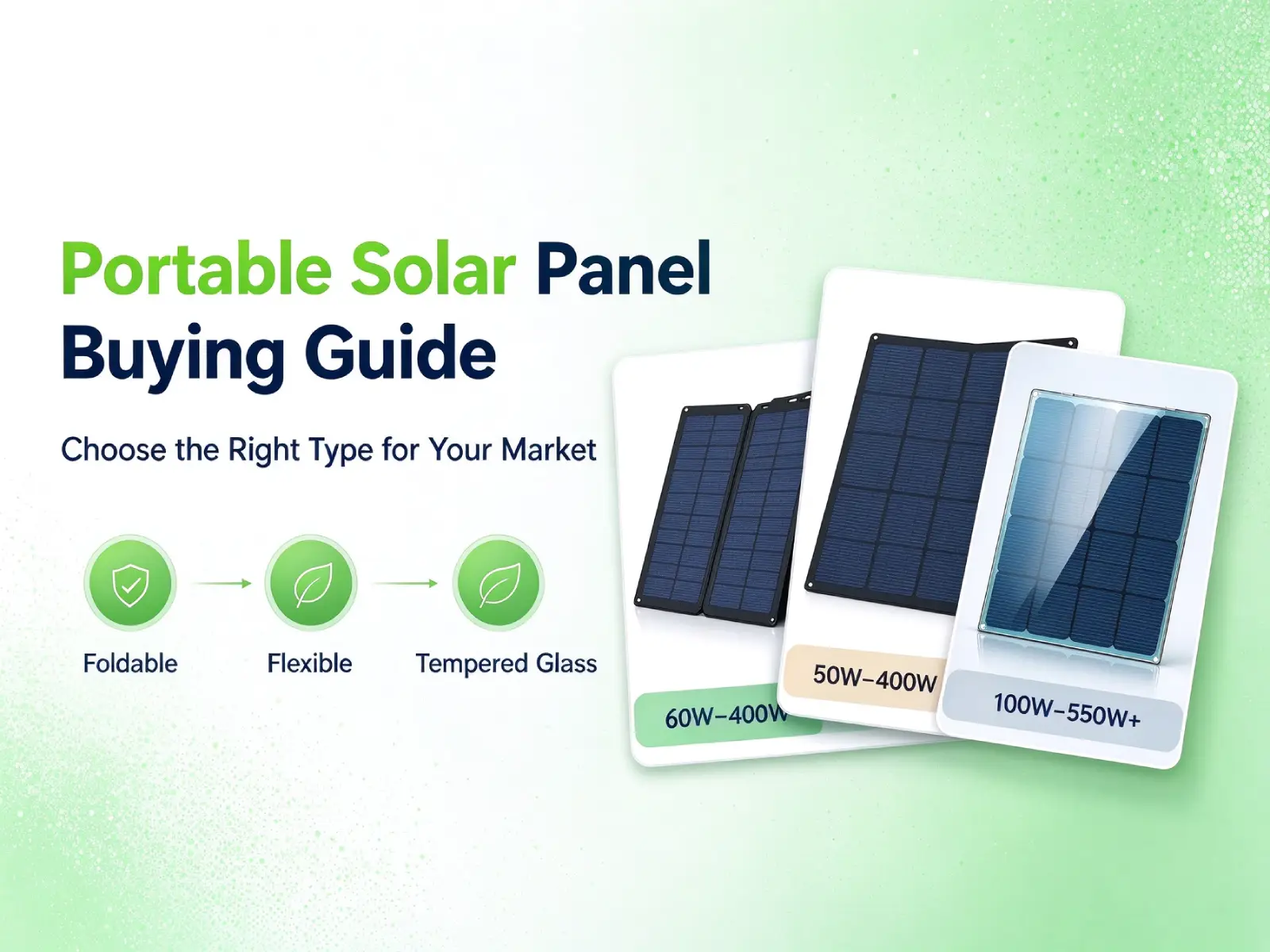
1.1 Foldable Solar Panels
Foldable panels are made of multiple smaller panels connected by hinges or fabric. They fold into a compact size for transport and unfold for use.
Typical power range: 60W–400W
Common applications: Camping, RV, emergency kits, outdoor events
Key features:
-
Portable and easy to set up
-
Usually includes a carrying bag
-
Often comes with built-in kickstands or mounting options
-
Can include USB or DC outputs
1.2 Flexible Solar Panels
Flexible panels use thin cells and flexible encapsulation materials, allowing them to bend to fit curved surfaces.
Typical power range: 50W–400W
Common applications: RVs, boats, curved roofs, building-integrated photovoltaics (BIPV)
Key features:
-
Lightweight and thin
-
Can be mounted on curved surfaces
-
Often uses ETFE or PET surface materials
-
Requires careful surface preparation for installation
1.3 Tempered Glass Solar Panels
Tempered glass panels are the traditional rigid solar panels used in homes and commercial installations. In the portable market, smaller versions are used for balconies, camping, and off-grid setups.
Typical power range: 100W–550W+
Common applications: Balconies, rooftops, fixed installations, solar generators
Key features:
-
Durable and weather-resistant
-
Higher efficiency per area
-
Long lifespan
-
Heavier and less portable
Key takeaway: Each type serves a different purpose. The best choice depends on your target market and customer needs.
2. Performance Comparison
Performance is one of the most important factors when choosing a product type.
2.1 Conversion Efficiency
| Type | Typical Efficiency |
|---|---|
| Foldable | 22%–24% |
| Flexible | 18%–22% |
| Tempered Glass | 20%–23% |
Foldable panels often use high-efficiency monocrystalline cells. Flexible panels trade some efficiency for flexibility. Tempered glass panels offer strong efficiency, especially in larger formats.
2.2 Power Output
-
Foldable: 60W–400W per unit, scalable with multiple panels
-
Flexible: 50W–400W, depending on size
-
Tempered Glass: 100W–550W+, often used in arrays
2.3 Low-Light Performance
Some panels perform better in low-light conditions. Bifacial and high-efficiency cells can improve performance during cloudy or early/late hours.
Foldable panels with bifacial cells can capture reflected light, adding usable power in some conditions.
2.4 Temperature Coefficient
Heat reduces solar panel output. Panels with better temperature coefficients lose less power in hot conditions.
Tempered glass panels often have better thermal management due to their construction. Flexible panels can run hotter if not properly ventilated.
Key takeaway: Efficiency alone does not determine performance. Consider power output, low-light behavior, and heat tolerance.
3. Weight and Portability
Portability is a key selling point for portable solar panels. Weight and size affect how customers use the product.
3.1 Foldable Panels
-
Weight: Moderate; depends on power and materials
-
Folded size: Compact enough for a backpack or car trunk
-
Setup: Usually unfolds in seconds
-
Best for: Customers who need to move the panel frequently
3.2 Flexible Panels
-
Weight: Lightest option, often 50–70% lighter than glass panels
-
Thickness: Very thin, sometimes 2–3mm
-
Setup: Usually mounted semi-permanently
-
Best for: Customers who want to install and forget
3.3 Tempered Glass Panels
-
Weight: Heaviest option
-
Size: Bulkier, harder to move
-
Setup: Usually fixed or semi-permanent
-
Best for: Customers who prioritize durability and output over portability
Key takeaway: Portability is not just about weight. Consider folded size, setup time, and mounting requirements.
4. Durability and Weather Resistance
Durability affects warranty claims, customer satisfaction, and brand reputation.
4.1 Foldable Panels
-
Surface: Often ETFE or PET
-
Water resistance: Typically IP65–IP67
-
Durability: Good for outdoor use with proper care
-
Weak points: Hinges, connectors, and fabric edges
4.2 Flexible Panels
-
Surface: ETFE or PET
-
Water resistance: Often IP67 or higher
-
Durability: Good when properly installed; can be damaged by sharp bends or poor adhesion
-
Weak points: Delamination, connector stress, surface scratches
4.3 Tempered Glass Panels
-
Surface: Tempered glass with aluminum frame
-
Water resistance: High, suitable for permanent outdoor use
-
Durability: Excellent; resistant to hail, wind, and UV
-
Weak points: Heavy; glass can break under impact
4.4 Lifespan
-
Foldable: 5–10 years with proper care
-
Flexible: 5–10 years, depending on installation and materials
-
Tempered Glass: 10–25 years
Key takeaway: Durability depends on materials, construction, and how the product is used. Match durability to the expected use case.
5. Cost Comparison
Cost affects pricing strategy, margins, and target market.
5.1 Unit Cost
-
Foldable: Moderate to high, due to hinges, fabric, and assembly
-
Flexible: Moderate to high, due to specialized materials
-
Tempered Glass: Lower per watt at scale, but heavier and more expensive to ship
5.2 Cost per Watt
-
Foldable: Higher than glass, lower than some flexible options
-
Flexible: Often the highest cost per watt
-
Tempered Glass: Lowest cost per watt at volume
5.3 Total Cost of Ownership
Consider:
-
Shipping cost (weight and volume)
-
Packaging cost
-
Return and warranty rates
-
Installation requirements
-
Replacement frequency
A cheaper panel may cost more over time if it fails early or generates less power.
Key takeaway: Compare total cost, not just unit price. Consider shipping, returns, and lifespan.
6. Best Use Cases by Type
Choosing the right type depends on where and how the product will be used.
6.1 Foldable Solar Panels
Best for:
-
Camping and hiking
-
RV and overlanding
-
Emergency preparedness
-
Outdoor events and festivals
-
Portable power stations
Why:
-
Easy to carry and set up
-
Good power-to-weight ratio
-
Flexible positioning for optimal sunlight
6.2 Flexible Solar Panels
Best for:
-
RVs and vans
-
Boats and yachts
-
Curved roofs and awnings
-
Building-integrated applications
-
Remote monitoring and IoT
Why:
-
Conforms to curved surfaces
-
Lightweight and low-profile
-
Can be permanently mounted
6.3 Tempered Glass Solar Panels
Best for:
-
Balcony solar systems
-
Home backup power
-
Off-grid cabins
-
Commercial and industrial applications
-
Solar generators
Why:
-
High output and durability
-
Long lifespan
-
Strong performance in fixed installations
Key takeaway: Match the product type to the customer’s use case. A panel that works for camping may not work for a balcony installation.
7. Market Trends and Demand
Understanding market trends helps you plan your product line.
7.1 Growing Demand for Portability
Outdoor recreation, van life, and emergency preparedness continue to drive demand for foldable and flexible panels.
7.2 Balcony Solar in Europe
Europe has seen strong growth in balcony solar systems, driving demand for compact tempered glass panels and plug-and-play kits.
7.3 RV and Marine Markets
RV and marine customers prefer flexible panels for curved surfaces and limited roof space.
7.4 Bifacial and High-Efficiency Cells
Bifacial cells and higher-efficiency monocrystalline cells are becoming more common, improving performance across all panel types.
7.5 Integrated Solutions
Customers increasingly want complete solutions: panel + battery + controller + inverter. Suppliers that can offer integrated systems have an advantage.
Key takeaway: Align your product line with market trends and customer demand.
8. How to Choose the Right Type for Your Business
Use this framework to decide which type to source.
Step 1: Define Your Target Market
-
Outdoor enthusiasts → foldable
-
RV and marine → flexible
-
Home and balcony → tempered glass
-
Emergency preparedness → foldable or portable glass
Step 2: Consider Your Sales Channel
-
E-commerce → foldable and flexible
-
Retail stores → foldable and glass
-
Project sales → glass and flexible
-
Distributors → full range
Step 3: Evaluate Your Budget
-
Lower budget → start with one type
-
Higher budget → offer a range
-
Consider MOQ and inventory costs
Step 4: Test the Market
-
Order samples
-
Test with real customers
-
Gather feedback
-
Adjust your product line
Step 5: Build a Long-Term Product Roadmap
-
Start with one or two types
-
Add complementary products
-
Expand as demand grows
-
Work with a factory that can support multiple types
Key takeaway: Start focused, test, and expand based on real demand.
9. Conclusion
Choosing between foldable, flexible, and tempered glass solar panels is a strategic decision. Each type has strengths and trade-offs.
To summarize:
-
Foldable panels are portable and versatile
-
Flexible panels conform to curved surfaces and are lightweight
-
Tempered glass panels are durable and high-output
The right choice depends on your target market, sales channel, budget, and customer needs.
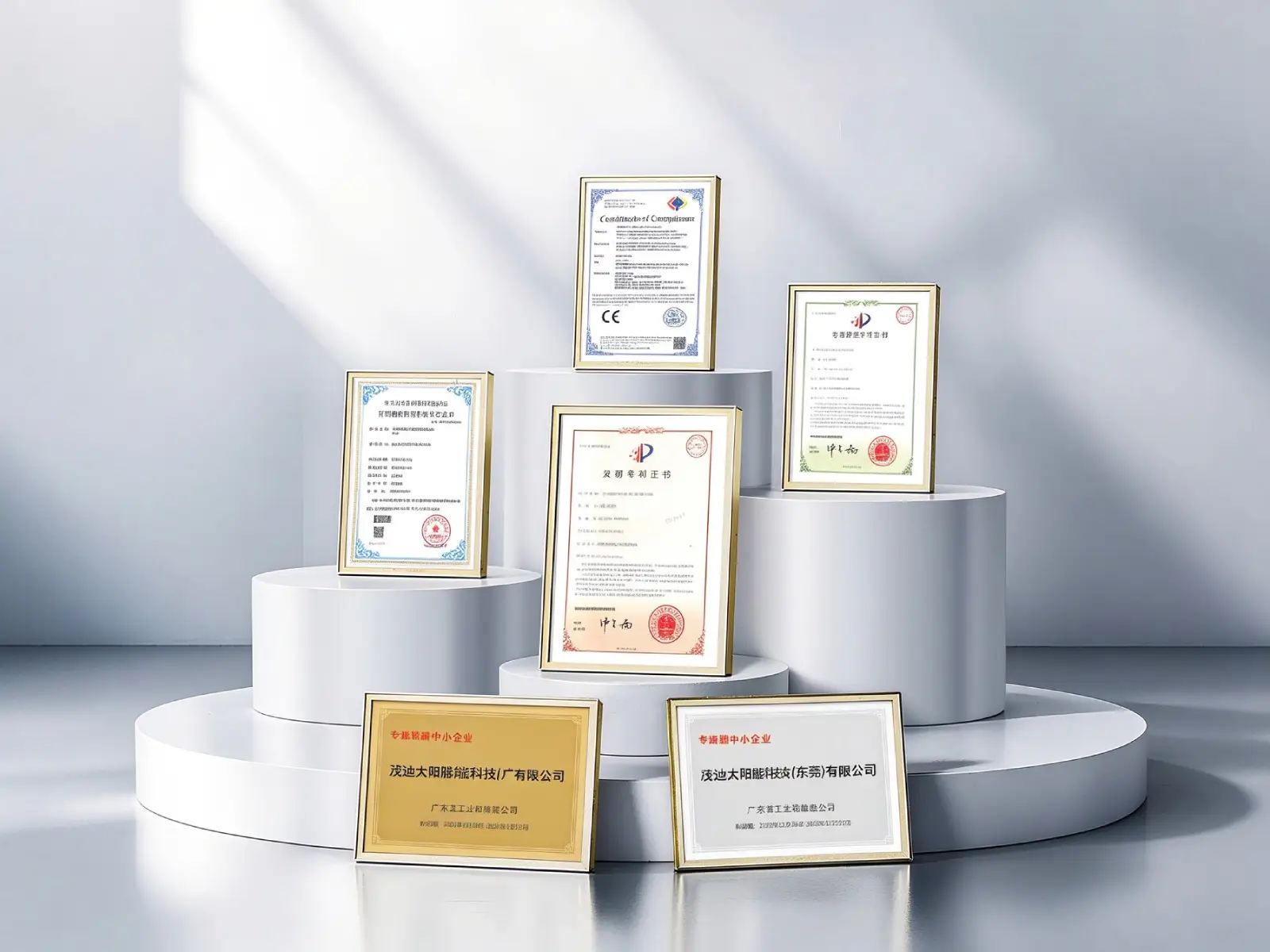
If you are sourcing portable solar panels and want a factory that can support multiple product types, Gaotu Innovation can help. With 18 years of OEM experience, 380 global patents, and production bases in China and Indonesia, we manufacture foldable, flexible, and tempered glass solar panels for brands, distributors, and project buyers worldwide. You can request samples, discuss your product roadmap, or download our product catalog to learn more.
Related Posts
Canton Fair Live | Huge Crowds! Maodi’s Portable Solar‑Storage Products Are a Smash Hit
Heading to Guangzhou for China’s Premier Trade Show As autumn sets in, all eyes turn…
OEM ODM Solar Furniture Table | 25% High Conversion Solar Table for Global Distributors
Introduction: Why This Product Is a Must-Stock Item This Year Anyone in the outdoor energy…
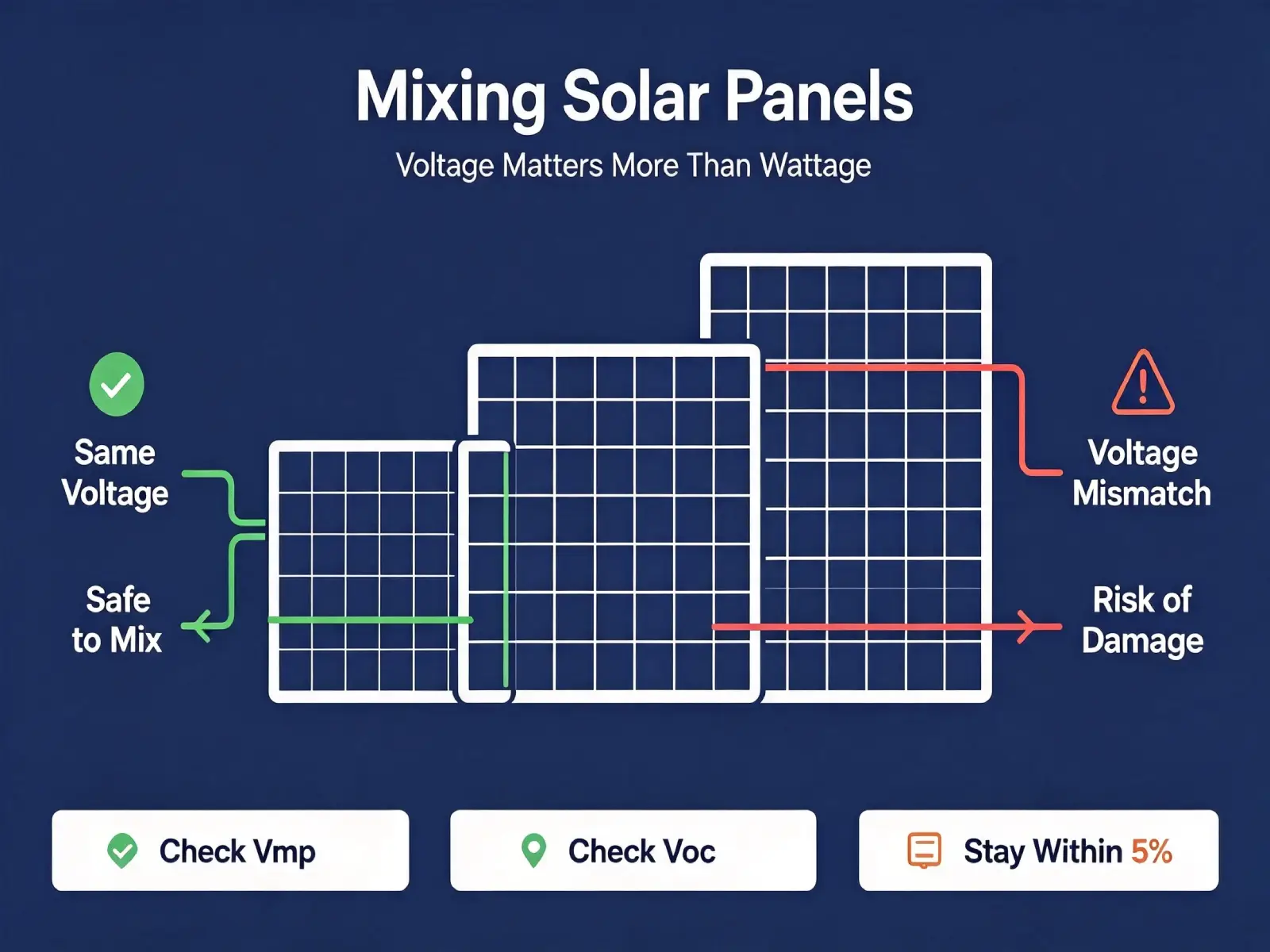
Can Solar Panels of Different Wattages Be Mixed?
Many homeowners and off-grid solar users face a common dilemma: their existing solar panels are…

Leave a Reply