

Solar Power Knowledge
Commercial Solar Procurement: The Real Risks EPCs and Developers Must Avoid
 gaotu
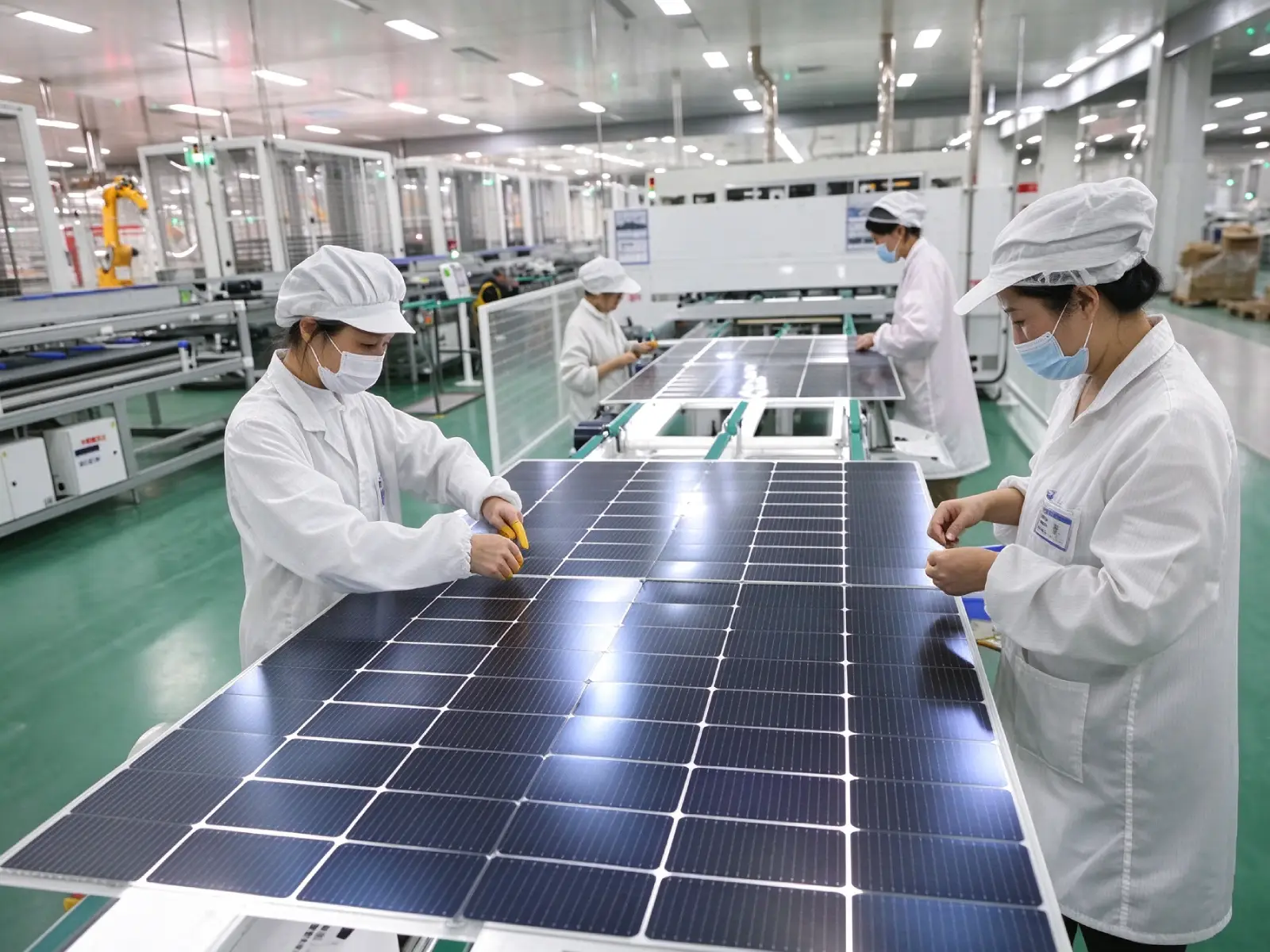
Article Summary: Project procurement isn’t about buying “cheaper panels”—it’s about securing on-time grid connection. Written for EPC contractors and developers, this guide tackles core bulk purchasing risks: ensuring batch consistency and staged deliveries, calculating the realistic 5-8 week lead time, avoiding frame thickness mismatches on-site, and mitigating US AD/CVD tariff and customs risks. Get your 25-year warranty enforced and bypass costly project delays.
Quick Answers: Project-Level Solar Procurement
- Why must project procurement demand “same batch” modules?
Mixed batches cause power output deviations across strings, severely impacting overall efficiency. It must be contractually stipulated as same-batch, same-line. - What is the realistic lead time from a China factory to a US West Coast site?
Don’t just listen to the “25-day production” figure. Factoring in scheduling, ocean freight, customs, and inland transit, the realistic total is 5 to 8 weeks. Add a buffer for peak seasons. - How do you avoid frame compatibility issues during on-site installation?
Frame thicknesses vary (e.g., 35mm vs. 40mm). You must verify mounting clamp compatibility before ordering to prevent costly on-site downtime. - What capabilities should a supplier have to handle US AD/CVD tariff risks?
Confirm if they have US domestic or third-country (like Indonesia) capacity as a hedge. Currently, a customs “pending determination” status is worse for a project timeline than an outright denial.
If you are buying panels for a specific commercial or industrial project, do not use a retail mindset. Project procurement isn’t about saving a few cents per watt—it’s about getting interconnected on time without any hiccups. If just one bad batch slips into a shipment of thousands of panels, your entire project timeline and ROI go straight down the drain.
If you are still stuck deciding between a factory and a trader, go read our Solar Panel Wholesale Supplier Guide first. Today, we’re cutting the fluff and getting straight to the point: the critical metrics EPCs and developers must hammer out before placing a deposit.
Stop Using Retail Logic for Project Procurement
Retail is about stock availability and unit price. Projects are about the certainty of bulk delivery.
-
Never Mix Batches: The biggest nightmare in large projects is receiving mixed batches. The slightest power output deviation will drag down your entire string efficiency. The contract must explicitly state: same batch, same production line.
-
Delivery Must Align with the Construction Schedule: Project schedules are always built backwards. Dumping thousands of panels on-site all at once will crush your cash flow with storage and capital tie-up costs. Whether the supplier can accommodate staged deliveries is the ultimate test of their production line’s flexibility.
-
Warranty is About “Who Pays”: Don’t just listen to them brag about 10-year product and 25-year power warranties. When things go south, do you go to the factory or the trader? Who eats the freight cost for replacements? How long does the claim take? If this isn’t written into the purchase contract, that 25-year warranty isn’t worth the paper it’s printed on.
-
Frame Thickness: The Hidden Trap: Different manufacturers use different frame thicknesses (35mm and 40mm are common). If you don’t check compatibility with your mounting clamps before ordering, and the panels don’t fit on-site, who covers the cost of two days of downtime?
Before You Sign the Contract and Pay the Deposit, Nail Down These 5 Things
1. Batch Consistency: Get it in Writing
Don’t rely on verbal promises from a sales rep. The contract must state that all modules come from the same production batch. Also, document the allowable deviation for power binning. If your system is voltage-sensitive and production batches fall into different power bins, your string matching will be a disaster. Ask directly for the EL inspection report for this specific batch. It’s the quickest way to gauge their actual quality control baseline.
2. Lead Times: Break it Down, Don’t Swallow the Total Number
When a supplier says “25-day delivery,” that’s usually just the time they spend working in the factory. From a Chinese factory to a US West Coast site, the realistic total lead time is at least 5 to 8 weeks. This includes: production scheduling (18-25 days), inland transport to port (1-3 days), ocean freight (2-4 weeks), customs clearance (1-3 days, but double that if trade remedy reviews hit), and port-to-site transit (1-5 days). In peak season, add another two weeks of buffer. Don’t accept a vague number—demand a screenshot of their current production schedule.
3. Warranty: Focus on the “Execution Path”
Beyond the years, you must ask: What is the claim process? Who bears the freight for replacement modules? If the factory is overseas, how do you pursue recourse across borders? For large projects, it’s best to involve third-party warranty insurance (like PowerGuard or MunichRe), but remember to go to their official website and verify the policy number. Don’t get scammed by fake documents.
4. Certifications: Must Match the Exact Model You’re Buying
EPC bidding and project approvals require a complete document package (datasheet, IEC 61215/61730 certificates, structural load reports). Don’t just look at the PDFs on their website. The key is whether the certificate covers the exact model you are buying. Take the certificate number and verify its validity on the TÜV Rheinland website. It’s a million times more reliable than a screenshot from a sales rep.
5. Supply Chain Compliance: The Lifeline for US Projects
If your project is in the US, the manufacturing origin directly determines your AD/CVD (anti-dumping/anti-subsidy) tax rate. Since 2025, the final rulings on Southeast Asia, new investigations into Laos/India/Indonesia, and UFLPA reviews have made customs clearance a nightmare. Even if your goods are perfectly fine, a “pending determination” status from customs can drag your project timeline to a halt. When sourcing today, ask upfront if they have US domestic capacity or third-country (like Indonesia) capacity as a hedge. This is a mandatory question, not a bonus.
Two Practical Details: Staged Delivery and Loading Optimization
Flexibility for Staged Delivery: As mentioned, project schedules are built backwards. You need a supplier capable of “multi-batch, small-lot” production, not just one-shot full-container shipments. Ask if they have experience with similar staged delivery cases.
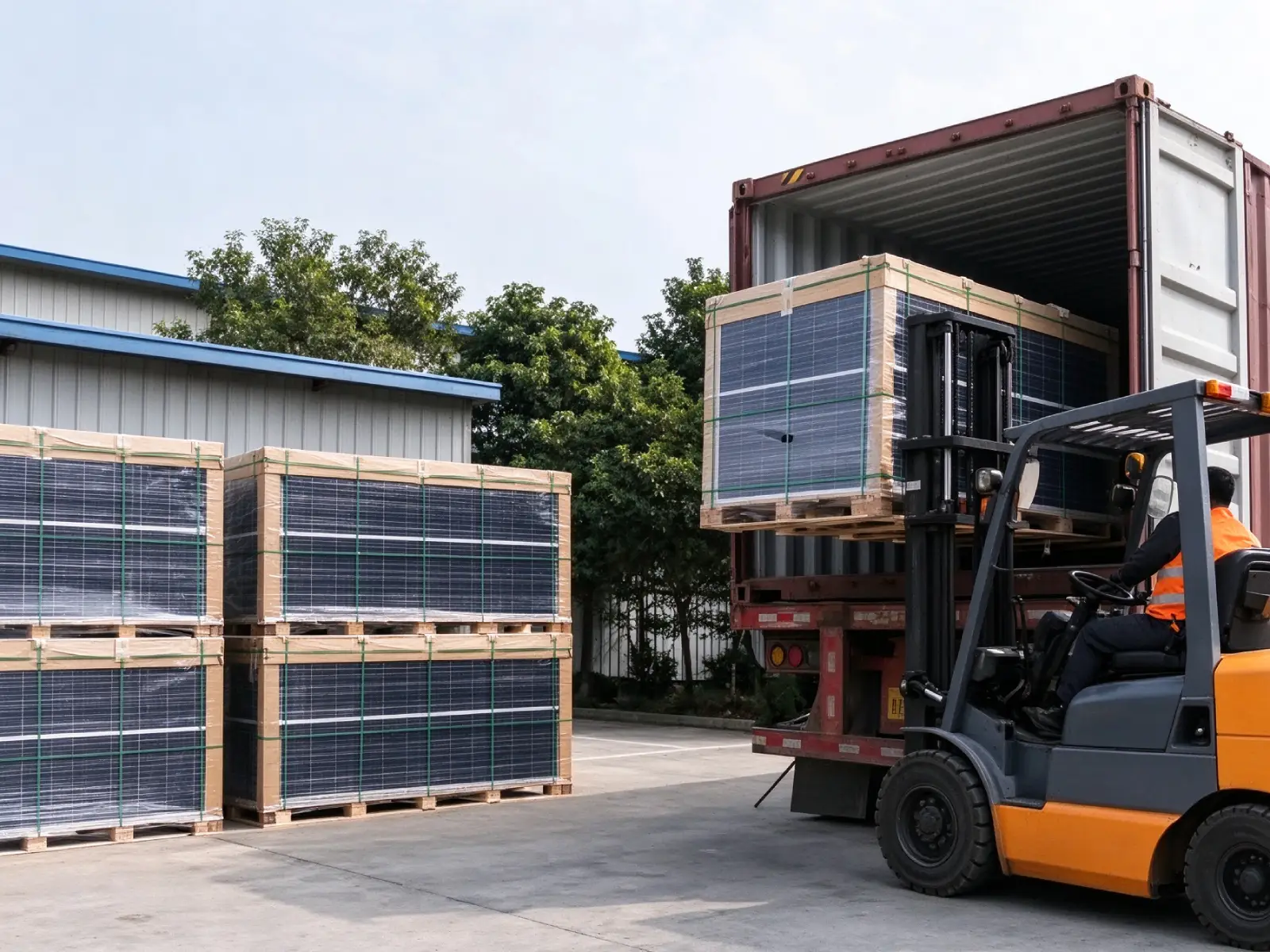
Don’t Waste Container Space: Two different loading plans for the same 40HQ can result in drastically different wasted costs. For example, a 1MW project using 600W panels requires about 1,667 pieces. At 720 pieces/container, you’ll need 3 containers, but the third container only holds 227 pieces—that’s just pure wasted space. The veteran move is: use 2 containers for 1,440 pieces of 600W modules (approx. 864kW), and fill the remaining capacity with higher-power modules. When requesting a quote, give them your total project capacity and demand a loading optimization plan. Don’t foolishly ask “how much for one container?”
Next Steps
If you have determined your project capacity, target market, and grid connection timeline, don’t just send an email saying “How much are your solar panels?” Prepare a structured Request for Quotation (RFQ). Include: project type, total capacity and power requirements, target market (which dictates certifications and tariffs), delivery milestones, and staged delivery needs. Send it to at least two suppliers. The professionalism of their response is your first round of screening.
For a complete supplier verification framework (factory audits, EL reports, etc.), see our pillar article, Solar Panel Wholesale Supplier Guide. If you need special dimensions or encapsulation materials, the Custom Bulk Order Guide has the answers.
(Note: Data in this article is for reference only. Actual terms are subject to real-time supplier confirmation.)
About Gaotu Innovation
If you’re in the EPC game, you know the biggest fears right now are “supply chain disruptions” and “tariff traps.” Gaotu Innovation’s value is in mitigating those risks and guaranteeing delivery. With three manufacturing centers in Dongguan and Indonesia, our dual-base synergy can handle full containers—and we are fully capable of accommodating your staged delivery schedules.
For the US market, our Indonesia factory serves as an effective hedge against AD/CVD tariff risks. Paired with our US overseas warehouse, we offer a compliant “Indonesia origin + local delivery” path. Plus, our full-process quality traceability system can locate anomalies to the specific batch and process within 30 minutes. We have long-term OEM experience with brands like Anker, EcoFlow, and Bluetti, and hold full certifications including ISO 9001, TÜV, CE, and UL. If you have specific project needs, let’s talk.
Related Posts
Gaotu Innovation Debuts at The smarter E Europe to Expand European Green Energy Layout
The European Smart Energy Show has wrapped up with great success! GTPOW made a prominent…
How to Clean Solar Panels: A Safe and Effective Guide (2026)
1. Why Cleaning Solar Panels Matters Solar panels sit outside 24/7, and dust, bird droppings,…
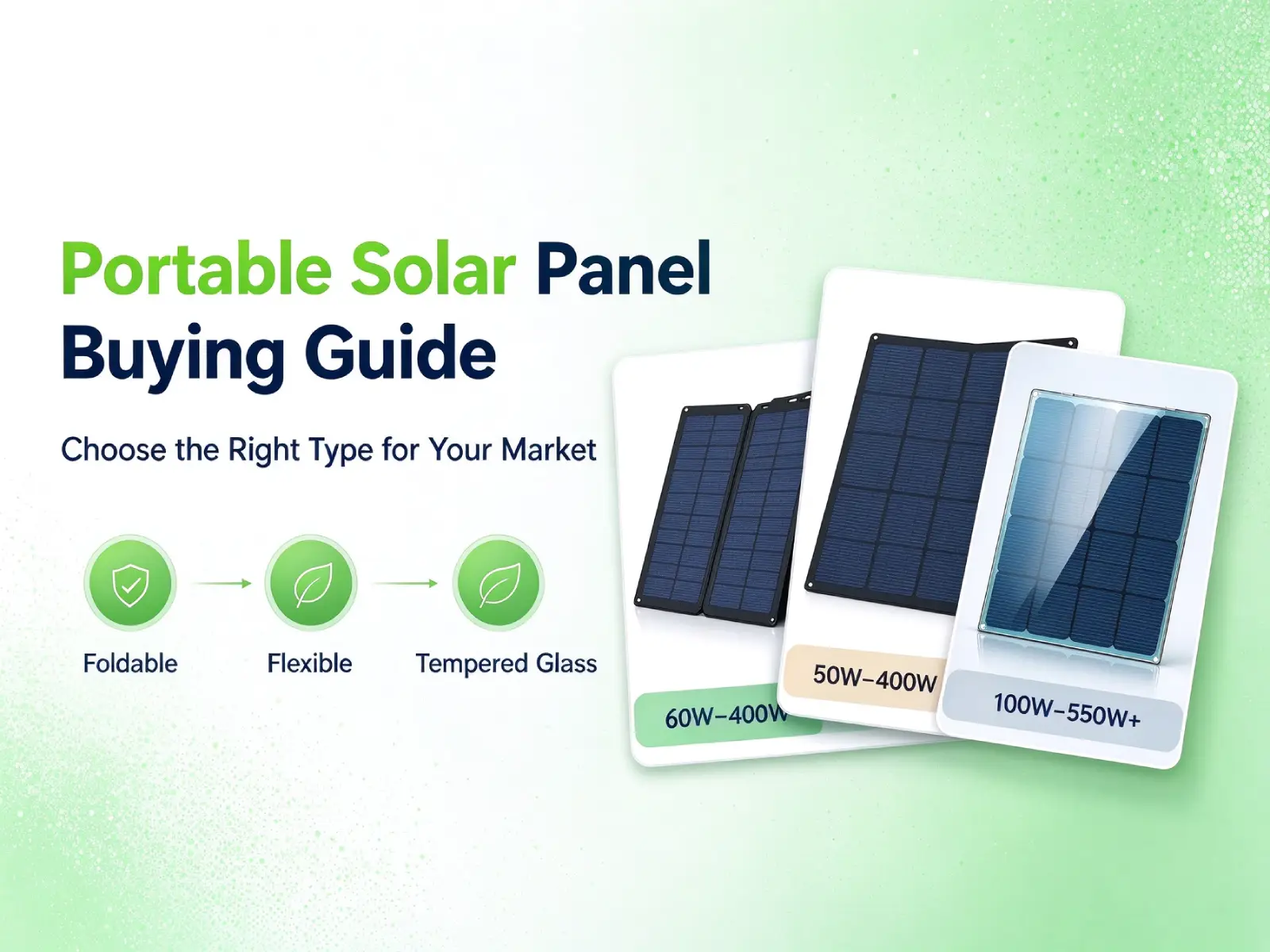
Foldable vs Flexible vs Tempered Glass Solar Panels: Which to Choose
Introduction Not all portable solar panels are the same. When buyers start sourcing, they quickly…
Leave a Reply