

Solar Power Knowledge
2026 Solar Panel Price: Portable, Foldable & RV Panel Cost
 gaotu
gaotuMany shoppers struggle with solar panel pricing: portable solar panels range from low-cost to premium models, with some identical-wattage options costing twice as much as others. If you’re confused about what causes these huge price gaps, you’re not alone.
Most buyers make the same mistake: only checking wattage while ignoring usage scenarios. The solar market has two completely different product categories: fixed rooftop home solar panels and portable foldable outdoor solar panels. Though they look similar, they differ drastically in materials, craftsmanship, durability, and application environments, with entirely separate pricing systems.
This guide focuses specifically on camping, RV road trips, off-grid living, and emergency backup power. We break down the latest 2026 portable solar panel market prices, core causes of price differences, key differences between entry-level and premium models, and critical buying tips to help you avoid cheap pitfalls and make a cost-effective purchase.
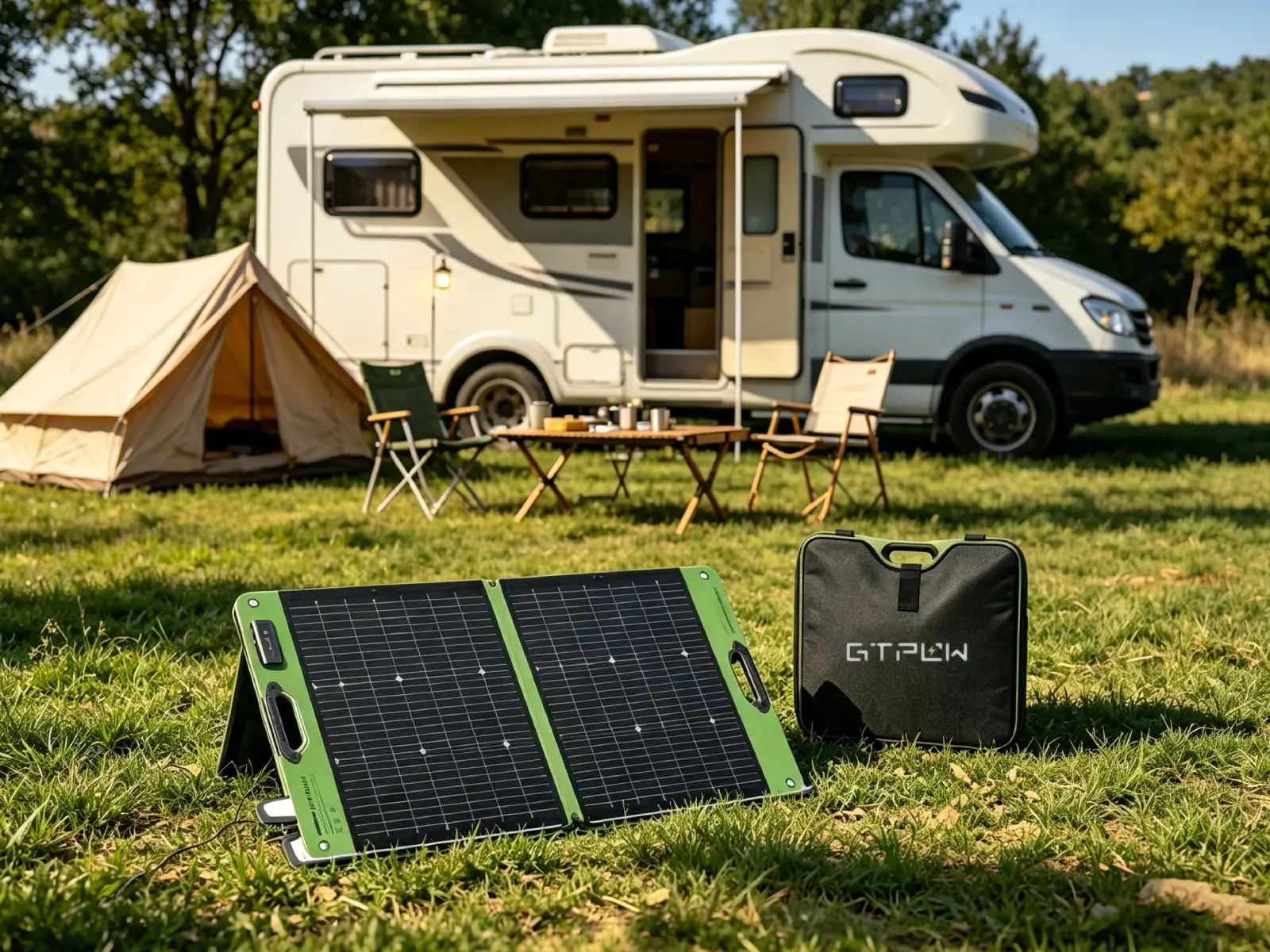
1. Solar Panel Price Overview: Why Portable Panels Cost More Than Home Panels
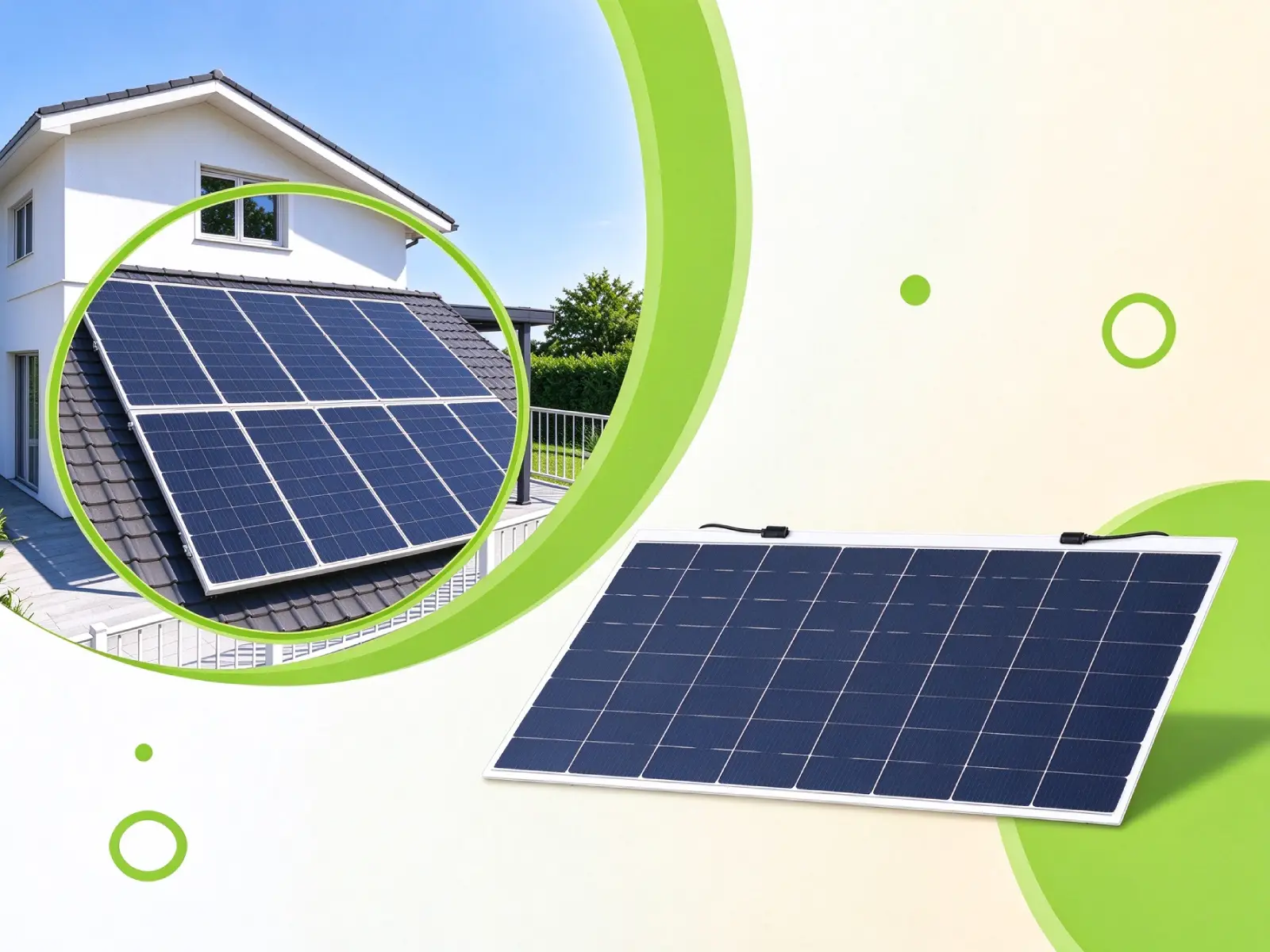
Standard fixed rooftop solar panels are cheaper in raw material cost, but they are designed exclusively for stable, stationary home environments. They are non-waterproof, non-drop-resistant, heat-sensitive, and non-portable. When exposed to outdoor rain, high heat, or vehicle vibration, they quickly delaminate, leak water, break down, and even pose electric leakage hazards.
The higher price of portable solar panels does not come from higher wattage — it comes from professional outdoor-grade craftsmanship. Qualified portable panels come with standard upgrades: dust and waterproof fabric, reinforced edging, bend-resistant structure, lightweight foldable design, stable voltage output, universal power station ports, and high and low temperature resistance. These features greatly enhance outdoor compatibility and service life. Simply put: home panels only work on rooftops; portable panels are built tough for real outdoor use.
2. 2026 Portable Solar Panel Prices by Wattage (Real Market Range)
Wattage is the primary factor affecting pricing. Higher wattage delivers faster charging speed and more stable power output for more demanding scenarios. All prices below reflect authentic market rates for standard outdoor foldable solar panels, excluding low-quality no-brand products. Final costs vary slightly based on build quality, bifacial design, and full accessory kits.
1. 100W Solar Panel Price | Best Budget Entry-Level Option
Price Range: $40 – $85. The 100W solar panel is the most popular entry-level outdoor option with excellent cost performance. It perfectly suits short camping trips, outdoor vendor power supply, small power station charging, basic RV electricity use, and household emergency backup. It fully supports daily lighting, phone charging, and low-wattage device operation, making it the ideal pick for casual outdoor users on a budget.
2. 200W Solar Panel Price | Mainstream Choice for RV & Long-Term Outdoor Use
Price Range: $85 – $145. The 200W panel is the top choice for experienced outdoor enthusiasts and full-time RV dwellers. It delivers double the charging efficiency of 100W panels, offering fast charging on sunny days and stable power output even on cloudy days. It easily powers RV refrigerators, electric kettles, lighting systems, and large-capacity power stations. For frequent road trippers and long-term off-grid living, the 200W model offers the best balance of performance and affordability, ranking as the best-selling outdoor solar panel.
3. 300W+ High-Power Solar Panel Price | Heavy-Duty Outdoor Solution
Price Range: $145 – $260. 300W and 400W high-power panels are premium, high-cost models tailored for heavy-duty scenarios. They are ideal for large RVs, long-term wilderness camping, outdoor workstations, and high-capacity power systems. Their core advantages include superior low-light performance, massive power generation, and fast charging speed. They maintain stable power output even at dusk or on overcast days, completely solving power shortages for high-wattage outdoor equipment.
3. Solar Panel Price Differences by Type & Best Use Cases
With identical wattage, panel design and manufacturing quality create major price gaps. Many users wonder why two 200W panels can differ by nearly $50 — the answer lies in structural design, build standards, and scenario adaptability.
1. Foldable Solar Panels | Universal All-Purpose Style
Foldable panels are the most cost-effective and widely used option on the market. Their compact foldable design ensures easy portability, paired with adjustable metal brackets to optimize sunlight absorption angles. With moderate pricing, mature craftsmanship, and low failure rates, they fit over 90% of camping, short-distance road trip, and emergency power scenarios, serving as the optimal choice for regular outdoor users.
2. Flexible Solar Panels | Fixed RV Installation Specialty
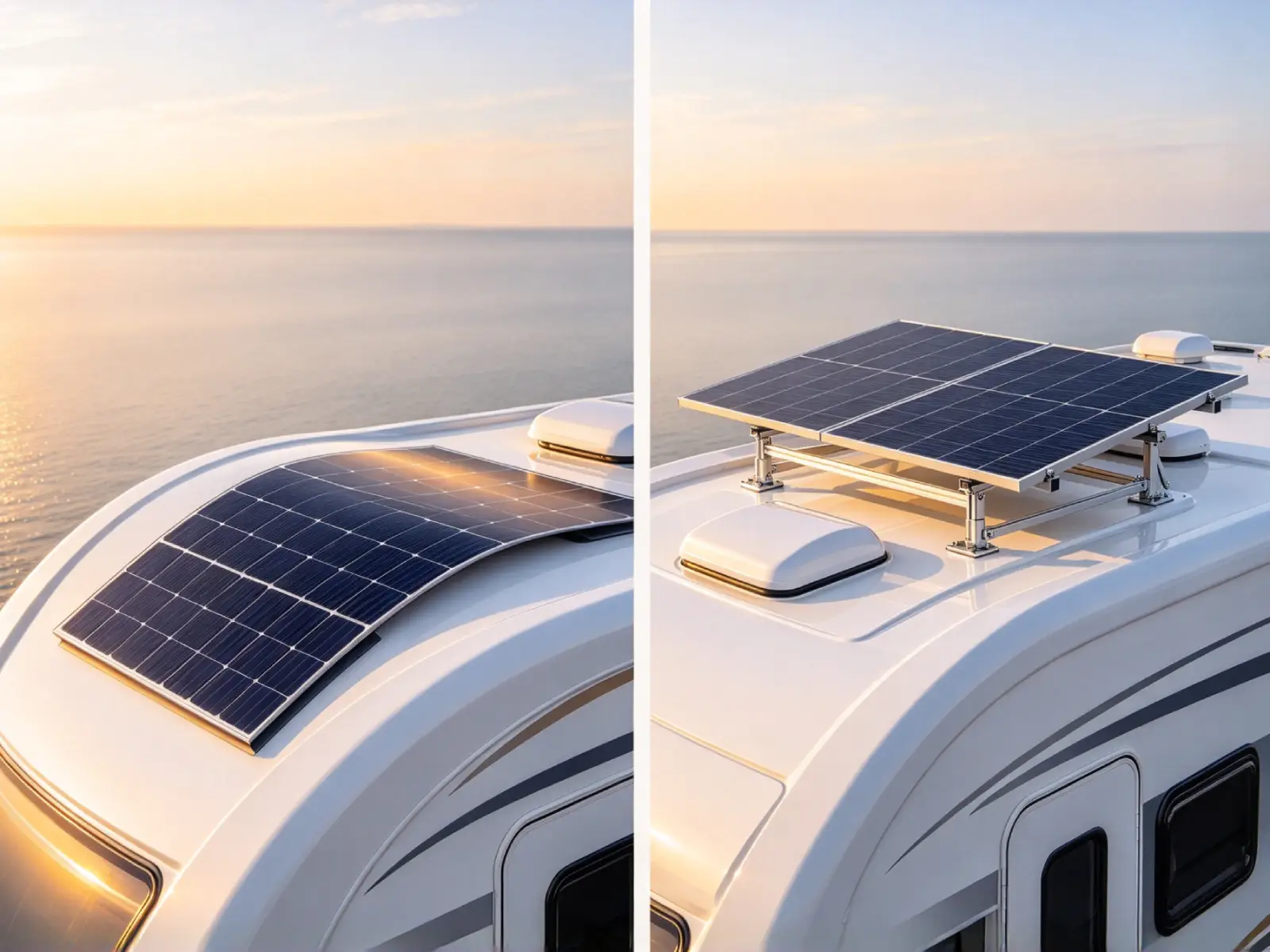
Made with bendable photovoltaic materials, flexible panels fit perfectly on curved RV roofs and irregular surfaces, offering far better adaptability than rigid panels. Their special materials and complex lamination process raise production costs, making them 15%–30% more expensive than standard foldable panels. They are not designed for frequent folding and carrying, but exclusively for fixed RV installation and long-term stationary outdoor use.
3. Bifacial Solar Panels | High-Efficiency Premium Upgrade
Bifacial panels are an upgraded premium version of traditional single-face panels, widely adopted in high-end outdoor setups. They absorb direct sunlight from the front and capture reflected light from the ground or water on the back, boosting overall power generation efficiency by 15%–25% with vastly improved low-light performance. Built with thicker, more precise encapsulation and superior weather resistance, they come at a higher price. They are perfect for long-term outdoor users pursuing maximum power output and minimal energy waste, delivering far higher long-term power generation and value than standard panels.
4. Critical Buying Pitfall: Never Use Cheap Home Panels for Outdoor Use
Many budget-focused buyers opt for low-cost residential rooftop solar panels for outdoor use, which seems economical at first glance but leads to serious hidden problems — this is the biggest mistake in outdoor solar setup.
Residential solar panels are engineered for fixed, temperature-stable rooftop environments with no vibration or rain exposure. They feature fragile frames, no waterproof coating, poor UV resistance, and exposed ports. When facing outdoor high heat, rainwater, and road vibration, they rapidly delaminate, crack, and short-circuit, resulting in short service life and potential electric leakage or fire risks.
Professional outdoor and RV solar panels undergo specialized upgrades for weather resistance, waterproofing, drop resistance, and anti-aging performance. They feature short-circuit protection, bend-resistant reinforcement, and UV-proof waterproof surfaces, enabling plug-and-play operation with zero modification required. Though priced higher, they offer longer lifespans, guaranteed safety, and no frequent replacement costs — delivering far lower long-term total costs than cheap residential panels.
5. 5 Core Factors That Determine Solar Panel Pricing
Solar panel prices vary drastically across the market. Master these five core pricing rules to easily distinguish high-quality products from inferior alternatives and avoid overpaying or buying defective units.
1. Photovoltaic Conversion Efficiency (Core Performance Gap): Conversion rate defines power generation capability. Premium panels reach 23%+ efficiency, while low-end generic panels only hit 16%–18%. Under the same sunlight conditions, high-efficiency panels generate more power and charge faster, with a decisive advantage in low-light environments — this is the biggest performance and cost gap between high and low-tier panels.
2. Material & Encapsulation Quality (Lifespan Determinant): High-quality panels adopt high-light-transmission tempered glass, waterproof Oxford fabric, and reinforced edging, resisting UV rays, aging, and cracking, with a stable service life of 3–5 years. Cheap generic panels use recycled materials and thin encapsulation, prone to water penetration and delamination, often failing within half a year.
3. Solar Cell Type (Basic Quality Divider): All standard outdoor panels use monocrystalline silicon cells, featuring high conversion efficiency, stable performance, low attenuation, and excellent weather resistance. Polycrystalline silicon cells, with low efficiency, severe heat generation, and fast power attenuation, are only used in cheap inferior panels and gradually phased out — avoid them entirely.
4. Voltage Stabilization & Accessory Configuration (User Experience Key): Premium portable panels have built-in voltage stabilization modules to ensure stable output and prevent damage to power stations and electronic devices. Generic panels lack stabilization, with fluctuating voltage that easily burns out equipment. High-end full kits include dedicated brackets, storage bags, and multi-spec cables for plug-and-play convenience with no extra purchases needed.
5. Warranty & After-Sales Service (Hidden Cost Factor): Reputable brands provide 2–3 years official warranty with free repair or replacement for non-human damage. Cheap no-brand panels offer zero after-sales support or warranty, requiring full repurchase once broken — seemingly cheap but costly in long-term use.
6. Frequently Asked Questions (FAQ)
1. Are expensive portable solar panels worth buying?
Absolutely. For off-grid outdoor scenarios, solar panels are the core power supply solution. Standard portable panels deliver safety, stability, durability, and perfect compatibility, avoiding frequent replacements and device damage risks. Low-cost inferior panels save money upfront but bring hidden dangers and poor performance, resulting in lower comprehensive cost performance.
2. What wattage solar panel is most cost-effective for camping and RVs?
100W: Ideal for occasional short camping trips and low-power use (lighting, phone charging).
200W: Best overall value for frequent road trips, full-time RV living, and daily comprehensive power use.
300W+: Perfect for long-term wilderness camping, high-power appliances, and large-capacity power stations.
3. Is the premium cost of bifacial solar panels worth it?
Yes, it pays off long-term. Bifacial panels excel in low-light conditions, generating extra power at dawn, dusk, and on cloudy or shaded days. They greatly reduce charging time and power anxiety, producing far more total energy than single-face panels over time for superior long-term value.
4. Why are outdoor solar panels more expensive than home rooftop panels?
They follow completely different manufacturing and quality standards. Outdoor panels require integrated portability, waterproofing, dustproofing, drop resistance, temperature resistance, voltage stabilization safety, and plug-and-play compatibility, with rigorous upgraded craftsmanship and testing standards that far exceed fixed residential panels.
5. Should beginners buy a single panel or a full kit?
Beginners are recommended to choose full accessory kits. Pre-matched parts and complete cables eliminate compatibility errors, port mismatch, and voltage mismatch issues for instant use. Experienced outdoor users can purchase single panels separately according to their power station parameters.
7. Final Conclusion: Choose Wisely & Avoid Wasted Money
When shopping for outdoor solar panels, never prioritize low price or wattage alone. The real value of a solar panel lies in outdoor adaptability, power generation efficiency, build quality, safety stability, and service life. Low-cost residential panels are unsuitable for harsh outdoor environments and come with numerous hidden flaws.
The best choice always depends on your usage scenario: pick a 100W foldable panel for light short-term outdoor use, a 200W mainstream panel for regular RV and long-term outdoor power needs, and a high-power bifacial premium panel for heavy-duty off-grid scenarios. Matching your device to your actual needs controls your budget while delivering durable, high-performance, cost-effective outdoor solar power solutions.
Related Posts
The Best High Efficiency Solar Backpack for Hiking & Camping in 2026
If you love hiking, camping, or road-tripping in an RV, you’ve definitely run into two…
Best Solar‑Powered Retractable Awning for Patio & Terrace 2026
If you own a villa, backyard patio or run a small commercial outdoor space, you’ve…
How to Choose Balcony Solar System
Balcony solar systems are hands down one of the best renewable energy options for apartment…
Leave a Reply