

Solar Power Knowledge
High Power Flexible Solar Panels: Size, Weight and Complete System Design Guide
 Gaotu Innovation
Summary
Many buyers misunderstand high power flexible solar panels as a single 400W+ module. This guide covers size, weight, heat limitations, RV & marine layouts, array options and wiring rules to help you build a reliable off‑grid solar system and avoid common pitfalls during selection and installation.
Quick Answers
- ✅ 400W usually refers to a total system target, not the rated power of one single panel
- ✅ Common single flexible panels range from 100W–300W. Multi‑panel arrays are recommended for 400W+ systems
- ✅ Heat dissipation is the main limitation. Fully bonded installation can reduce power output by 10–18%
- ✅ Marine applications require salt‑spray resistant ETFE, sealed junction boxes, and walk‑on grade panels if needed
- ✅ Do not mix panels with different Vmp in one string to prevent hotspots and controller burnout
Many buyers misunderstand high power flexible solar panels as a single 400W+ module. This guide breaks down real size, weight, heat limits, RV & marine layouts, array options and wiring rules to help you build a reliable off‑grid solar system.
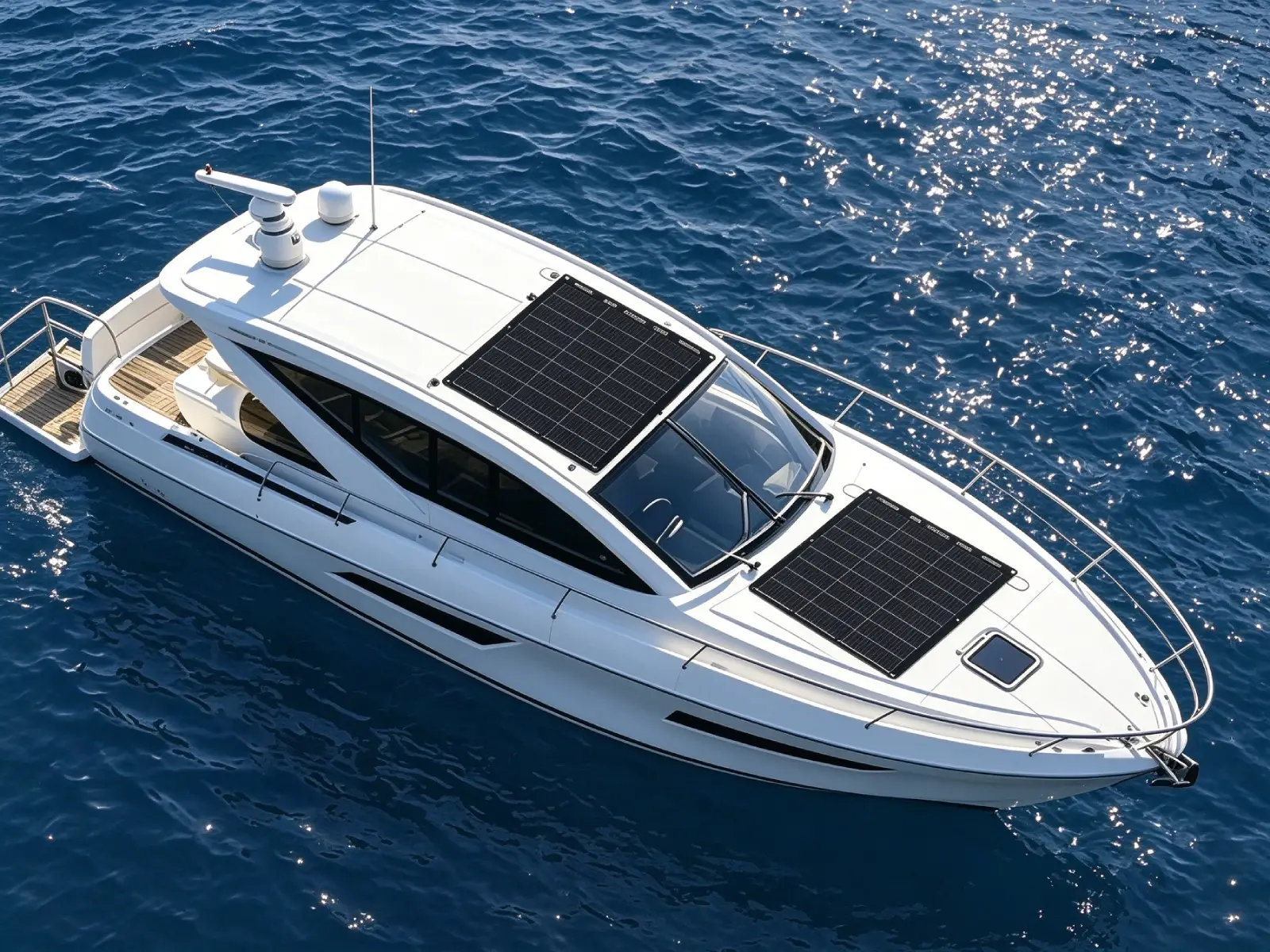
High‑power flexible solar panels are the go‑to lightweight PV solution for curved, weight‑limited surfaces where rigid glass panels cannot work. RV roofs, boat decks, expedition vans and temporary off‑grid shelters are the most common use cases. But there is one critical misconception we hear every day: buyers search for “400W flexible solar panel” expecting one single panel to hit that rated power.
In practice, 400W, 500W or higher is usually a system target, not a fixed single‑panel specification. Flexible panels have hard physical limits on maximum single‑panel wattage due to heat, cell size, current and mechanical bending. Pushing one flexible module too large creates hotspots, poor cooling and higher failure risk.
This guide walks you through how to evaluate usable roof space, choose between one large panel, multiple smaller panels or fully custom layouts, match charge controllers and batteries, avoid overheating failures, and prepare all the data you need for an accurate custom quote. If you are sourcing flexible panels for resale or project deployment, review our wholesale solar panels program for factory‑direct B2B terms and capacity details.
What Limits Maximum Wattage on a Single Flexible Solar Panel?
Unlike framed rigid solar panels with plenty of airflow, flexible panels are often bonded directly to a roof or deck surface. Heat buildup is the biggest limiting factor.
Glass‑free flexible modules use ETFE or polymer top sheets and back sheets. Without air gap ventilation, every extra watt adds heat. Higher temperature drags down voltage and real output, and long‑term hotspots will degrade solar cells much faster.
Other constraints:
- Bending radius: oversized panels cannot follow gentle curves without cell cracking
- Maximum safe series current inside one module
- Transportation and installation handling risk (very large thin panels tear easily)
Most reliable single flexible panels land between 100W–300W. True high‑power setups almost always use an array.
3 High‑Power Flexible Array Options: Single Large Panel / Multi‑Panel Array / Custom Cut Layout
When your target system power is 400W or above, you have three practical design paths. Below is a clear comparison table for fast decision‑making.
| Option | Best For | Advantages | Key Drawbacks |
|---|---|---|---|
| Single large flexible panel | Simple small systems, clean roof with zero vents/obstacles | Fewer wiring connections, neat appearance, less junction box clutter | Poor heat dissipation, limited layout flexibility, hard to work around roof AC, vents or antennas |
| Multiple mid‑size panels (100W–200W each) | Most RV, van and off‑grid builds | Easy to fit around obstacles, better distributed cooling, easier replacement if one panel fails | More wiring, more penetrations, careful series/parallel planning required |
| Custom shaped flexible solar array | Curved boats, odd‑shaped roof, OEM integration | Perfect fit for irregular surfaces, optimized for available space | Longer lead time, higher MOQ for bulk orders, needs precise dimension drawings |
For most DIY RV owners and small converters, multiple smaller panels is our default recommendation. If you require non‑standard dimensions, voltage or branding, explore our portable solar panel OEM & ODM custom service.
Reference Size & Weight Data for Typical High‑Power Flexible Panels
One of the biggest pain points for buyers is guessing footprint. Here are typical industry reference specs for Gaotu Innovation ETFE flexible mono panels for planning purposes:
- 100W flexible: ~1050×540mm, 1.8–2.2kg, Vmp ~18V
- 200W flexible: ~1650×680mm, 3.4–4.0kg, Vmp ~18V
- 300W flexible: ~2100×760mm, 5.2–6.0kg, Vmp ~36V
A 400W target system using two ×200W panels needs roughly 2.2 m² of clear usable roof area, before accounting for gaps around vents and edge clearance.
Internal link suggestion: link this section to our flexible solar panel product category page.
Electrical Matching: Voltage, Charge Controller and Battery Bank Rules
Your flexible array’s Vmp and Voc must stay within your charge controller window. This is one of the most frequent costly mistakes.
For common 12V battery systems:
- Use 18V Vmp panels (standard for 12V off‑grid)
- Series connection raises voltage; parallel raises available current
- Keep open‑circuit voltage (Voc) below the controller’s max PV input voltage, especially in cold weather
For 24V / 48V battery banks (higher power RV and marine systems):
- Group panels in series to reach matching Vmp
- Use MPPT controllers rather than PWM for high‑power flexible arrays; MPPT recovers far more power when panels run hot
Never mix old and new flexible panels, or panels with mismatched Vmp in the same string. Mismatched panels create power drag and hotspot risk.
Heat Management & Installation Best Practices (Critical For Flexible PV)
Because most flexible panels are surface‑mounted without racking, cooling directly decides your real‑world harvest.
Best practices:
- Whenever possible, leave a thin air gap instead of fully gluing the whole backside
- Avoid covering flexible panels with sealant completely around the edges
- Do not install flexible panels in permanently shaded zones
- Keep junction boxes exposed for passive cooling
- Dark‑colored roof membranes absorb more heat, adding extra power loss
A fully bonded flexible panel on a dark RV roof can lose 10–18% of rated output on hot sunny days due to temperature derating.
Marine High‑Power Flexible Solar: Special Requirements for Boats
Marine environments bring unique challenges that standard RV flexible panels do not face. Salt spray, constant vibration, deck foot traffic and humidity require upgraded construction.
If you plan a high‑power flexible solar system for yachts, sailboats or fishing boats:
- Choose salt‑spray resistant ETFE lamination
- Look for sealed, corrosion‑resistant junction boxes
- Select walk‑on grade panels if crew will step on the surface
- Add extra drip loops on wiring to stop saltwater creeping into connectors
- Plan for regular inspection, especially in tropical coastal regions
Internal link: link to our blog: Can You Walk On Marine Flexible Solar Panels?
Common Mistakes When Specifying High‑Power Flexible Solar Arrays
This is the section Sungold original article lacked; high search intent for flexible solar panel problems
- Buying one oversized single panel and ignoring roof obstacles → heavy shading kills total output
- Stacking panels in series without checking cold‑weather Voc limit → burns out MPPT controller
- Full permanent glue‑down with zero airflow → chronic overheating, fast power degradation
- Mixing different wattage / Vmp panels in one string
- Forgetting roof load limits: even flexible panels add cumulative weight
- Under‑sizing wire gauge for high‑current parallel arrays → voltage drop and power waste
Many costly errors originate in early project sourcing; read our full article: custom flexible solar panels B2B sourcing guide to avoid expensive procurement mistakes.
Checklist: Information You Need Before Requesting A Custom Gaotu Innovation Quote
To get an accurate layout, wiring suggestion and pricing, prepare these details before contacting our PV engineers:
- Application: RV / camper van / sailboat / workboat / cabin / other
- Battery voltage: 12V / 24V / 48V lithium or lead‑acid
- Target total wattage
- Usable roof/deck dimension sketch, mark vents, AC, antennas, railings
- Surface material: EPDM roof, fiberglass, aluminum, gelcoat
- Mounting method: adhesive bond / air gap / temporary
- Location (climate: hot desert, coastal salt, cold mountain)
- Whether you need pre‑wired strings, MC4 connectors, junction boxes
- Order quantity: sample / small batch / OEM bulk project
FAQ
Q: Can I buy a single 400W flexible solar panel?
A: A small number of manufacturers list single 400W flexible modules, but they carry higher heat risk and are harder to fit around typical RV roof hardware. For reliability, we recommend building a multi‑panel array for 400W+ targets.
Q: How much power will a 400W flexible array produce per day?
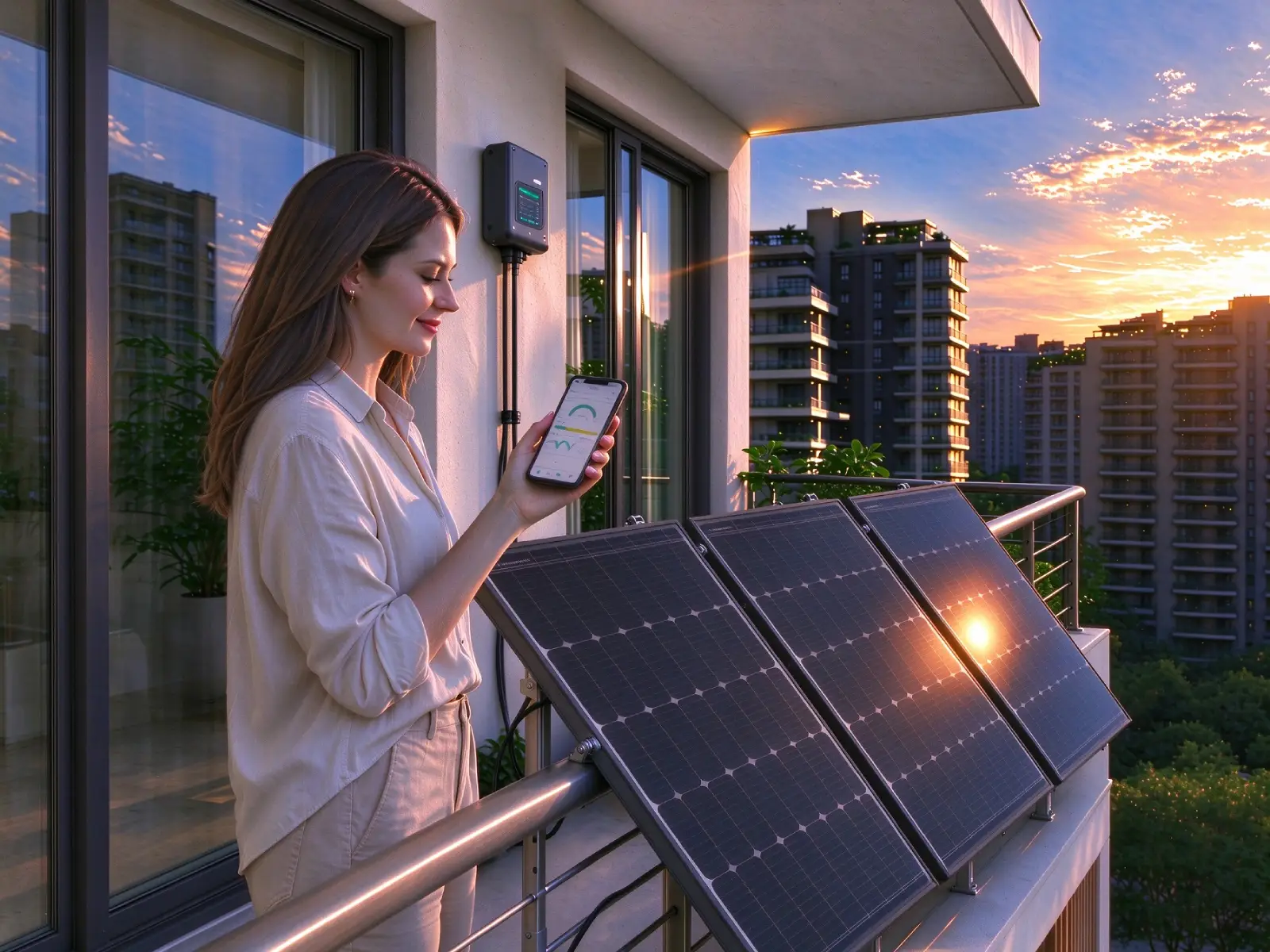
A: Under 4–5 peak sun hours, a well‑installed, unshaded 400W flexible array typically delivers around 1.2–1.6 kWh daily, after temperature and wiring losses. For fixed residential balcony PV reference, review our Gaotu Innovation balcony plug‑and‑play pv system product page.
Q: Are flexible solar panels less efficient than rigid panels?
A: Top‑tier mono flexible cells can reach similar cell efficiency, but the lack of rack airflow means real on‑roof harvest is usually lower than tilted rigid panels.
Q: Can high‑power flexible solar panels be curved?
A: Yes, but every model has a published minimum bending radius. Sharp folds will crack internal solar cells and void the warranty.
Q: What is the warranty on Gaotu Innovation flexible solar panels?
A: Our standard ETFE flexible panels come with product warranty and linear power output guarantee; custom marine‑grade panels have separate warranty terms.
Ready to Design Your High‑Power Flexible Solar System?
Our Gaotu Innovation PV engineering team supports custom layout drawings, string design, marine‑spec upgrades and OEM bulk orders for RV converters, boat builders and off‑grid installers. Get in touch via our contact page to submit your project specifications for a tailored quotation.
Related Posts

20000 Swift Power Bank – Exclusive Wholesale Catalog
1. Market Pain Points & Sales Logic Battery anxiety is a widespread consumer problem that…
Customized Power Portable Solar Panel: Wattage, Voltage, and OEM Specs
Article Summary This guide explains how distributors, system integrators, and bulk buyers can specify Customized…
Custom Voltage Portable Solar Panel: The Wholesaler’s Ultimate Guide to High-Margin Sourcing in 2026
Article Summary This guide explains why Custom Voltage Portable Solar Panels are a high-margin opportunity…


Leave a Reply