

Solar Power Knowledge
Mono vs Bifacial Solar Panels for Home Systems: What Wholesale Buyers Should Stock
 Gaotu Innovation
Product Comparison · Mono vs Bifacial
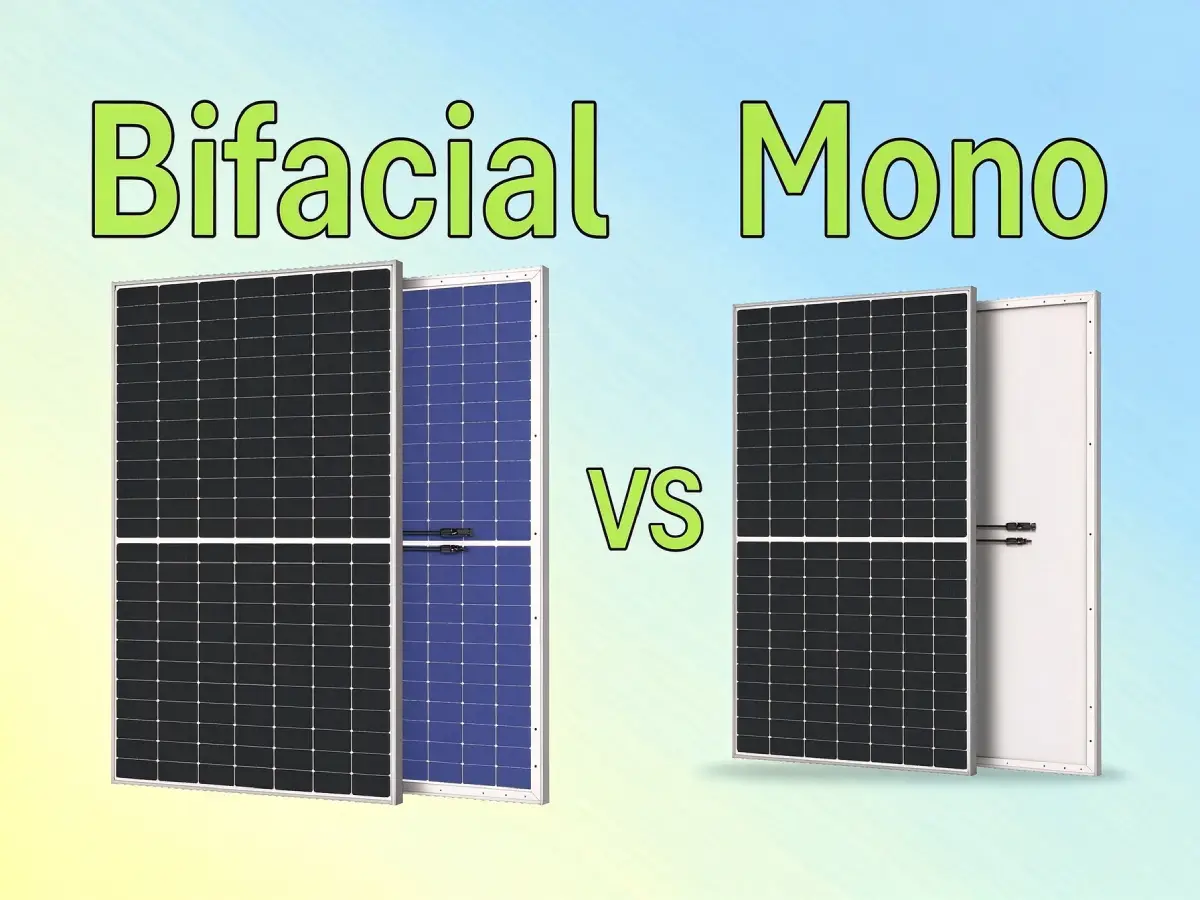
For pitched residential rooftops, mono single-glass modules remain the default in wholesale, and bifacial pays only where the back of the panel sees reflected light. Those two facts decide most stocking decisions — the rest is specification detail. This guide separates them clearly, so you can quote the right module instead of the more expensive one.
Short answer
- Mono is a cell technology (monocrystalline, usually PERC or TOPCon). It describes what generates power.
- Bifacial is a module construction (dual-glass, light-transmitting back). It describes where power can also be collected.
- They are not competing options. Most bifacial modules are mono inside — the real choice is single-glass mono versus dual-glass mono.
- For home systems: stock mono single-glass as the volume line, add bifacial only for flat roofs, carports, pergolas and ground-mounted garden arrays.
Definitions First: These Are Two Different Kinds of Labels
Monocrystalline (mono)
A mono module uses cells cut from a single-crystal silicon ingot. In residential products these are almost always PERC or TOPCon cells, with module efficiency typically in the 21–23% range for the 400–500 W formats that dominate home installations. Mono is a cell classification, so it tells you nothing about the back of the module.
Bifacial
A bifacial module collects irradiance on both faces. It is built with a transparent rear (dual-glass, or glass-backsheet), and its datasheet carries a bifaciality coefficient — usually 70–80% — describing how much of the front-side output the rear can contribute under ideal conditions. Bifacial is a construction classification, so a bifacial module is normally mono inside.
That distinction matters commercially: when a customer asks “mono or bifacial”, they are usually asking about weight, mounting and price, not about cell physics. A clear answer to that question is what wins the order — the wholesale solar panels for home guide covers the full residential range in the same terms.
Side-by-Side Comparison
| Specification | Mono single-glass | Bifacial dual-glass |
|---|---|---|
| What it describes | Cell type | Module construction |
| Rear-side gain | None | 0–3% flush-mounted; 5–15% on reflective ground |
| Weight (450–500 W class) | 21–26 kg | Roughly 2–4 kg heavier |
| Mounting | Standard rails, flush mounting is fine | Needs elevation, roughly 0.8–1 m, to gain anything |
| Best layout | Pitched roof, area-constrained sites | Flat roof, carport, pergola, ground mount |
| Price per watt | Baseline | Typically 2–5% higher |
| Handling on site | Two-person lift | Heavier, glass edges more fragile |
| Warranty | 25–30 year performance | Often 30 year, glass-to-glass |
The Physics That Decide Whether Bifacial Pays
Rear-side output is not a fixed bonus. It is the product of three variables, and if any one is near zero the gain disappears:
- Albedo — how much light the surface below reflects. Fresh snow is around 0.8, light concrete 0.4–0.5, dry sand around 0.3, grass around 0.2, dark asphalt near 0.1.
- View factor — how much of that reflected light actually reaches the back. This is driven by mounting height and tilt; a panel lying flat on a roof sees almost none of it.
- Bifaciality coefficient — the module’s own rear-side capability, typically 70–80%. Ask for the number, not the adjective.
A practical rule for quoting: bifacial adds meaningful value only when the panel is raised about a metre or more above a light-coloured surface. On a flush-mounted pitched roof, expect the rear gain to be negligible — and the extra cost, weight and glass handling to be very real.
Where Bifacial Loses on Residential Projects
- Flush roof mounting. The most common home layout gives the rear almost no irradiance, so you pay for a feature the site cannot use.
- Extra structural cost. Elevating the array means taller rails, more ballast or stronger anchors — often more than the energy gain is worth on a house.
- Weight and handling. Dual-glass modules are heavier and their edges are more fragile; breakage rates rise when crews are not used to them.
- Roof area limits. If the constraint is available area, front-side efficiency matters far more than rear-side gain.
- Shading and complex roofs. Rear collection assumes an unobstructed back; dormers, chimneys and parapets break that assumption.
Where Bifacial Wins: The Layouts Worth Stocking For
- Flat roofs and terraces with tilted, elevated mounting — the classic residential bifacial case in southern Europe.
- Carports and pergolas, where the panel is high above a bright surface and the structure is already there.
- Ground-mounted garden arrays, especially on gravel, sand or snow-exposed sites.
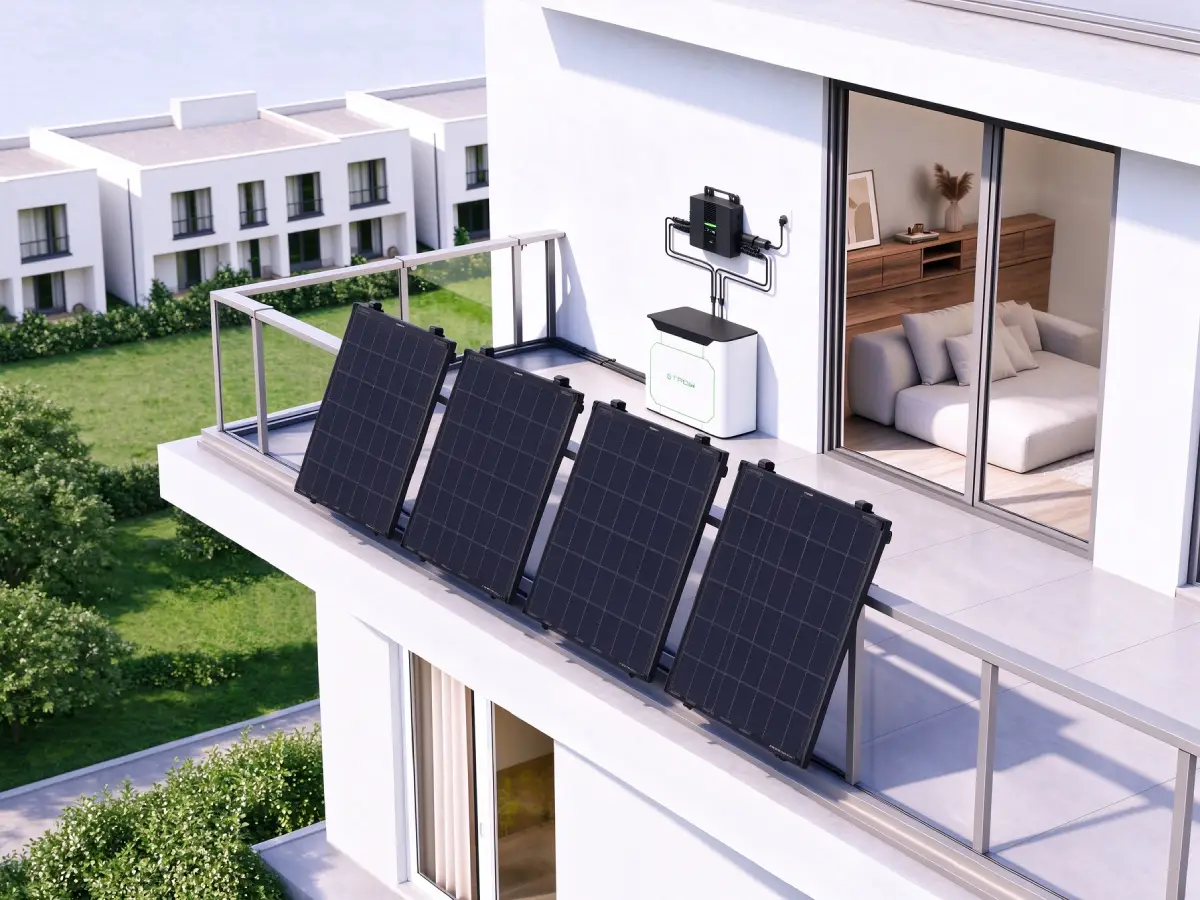
- Balcony and railing systems with a light wall behind, where the reflected component is real and the format is small — the reason bifacial and portable lines often overlap. See the portable and flexible range for small-format options.
What This Means for Your Inventory and Pricing
From a stocking perspective, the two products behave differently:
- Mono single-glass turns fast, suits most installer jobs, and is easy to substitute across wattages. It should be your stocked volume line.
- Bifacial dual-glass sells to specific projects — flat roofs, carports, ground arrays. Holding inventory is riskier; quote it to demand and keep a small buffer at most.
- Do not mix the two in one string. Different rear-side behaviour and current characteristics make strings harder to commission, and installers will blame you for the mismatch.
- Quote the system, not the panel. Bifacial quotes should include the raised mounting and the expected gain, otherwise the customer compares your price against a flush mono install and sees only the premium.
The residential module range is organised so both constructions sit inside certified families, which keeps substitution and documentation simple when a project changes layout mid-order.
Six Things to Check Before You Buy Bifacial
- The bifaciality coefficient, as a number. 70% and 80% are different products; the datasheet should state it explicitly.
- Dual-glass versus framed dual-glass. Frames shade the rear edge; frameless glass gains more but needs different clamping.
- Junction box position. A rear-mounted box blocks part of the back face — check the layout before promising a gain figure.
- Rear-side durability. The back face is exposed to UV, humidity and mechanical load; confirm the warranty covers both faces.
- Mounting height and tilt assumptions. Ask the factory what albedo and height their gain figure assumes; it is rarely the customer’s roof.
- Certification coverage. Confirm the exact dual-glass model appears on the certificate, not just its single-glass sibling.
Not sure which construction fits your market? Send us your typical roof types, mounting styles and target price band — we will recommend a mono-to-bifacial mix with the bifaciality figures and certificate references attached.
Frequently Asked Questions
Are bifacial solar panels better than mono for a house?
Not automatically. Bifacial only outperforms when the back of the panel receives reflected light, which usually requires elevation of about a metre above a light surface. On a flush-mounted pitched roof, the extra cost rarely pays back.
Is bifacial a type of solar cell?
No. Bifacial describes the module construction — a transparent rear that allows light collection from both sides. The cells inside are usually monocrystalline, so bifacial and mono are not alternatives to each other.
How much extra power do bifacial panels really produce?
Typically 5–15% in well-designed ground or carport installations with light-coloured surfaces, and close to zero when flush-mounted on a roof. The gain depends on albedo, mounting height and the module’s bifaciality coefficient.
Can I install bifacial panels with a normal string inverter?
Yes. Bifacial modules use standard DC output and work with ordinary string inverters. What changes is the expected current under rear-side irradiance, so string sizing and MPPT assumptions should be checked rather than copied from a mono datasheet.
Are dual-glass bifacial panels heavier?
Yes — roughly 2–4 kg heavier for the same wattage class, because both faces are glass. That affects lifting, mounting hardware and breakage risk, which matters on residential jobs more than in utility-scale projects.
Should a wholesaler stock both mono and bifacial?
Stock mono single-glass as the volume line and keep bifacial for project demand. Carrying deep bifacial inventory is risky unless your market has many flat roofs, carports or ground-mounted residential arrays.
Related Posts
Shipping and Lead Times for Wholesale Solar Panels from China
Core Summary Most buyers focus on the panel price and forget about the clock. But…

Flexible Solar Panel Maintenance: Cleaning, Inspection & Fault Diagnosis Guide
Flexible solar panel maintenance is usually straightforward, but the wrong cleaning method can create a…

Portable Solar Panel Certifications: What Buyers Must Verify
Abstract Many buyers misunderstand solar product certifications. This guide clarifies system & product certifications for…
Leave a Reply