

Solar Power Knowledge
Portable & Off-Grid Home Solar Panels: A Wholesale Buyer’s Guide
 Gaotu Innovation
Portable panels are sold by the unit and shipped by parcel; off-grid kits are sold by the box and contain a battery, which changes both the freight and the compliance work. Wholesale buyers who treat them as small rooftop panels usually lose money on shipping and get stuck at customs. This guide covers what to compare, how to size a kit, and the documents a battery-carrying kit needs before it can leave the factory.
Short answer
- Portable panel = a panel only (folding, flexible or briefcase). Light, sold by the unit, mostly 12 V nominal output.
- Off-grid kit = panel + charge controller + wiring, and often a battery and inverter. Sold as a system, heavier, and regulated as a battery shipment.
- Margins come from kit design, not panel price. The battery, controller and enclosure usually decide whether the product sells at all.
- Compliance trap: a kit containing a lithium battery needs UN38.3 test reports and dangerous-goods transport documents — not just a panel certificate.
Three Product Types, Three Different Businesses
Folding portable panels
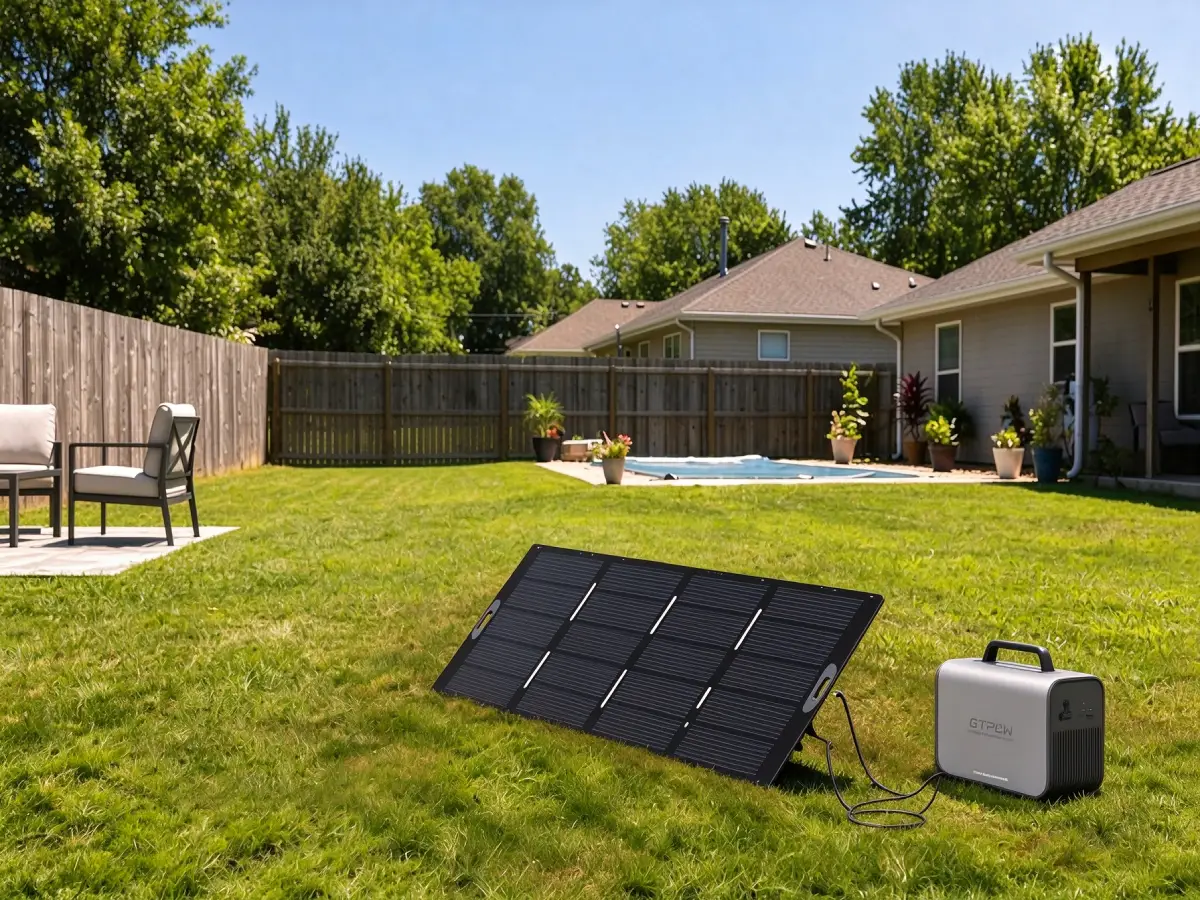
Laminated cells on a foldable substrate, usually with a carrying handle and a built-in stand. Typical formats run 100–200 W at 2–6 kg, with open-circuit voltage in the 18–22 V range so they can charge a 12 V battery directly through a controller. The best-selling end use is camping, RV and emergency backup.
Rigid portable / briefcase panels
Framed and glass-fronted, folding into a case. Heavier and more durable, better suited to semi-permanent installs on cabins, boats and job sites where the panel stays outside all season.
Off-grid kits
A system in a box: 200–400 W of panel, an MPPT charge controller, cabling, and often a 12 V lithium battery plus a small inverter. This is the product that lets a distributor sell to cabin owners, van converters and small-holding customers who have no grid connection at all.
All three sit alongside the rooftop business rather than replacing it — the wholesale solar panels for home guide covers the grid-tied residential line, and this article covers the part of the market that never connects to a utility.
Specification Comparison: What to Actually Compare
| Specification | Portable panel (100–200 W) | Off-grid kit (200–400 W) |
|---|---|---|
| Construction | ETFE or PET laminated, foldable | Rigid or flexible panel plus enclosure |
| Weight | 2–6 kg | 8–25 kg depending on battery |
| System voltage | 12 V nominal, Voc 18–22 V | 12 V or 24 V, set by controller and battery |
| Controller | Usually not included, or a small built-in unit | MPPT, typically 30–40 A |
| Storage | None | LiFePO4 50–100 Ah typical |
| Output | DC via MC4, XT60 or Anderson | DC plus AC outlet through inverter |
| Ingress protection | IP65–IP67 on the laminate | IP65 enclosure, connectors are the weak point |
| Certification | IEC 61215 / 61730 where claimed, CE for the assembly | Panel certificate plus UN38.3 for the battery |
Sizing Logic: Panel Watts Against Battery Amp-Hours
Buyers ask “how big should the kit be” as if it were a preference. It is arithmetic, and getting it wrong is the main source of returns:
- Daily harvest ≈ panel watts × peak sun hours × system efficiency. Use 3–5 peak hours depending on latitude and season, and about 0.7–0.8 for efficiency including controller and wiring losses.
- Usable storage ≈ battery Ah × system voltage × depth of discharge. Lithium tolerates roughly 80–90% discharge; lead-acid should stay near 50%.
- Match, roughly: a 200 W panel in a 4-peak-hour market yields about 600 Wh per day — enough for lighting, phone charging, a small fridge and a fan, with a 12 V 100 Ah lithium battery as the buffer.
- Oversizing the panel is cheaper than oversizing the battery, and it recovers faster on cloudy days. That is usually the better up-sell.
Publish these two formulas on your product page. It is the single most useful thing a distributor can put in front of a van converter or cabin owner, and it removes most pre-sales questions.
The Compliance Issue Most Sellers Discover Too Late: Batteries
A portable panel is an ordinary cargo item. A kit containing a lithium battery is not. Before the first shipment leaves, you need:
- UN38.3 test summary for the specific cell and battery model — not a generic document.
- MSDS / SDS and a transport declaration matching the battery’s state of charge and packing instruction.
- Correct UN number and packing for the mode you ship: air freight and sea freight follow different rules, and a kit may need to ship as dangerous goods with limited quantity allowances.
- Label and language compliance in the destination market, including battery disposal and safety warnings.
If a supplier cannot name the UN38.3 report number for the battery inside the kit, assume the shipment will be held. This is not a paperwork detail — it is the difference between a parcel business and a stranded pallet.
Rule of thumb for wholesale: sell panels as panels, and sell kits as battery products with the full dangerous-goods file attached. Pricing should reflect the second one.
Channel Fit: Where These Products Actually Sell
- Marketplaces and DTC suit portable panels: small parcels, strong visuals, high return rates that need a support process. Volumetric weight, not panel weight, decides your margin.
- Specialist dealers suit off-grid kits: RV and marine shops, farm supply, emergency-preparedness retailers. They need training and warranty clarity more than discounts.
- Installers rarely buy either — except as an add-on when a customer asks for backup power. That add-on is a real, repeatable sale.
In markets with unreliable grids, kits sell as resilience products. In markets with stable grids, they sell as outdoor and leisure products. Same SKU, different copy — and different warranty expectations.
A SKU Structure That Works for Wholesale
- One entry portable panel around 100 W — the gift and first-purchase item, sold in volume.
- One performance portable panel at 200 W — the mainstream camping and RV choice.
- One folding flexible line for buyers who need light weight and curved surfaces, such as boat decks and van roofs. The portable and flexible OEM range is where private-label demand concentrates.
- One or two off-grid kits with and without battery, so a dealer can choose whether to carry the dangerous-goods burden themselves.
That is four to five SKUs, not fifteen. Portable ranges sprawl easily because every wattage looks sellable, and the result is slow-moving stock in five sizes. The residential module range follows the same discipline: a small number of families, deep enough to cover the real applications.
Five Mistakes That Cost Portable Sellers Money
- Pricing on product weight. Cartons for a 200 W folding panel are bulky; volumetric weight can double the freight per unit.
- Selling a kit without a battery file. The first customs hold usually ends the channel relationship.
- Under-specifying the controller. A PWM unit on a 200 W panel wastes harvest and invites warranty claims that are hard to defend.
- No connector standard. Mixed MC4, XT60 and Anderson outputs create support tickets and returns.
- Treating portable as a commodity. Buyers in this segment pay for design, packaging and clear instructions far more than for cents per watt.
Building a portable or off-grid line? Send us your channel, target market and whether you want battery-included kits — we will return a SKU structure, freight estimate and the UN38.3 documentation status for each option.
Frequently Asked Questions
What is the difference between a portable panel and an off-grid kit?
A portable panel is the module alone, usually 12 V nominal and a few kilograms. An off-grid kit adds a charge controller, wiring and often a battery and inverter, which makes it a complete system and a regulated battery shipment.
How many watts do I need to run a fridge off-grid?
A small efficient fridge draws roughly 1–2 kWh per day, so plan on 400–600 W of panel in a 4-peak-hour market, or 200–300 W plus a larger battery if you accept occasional grid or generator backup.
Do portable solar panels work with a car battery?
Yes, through a charge controller sized for the panel. A 100–200 W folding panel with an 18–22 V open-circuit voltage is commonly used to maintain or charge 12 V batteries in vehicles and boats.
Do off-grid kits with batteries need special shipping documents?
Yes. Lithium batteries require a UN38.3 test summary, an SDS, and transport documentation appropriate to air or sea freight. The documents must match the specific battery model inside the kit.
Is ETFE better than PET for a folding panel?
ETFE is more UV and abrasion resistant and holds up longer outdoors, which suits panels that stay outside. PET is cheaper and lighter for occasional use. The difference shows up in warranty claims rather than in the datasheet.
Can portable panels be private-labelled?
Yes — printing on the laminate, the carry case and the manual are the usual customisation points, and minimum order quantities are far lower than for rooftop modules. Ask for the MOQ per SKU before designing packaging.
Related Posts
Gaotu 1600W Solar EV Charger: Charge Your EV Anywhere, Anytime – No Grid Required
You’re planning a road trip. The destination is perfect—remote, scenic, off the beaten path. But…

Wholesale Portable Solar Panel: The Ultimate Sourcing Guide for Bulk Buyers
Portable foldable solar panels have become one of the fastest-growing off-grid energy products globally. Demand…
126W Solar Shade Umbrella: Turn Any Outdoor Space Into a Portable Off-Grid Power Station
Outdoor living shouldn’t mean being cut off from power. Whether you’re camping deep in the…
Leave a Reply