

Solar Power Knowledge
Solar Panel Bulk Procurement & Shipping Logistics: Pallets, Containers & Landed Cost Guide
 gaotu
gaotu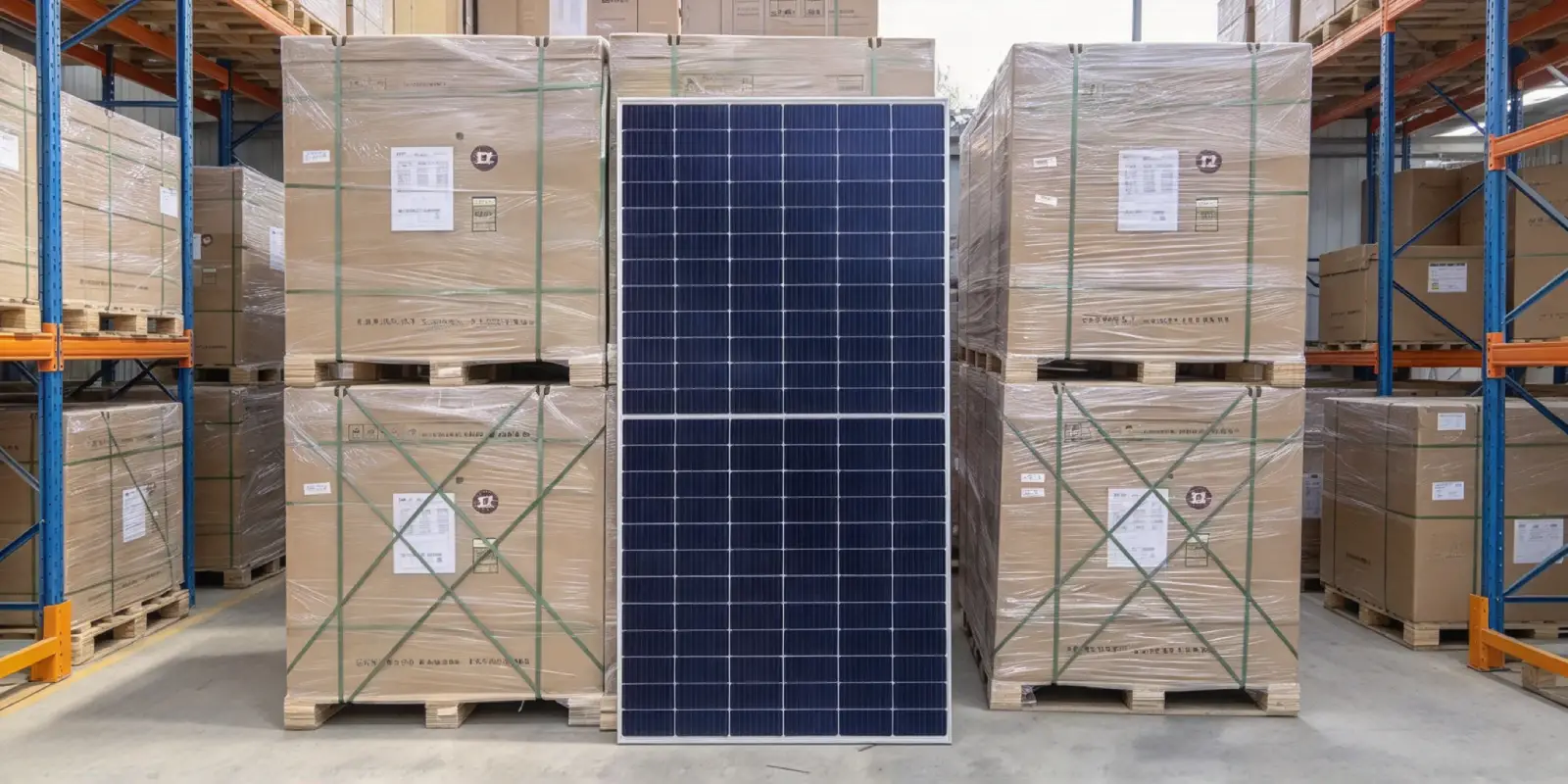
Article Summary:
In large-scale B2B solar panel procurement, logistics directly determine project profit margin. Pricing is calculated by pallets and containers instead of individual panels. This guide covers pallet packing specs, vertical packing anti-microcrack principle, 40ft high cube container loading capacity, and the cost & risk differences between FCL full container and LCL less-than-container shipments. Full-container delivery achieves the lowest per-watt landed cost, while LCL has extra handling fees and higher risk of cell cracks.
Quick Answers:
- How many solar panels fit on one pallet? Usually 30–36 pcs, varies by module wattage.
- Why pack solar panels vertically? Avoid heavy compressive stress, prevent hidden micro-cracks during sea transit.
- Which container type for solar bulk shipment? 40ft HC (High Cube) is standard; 20ft is rarely used due to volumetric limitation.
- FCL vs LCL? FCL = lower per-watt freight & less handling damage. LCL has hidden destination charges and 15–30% distributor markup.
In large-scale photovoltaic procurement, logistic efficiency dictates your final project margins. When buying solar panels at a B2B volume, quotes are rarely built around individual modules. Instead, the entire logistical framework—and the resulting price per watt—is calculated by structural packing units: pallets and containers.
Accurately evaluating structural loading capacities, micro-crack prevention methods, and sea freight logistics allows procurement teams to optimize freight densities and minimize overhead.
1. Pallet Loading Breakdown: The Micro-Unit of Wholesale Sourcing
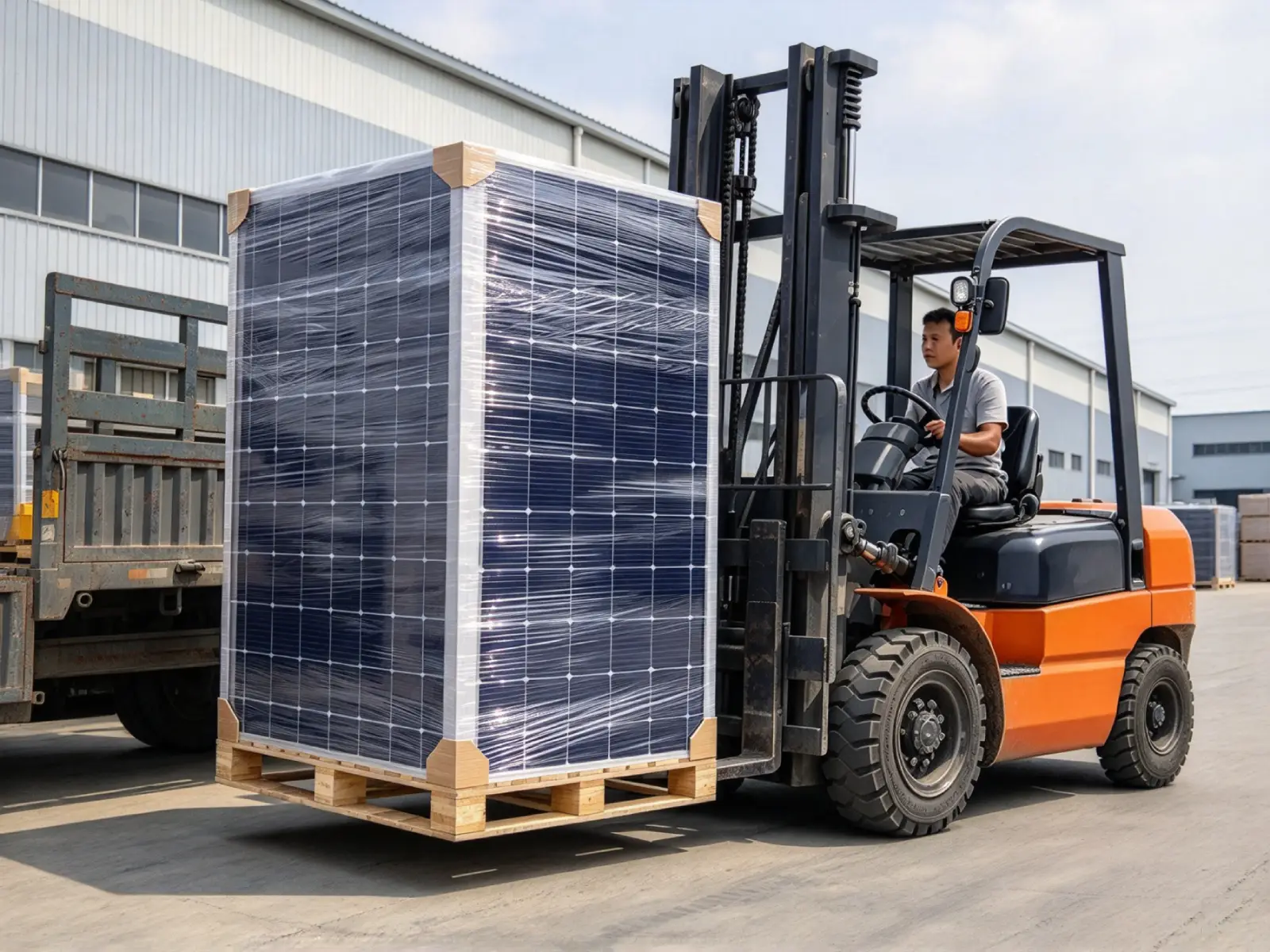
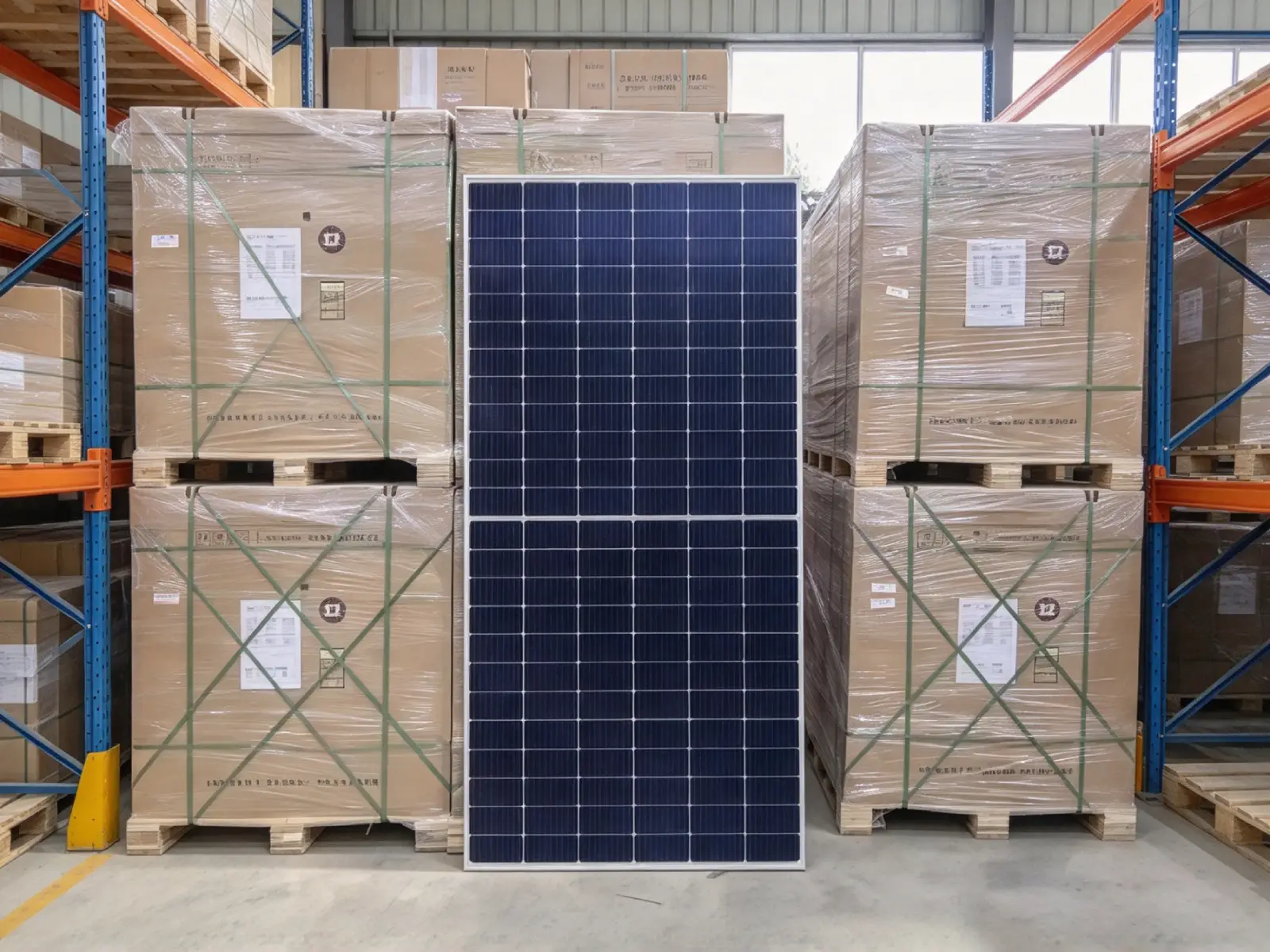
A pallet is the fundamental handling unit of the solar industry. Manufacturers utilize heavy-duty, reinforced wooden or composite pallets designed specifically to sustain the structural load of stacked solar glass.
- Average Module Count: A single standard pallet typically contains 30 to 36 solar panels.
- Physical Demographics: For a standard 550W+ commercial N-Type TOPCon module, a fully loaded pallet stands roughly 1.1 meters wide, 2.2 meters long, and 1.2 meters high.
- Weight Parameters: A loaded pallet generally weighs between 900 kg and 1,100 kg (1,900 to 2,400 lbs).
Why Vertical Packing Matters
Modern factories stack panels vertically (on their long edges) rather than flat. Stacking solar panels horizontally creates massive structural stress on the bottom modules, causing invisible micro-cracks in the silicon cells during ocean transit. Vertical packing, braced with heavy-duty corner guards and industrial strapping, isolates individual module weights and protects cell integrity.
2. Container Sourcing Dynamics: Maximizing Freight Density
For direct-from-factory procurement, the standard minimum order quantity (MOQ) is tied to a 40ft High Cube (HC) ocean container. 20ft containers are rarely used for solar shipments because panels are high-volume, relatively lightweight cargo; a 20ft container would run out of volumetric space long before hitting its weight limit.
Standard 40ft HC Container Capacities
| Module Type / Rating | Pallets per Container | Panels per Pallet | Total Panels per 40ft HC |
|---|---|---|---|
| Residential (400W – 450W) | 26 Pallets | 36 Panels | 936 Panels |
| Commercial (550W – 580W) | 20 – 22 Pallets | 31 – 33 Panels | 620 – 726 Panels |
| Utility Large-Format (600W+) | 20 Pallets | 30 Panels | 600 Panels |
To maximize space, logistics engineers use an interlocking double-stack layout inside the 40ft HC container, placing one pallet directly on top of another using internal protective framing. This guarantees that all vertical space within the High Cube configuration is fully utilized.
3. Shipping Cost Breakdown: FCL vs. LCL Financial Impacts
Choosing whether to buy by the pallet or by the full container alters your total landed cost structure.
FCL (Full Container Load) Advantages
When you purchase a full container, the logistics are clean. The container is sealed at the manufacturing facility and remains closed until it arrives at your project site or centralized warehouse. FCL shipments enjoy the lowest possible sea freight rates per watt because you are not paying for consolidation services or dynamic port handling.
LCL (Less than Container Load) Disadvantages
If you only order 2 or 3 pallets, your cargo must share a container with other goods via LCL shipping. LCL introduces several hidden cost vulnerabilities:
- Increased Handling Risks: Your pallets will be shifted multiple times at regional consolidation warehouses, increasing the risk of forklift damage and panel micro-cracks.
- High Localized Fees: LCL ocean freight might seem cheap initially, but destination port fees (de-consolidation, warehouse handling, and documentation) are significantly higher per unit than FCL.
- The Channel Premium: Buying individual pallets often means purchasing out of a domestic distributor’s warehouse rather than the factory floor, which instantly appends a 15% to 30% middleman markup to cover their localized overhead.
Conclusion: Engineering a High-Efficiency Supply Chain
When scaling your solar enterprise, logistical planning is just as important as selecting the right cell efficiency. Sourcing wholesale solar panels by the full 40ft container minimizes handling hazards, optimizes volumetric ocean freight configurations, and delivers the lowest absolute landed cost per watt. For regional operations where pallet-level purchasing is required, aligning with a partner capable of executing secure, micro-crack-free LCL or domestic warehouse transport is vital to preserving long-term asset reliability.
About GTPOW | Gaotu Innovation
We’re your trusted solar solution provider. We offer customized commercial solar systems, OEM & ODM services, and end-to-end support for North American businesses. Reach out to discuss your rooftop solar project today.
Website: gtpowsolar.com
Email: info@gt-pow.com
Related Posts
Commercial Solar Rooftop Installation Cost: A Complete Guide for Business Owners
Summary: Written for factory, warehouse and office building owners, this guide breaks down the cost…
Marine-Grade Flexible Solar Panels: The Definitive Sourcing Guide for RV & Yacht Manufacturers
For recreational vehicle, luxury yacht and vessel manufacturers, every single component within the end product…
Gaotu 1600W Solar EV Charger: Charge Your EV Anywhere, Anytime – No Grid Required
You’re planning a road trip. The destination is perfect—remote, scenic, off the beaten path. But…
Leave a Reply