

Solar Power Knowledge
OEM Solar Panel Manufacturer Checklist: 12 Questions Before You Sign
 gaotu

Summary / Article Summary
Signing an OEM contract with a solar panel manufacturer is a one-shot game: ask the right questions before the ink dries, or spend months cleaning up the mess. This checklist gives brand owners and distributors 12 questions that map directly to the ways OEM orders go wrong—customization depth, power tolerance after changes, cell binning records, pilot-batch MOQ, tooling ownership, payment risk, certificate coverage for the custom model, retesting cost, line scheduling, EL testing, a stress-test question about past failures, and the quality dispute process when the first shipment lands out of spec. It ends with Gaotu Innovation as a concrete supplier benchmark.
Quick Answers
- What should I ask an OEM solar panel manufacturer before signing?
Twelve questions across five areas: customization depth (what have they actually changed, how power tolerance shifts, cell binning records), money and volume (pilot-batch MOQ, tooling ownership, payment schedule), certification (which certificate covers your custom model, retesting cost and timeline), line and quality (dedicated vs. mixed line, EL testing scope, past client failures), and the quality dispute process for out-of-spec shipments. - What is the most important question on the list?
Question 7—the certificate number for your specific custom model. Most OEM disputes and customs holds trace back to a standard-product certificate being used to cover a modified product. Verify the model description on the certificate against your configuration before paying a deposit. - Can I negotiate the MOQ on a custom OEM order?
Yes, through a pilot batch. A legitimate factory will run a small trial to verify the custom spec is reproducible, usually well below the formal MOQ. Ask whether the mass MOQ can come down to the pilot quantity once the pilot passes. - What should I look for on a factory visit?
Cell binning records next to the stringer, freshly offloaded semi-finished modules checked for bubbles, archived EL images tied to serial numbers, and whether your order runs on a dedicated line or mixed with standard products. - How does Gaotu Innovation fit into this checklist?
Gaotu Innovation is an 18-year solar OEM/ODM manufacturer with Dongguan and Indonesia plants, a product range from roughly 7W to 550W covering portable foldable, flexible, and rigid panels, and published OEM scope covering electrical, mechanical, and branding customization. It serves as a concrete benchmark when running the 12 questions against other suppliers.
Before you sign an OEM contract, the sales rep is slapping you on the back and promising everything is fine. You get exactly one shot to ask the right questions. Sign first and find out later that the line can‘t actually handle your changes—or that the “factory” doesn’t even own a laminator—and you‘re not negotiating anymore. You’re cleaning up a mess.
Here are 12 questions, in roughly the order you’d ask them sitting across the table. You don‘t need all of them. But each one maps to a specific way you can lose money.
On “what can you actually change”
1. What’s the deepest customization you‘ve done?
Don’t ask “can you do it.” Ask “what have you done.” Make them walk through a specific case: what structural change, what industry the client was in (no names needed), what went wrong, how they fixed it. Factories that have actually done deep OEM work can tell you the ugly details. The ones who say “we can do anything” usually mean they’ve swapped labels.
2. After the change, how does power tolerance work?
This is where OEM orders go to die. Change a backsheet material or a junction box, and output can drop a bin or two. Ask: “For the modified model, what’s the guaranteed positive tolerance? How many watts of negative tolerance do you allow?” If they say “same as standard,” they either haven‘t really done it or they’re hoping you won‘t check.
3. Can I see the cell binning records?
Mentioned in the pillar page, worth repeating. OEM volumes are usually too small for a factory to dedicate a clean cell batch. You don’t need to understand the sorter parameters. Just ask: “Can you attach the binning data for the cells used in my order at shipment?” A factory that can produce that has at least basic line discipline.
On money and volume
4. What‘s the MOQ for a pilot batch?
When the formal MOQ is a wall, the pilot batch is your only door. A legitimate factory will run a small trial to verify the custom spec is reproducible. Ask: “What’s the minimum for a pilot? How does the pilot price compare to mass production? If the pilot passes, can the mass MOQ come down to that pilot quantity?” If they won‘t even do a pilot, move on.
5. Who pays for tooling, and who owns it?
If you’re changing frame dimensions or junction box placement, there may be a mold involved. Ask: “Is the tooling cost one-time or baked into the unit price? Who owns the mold? If we stop working together, can I take it?” Some factories will charge you tooling and never put ownership in the contract. You find out months later that the mold doesn‘t exist or you can’t touch it.
6. What‘s the payment schedule?
“30% deposit, 70% before shipment” is standard, but for a custom OEM order that schedule puts all the risk on you. Try to negotiate: full payment on the pilot, but hold back 10–20% of the mass order until after arrival inspection. If they insist on full clearance before shipment, at least get the inspection standard into the contract: how many modules get sampled, what pass/fail criteria, what happens on failure.
On certification and compliance
7. What’s the certificate number for my custom model?
Not “do you have IEC.” Ask: “Which certificate applies to this specific model?” Change the backsheet or junction box, and the original certificate may no longer cover it. Have them send you the model description on the certificate so you can check. If they say “the series certificate covers it,” go look up that series on the TÜV or UL database yourself and verify your configuration is actually listed.
8. If the certificate doesn‘t cover it, how long does retesting take and who pays?
Some changes genuinely require retesting. Get it clear: how long, who covers the cost, and can product ship before the new certificate is issued? If they say “no retest needed,” have someone who knows certification confirm that before you wire a deposit. When customs holds your container, the factory isn’t paying the demurrage.
On the line and quality
9. Which line is my order running on?
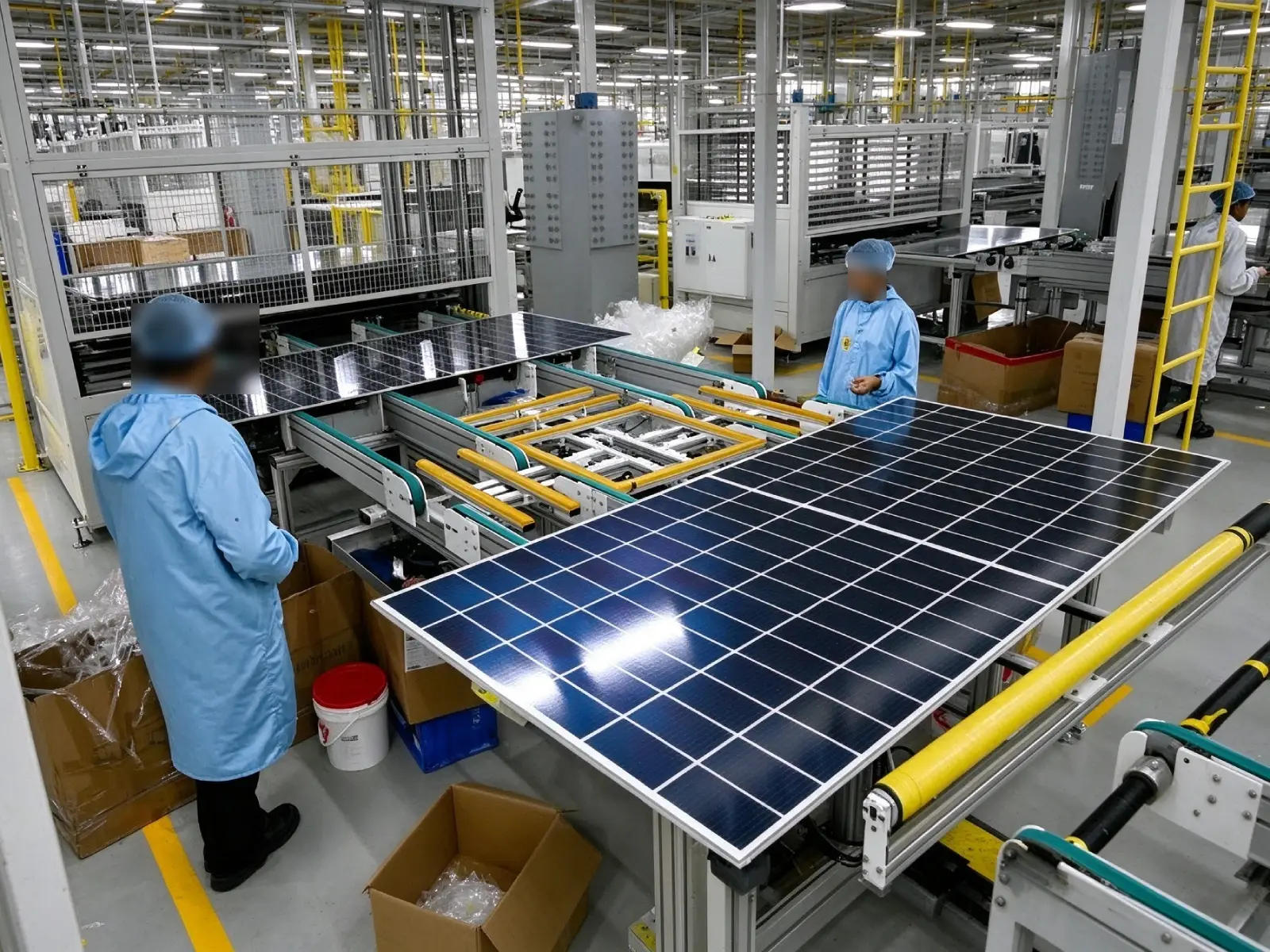
The difference between a big factory and a real factory isn‘t size. It’s scheduling logic. Ask: “Does the OEM custom order get a dedicated line, or does it run mixed with standard products?” Mixed lines mean frequent changeovers and higher error rates. If they say they have a dedicated flexible line, ask to see it. Can‘t see it, assume it doesn’t exist.
10. Is EL testing every module or spot check?
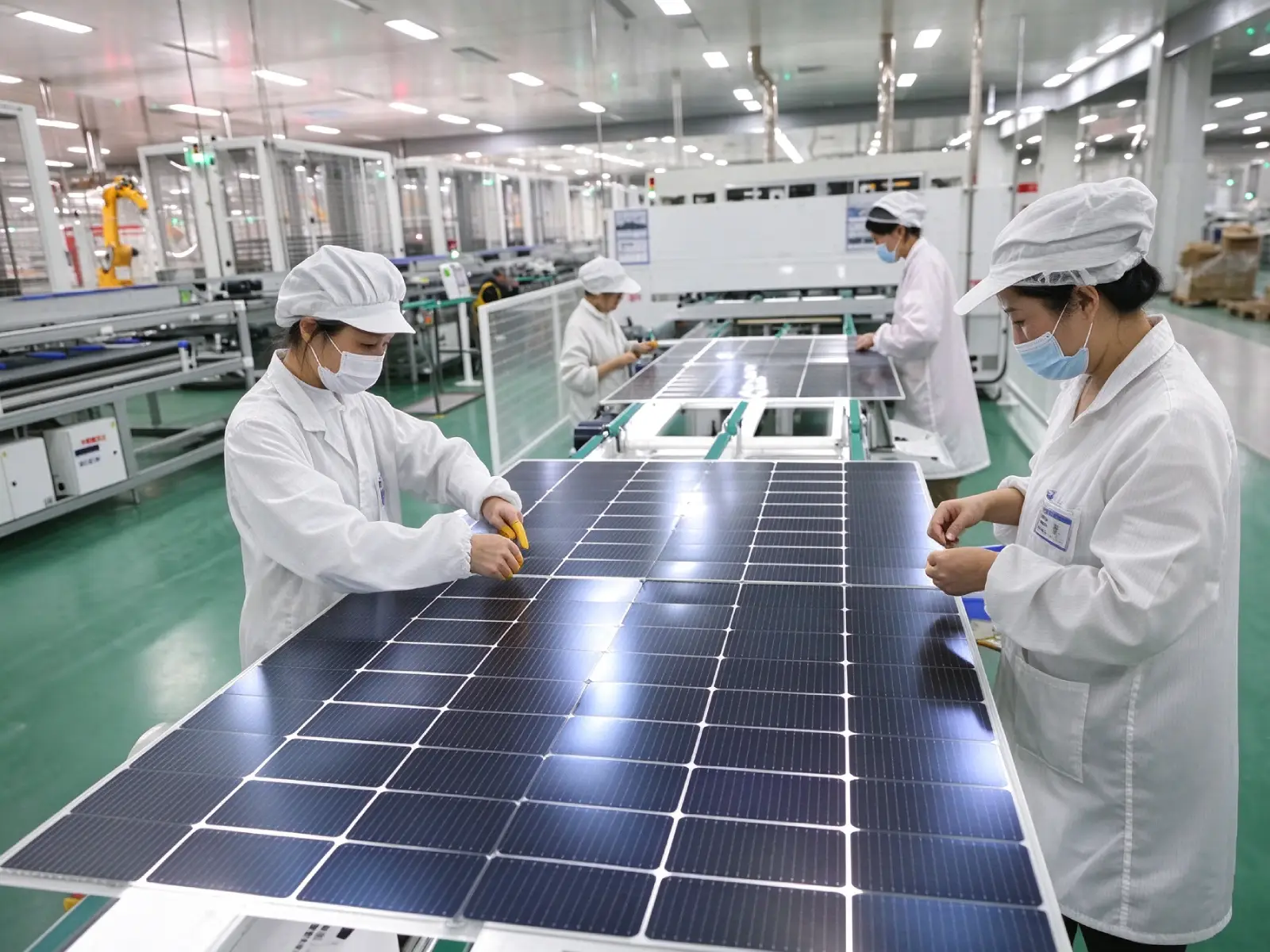
OEM orders live and die on micro-cracks. Ask: “Do you archive EL images? Can you pull a few at random at shipment and send them with matching serial numbers?” A factory willing to do that has some confidence in its soldering. A factory that waves it off as unnecessary is telling you where they cut corners.
11. What went wrong with your last OEM client?
This is a stress test. Most salespeople freeze, then say “no problems.” Reframe it: “In the last six months, has any client returned product or requested rework? What was the reason?” A factory that can tell you a real story is ten times more trustworthy than one that claims zero complaints.
The last one
12. If 5% of the first shipment lands out of power spec, what‘s your process?
Make them write it down, not say it. Replacement, refund, or credit on the next order? Whose test results govern the determination? Who pays freight on replacements? A legitimate factory has a written nonconforming-product procedure. If they don’t, they‘re telling you the answer is “we’ll figure it out when it happens.”
A reference point: where Gaotu Innovation sits
If you‘re running this checklist against suppliers, Gaotu Innovation is a useful benchmark.
Gaotu has been doing solar OEM/ODM for 18 years. Their core lines are portable foldable panels, flexible modules, and rigid panels, spanning roughly 7W to 550W. They run a main plant and a branch plant in Dongguan, plus an Indonesia manufacturing center—combined footprint over 80,000 square meters, around 1,200 employees. The Indonesia facility matters if you’re selling into the US: it opens a tariff lane that a China-only factory can‘t offer.
On customization, their published OEM scope covers electrical adjustments (voltage, cell string layout), mechanical sizing and framing options, and branding/packaging/documentation. They advertise 72-hour sample turnaround, though for your specific custom spec you’re still running question #4 above.
On certification, their public materials lean heavily toward portable and flexible product lines. If you‘re doing large-format glass module OEM for utility or commercial projects, confirm certificate coverage separately. Questions #7 and #8 are built for exactly that.
Contact: gtpowsolar.com, OEM inquiries through the site form or info@gt-pow.com. Shenzhen office in Longhua, Xinghe WORLD.
One last thing: this checklist isn’t about asking all 12 questions to look thorough. Pick three or four you actually care about and go deep. Salespeople don‘t fear the guy with a long list. They fear the guy who asks the one question they can’t bullshit their way through.
Related Posts
Top Reliable Solar Manufacturers: Contact Details for Wholesale Buyers
Global solar wholesalers, distributors and EPC contractors frequently struggle to source direct, official contact information…

126W Solar Shade Umbrella: Turn Any Outdoor Space Into a Portable Off-Grid Power Station
Outdoor living shouldn’t mean being cut off from power. Whether you’re camping deep in the…
How to Select the Right Solar Panels for Your C&I Rooftop Project in 2026
Driven by Europe’s energy transition, more and more businesses are rolling out commercial‑industrial solar projects.…

Leave a Reply