

Solar Power Knowledge
Solar Module Factory Audit: How to Verify a Real Manufacturer vs. Trader
 Gaotu Innovation
Article Summary
The more urgent your order, the easier it is to mistake a trader for a solar module factory. This guide lays out a five-layer audit you can run without flying to China, ordered from cheapest to most expensive: reading the business scope on the license, cross-checking line counts against capacity math, verifying certificate numbers on the issuing body’s database, requesting a live uncut video walk to the laminator, and asking a maintenance question only a real factory can answer. It closes with Gaotu Innovation’s public numbers as a verifiable benchmark.This audit framework complements our core OEM buying guide covering five critical points before signing an OEM solar panel manufacturer contract.
Quick Answers
- How can I tell a real solar module factory from a trader?
Run a five-layer audit: check the business scope on the Chinese business license, cross-check equipment counts against stated monthly capacity, verify certificate numbers on the issuing body’s public database, request a live uncut video walk to the laminator, and ask a daily maintenance question only a real line supervisor can answer. - What is the fastest way to expose a trader?
Ask for a live video call walking from the office to the workshop, then request the camera stop at the laminator to show the edge of the batch currently running. A trader has no workshop to walk to. Dodging with “not convenient to film” or “client confidentiality” confirms a middleman. - Why does business scope matter more than registered capital?
Registered capital can be inflated, but business scope is harder to fake. A real PV module manufacturer must list PV module manufacturing or solar cell module production explicitly. If the scope only says technology development, consulting, wholesale, and retail, it is a trader regardless of workshop photos on the website. - How do I verify a solar module certificate?
Get the certificate number and look it up yourself on TÜV Rheinland, TÜV SÜD, UL, or Intertek public databases. Check that the certificate holder name matches the company you are talking to, that the product model covers your custom configuration, and that the certificate is still valid. - What Gaotu Innovation numbers can I use as a benchmark?
Gaotu Innovation publishes 18 years of OEM/ODM experience, 35,800 square meters in Dongguan plus 15,200 square meters in Indonesia, 20 automated production lines, 18 automated laminators, monthly output of 132,500 modules, 72-hour samples, and 18–25 days for mass production—an equipment-to-capacity ratio you can cross-check against other suppliers.
The most ironic thing about finding a solar module factory is this: the more urgent your order, the more likely you are to mistake a trader for a manufacturer.
Traders aren’t inherently bad to work with. The problem is when you think you’re discussing OEM customization, production scheduling, and certification coverage with a factory—and the person across the table is actually a middleman. No production line, no laminator, no EL tester. Whatever you ask, the answer is “no problem, our factory can do it.” Then he turns around, squeezes a real factory on price, takes a cut, and loses half your customization requirements in translation.
This isn’t going to tell you to “check the business license” and call it a day. Licenses can be borrowed, showrooms can be rented, and websites can look better than the real factory’s. Here’s a factory-audit logic you can run without flying to China, ordered from cheapest to most expensive. Each layer filters out a batch of people.
Layer One: Check the license—but read the business scope, not the registered capital
Get their full Chinese legal name and look it up on the National Enterprise Credit Information Publicity System . Most people only check whether the company is active and what its registered capital is. The field that actually matters is business scope.
A real PV module manufacturer must have “PV module manufacturing,” “solar cell module production,” or similar wording explicitly listed in its business scope. If the scope says “solar product technology development, technical consulting, wholesale and retail,” it’s a trader—no matter how many workshop photos are on the homepage. Registered capital can be inflated; business scope is harder to fake.
Red flag: they only give you an English name and refuse to share the full Chinese registered name. Every legitimate Chinese company has one. If they won’t give it, the conversation is over.
Layer Two: Ask about line counts, then cross-check the math
The easiest place to catch a trader is when the capacity numbers don’t add up.
Ask: How many production lines? How many laminators? How many stringers? What’s the monthly capacity in modules? In a real module factory, equipment count and capacity are physically constrained. For example, producing 130,000 modules a month requires roughly 18 automatic laminators to keep up (each laminator has a finite per-shift output). If someone claims 100,000 modules a month but has only 3 laminators, either the number is invented or the work is outsourced.
Go further: ask for last month’s electricity bill or shipment records. PV manufacturing is power-intensive; electricity bills are hard to fake. Shipment records can be cross-checked against the electricity bill—how many containers went out, how many modules that represents, and whether it matches equipment capacity.
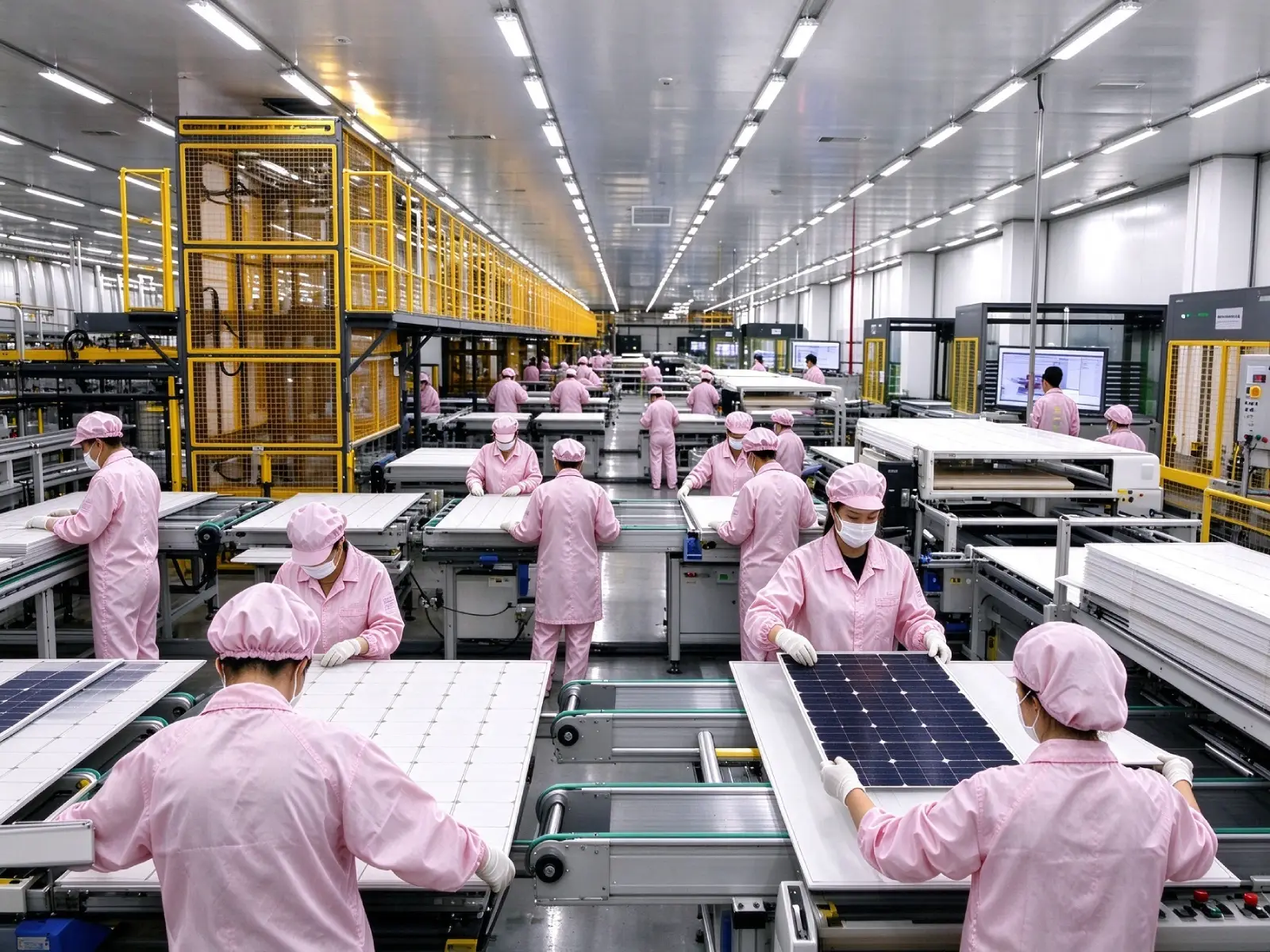
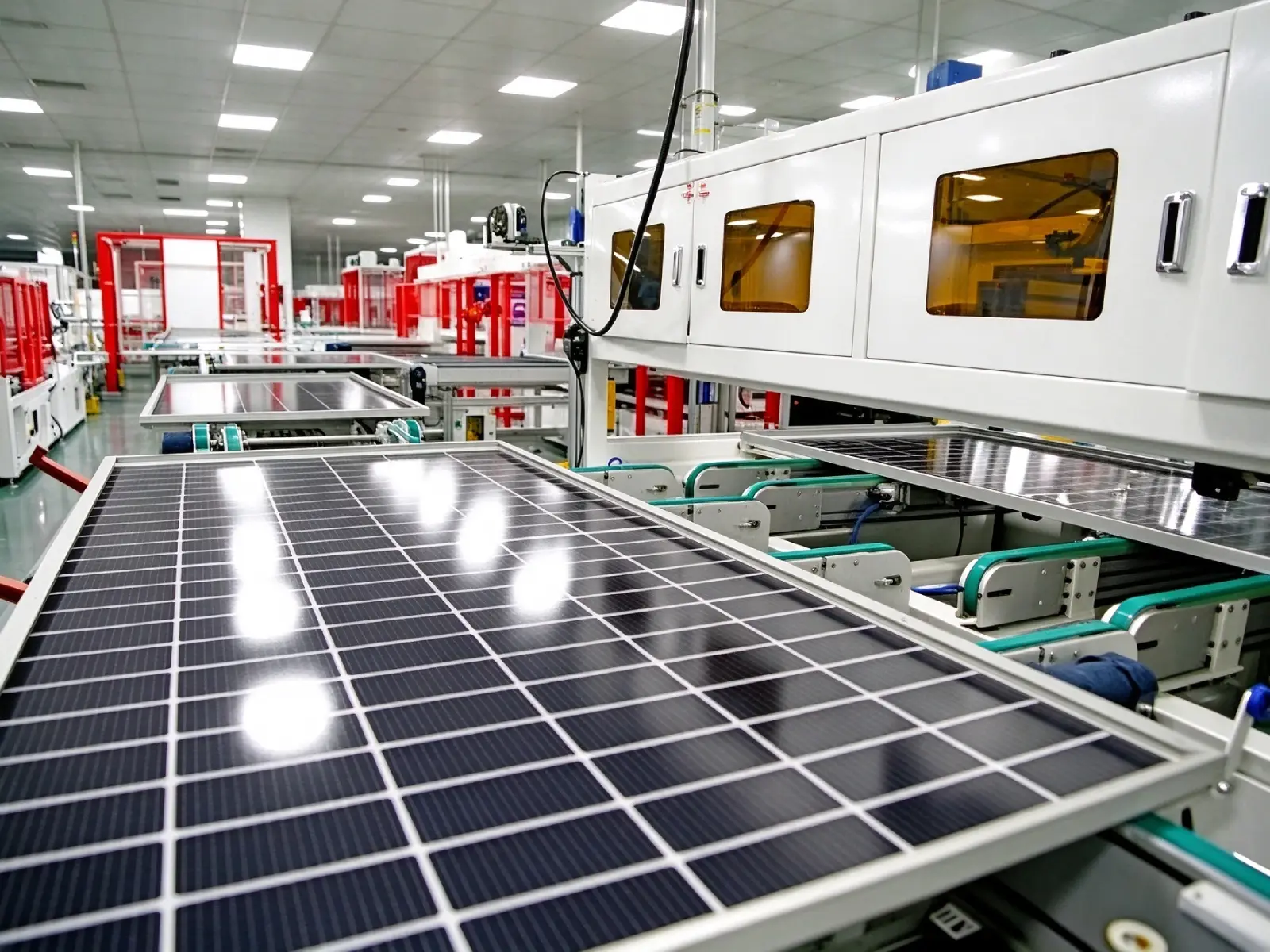
Gaotu Innovation’s public numbers offer a reference point: Dongguan main and branch plants total 35,800 square meters, with 20 automated production lines, 8 high-speed SMT lines, 28 ribbon welders, 18 automated laminators, and monthly capacity of 132,500 modules. Their Indonesia center adds another 15,200 square meters and 10 lines. That equipment-to-capacity ratio holds up.
Layer Three: Ask about certification, then go verify it yourself
The most common trader trick is sending you a screenshot of someone else’s certificate. The company name on the certificate may be a factory you’ve never heard of, or the certified model may not match what you’re ordering.
The right move isn’t “show me the certificate.” It’s: get the certificate number and look it up on the issuing body’s database yourself. TÜV Rheinland, TÜV SÜD, UL, and Intertek all have public certificate databases. Check three things: whether the certificate holder name matches the company you’re talking to, whether the product model covers your custom configuration, and whether the certificate is still valid.
If they say “the certificate is being updated” or “the series certificate covers it,” you can politely end the conversation. Customs doesn’t read “series coverage” explanations when your container is held.
Layer Four: Ask for a video they’d rather not shoot
This is the cheapest and most effective move.
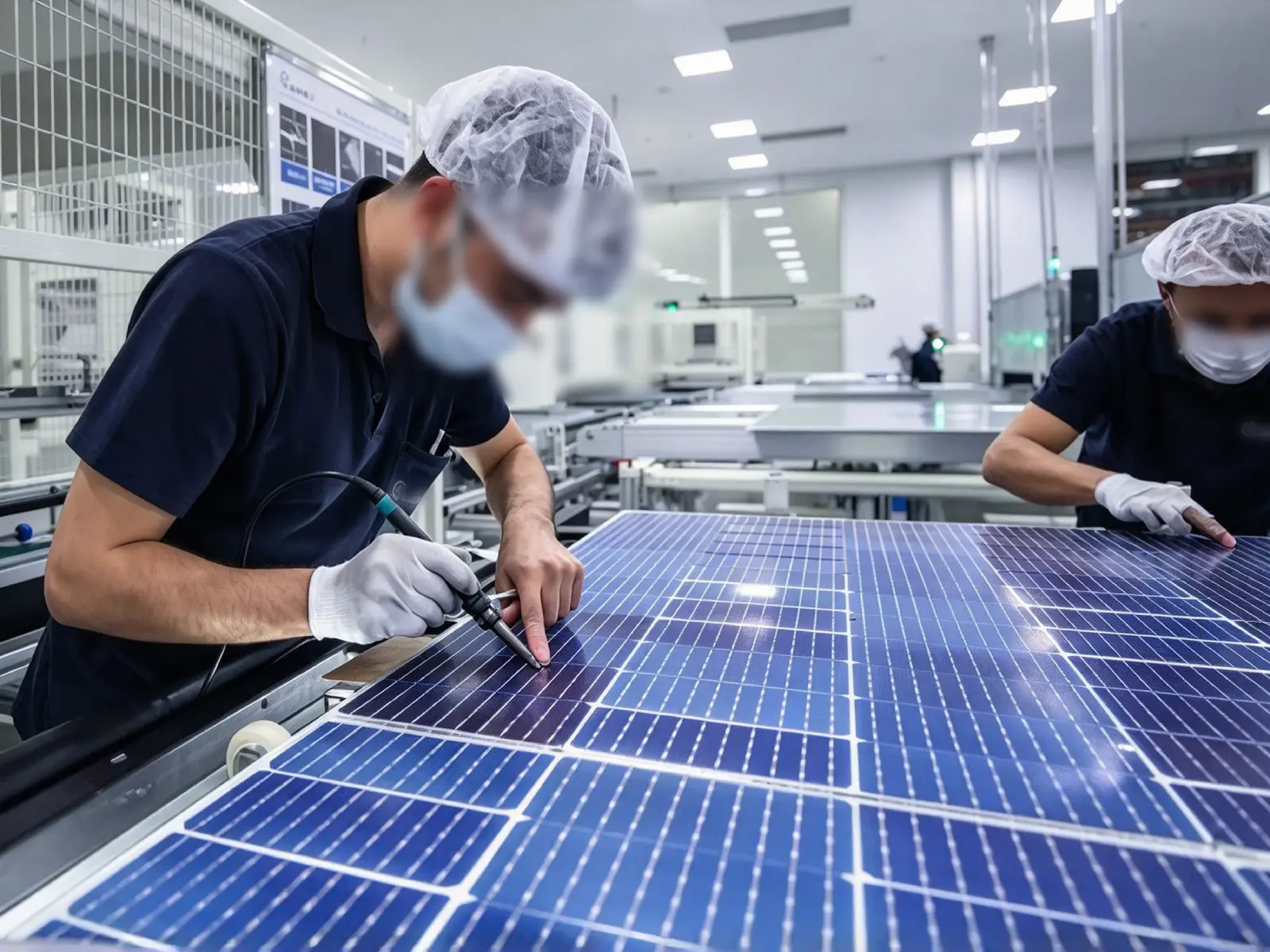
Don’t ask for a edited promotional video. Ask for a live video call, walking from the office to the workshop, camera rolling without cuts. Then make a specific request: “Can you walk over to the laminator and let me see the edge of the batch currently running?”
A trader can’t do this. There’s no workshop to walk to. A real factory, even a messy or poorly lit one, can at least get the camera there. Dodging with “the workshop isn’t convenient to film” or “client confidentiality” basically confirms a middleman. Real confidentiality is about formulations and customer lists—not what a laminator looks like.
Laminator performance is one key failure point in PV manufacturing, which we break down step‑by‑step in solar module factory production line: from cell to EL test in 8 steps.
Layer Five: Ask a technical question only a real factory can answer
Pick a question about daily line maintenance. Traders can’t answer it because they don’t touch equipment.
For example: “When was the last time you changed the vacuum pump oil on your laminator? Who logs that?” Or: “How often is the EL camera calibrated? Where are the calibration records?”
A real factory’s line supervisor will have an answer, or at least know who to ask for the record. A trader’s response is usually two seconds of silence, then “I’ll need to check with the technical team.” Let them check. What comes back is often a generic script that doesn’t directly address your question.
Many of these stress‑test questions are built into our full OEM solar panel manufacturer checklist with 12 questions before you sign for supplier interviews.
A usable comparison: where Gaotu Innovation can be verified
If you’re running this framework against suppliers, Gaotu’s public information at least offers anchors you can verify.
Their site states 18 years of OEM/ODM experience, 35,800 square meters in Dongguan plus 15,200 square meters in Indonesia, monthly output of 132,500 modules, 72-hour samples, and 18–25 days for mass production. Their foldable lines use Tier-1 mono or SunPower Maxeon cells, selectable at order time. Lamination uses temperature-controlled laminators, with dual EL testing before and after lamination on every panel, plus simulated-sunlight IV testing.
This information doesn’t replace your own audit. But it creates a chain of specifics you can pursue: concrete questions to ask, concrete numbers to cross-check, concrete line descriptions to request on video. What a trader fears most is you showing up with a real factory’s details and asking him to match them.
Contact: gtpowsolar.com, OEM inquiries through the site form or info@gt-pow.com.
One last thing: the point of a factory audit isn’t finding the “biggest” factory. It’s finding the one who has a specific answer to everything you ask. Traders are good at saying “no problem.” Real factories are good at saying “that depends, specifically…”—which sounds less impressive, but it means they actually touch the equipment.
Related Posts

Plug-in solar panels: are they worth it?
Quick Answer: Plug-in solar panels are highly worthwhile for renters, apartment dwellers, and small households…
OEM Solar Panel Manufacturer: Five Things to Nail Down Before You Sign
Article Summary OEM solar panel manufacturing is not about slapping your logo on a finished…
Portable Solar Panel OEM: Complete Customization & Wholesale Guide
Market Status and Industry Value of Portable Solar Panel OEM With the popularity of outdoor…



Leave a Reply