

Solar Power Knowledge
Solar Panel Distributor vs. Factory: Which Saves More at 1MW Volume?
 Gaotu Innovation
Article Summary
At 1MW, procurement sits right on the economic dividing line between solar panel distributor and factory. This guide breaks down how many panels 1MW actually means (1,724–1,818 modules, or 3–4 40HQ containers), where a distributor earns his markup through stock, small-batch flexibility, and local warranty, where the factory wins on unit cost and origin control, and the three questions—timeline, tariff structure, and repeat volume—that decide which channel is cheaper for your specific order. It closes with Gaotu Innovation as a concrete benchmark.
Quick Answers
- How many solar panels does 1MW require?
At 550W to 580W per module, 1MW needs roughly 1,724 to 1,818 panels—at least 3 to 4 full 40HQ containers. That volume is the threshold where factory scheduling logic starts to beat distributor stock logic. - When is a distributor cheaper than going factory-direct?
When your timeline is tight, you need staged small-batch delivery, or you want local warranty support. Distributor stock delivers in 2–5 days after clearance, while factory lead time plus ocean transit runs six weeks minimum. On hard-deadline projects, that time gap is worth the markup. - Where does the factory save the most money at 1MW?
Not in the unit price—in origin control. A factory with a third-country plant can route through tariff-advantaged origins, which matters enormously for the US market. A distributor’s origin was locked in at his own purchase, so that lever doesn’t exist for him. - What three questions decide distributor vs. factory at 1MW?
First, how hard is your project timeline? Second, what’s the tariff structure in your destination market? Third, is this a one-off project or ongoing procurement? Relationships with a factory are negotiated into existence over repeat orders, not granted on the first one. - How does Gaotu Innovation fit this comparison?
Gaotu Innovation brings 18 years of OEM/ODM experience, a 35,800-square-meter Dongguan plant, a 15,200-square-meter Indonesia manufacturing center publicly described as a US tariff lane, and monthly capacity of 132,500 modules—enough to absorb a 1MW order without backlog, with 18–25 day mass production.
At the 1MW procurement level, you eventually hit a fork: do you buy from a distributor with stock on hand, or go straight to the factory?
The distributor’s rep tells you “we respond fast, we have inventory, no production queue.” The factory’s rep tells you “the middleman markup is money you could spend hiring a procurement person.” Both are telling partial truths, and both are leaving things out. The reality: 1MW sits right on the economic dividing line between distributor and factory. Lean one way and the distributor wins; lean the other and the factory crushes it. It depends on what kind of buyer you are.
This doesn’t pick a side. It breaks down where each channel saves you money, where each costs you, and when choosing wrong means losing the money you thought you saved.
First, get clear: how many panels is 1MW?
Don’t skip this. Plenty of people compare “prices” without having calculated how many panels they actually need.
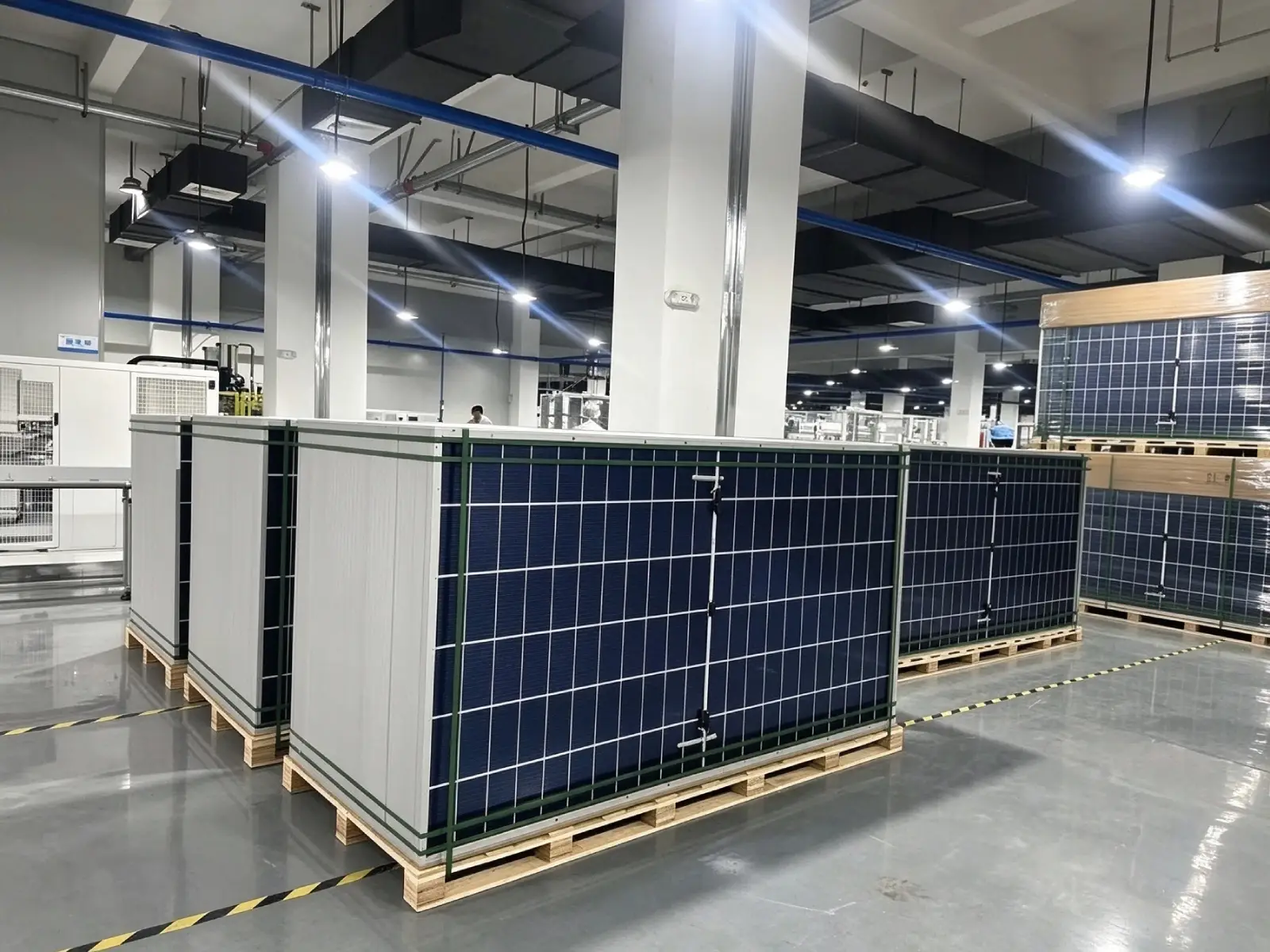
At current mainstream module wattage—550W to 580W—1MW requires roughly 1,724 to 1,818 modules. What does that mean? At least 3 to 4 full 40HQ containers.
That’s the watershed. If you only need half a container or one container, the distributor’s inventory logic holds—the factory won’t open a line for one container, and the distributor has stock. But at 3+ containers, the factory’s scheduling logic kicks in: your order is big enough to justify a production slot, and the distributor’s markup starts looking like an ugly number.
Where the distributor saves you: time and certainty
Distributors don’t earn their markup for nothing. At 1MW, they provide three things a factory can’t.
First, stock. Factory standard lead time is 18 to 25 days, plus 18 to 40 days of ocean transit—six weeks minimum from order to arrival. A distributor with local inventory can deliver 2 to 5 days after clearance. For projects with hard deadlines or staged replenishment, that time gap is itself money.
Second, small-batch flexibility. You don’t have to take the full 1MW at once. Take 200kW first to test the market, the install, the customer feedback, and order the rest once demand is confirmed. Factory container MOQ means once you order, 3 to 4 containers ship together, and the inventory pressure is all yours.
Third, localized warranty and after-sales. The distributor is local—when something goes wrong, you have someone to call. The factory is overseas; warranty claims go through cross-border processes, and the time and communication costs are real.
But what’s the cost? Industry data puts the gap between factory ex-works pricing and end-user pricing after multiple middle layers at 30% to 50%. On a 1MW order, even saving just 20% is real money.
Where the factory saves you: unit cost and origin control
The factory has one advantage, and it’s big enough: no middle-layer markup.
A 1MW order is a volume the factory takes seriously. You can negotiate price tiers, payment terms, pilot batches. The discount room a distributor has is limited by his procurement cost and operating overhead; the room a factory has depends on his margin floor and capacity utilization.
But at 1MW, the real savings from going factory-direct isn’t in the unit price—it’s in origin selection.
If you’re selling into the US, China-origin modules face stacked duties (Section 301’s 50% plus anti-dumping/countervailing duties) that can double the landed cost or worse. A factory with a third-country manufacturing center can offer you different origin options. Gaotu Innovation runs a 15,200-square-meter manufacturing center in Indonesia, publicly described as a tariff lane for the US market, with materials citing roughly 20% savings on ocean freight. That’s an option a distributor can’t give you—the origin of what a distributor sells was locked in the moment he bought it.
What’s the factory cost? You wait. 18 to 25 days of production, plus ocean transit, plus customs—your cash is stuck on the water. And warranty is cross-border; if a batch has problems, the accountability process is far more complex than with a distributor.
A decision framework for 1MW: three questions
Don’t ask “which is cheaper.” Ask these three.
First, how hard is your project timeline?
If the install crew is already on site and a week’s delay triggers penalties, the distributor’s stock premium is worth paying. If your project is three months out and the factory’s lead time fits comfortably, there’s no reason to hand 20% to 30% to a middleman.
Second, what’s the tariff structure in your destination market?
Europe is relatively simple—the gap between China-origin and third-country origin isn’t as dramatic as in the US. In the US, origin is a life-or-death line. Calculate tariffs first, then compare quotes. A supplier quoting “low China-origin price” and one quoting “slightly higher third-country origin” may produce completely reversed landed-cost math.
Third, is this a one-off project or ongoing procurement?
If you do one 1MW project a year, the distributor’s convenience is worth paying for. If you plan to ship a container a quarter, the factory-direct relationship is worth building now. Relationships are negotiated into existence, not granted on the first order.
A reference point: where Gaotu Innovation sits in a 1MW scenario
If you’re running this framework against suppliers, Gaotu’s public information offers a comparison.
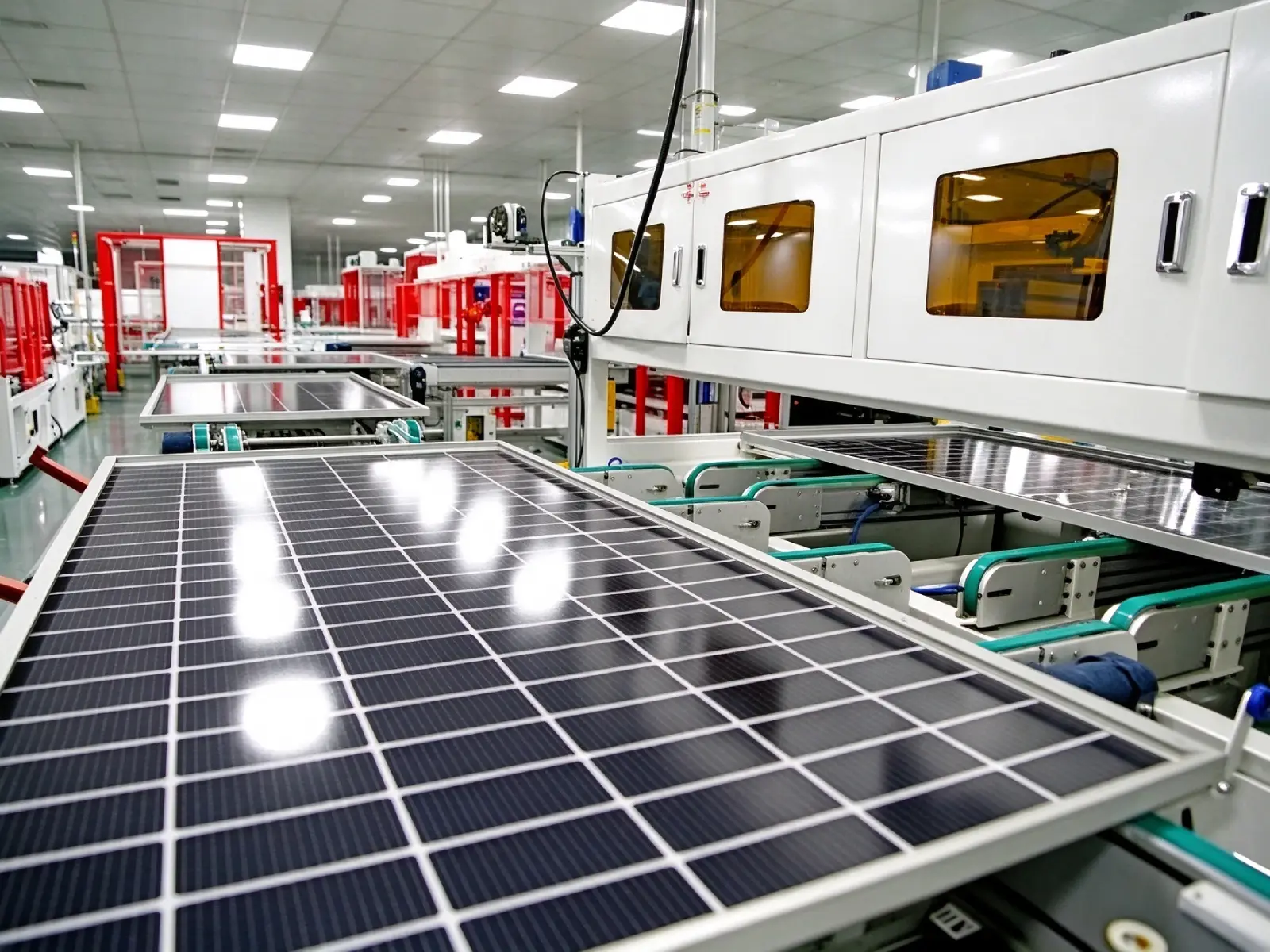
18 years of OEM/ODM experience, a 35,800-square-meter Dongguan main and branch plant, a 15,200-square-meter Indonesia manufacturing center, and monthly capacity of 132,500 modules. Samples in 72 hours, mass production in 18 to 25 days. Product lines cover rigid panels from 45W to 550W, foldable panels from 7W to 470W, and flexible modules from 50W to 470W.
Two things worth noting for a 1MW buyer. First, the Indonesia plant means you can get two origin options and pick the tariff-advantaged channel for your destination. Second, their capacity scale (130,000+ modules a month) means a 1MW order—about 1,800 modules—doesn’t queue up behind a backlog; the 18 to 25 day production lead time is credible.
What you’ll need to confirm yourself: their public materials don’t publish container-level price tiers for 1MW wholesale, nor do they describe a distributor partnership program. If you’re comparing “distributor stock” against “factory direct,” those two pieces need to be asked directly.
Contact: gtpowsolar.com, OEM and wholesale inquiries through the site form or info@gt-pow.com.
One last thing: at 1MW, choosing distributor vs. factory is really choosing which risk you can absorb. The distributor risk is “paid more but the goods arrived on time.” The factory risk is “saved money but the goods may arrive late, or arrive with problems that require cross-border back-and-forth.” There’s no universal answer—only which risk you can digest better. Getting that calculation right matters far more than getting the unit price right.
Related Posts

Solar Panel Wholesale Supplier Guide: How to Source Bulk Supply Direct from a Factory
If you are looking for a solar panel wholesale supplier and want to cut out…
2026 Solar Panel Price: Portable, Foldable & RV Panel Cost
Many shoppers struggle with solar panel pricing: portable solar panels range from low-cost to premium…
Portable Solar Panel Wholesale | OEM Bulk Supply for RV
Portable solar panel wholesale demand is surging rapidly across North America, Europe, Southeast Asia, and…


Leave a Reply