

Solar Power Knowledge
Marine Solar Panel Salt Spray Protection & Maintenance Guide
 Gaotu Innovation
Summary
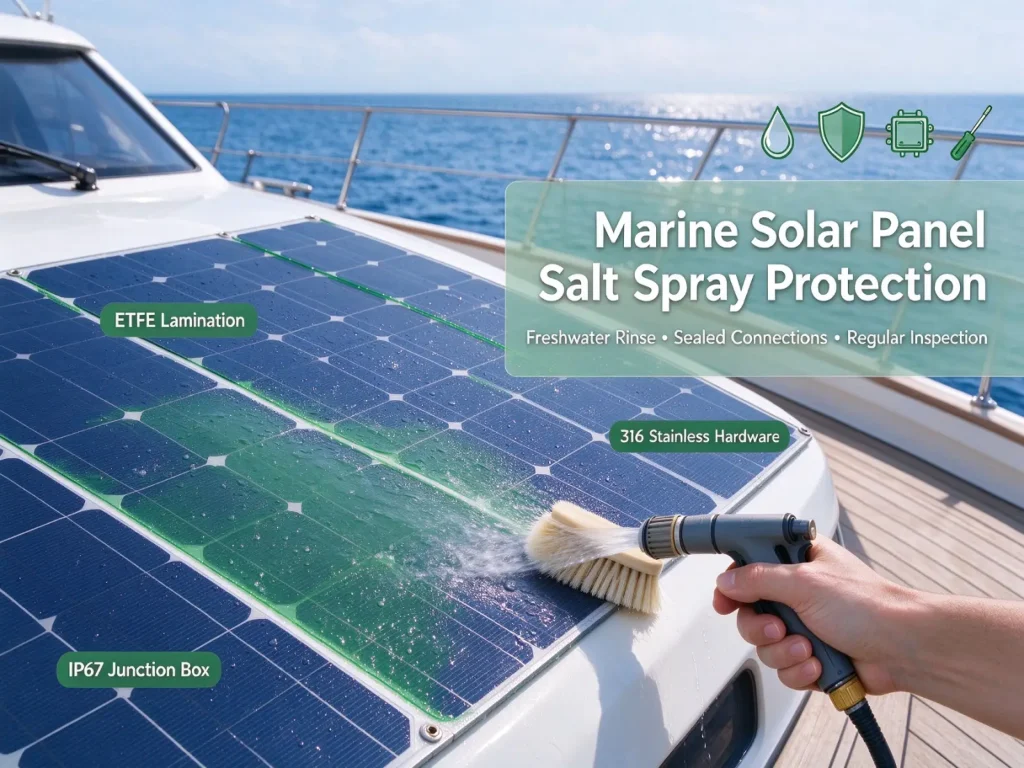
Salt spray causes corrosion, leakage and delamination on marine solar panels. This guide covers salt corrosion principles, marine-grade material selection, installation protection rules, inspection checklist and periodic maintenance routines to extend the service life of your boat PV array.
Quick Answers
- ✅ Ordinary flexible solar panels are NOT suitable for long-term offshore saltwater environments
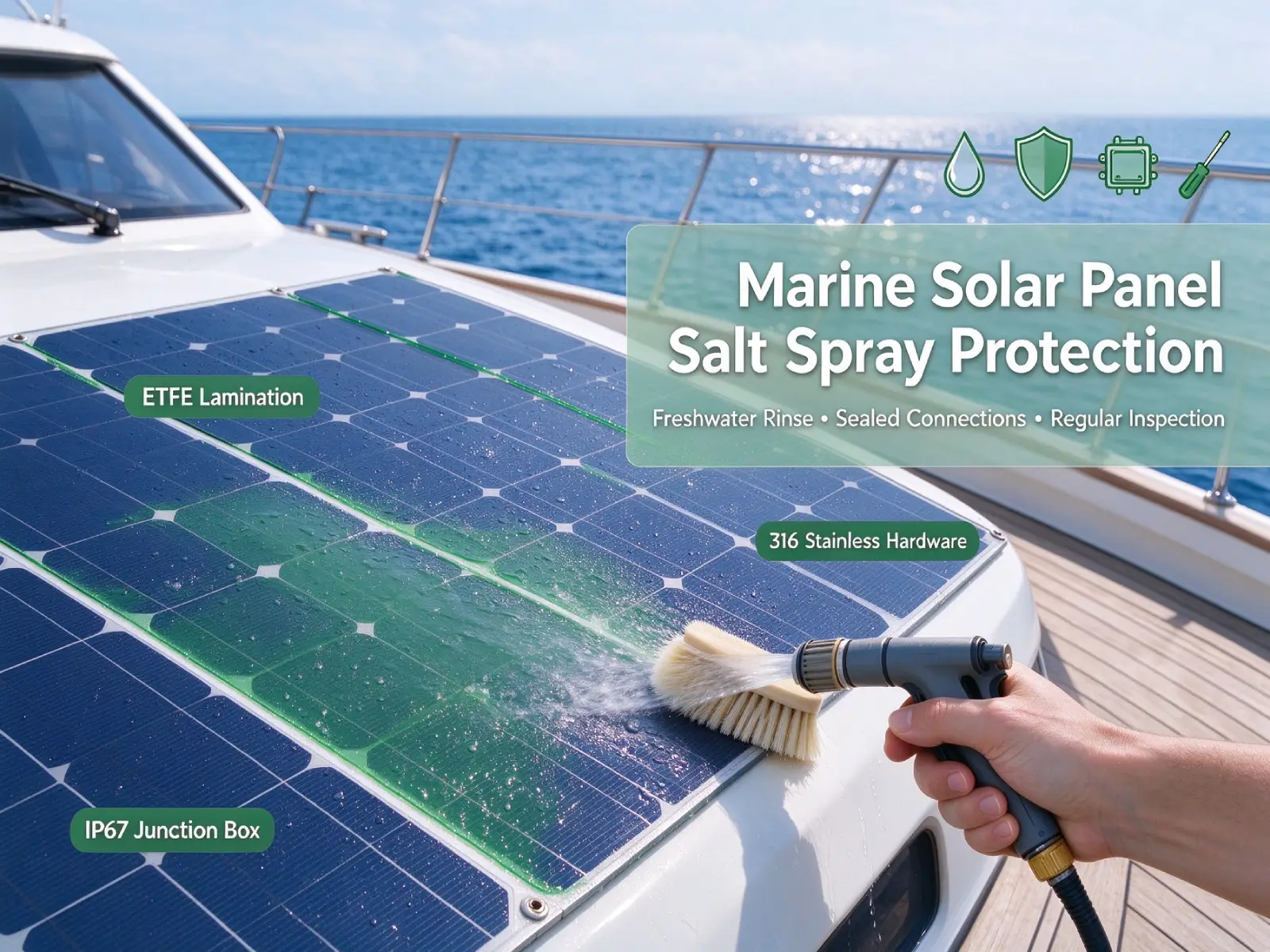
- ✅ ETFE top sheet, sealed IP67 junction box and 316 stainless hardware are baseline marine specs
- ✅ Drip loops on cables can stop saltwater wicking into MC4 connectors
- ✅ Weekly freshwater rinse is the simplest and most effective anti-salt routine
- ✅ Salt corrosion can speed up hotspot and overheating damage on flexible panels
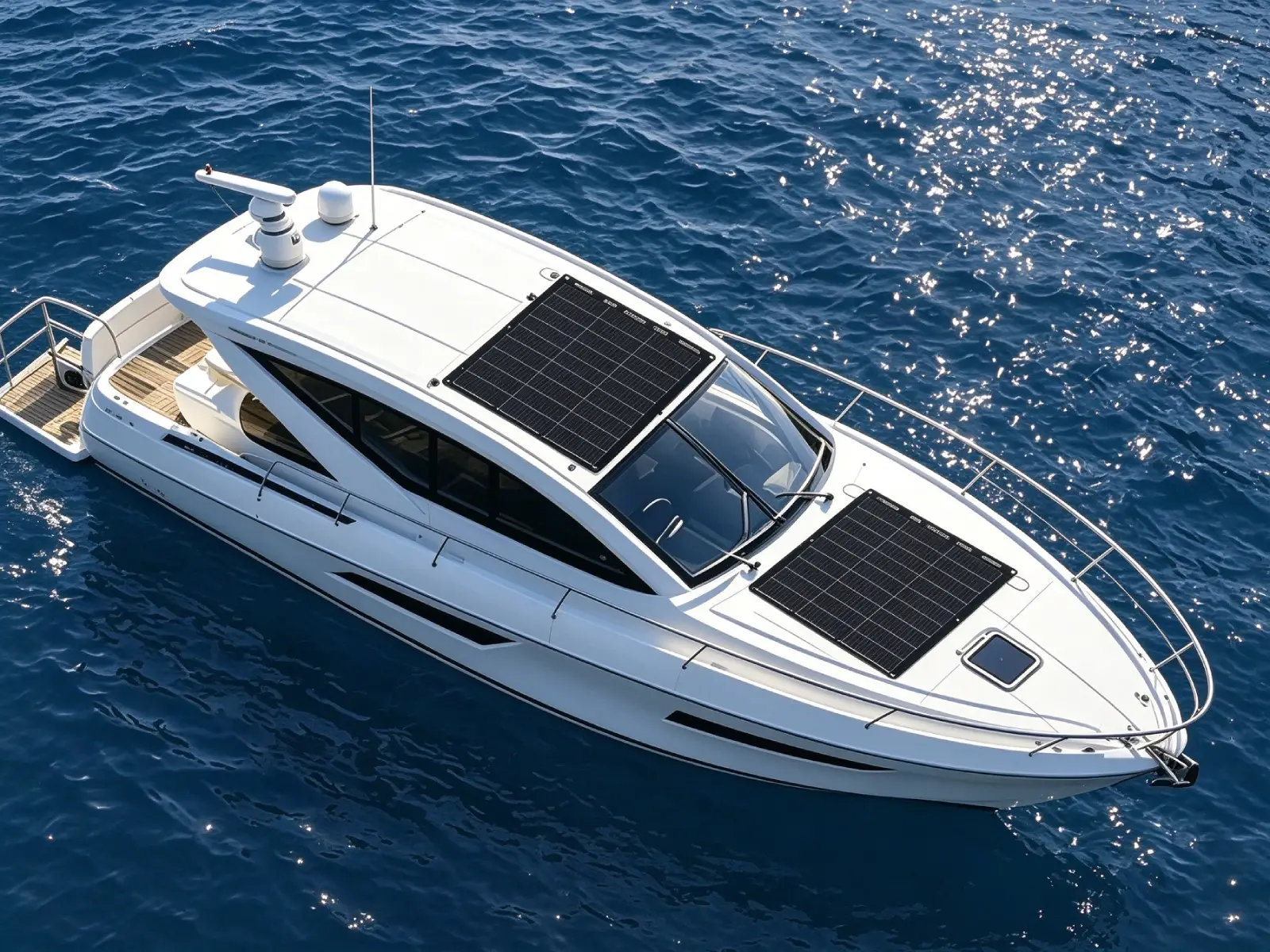
Boat solar systems face a uniquely harsh environment: constant salt mist, high humidity, wave splash and vibration. Many B2B buyers install standard RV flexible solar panels on yachts or fishing boats, only to see connectors rust, backsheet peel and power drop within 1–2 years. Salt corrosion also worsens overheating issues we explained in high-power flexible solar panel system design guide and our dedicated post about flexible solar panel overheating.
How Salt Spray Damages Marine Solar Panels
Sea salt contains sodium chloride. Once salt moisture settles on PV modules and wiring, it forms conductive brine. The main damage paths:
- Galvanic corrosion: dissolves aluminum frames, copper pins inside MC4 plugs and metal screws
- Delamination: saltwater seeps through poor seals, separates ETFE film from solar cells, creates bubbles
- Leakage current: salty film on the surface triggers insulation failure, safety risk
- Accelerated aging: salt residue traps heat on panel surface, increasing temperature derating and hotspot risk
Even inland freshwater boats can get salt contamination if they sail near estuaries or coastal areas.
First Step: Pick The Right Marine-Grade Solar Panels & Accessories
Maintenance can only slow corrosion. It cannot fix low-spec hardware. For saltwater use, stick to these baseline requirements:
- Top layer: ETFE (not PET). ETFE resists salt chemical erosion and UV far better
- Junction box: fully sealed IP67 marine box, anti-corrosion plastic housing
- Fasteners: 316 stainless steel. Never use 304 steel or ordinary carbon steel screws
- Cable & connector: marine-grade MC4, tin-plated copper conductors, extra rubber sealing rings
If you are sourcing bulk marine flexible arrays for shipyards or yacht converters, check our wholesale solar panels marine specification options. Custom layouts for curved decks are available via our OEM & ODM service.
Critical Installation Anti‑Salt Rules
1. Add Drip Loops For All PV Cables
This is the most frequently skipped step. Form a downward U-shaped drip loop before cables enter junction boxes or pass through deck holes. Water will drip off the low point instead of creeping upward along wire insulation into connectors.
2. Do Not Over‑Seal, But Seal The Right Spots
Seal cable penetrations, screw holes and junction box base with marine neutral-cure silicone. Keep panel side edges open for airflow, as covered in our overheating article. Blocking all ventilation traps both heat and moisture inside the laminate.
3. Keep Connectors Elevated & Protected
Route MC4 pairs away from deck splash zones. Mount junction boxes facing downwards or sideways, never straight up where rain and spray pool on the lid. Wrap exposed mated connectors with self-fusing marine tape for extra protection.
4. Isolate Dissimilar Metals
Avoid direct contact between stainless steel and aluminum. Use plastic or EPDM gaskets. Direct metal contact in salty air triggers fast galvanic rust.
Regular Maintenance Schedule for Boat Solar Arrays
Weekly / After Every Coastal Trip
Rinse the whole panel surface thoroughly with fresh, low-pressure clean water. Flush away salt dust before it dries and crystallizes. Do NOT use high-pressure washer, it can push water past seals and damage ETFE lamination.
Monthly Inspection
- Check ETFE surface: look for white salt stains, bubbles, cracks or lifting edges
- Inspect MC4 connections: check green/white corrosion powder, looseness, cracked rubber
- Check junction box: condensation inside, sealant peeling
- Check mounting screws: rust, loose fixings
- Clean salt off drip loops and cable jackets
Quarterly Deep Service
Use mild, non-abrasive solar panel cleaner and soft sponge to remove stubborn salt residue. Never use bleach, acidic detergent or scouring pads. These scratch ETFE and destroy anti-corrosion coatings. After cleaning, re-tape connectors and touch up sealant gaps.
Annual System Test
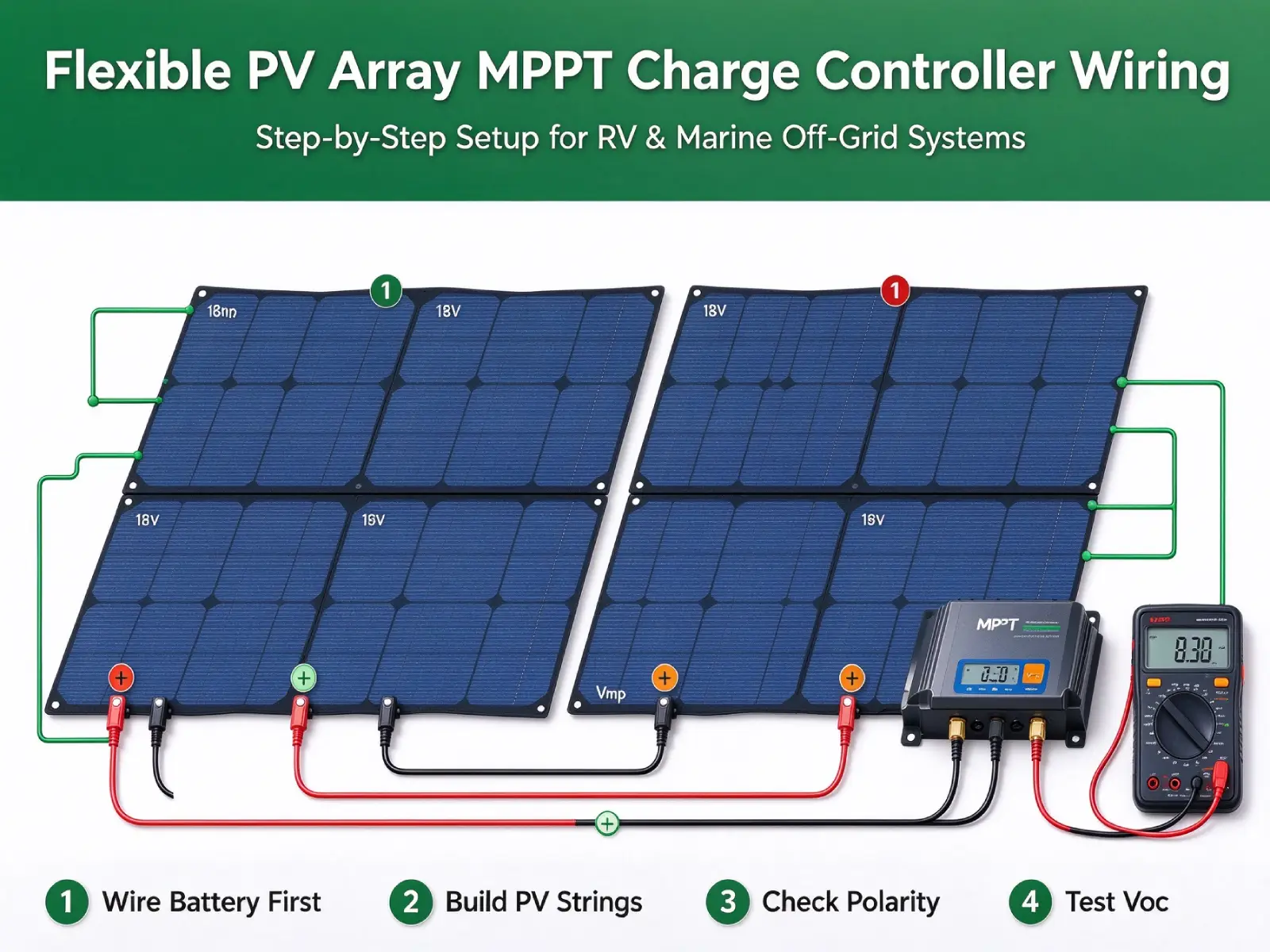
Measure open-circuit voltage (Voc) of each string. Compare readings against original spec. A big voltage drop often means hidden salt leakage or cell damage. Verify MPPT controller status to catch gradual performance loss early.
Common Marine Solar Mistakes To Avoid
- Using cheap standard panels marked “waterproof” for offshore salt environments
- High-pressure washing flexible ETFE panels
- Letting salt residue bake on the panel surface for weeks in strong sun
- Tucking MC4 connectors under deck without drip loops
- Mixing 304 screws on saltwater vessels
- Covering panels with tarps while mooring, trapping damp salt air underneath
FAQ
Q: Can I use flexible solar panels on saltwater boats?
A: Yes, but you must select marine-grade ETFE flexible panels, not general RV versions. Add drip loops and stick to the freshwater rinse routine.
Q: How long will a marine flexible solar panel last with proper maintenance?
A: With regular rinsing and inspection, marine ETFE flexible panels can reach 8–12 years service life. Neglected panels may fail within 2–3 years due to salt delamination.
Q: Is salt damage covered under product warranty?
A: Salt corrosion, seal damage from poor installation and lack of maintenance are generally excluded from warranty. Our warranty covers manufacturing defects only.
Need Marine PV Layout & Spec Recommendation?
We supply pre-configured marine flexible solar arrays, walk-on grade panels and matched salt-proof wiring kits for yacht builders and marine installers. Contact our engineering team with your vessel drawing for a quote.
Related Posts

How to Turn Any Outdoor Space into an Off-Grid Power Station – A Practical Guide to the GTPOW 126W Solar Shade Umbrella
At first glance, it looks like a premium backyard shade canopy: 240cm diameter, heavy-duty Oxford…

How to Import Solar Panels from China: A Complete Guide for Wholesalers and Distributors
Summary and Quick Answers This guide is written for importers, wholesalers, and distributors who want…

How to Verify a Real Solar Panel Factory in China
Most international B2B buyers, solar project contractors, and distributors share one frustrating sourcing pain point:…


Leave a Reply