

Solar Power Knowledge
How to Verify a Real Solar Panel Factory in China
 gaotu
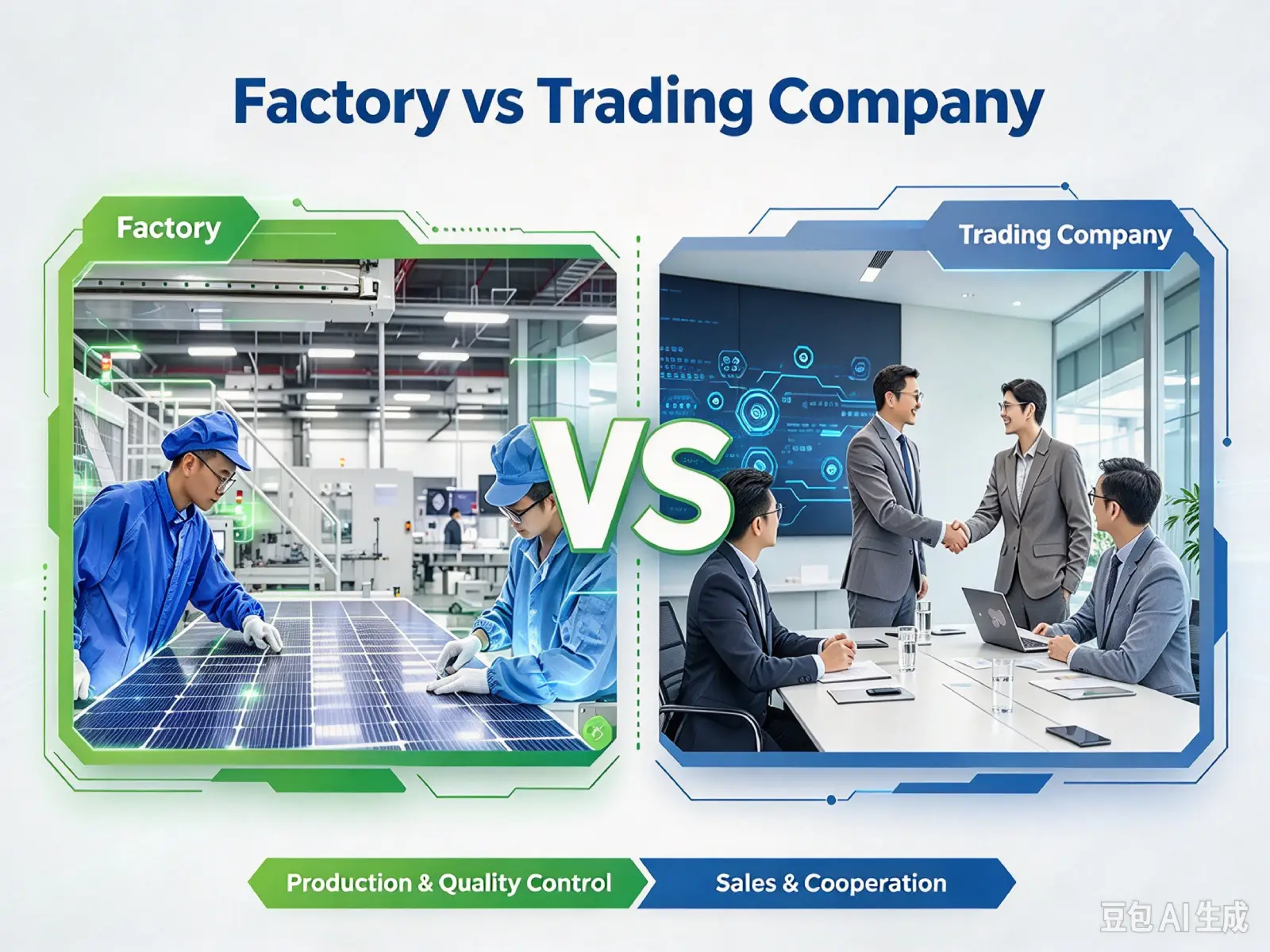
gaotuMost international B2B buyers, solar project contractors, and distributors share one frustrating sourcing pain point: it is nearly impossible to tell genuine flexible solar panel manufacturers apart from trading companies online. Sourcing platforms are saturated with middlemen who use polished factory photos and fake production cases to pose as direct manufacturers. A wrong supplier pick leads to defective bulk orders, project delays, and damaged brand credibility.
Many buyers choose to fly to China for on-site factory audits, but this approach is time-consuming, costly, and unnecessary for initial supplier screening. However, skipping verification and placing full-container orders blindly poses huge risks—especially for flexible PV modules. Unlike rigid glass solar panels designed with high fault tolerance, flexible solar products are extremely sensitive to tiny production errors. Imperfect cell cutting, uneven vacuum lamination, and sloppy quality control will cause invisible micro-cracks, hot spots, and power attenuation, resulting in product failure within just a few months of field operation.
The good news is that professional procurement teams no longer rely on physical visits to vet suppliers. With standardized remote audit protocols, you can accurately verify a Chinese supplier’s legal qualification, real production capacity, and product quality standard entirely from your office. This article shares practical, industry-tested remote audit methods to help you filter out unqualified middlemen and lock in reliable flexible solar manufacturers.
1. Verify Authenticity via Chinese Business License
Website introductions, company brochures, and customer cases can all be falsified, but the official Chinese business license issued by the government cannot. Before requesting samples or virtual factory tours, always ask suppliers for a high-definition full scan of their original business license, and focus on two core verification points instead of trusting their self-claimed English company profile.
Check the Business Scope
This is the fastest way to distinguish a factory from a trading company. If the business scope only includes words such as wholesale, retail, trading, import and export, and consulting, the company is purely a middleman with no independent production capacity.
A genuine flexible solar panel manufacturer’s license must clearly coverproduction, manufacturing, assembly, or processing of solar cells and photovoltaic modules. Only these keywords prove the enterprise is qualified and equipped for formal PV product production.
Match Registered Address with Production Scale
Cross-check the license’s registered address with the supplier’s claimed factory scale. Formal solar lamination and assembly production requires professional industrial parks, high-load power supply systems, and standardized production workshops. If a company’s registered address is located in a downtown commercial office building but claims to own a 10,000-square-meter production base, it is definitely outsourcing all production with no independent workshop or quality control system.
2. Live Video Factory Audit: Expose Fake Trading Companies Completely
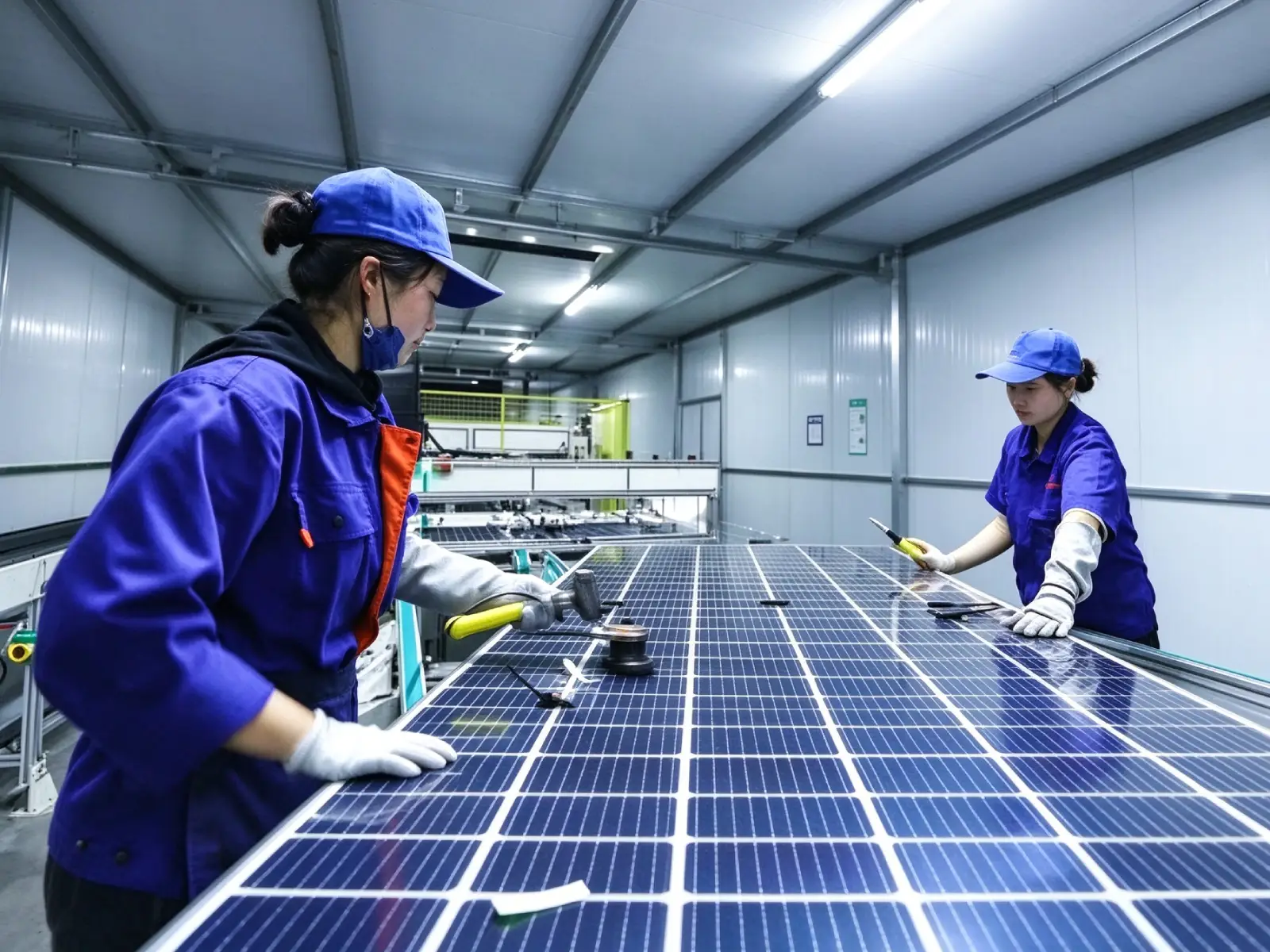
Trading companies are skilled at using high-definition stock images and edited factory footage to disguise their identities. Pre-recorded videos can be forged, but real-time on-site production cannot. Arrange an unedited live video tour via WeChat, Zoom, or Microsoft Teams during China’s official working hours (9:00 AM – 5:00 PM CST). A professional flexible solar panel factory must be able to show you fully operational automated production lines in real time, covering four core processes:
Automatic Laser Slicing → Precision Cell Layout → Multi-Layer Vacuum Lamination → Dual EL Online Testing
Automatic Laser Cell Slicing
High-efficiency monocrystalline cells require precise laser cutting. Low-end factories and middlemen’s cooperative small workshops still adopt manual or mechanical dicing, which leaves tiny edge micro-fractures. These invisible flaws will gradually evolve into power attenuation and dead zones under outdoor thermal stress.
Multi-Layer Vacuum Lamination System
Lamination is the core process that determines the durability of flexible solar panels. Premium ETFE military-grade encapsulation materials can only achieve stable polymer cross-linking under strict constant temperature and high-pressure vacuum environments. During the live audit, ask workers to display real-time data of temperature and pressure gauges. Unstandardized lamination parameters will directly cause panel delamination, water penetration, and scrapping in later use.
Sun Simulator Flashtest Station
Qualified manufacturers test every finished module one by one through sun simulators to detect accurate electrical parameters including Voc, Isc, and Pmax. Each batch of products corresponds to independent serialized test reports, realizing full traceability of product quality. Factories without complete testing procedures often have inconsistent panel power and unqualified product rates.
Dual EL Electroluminescence Testing (Core Verification Standard)
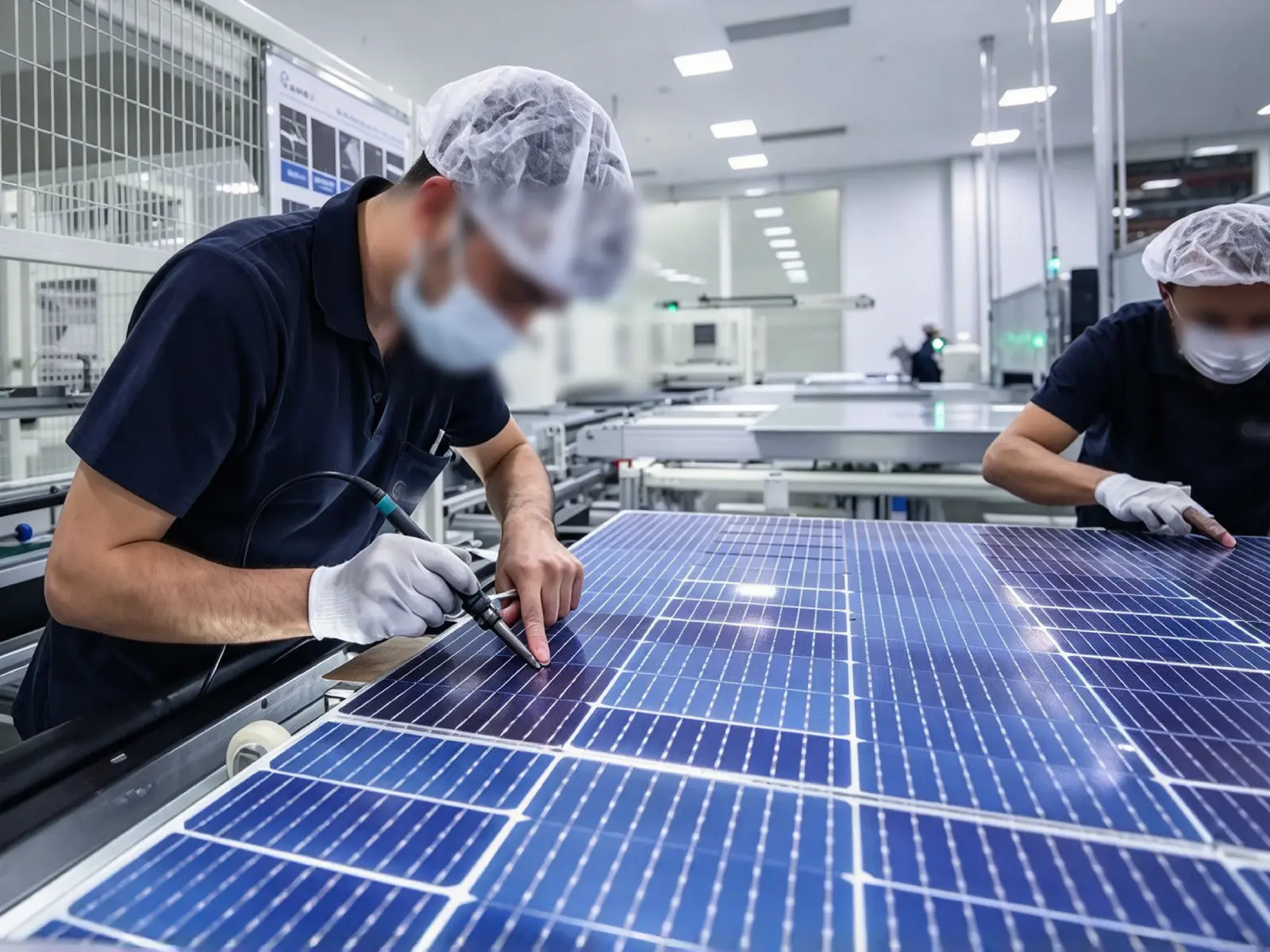
EL testing is the most authoritative detection method for flexible solar panels, equivalent to X-ray inspection for solar modules. It can clearly capture internal silicon chip micro-cracks and hidden defects that are invisible to the naked eye. Never cooperate with suppliers who refuse to display on-site EL testing equipment or cannot provide original EL scanning files of your ordered batch—this is the bottom line of quality control.
3. Gaotu Innovation’s Transparent Factory Standards: Zero Middleman, Zero Hidden Risks
At Gaotu Innovation, we eliminate all supply chain information asymmetry and intermediate links. As a professional flexible solar panel manufacturer with independent production bases and complete automated production lines, we support full-process transparent remote audits for global buyers and engineering teams, with no edited footage or false propaganda.
Our Exclusive Production & Quality Control Standards:
-
Dual inline EL inspection: Every module undergoes strict EL scanning twice, once before encapsulation and once before final packaging, completely eliminating hidden micro-crack defects
-
Verifiable mechanical performance: Live video demonstration of certified static bending radius (≥30cm), ensuring the panels adapt to curved installation scenarios such as RVs, yachts, and building surfaces without damaging the internal cell structure
-
Bifacial power generation verification: Real-time sun simulator testing proves that the translucent rear ETFE layer effectively captures ground reflected light, increasing overall power output by up to 25%
-
Direct R&D docking: Global clients can communicate directly with our professional engineering team to realize customized OEM/ODM solutions including special sizes, customized voltages, and exclusive junction box designs
With self-owned production equipment and complete quality management systems, we strictly follow CE, RoHS, and IEC international industry standards for all products. Different from middlemen who cannot control production quality, we realize factory-direct pricing, low MOQ customized services, and full-process quality controllability. Our ultra-light flexible panels maintain stable structural integrity after repeated bending, solving the common pain points of easy damage and rapid power decay of inferior flexible modules on the market.
Build a Stable & High-Quality Solar Supply Chain
Excellent B2B solar sourcing is not simply chasing the lowest quotation, but finding a manufacturing partner with rigorous production standards and stable quality control. Through business license screening and real-time live video verification of core equipment such as laser slicing machines, vacuum lamination systems, and EL testers, you can efficiently eliminate high-risk middlemen and inferior factories in the early sourcing stage.
If you are preparing RFQ for commercial solar projects or new product launches, a comprehensive understanding of China’s flexible solar manufacturing industry will help you avoid sourcing traps and optimize procurement costs. You can refer to our Ultimate Guide to Choosing a Flexible Solar Panel Supplier in Chinato fully grasp the industry’s genuine supply chain rules.
If you need a free live remote audit of our automated production lines, or want to customize engineering samples according to project requirements, feel free to contact the Gaotu Innovation professional sourcing and engineering team at any time to get targeted project solutions.
Related Posts
How to Import Solar Panels from China Safely: Compliance and Risk Mitigation Guide
Article Abstract Buying wholesale solar panels direct from Chinese factories delivers major cost advantages, yet…

Bulk Price for Foldable Portable Solar Panel: 2026 Wholesale Pricing Guide
Bulk price for foldable portable solar panel is the top search concern for global resellers,…
How to Choose a Reliable Flexible Solar Panel Manufacturer
1. Why Flexible Solar Sourcing Frequently Fails Flexible solar panels have evolved far beyond basic…
Leave a Reply