

Solar Power Knowledge
What Is Home Solar Panel Wholesale? A Business Overview
 Gaotu Innovation
Business Overview · Getting Started
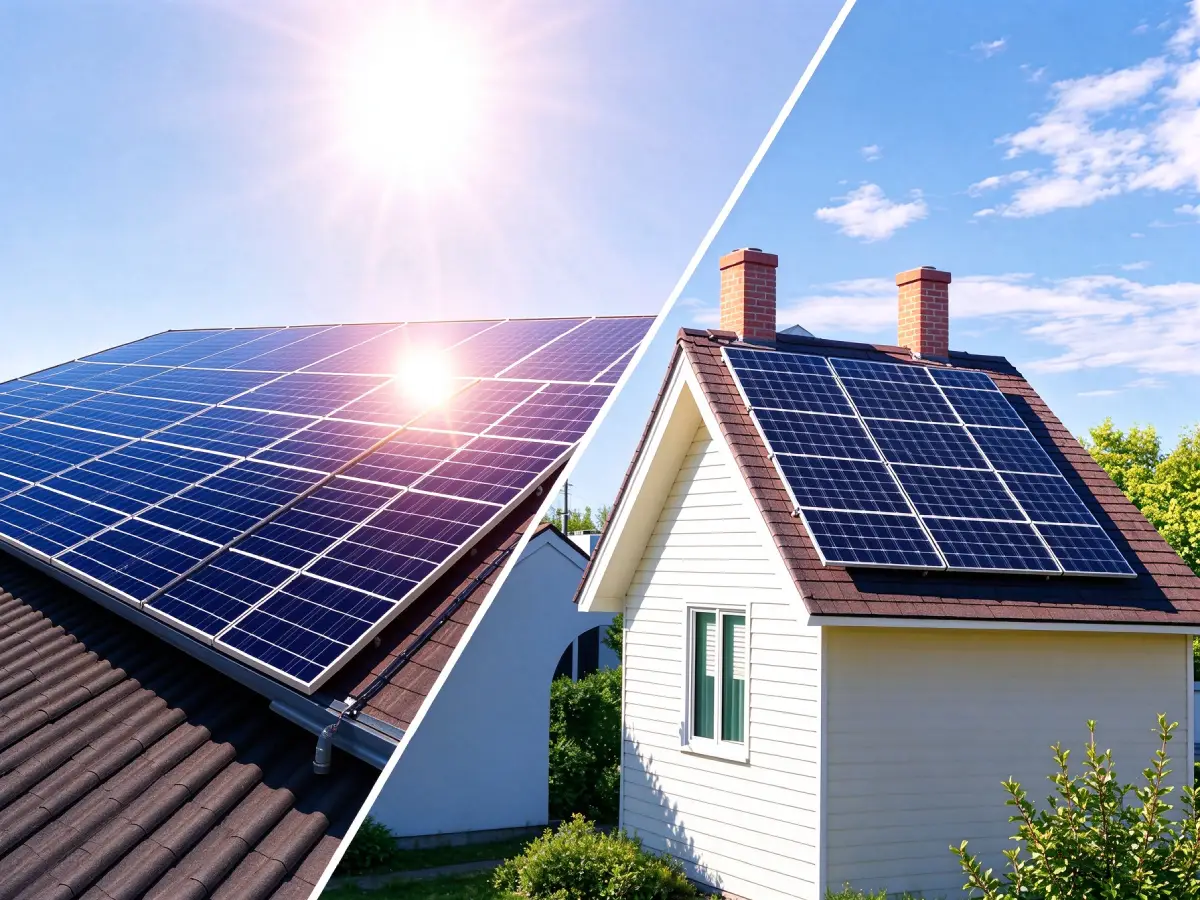
Home solar panel wholesale is the business of buying residential photovoltaic modules in bulk from manufacturers and reselling them to installers, dealers, project developers and online sellers — not to homeowners. The product is the same hardware sold at retail; what changes is the customer, the volume, the documentation, and where the margin comes from.
Short answer
- Wholesale means B2B. Your customer installs or resells; they already know what a solar panel is and will ask about certificates, lead time and price basis.
- Volume is modest at the start. A tray is 30–36 modules, a 40HQ container holds roughly 600, and a first order is usually far below that.
- Margin comes from three places: product spread, attached equipment (mounting, inverters, storage, kits), and service — not from the panel alone.
- It is a documentation business as much as a product business. Certificates, origin files, warranty terms and shipping terms decide whether an order is profitable.
What “Wholesale” Means in This Industry
In most industries, wholesale simply means selling in bulk. In solar it also implies a specific position in the supply chain, with responsibilities that retail does not carry:
- You buy from the manufacturer or its export arm, not from a retail storefront.
- You sell to businesses — installers, EPCs, electrical distributors, marketplace sellers — who resell or deploy.
- You carry the compliance chain. The certificates and test reports you receive are the ones your customers will ask you for.
- You hold inventory risk, at least in a stock-based model: price movement, currency, and slow-moving SKUs are yours.
- You set the commercial terms — Incoterm, payment schedule, warranty pass-through — that determine whether a deal is actually profitable.
A rooftop installer and a wholesaler may sell the same 450 W module in the same city. The installer sells labour and system design to a homeowner; the wholesaler sells availability, documentation and credit terms to that installer. Different business, same product.
The Four Roles in the Chain
Manufacturer
Owns production, holds the certificates, sets MOQ and lead times. Sells to importers and large distributors, and increasingly direct to EPCs.
Importer / distributor
Buys containers, handles customs and duty, holds regional stock, sells in mixed quantities to installers. Where most wholesale margin actually sits.
Installer / EPC
Designs and builds systems. Buys modules, mounting, inverters and storage; cares about lead time and technical support more than cents per watt.
Online seller
Sells small quantities — panels, balcony kits, portable units — through marketplaces or a direct store. Volume is low, support burden is high.
Where the Money Actually Comes From
Panels are a commodity with a thin spread. A wholesale operation that only trades modules is competing on a few percent, and one price move can erase a quarter’s margin. Sustainable revenue comes from four layers:
- Product spread. The difference between your landed cost and your resale price. Real, but thin and exposed to freight, duty and currency.
- Attached equipment. Mounting, wiring, inverters, storage and kits. These carry better margins and make your offer a system rather than a box. The residential module range is designed to be sold this way.
- Service and availability. Local stock, fast replenishment, spare pools for warranty swaps, technical support on string design. Customers pay for not waiting.
- Differentiated segments. Balcony kits, portable off-grid, flexible panels — smaller volumes, far less price pressure. The portable and flexible line is where new entrants usually find their first real margin.
The practical test of a wholesale business is not “what is my price per watt” but “what is my gross margin per order after freight, duty, defects and warranty reserve”.
Three Entry Paths
| Model | Stock distributor | Project / trading |
|---|---|---|
| Capital needed | Higher — inventory and warehouse | Lower — order-driven |
| Margin | Steadier, lower per unit | Lumpier, higher per deal |
| Risk | Price and dead stock | Counterparty and payment |
| Best for | Markets with many small installers | Tender-driven or emerging markets |
| Compliance load | Continuous — stock must always be documented | Per shipment — verified deal by deal |
A third path — marketplace and DTC selling of portable and balcony products — sits outside this table because it is retail, not wholesale. It is a good first business for a small team, and a poor fit for anyone expecting container economics.
What You Need Before the First Order
- A defined customer. “Installers in one region” is a plan; “anyone who buys solar” is not. Your customer decides your SKU mix, credit terms and service level.
- Documented product. Certificate and test reports for the exact model, warranty terms in writing, and the datasheet your customers will forward to their clients.
- A logistics answer. Landed cost per watt, including freight, duty and handling, plus a realistic lead time your customers can build schedules around.
- A trial plan. One tray, not one container, to test packing, labels, flash data and response speed. First-order failures are survivable at 30 panels and fatal at 620.
- Working capital discipline. Deposits, payment terms and warranty reserve. In this trade, cash flow kills more businesses than price competition does.
The wholesale solar panels for home guide covers each of these in more depth, and is the natural starting point if you are building a residential line from scratch.
Four Misconceptions Worth Clearing
- “Wholesale just means cheaper.” It means a different customer with different expectations — including documentation, credit and support you must now provide.
- “You need to buy containers.” No. Many viable distributors start with tray quantities and grow into containers once turnover is proven.
- “Certificates are the factory’s problem.” They are yours the moment you resell. Your customer will ask you, not the factory.
- “Modules are the business.” Modules are the entry ticket. The business is availability, attached equipment, warranty logistics and credit.
Starting a residential wholesale line and not sure which model fits your capital and market? Send us your target region, customer type and first-year volume — we will come back with a product mix, trial order terms and the document set for your market.
Frequently Asked Questions
What is the difference between wholesale and retail solar panels?
Wholesale sells to businesses that install or resell, in commercial quantities and with documentation attached. Retail sells to the end user who needs a system installed. The hardware can be identical; the customer, volume and obligations are not.
How much does it cost to start a solar wholesale business?
It depends on the model. An order-driven trading operation can start with a trial of one tray and grow; a stock distributor needs warehouse capacity, inventory and working capital to cover deposits and payment terms.
Do I need a licence to resell solar panels?
Requirements vary by market. Commonly you need a registered business, compliant product documentation and, in some countries, registration related to import, electrical goods or producer responsibility for disposal. Check the specific rules for your destination.
What is a typical minimum order for wholesale solar panels?
Sample quantities of one or two modules are common, a pallet is usually 30–36 modules, and a 40HQ container holds roughly 600. Actual MOQ depends on whether the item is stock or made to order.
Is solar wholesale a good business to enter now?
It is a harder market than 2023: residential demand has softened in several countries and module prices turned upward in 2026. It remains workable for operators who sell service, attached equipment and differentiated segments rather than pure module trading.
Can I start with balcony kits or portable panels instead of rooftop modules?
Yes, and many new entrants do. Volumes are smaller and unit economics are retail-like, but competition on price is far less intense and the compliance load is lighter than container-scale rooftop distribution.
Related Posts
Portable Solar Panel Bulk Supply
As the global demand for off-grid power solutions continues to surge, portable solar panels have…
Gaotu 200W Portable Foldable Solar Panel | Full Product Introduction
Think of it as a compact, foldable mobile power station that fits neatly inside your…
How to Evaluate a Wholesale Solar Panel Distributor: B2B Sourcing Protocol
Article Summary: Choosing the right wholesale solar panel distributor is far more than chasing low…
Leave a Reply