

Solar Power Knowledge
Residential Solar Panel Wholesale Trends in Europe and the USA for 2026
 Gaotu Innovation

Market Trends · Europe & USA
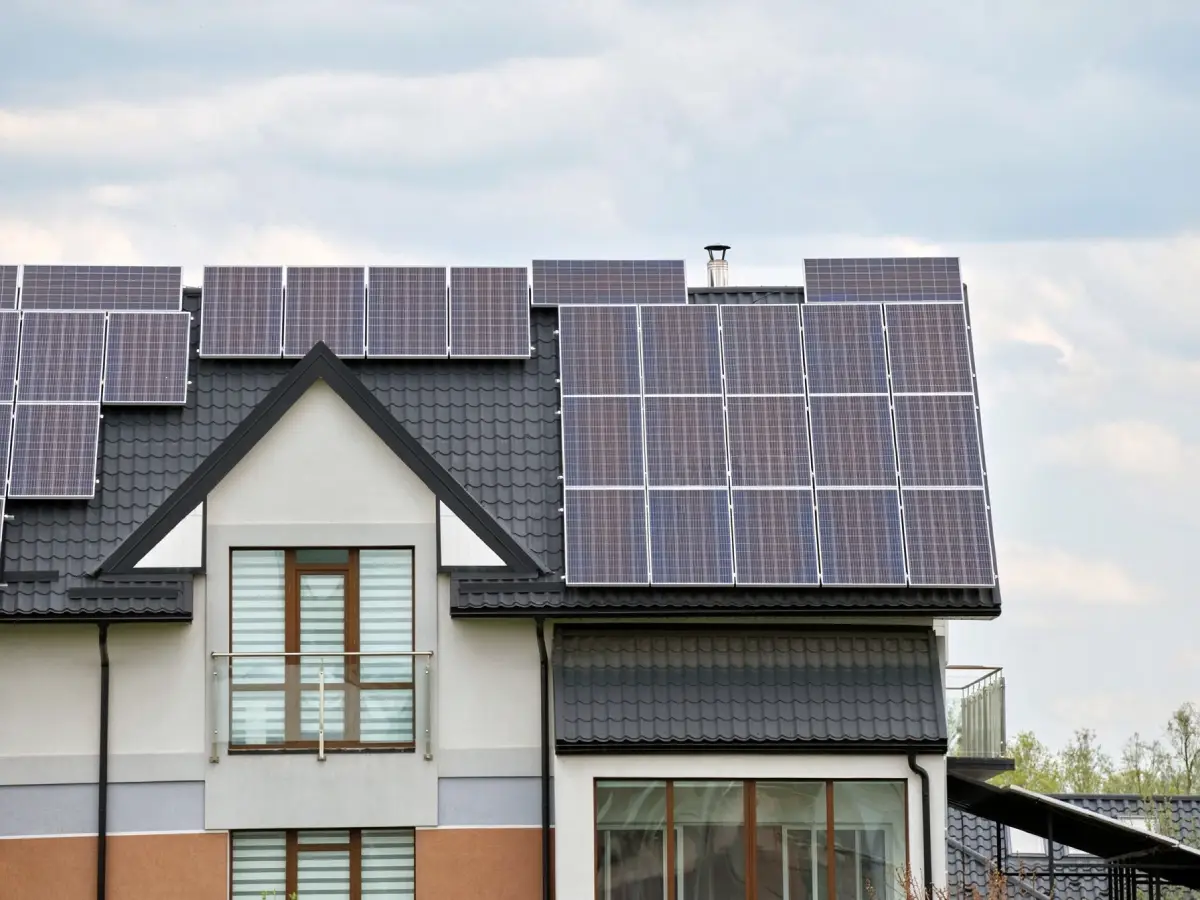
The residential segment is no longer the growth engine of the solar market, and module prices have stopped falling. For wholesale buyers that changes the job: it is less about securing cheap containers and more about matching inventory to a smaller, more service-heavy demand base. This is what the latest market data actually shows, and what it means for your buying plan.
Short answer
- The residential share halved. Rooftop systems fell from 28% of new EU capacity in 2023 to 14% in 2025, while total EU installations contracted for the first time in a decade.
- Policy, not price, caused it. Net metering phase-outs and incentive rollbacks cut demand faster than high interest rates did.
- Module prices turned around. Global module prices rose roughly 26% in the first five months of 2026, ending the 2024–2025 floor.
- What sells now is not a bare panel. Storage, balcony kits, portable off-grid and service attach are carrying the margin that panels no longer do.
The Headline: Residential Shrank Faster Than the Market
The EU installed about 65.1 GW of solar in 2025, a 0.7% decline and the first annual contraction in a decade, according to SolarPower Europe’s EU Market Outlook. Total capacity still crossed 400 GW and met the bloc’s 2025 target — but the composition shifted sharply away from households.
The forecast matters more than the 2025 number: SolarPower Europe expects installations below 62 GW in 2026 and around 60 GW in 2027, which would leave the EU short of its 750 GW 2030 goal. For a distributor, that is not a headline about the energy transition — it is a statement about how much residential volume will be available to sell into.
Europe: Policy Rollback Did What High Prices Could Not
The European slowdown is policy-driven, and the country patterns are unusually clear:
- Netherlands. The end of net metering — confirmed for 1 January 2027 — removed the payback logic that built the country’s per-capita leadership. Its ranking among EU markets has already fallen sharply.
- Italy. Rooftop installations contracted after support schemes were phased out, and the country lost its third-place ranking to France.
- Germany. The decline is attributed less to policy than to lower retail electricity prices and a reduced sense of urgency — yet the plug-in (balcony) segment keeps growing.
- Poland, Austria, Belgium, Hungary. Incentive changes produced steep drops from the 2023 peak.
The commercial read-across is consistent: when export compensation falls, the customer’s economics shift from “sell surplus” to “use it yourself”. That pulls demand toward storage, self-consumption hardware and small plug-in systems — not toward cheaper panels.
United States: Two Policy Events Reset the Sales Model
The US residential segment installed about 4.65 GWdc in 2025, roughly 2% below 2024, with several quarters posting year-over-year declines, according to SEIA and Wood Mackenzie data. Two structural changes explain most of it:
- California’s net billing tariff (NEM 3.0) cut export credits by roughly 75–80% against NEM 2.0. Residential sales in the state fell sharply, and the large share of installs still completing under NEM 2.0 will fade through 2026.
- The federal residential credit (Section 25D) ended after 2025 under the 2025 budget legislation, removing the direct incentive for customer-owned systems.
What survives is a market that sells on rate avoidance, resilience and financing rather than on export income — plus a policy layer that keeps changing. Add the minimum import price rules taking effect in late 2026 and it becomes clear why US buyers are shifting to shorter commitments and more careful origin documentation.
Prices: The 2024 Floor Is Gone
The second half of the story is cost. After two years of decline, module pricing turned in 2026:
- Global module prices rose about 26% in the first five months of 2026 to roughly $0.11/W, even as polysilicon and wafer prices fell, per the National Laboratory of the Rockies data cited in mid-2026 trackers.
- US delivered prices stayed near $0.27/W — a tariff-influenced level that is roughly 2.5 times the global benchmark.
- Europe spot indices put mainstream TOPCon around €0.13/Wp, high-efficiency n-type bifacial near €0.15/Wp, and clearance or low-cost stock near €0.07/Wp.
Two implications follow. First, inventory held at 2025 costs can look cheap or expensive within a quarter, so forward cover becomes a pricing decision rather than a logistics one. Second, the spread between mainstream and high-efficiency product is now wide enough that SKU mix affects margin more than purchase price does.
Europe vs United States at a Glance
| Aspect | Europe | United States |
|---|---|---|
| Demand driver | Retail rate level and self-consumption economics | Rate avoidance, resilience, financing |
| Main policy risk | Net metering and incentive phase-outs by country | Federal credit expiry, state tariffs, import rules |
| Fastest-growing products | Balcony kits, storage add-ons, retrofits | Solar-plus-storage, backup systems, TPO |
| Price benchmark | Roughly €0.13/Wp mainstream TOPCon | Near $0.27/W delivered |
| Documentation burden | CE, IEC reports, country grid rules | UL listings, duty and supply-chain traceability |
| Buying rhythm | Mixed pallets, quick replenishment, warehouse-led | Shorter commitments, tighter origin checks |
What This Means for Wholesale Buyers
- Buy smaller and more often. With prices rising after a floor, and demand thinner than 2023, long forward positions are a bet on someone else’s forecast. Two or three shipments a year beat one container held for six months.
- Shift SKU weight toward attach products. Storage-ready inverters, mounting, wiring and small plug-in systems carry more margin per euro of revenue than modules do. The residential module range still anchors the sale, but it is no longer the profit centre.
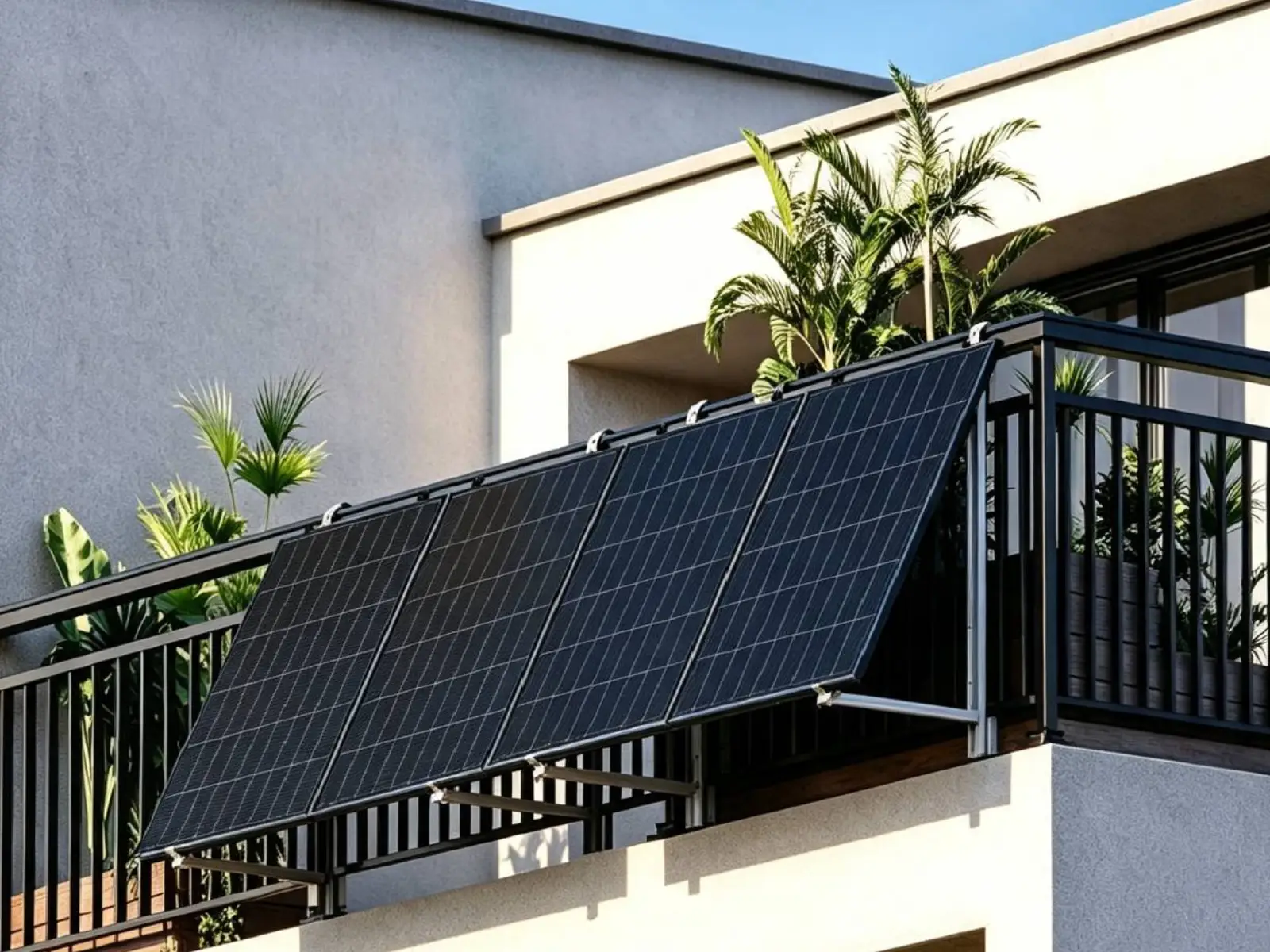
- Treat balcony and portable as the growth line. European plug-in demand kept growing even where rooftop collapsed — a rare counter-cyclical segment, and one where product design matters more than cents per watt. See the portable and flexible range for format options.
- Price the compliance cost into the quote. On the US side, origin documentation and duty exposure now sit in the same decision as price. On the EU side, country-by-country grid rules still decide whether a system can be commissioned.
Five Indicators to Watch Over the Next Four Quarters
- Dutch installation volumes after 1 January 2027. The first clean read on what happens when export compensation disappears entirely.
- German plug-in segment growth. If balcony demand holds while rooftop falls, it confirms the shift to self-consumption products across Europe.
- California’s NEM 2.0 pipeline running dry. Watch quarterly installs for the drop that follows the legacy backlog.
- Module price direction in 2027 procurement. Whether the 2026 increase holds or reverses decides inventory strategy.
- US import rule implementation. Minimum import price mechanics and documentation requirements will reprice landed cost, not just FOB.
Planning next year’s buy against a thinner market? Send us your market, expected volume and product mix — we will return a shipment cadence, a price basis and the documents your market requires.
Frequently Asked Questions
Is the residential solar market shrinking?
In Europe, yes — rooftop’s share of new EU capacity halved from 28% in 2023 to 14% in 2025, and total installations contracted for the first time in a decade. In the US, the residential segment fell about 2% in 2025. Both markets remain large, but they are no longer growing on their own momentum.
Why did European rooftop demand fall so fast?
Policy, mainly. Net metering phase-outs and incentive rollbacks in the Netherlands, Italy, Poland and others removed the payback case. Lower retail electricity prices and higher interest rates made postponing easier.
Are solar panel prices going up in 2026?
Yes, at the global level. Module prices rose roughly 26% in the first five months of 2026 to about $0.11/W, while polysilicon and wafer prices fell. US delivered prices stayed near $0.27/W.
What product is still growing in residential solar?
Storage-attached systems, balcony and plug-in kits, and portable off-grid products. In Germany, plug-in solar kept expanding while rooftop declined — a signal of where self-consumption demand is heading.
Should a distributor hold more or less inventory in this market?
Less depth, more frequency. With prices rising off a floor and demand thinner than the 2023 peak, smaller and more frequent shipments reduce both price risk and dead stock.
How does the US net billing tariff affect wholesalers?
NEM 3.0 cut export credits by roughly 75–80% and shifted system design toward storage and self-consumption. Wholesale demand moves from bare modules toward storage-ready packages and higher-efficiency modules that fit smaller arrays.
Related Reading
- Wholesale Solar Panels for Home — Full Buying Guide
- Residential Solar Panel Range for Distributors & Installers
- Portable & Flexible Solar Panels — OEM / ODM
- Talk to Our Export Team
Data sources: SolarPower Europe EU Market Outlook 2025–2030; SEIA / Wood Mackenzie US Solar Market Insight; pvXchange spot index; National Laboratory of the Rockies pricing data. Figures are market aggregates and change with each release — check the latest edition before committing to a buying plan.
Related Posts

Hidden Costs to Avoid When Buying Solar Panels in Bulk
Article Summary Many B2B solar buyers only compare factory FOB per-watt pricing and overlook a…
How to Choose Balcony Solar System
Balcony solar systems are hands down one of the best renewable energy options for apartment…
Solar Panel Wholesale: Factory-Direct Pricing Tiers & Container Loading
Summary / Article Summary Wholesale solar panel pricing is not automatic volume discounting. This guide…


Leave a Reply