

Solar Power Knowledge
How to Choose a Reliable Wholesale Solar Panel Supplier for Home Systems
 Gaotu Innovation

Most supplier problems are not visible in a quotation. They show up four months later, when a container arrives with the wrong junction box, when a warranty claim goes unanswered, or when the certificate you were shown turns out to belong to a factory that never touched your order. The way to avoid that is not intuition — it is a fixed set of questions asked in the same order, every time, before you commit.
First, Know Which Type of Supplier You Are Buying From
Three types show up in almost every search, and they carry different risks. You are not looking for a “best” type — you are looking for clarity about who actually owes you what.
Factory
Owns the line, holds the certificates, can customise. Best for repeat volume and private label. Downside: narrower product range, less flexible on small mixed orders.
Trading company
Sells across several factories, good at mixed containers and paperwork. Downside: warranty passes through them, so their survival matters as much as the factory’s.
Marketplace seller
Fastest to start, lowest entry cost. Downside: no control over production, no technical support, and the listing may change supplier between orders.
Whichever it is, one question settles most of it: who signs the warranty, and can that party still exist in five years? A ten-year performance warranty from an unknown trading entity is a marketing line, not an asset.
The Six Things That Actually Decide Whether They Can Fulfil You
Sales talk is easy to generate. These six are not, because each one requires the supplier to expose something concrete:
- Certificate holder identity. Ask for the certificate number and look it up yourself. If the holder is not the entity quoting you, ask for the factory audit and OEM agreement that connects them. Our wholesale solar panels for home guide covers the document set in more detail.
- Production capacity and current lead time. Not the maximum capacity on the slide — the lead time they will commit to in writing for your quantity, this quarter.
- Range depth where it matters. A supplier with only standard rooftop modules cannot help you differentiate. Ask what else they make: bifacial, balcony kits, portable off-grid, flexible panels.
- Quality evidence from a real batch. Flash test data and EL images from a production run, not from a lab sample.
- Stock position and shipping terms. Overseas warehouse availability changes your delivery promise to installers more than the factory’s monthly output does.
- Customisation willingness. Private label, packaging, datasheet localisation, frame or connector changes. The answer is usually “yes, with a MOQ” — you want to hear the number, not the yes.
What to Look At in a Factory Audit, Even a Video One
Most buyers never visit. A 40-minute video call can still reveal a great deal, if you ask to see specific things rather than a general tour:
- The EL tester, running. Ask them to test a module while the camera is on it. A working line has this equipment in use, not stored in a corner.
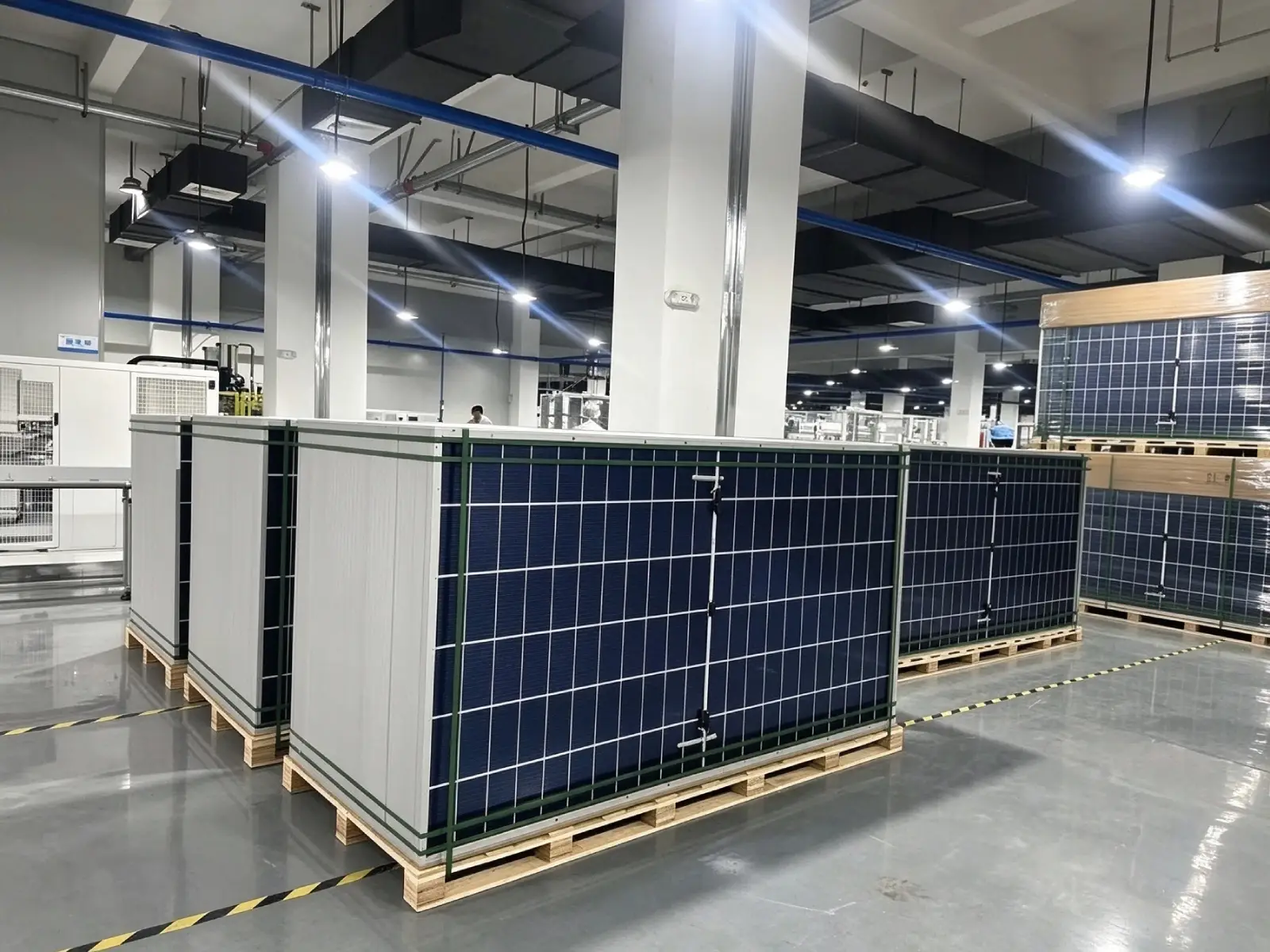
- The lamination and framing stations. These are the bottleneck steps; a factory that outsources them is an assembler, not a manufacturer.
- Packing area and pallet standards. Where your cartons get strapped determines how much breakage you eat on arrival.
- Warehouse with finished goods. Finished stock means they ship from inventory, which is the difference between a 15-day and a 45-day promise.
If a supplier refuses a video walk-through entirely, that is itself the answer. It does not prove fraud, but it does tell you the relationship will be document-only.
How to Read a Quote Without Getting Trapped by the Price
Two quotes that differ by 8% are rarely about the same product. Normalise them before comparing:
- Incoterm. EXW, FOB, CIF and DDP produce very different landed costs. Convert everything to landed cost per watt at your warehouse.
- What is included. Pallet, corner protection, connector type, cable length, junction box, manual. Accessories are where the cheap quote hides.
- Power tolerance and binning. A 0/+5W bin and a ±3% bin are not the same product, even at the same nominal wattage.
- Payment terms. 30/70 against 100% prepayment is a financing cost. Price it in.
- Warranty structure. Product warranty years, performance curve, who administers claims, and whether shipping for replacements is included.
A supplier that cannot produce a line-by-line breakdown is quoting a number, not an offer.
Trial Orders: The Cheapest Risk Test You Can Run
Never let the first order be the full container. A tray-level trial — 30 to 36 modules, or a handful of kit sets — tests the things a catalogue cannot: packing quality, labelling accuracy, actual flash data, response speed when something is wrong, and whether the invoice matches the quote.
Treat the trial as a scored exercise, not a formality. If they are slow or vague on a 30-panel order, they will be worse on 620. Our residential module range is structured so that trial quantities and full containers come from the same line — that is the point of a trial.
A Ten-Point Scorecard You Can Reuse
Score each item 0–2 and require 15 or more before a deposit. It is deliberately blunt, because gut feel is what gets buyers into trouble.
- Certificate number verified on the issuer’s database — 2 points
- Certificate holder is the producing entity, or linkage documented — 2
- Written lead time for your quantity, this quarter — 2
- Flash test and EL data from a real batch — 2
- Product range beyond standard rooftop modules — 1
- Overseas warehouse or local stock option — 1
- Full cost breakdown, including accessories — 1
- Warranty administrator named, claims process in writing — 2
- Video audit completed without excuses — 1
- Trial order accepted at tray quantity — 2
A supplier who answers technical questions precisely, admits what they do not make, and sends a flawed batch report without being asked is usually a better partner than one with a perfect brochure.
Red Flags Worth Ending the Conversation
- Price far below the market with no explanation. Either the binning is weak, the cells are downgraded, or the certificate does not cover what is shipping.
- Container-only, no trial orders. A supplier who will not sell 30 panels is telling you they have no finished stock and no interest in your first year.
- Warranty promised verbally, never in the contract. If the terms are not in the sales contract, they do not exist.
- 100% prepayment to a personal account or a third-party company name. Payment routing is the single most common point of loss in this trade.
Want to run this scorecard against a real supplier? Send us your target market, product mix and expected annual volume — we will reply with the certificate set, lead time and trial order terms, and you can score us the same way.
Frequently Asked Questions
Is it better to buy from a factory or a trading company?
A factory gives you production control and certificate traceability; a trading company gives you product breadth and easier mixed containers. The deciding factor is who administers the warranty and whether that party is stable enough to honour it for a decade.
How many panels should a first trial order be?
A tray is usually 30 to 36 modules — enough to test packing, labelling, flash data and response speed, small enough that a failure is survivable. Reserve full containers for suppliers who have already passed a trial.
What is the fastest way to verify a supplier’s certificate?
Look the certificate number up in the issuer’s public database — UL, TÜV, Intertek and others publish searchable records. Then confirm the holder name matches the entity that will produce your order.
Should I pay a deposit before seeing a production batch?
A deposit is normal once terms and certificates are verified, but ask for flash test data and EL images from the batch before shipment release, with the balance tied to that inspection.
Does a lower price per watt always mean a worse panel?
Not automatically, but a gap of more than a few percent usually comes from somewhere: weaker power binning, thinner frames, lighter packaging, or cells that are not covered by the certificate being shown.
Related Posts

Why Solar Panels Never Reach Their Rated Wattage in Daily Use
Many solar panel users run into the same issue: their 400-watt solar panel only outputs…
Solar Panel Distributor vs. Factory: Which Saves More at 1MW Volume?
Article Summary At 1MW, procurement sits right on the economic dividing line between solar panel…

Solar Panel and Portable Power Station Compatibility Guide
Core Overview: Most issues of incompatibility, charging failure, slow charging, and equipment burnout between solar…


Leave a Reply