

Solar Power Knowledge
Solar Panel Price Per Watt for Wholesale Buyers: What Actually Drives the Number
 Gaotu Innovation
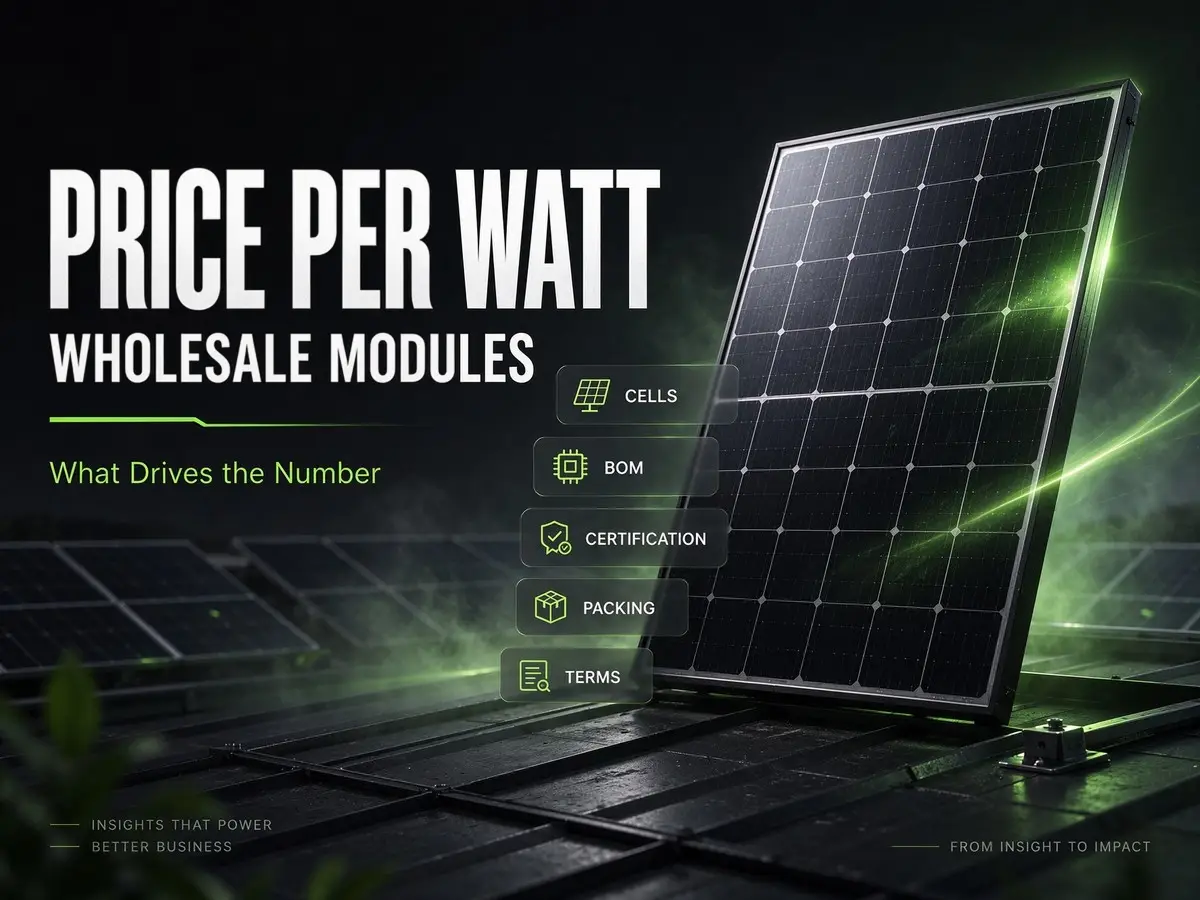
Two distributors ask for a price on the same 580 W rooftop module in the same week and receive quotes that differ by eighteen percent. Neither supplier is lying. The gap comes from five structural variables — cell grade, bill of materials, certification amortisation, packing, and payment terms — plus whatever the freight market did since the last quote. This guide breaks the per-watt number into its parts so you can compare quotes that were never meant to be comparable.
- A per-watt price is a bundle, not a benchmark. It contains cells, glass, frame, junction box, conversion cost, certification amortisation, packing and the supplier’s margin — all of which move independently.
- Wattage is not the price driver; cell grade and BOM are. Two 580 W modules can carry cells binned two grades apart and differ by ten percent with no visible external change.
- Compare landed cost per watt, not FOB per watt. Freight, duty and port charges can swing the ranking of two quotes by more than the module difference.
- The cheapest quote is usually the one with the shortest warranty paper trail. Price and warranty length move in opposite directions more often than suppliers admit.
What a Per-Watt Price Actually Contains
Strip a module price down and you find seven layers. Knowing which layer a supplier is cutting tells you what you are actually buying.
| Layer | Behaviour | What cutting it looks like |
|---|---|---|
| Cells | Largest single cost; grade and binning decide efficiency | Mixed-grade or re-binned cells at the same nameplate wattage |
| Glass, encapsulant, backsheet | Thickness, coating, supplier | Thinner glass, cheaper EVA, no anti-reflective coating |
| Frame and junction box | Load rating, IP class, diode quality | Lighter frame profile, lower IP rating, fewer bypass diodes |
| Conversion and QC | Automation level, EL inspection rate, flash testing | Sampled EL instead of full inspection, looser power tolerance |
| Certification amortisation | Fixed cost spread across annual volume | Certificates for a different model or factory being shown as yours |
| Packing | Carton strength, pallet type, corner protection | Bulk loading with no corner protection — cheaper freight, higher breakage |
| Supplier margin and terms | Volume, payment terms, FX exposure | A discount that is really a shorter warranty or a longer lead time |
Because cells dominate the stack, the fastest way to move a price is to move cell quality — not to redesign the module. That is why a quotation that is eight to twelve percent below the rest of the market is almost never a better deal; it is a different bill of materials with the same label.
Why Two Quotes for the Same Wattage Differ
- Cell grade. Grade A cells from a consistent supplier versus blended or re-binned cells can differ several percent in price and much more in field yield. Ask for the cell supplier and the binning rule in writing.
- BOM transparency. A supplier who can name glass thickness, encapsulant type and junction box rating is quoting a product; one who cannot is quoting a wattage.
- Certification scope. Holding a listing for the exact model and factory costs real money. Suppliers who reuse another model’s certificate price lower and hand you a compliance risk.
- Packing method. Bulk versus palletised changes both the container count and the damage rate — and therefore the true cost per delivered watt.
- Payment terms. Thirty percent deposit against balance on copy of documents prices differently from a 90-day letter of credit. The financing cost is hidden in the unit price, not shown as a line.
- Quote date. Polysilicon, cell and freight markets move. A quote without a validity window is a snapshot being presented as a commitment.
The Four Price Bands You Will See
| Band | What you are buying | Sells to |
|---|---|---|
| Premium certified | Full listing for the exact model, tight power tolerance, full EL inspection, long warranty paper trail | Installers selling into incentive or utility-connected markets |
| Mainstream tier | Standard listing, standard tolerance, sampled inspection | The bulk of residential resale in most markets |
| Value band | Older platform, thinner documentation, sometimes a shorter product warranty | Price-led projects, replacement stock, non-incentive markets |
| Off-spec | Cosmetic seconds, downgraded power class, no consistent traceability | Not a residential resale product — expect returns |
Most resellers should live in the mainstream band and use the premium band for a flagship SKU. The value band is viable only when you can absorb a shorter warranty without promising more than you have — the mechanics of that promise are covered in our warranty terms guide.
Per Watt Versus Per Module: The Trap
Suppliers quote per module and invoice per watt, or the reverse. It is worth doing the division yourself every time, because higher wattage does not automatically mean a lower cost per watt. A 580 W module with a larger frame and heavier glass may cost more per watt than a 540 W module in the same platform, while taking fewer units per pallet and adding handling cost.
Two checks kill most of these errors:
- Divide the module price by its actual flash-tested wattage, not the nameplate class. A module sold as 580 W that flashes at 578 W is a different number.
- Divide the container total by the delivered watts, after weighing packing method and expected breakage. A cheaper per-watt quote with bulk loading and no corner protection can land more expensive per intact watt.
This is the same principle that governs wattage selection itself — rooftop installers buy the wattage that fits their racking and string windows, not the highest number on the datasheet. Our article on which residential wattage to stock covers that decision in detail.
What Moves the Number Between Quotes
- Upstream cell and wafer prices. Module prices follow cell prices with a lag of weeks; a rise upstream shows up as shorter quote validity and firmer lead times before the price itself changes.
- Freight. Ocean rates are volatile and quote validity is often only weeks. A supplier absorbing freight into a DDP number is carrying a risk they will reprice later.
- Exchange rate. A euro-denominated quote and a dollar-denominated cost base create a margin gap that appears in your invoice, not theirs.
- Trade measures. Origin and tariff treatment can change the effective price by more than any negotiation lever. Verify the applicable measures rather than taking a supplier’s summary.
- Seasonality. Q4 rush orders and pre-holiday shipping windows price higher than Q1 planning volumes on the same product.
How to Compare Quotes Fairly
Normalise every quote onto one sheet before you decide anything. Six fields are enough to expose most differences:
- Same Incoterm and named place. Otherwise you are comparing a factory gate price with a delivered price.
- Same wattage class and flash tolerance. Ask for the tolerance band, not just the class.
- Same certification scope. Model and factory must match the certificate, not merely the brand on it.
- Same packing method. Bulk or palletised, corner protection or not, modules per container.
- Same warranty back-to-back terms. Product and performance years, plus who pays replacement freight.
- Same payment terms and quote validity. Deposit ratio, instrument, and the date the price expires.
Then convert everything to landed cost per delivered watt. The freight and duty side of that calculation is set out in our guide to sourcing wholesale solar panels for home, and the volume thresholds that change the fixed-cost picture are covered in the MOQ guide.
Negotiation Levers That Actually Move Price
- Volume commitment, not volume intention. A twelve-month frame agreement with quarterly call-offs prices better than a single container order, because it removes the supplier’s demand risk.
- Mixed container. Three wattages in one container reduces the supplier’s inventory fragmentation and often earns a better blended rate than three small orders.
- Payment terms. A faster instrument with a smaller deposit is worth more to a supplier than a longer credit line; both are levers on price.
- Freight control. Taking freight in-house on FOB terms lets you capture the margin the supplier was building into DDP — and see the real rate.
- Label-only private label. Branding with stickers and inserts avoids packaging tooling cost while still building a brand. Printed cartons wait until volume justifies the plates.
- Specification discipline. Adding a special frame, connector or junction box to a standard platform reopens certification and raises cost. Stay on standard platforms as long as the market allows.
Price Red Flags
- Deep discount, unchanged paperwork. If price falls but the warranty, certificate scope and packing stay vague, the discount came from somewhere you cannot see.
- No validity date. A price with no expiry is a conversation starter, not a quote.
- Per-module price with no wattage basis. Without a flash tolerance and a clear class, the per-watt figure is decorative.
- Warranty and price moving together upward. Extremely cheap and a 30-year promise in the same document is the most common false comfort in this category.
Frequently Asked Questions
What is a normal wholesale price per watt for home modules?
It depends on origin, certification scope, cell grade and freight lane, and it moves through the year. Rather than anchoring on a single figure, ask three suppliers for the same specification and compare landed cost per delivered watt — that comparison is stable even when the market is not.
Why is one supplier ten percent cheaper?
Usually cell grade, certificate scope, packing method, payment terms or quote age. Ask specifically which of those is different, and require the answer in writing.
Should I buy on FOB or DDP to get the best price?
FOB usually gives the truest cost picture if you have a broker; DDP gives a single number but hides the freight and tax components you are paying for.
Does a higher wattage module always cost less per watt?
No. Larger frames, heavier glass and fewer units per pallet can raise the per-watt and per-handling cost. Check the container total rather than the module price.
How long should a wholesale quote stay valid?
Long enough to cover your customer’s decision but short enough to reflect current cell and freight markets. Ask for the validity window explicitly and treat anything unstated as a snapshot.
Want a like-for-like sheet for three wattages with landed cost built in? Send your destination port, target wattage and volume — our export team will return a comparison rather than a single number. Talk to the GTPOW export team.
Related Posts

Wholesale Solar Panels in 2026: A Buyer's Guide to Real Wholesale Pricing
Introduction If you are searching for wholesale solar panels, you have probably already seen prices…

Portable Solar Panels Factory: The B2B Guide to OEM & ODM Manufacturing
Quick Summary: If you are managing an outdoor brand, an emergency power station line, or…
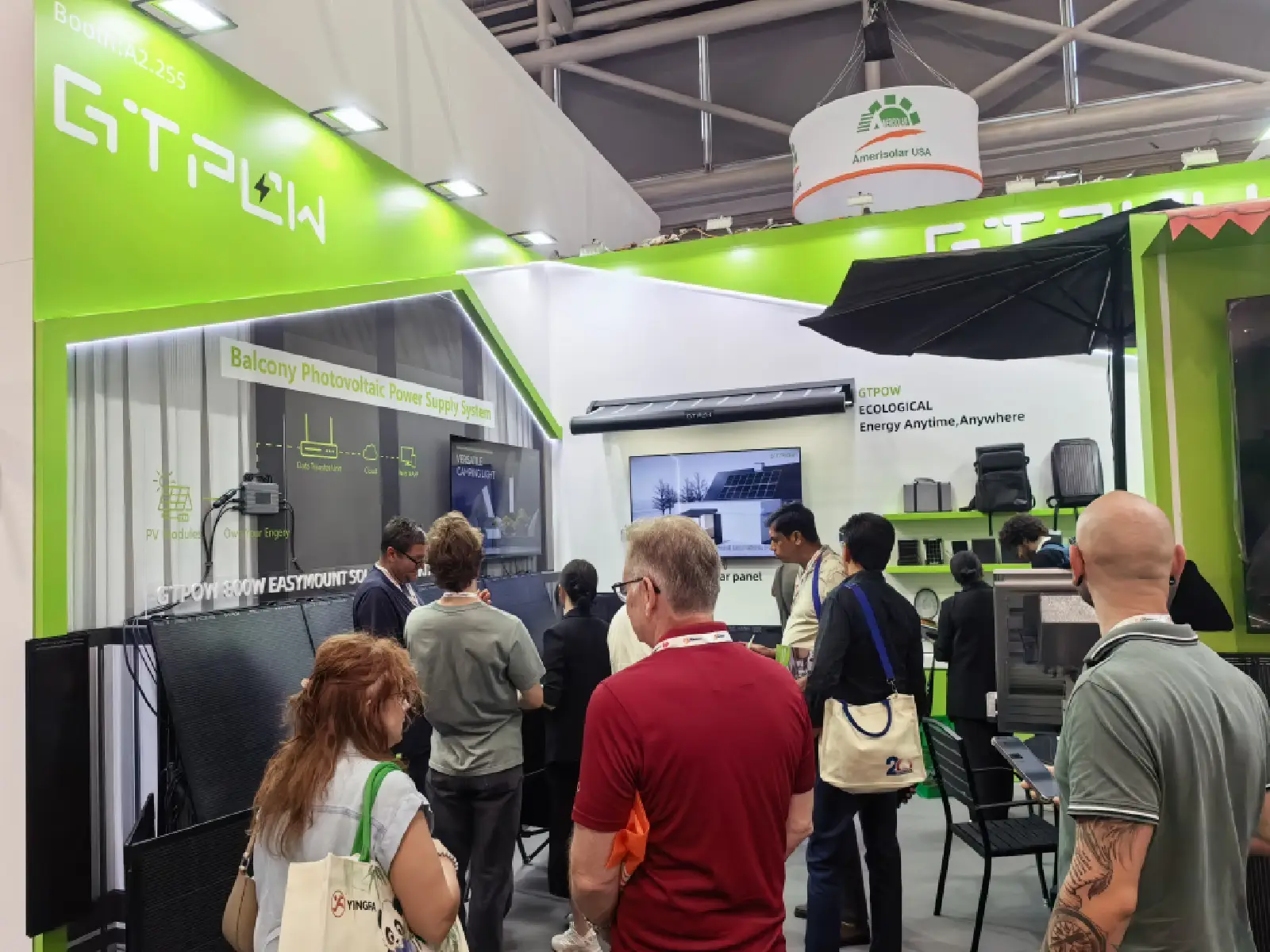
Gaotu Innovation Debuts at The smarter E Europe to Expand European Green Energy Layout
The European Smart Energy Show has wrapped up with great success! GTPOW made a prominent…


Leave a Reply