

Solar Power Knowledge
Balcony Solar Regulations in Germany & UK — A Distributor’s Guide to Staying Out of Trouble (2026)
 gaotu
gaotu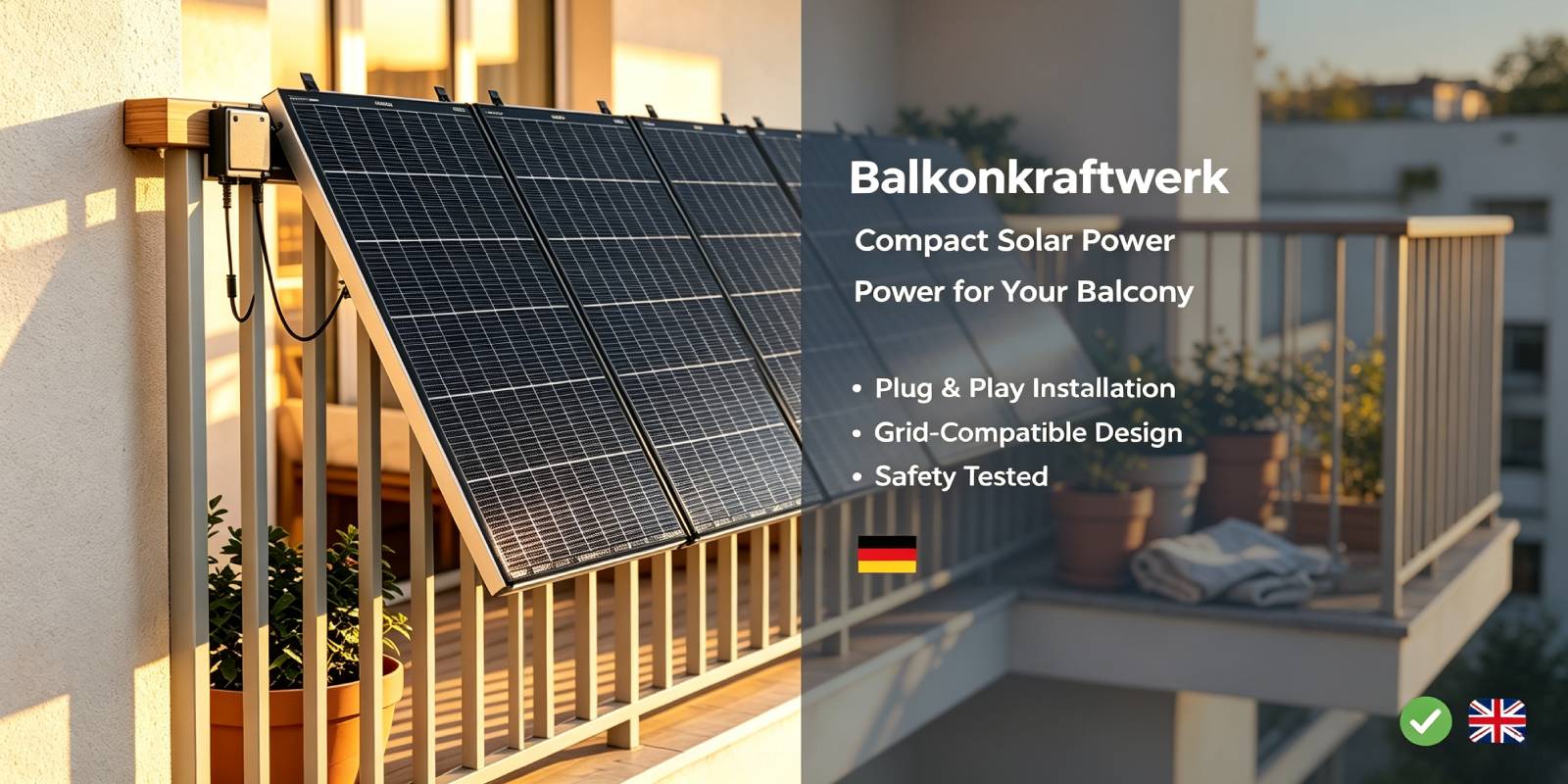
If you’re sourcing balcony solar kits for the German or UK market, getting the regulations wrong isn’t a minor issue. It’s the difference between a container that clears customs and sells through, and stock that just sits in a warehouse. It’s not a product quality problem — it’s a compliance problem.
This guide is for distributors and wholesale buyers. It covers two markets only: Germany and the UK. One is mature, the other just opened up. If you’re new to this category, start with our balcony solar kits for wholesale overview first.
Germany: Clear Rules, Just Follow Them
Germany is the benchmark market for balcony solar. Over 1.15 million units are already up and running, and things got a lot simpler after the Solarpaket I came into effect.
The 800W Inverter Limit
German law caps the inverter AC output at 800VA. This is the hard number for product compliance and grid connection. Panel capacity can be higher — up to 2,000Wp — as long as the inverter stays within 800VA.
For distributors, the sweet spot for Germany is an 820Wp module setup paired with an 800W microinverter. Max out the solar harvest without crossing the legal line.
DIN VDE V 0126-95: The Product Standard You Have to Meet
The mandatory product standard for plug-in solar in Germany is DIN VDE V 0126-95, effective December 2025. Note that it applies to the complete system, not individual components.
Here’s what distributors need to confirm with their factory:
-
Native 800W inverter output. Inverters where the end user can bump up the output via software are no longer allowed for new installations.
-
Schuko plugs are now formally accepted. The Wieland connector is no longer mandatory. That saves end users €150–200 in installation costs right off the bat.
-
Complete system testing. This standard is the basis for type testing and the manufacturer’s declaration of conformity.
Registration: Simplified, But Still Required
Every balcony solar system has to be registered in the Marktstammdatenregister (MaStR). After Solarpaket I, systems under 800W with up to 2,000Wp panel power no longer need separate notification to the grid operator.
For distributors, this means your retail partners can simply tell end customers: “Register online within 30 days, and you’re done.”
Tenant Rights: The Real Demand Driver
After Solarpaket I, balcony solar is classified as a “privileged measure” under German tenancy law. Landlords can’t unreasonably refuse installation.
55% of people in Germany rent their homes. What does that number mean? The balcony is the only “roof” tenants can actually manage themselves. The demand is structural, not a fad.
UK: The New Market — Rules Are Still in Transition
The UK legalized plug-in solar on August 27, 2026, covering England, Scotland, and Wales. Northern Ireland is expected to follow.
This is a brand-new market. The regulatory framework is still transitional.
The 800W Cap — What It Actually Means
UK regulations allow plug-in microgenerators with a maximum output not exceeding 800 watts. They connect through a standard BS 1363 plug and socket.
The government estimates each kit can provide up to 20% of an average home’s electricity use, saving households around £110 a year.
Battery Storage Is Currently Excluded
Here’s a key difference from Germany: the UK’s first-phase framework does not include battery storage. The regulations define a plug-in microgenerator as a device that generates electricity from sunlight and connects via a standard plug. Battery storage is seen as having distinct safety and grid-management concerns that need a separate framework.So here’s the straight advice for distributors: don’t bundle battery storage into your UK SKU in 2026. If you have a storage-integrated product, it won’t qualify for the simplified plug-in route. For the German market, however, all-in-one balcony solar storage is already the fastest-growing segment.
So here’s the straight advice for distributors: don’t bundle battery storage into your UK SKU in 2026. If you have a storage-integrated product, it won’t qualify for the simplified plug-in route.
The Interim Product Specification: Your Compliance Checklist
Germany has a mature DIN standard. The UK currently uses an Interim Product Specification. All plug-in solar devices supplied for UK use must comply with it.
The specification covers:
-
Electrical design and British plug requirements
-
Mounting systems
-
Fire protection
-
Labelling requirements for compliant products
Before the law changed, the UK ran an independent electrical safety study that tested plug-in solar products compliant with German standards under UK domestic wiring conditions. The conclusion: compliant products can be safely connected to UK wiring — provided minimum product standards are met.
Planning: England Is Simpler Than Scotland and Wales
In England, permitted development changes mean most plug-in solar installations don’t need planning permission. Scotland and Wales have their own planning regimes and haven’t introduced equivalent changes yet. Northern Ireland is different again and hasn’t legalized plug-in solar at all.
For distributors, this means England is your primary launch market. If you’re selling into Scotland or Wales, have your retail partners remind customers to check local planning requirements first.
Retailers Are Already Moving
Amazon, Argos, Currys, Wickes, B&Q, and Lidl have all committed to stocking plug-in solar panels. This isn’t a niche product for specialist installers anymore — it’s heading for high street shelves.
What This Means for Your Sourcing Strategy
| Germany | United Kingdom | |
|---|---|---|
| Regulatory status | Mature, stable | Transitional, new |
| Product standard | DIN VDE V 0126-95 | Interim Product Specification |
| Inverter limit | 800VA | 800W |
| Panel capacity limit | Up to 2,000Wp | Not specified in legislation |
| Battery storage | Permitted (separate requirements apply) | Excluded from first phase |
| Plug type | Schuko accepted | BS 1363 |
| Registration | MaStR (online) | UK Plug-In Solar Registration portal |
| Tenant rights | Privileged measure, strong protection | Landlord consent may be required |
The bottom line in plain English: If you’re sourcing for both markets, you need two compliance packs, not one. A CE mark for Germany won’t automatically satisfy the UK’s Interim Product Specification. Budget your certification costs for two markets.And once compliance is sorted, make sure the kit doesn’t come back — see our guide on how to reduce balcony solar kit returns.
This guide is for B2B sourcing decisions and does not constitute legal advice. Buyers should confirm local regulations with qualified professionals for their specific product configurations.
About Gaotu Innovation
Gaotu Innovation is an innovative enterprise deeply engaged in the photovoltaic new energy sector. We supply high-quality solar modules, balcony PV systems, portable solar power stations, flexible solar panels, as well as ODM/OEM customization services for global markets. Committed to technological innovation and continuous product performance optimization, we deliver reliable, cost-effective green energy solutions for households, RVs, outdoor applications and commercial clients.
Related Posts

Monocrystalline Portable Solar Panel Factory: Premium Efficient & Waterproof Solar Panels for Global Off-Grid Use
1. Why Monocrystalline Portable Solar Panels Are Dominating the Global Market With the rapid growth…
The Wholesale Off-Grid Power Backpack for Outdoor & Daily Use — GTPOW 13W Solar Backpack
If you’re an outdoor enthusiast, frequent traveler, or daily commuter, you’ve definitely faced this annoying…
How to Clean Solar Panels: A Safe and Effective Guide (2026)
1. Why Cleaning Solar Panels Matters Solar panels sit outside 24/7, and dust, bird droppings,…
Leave a Reply