
Solar Power Knowledge
The Ultimate Guide to Choosing a Flexible Solar Panel Supplier in China (2026 Sourcing Guide)
 gaotu
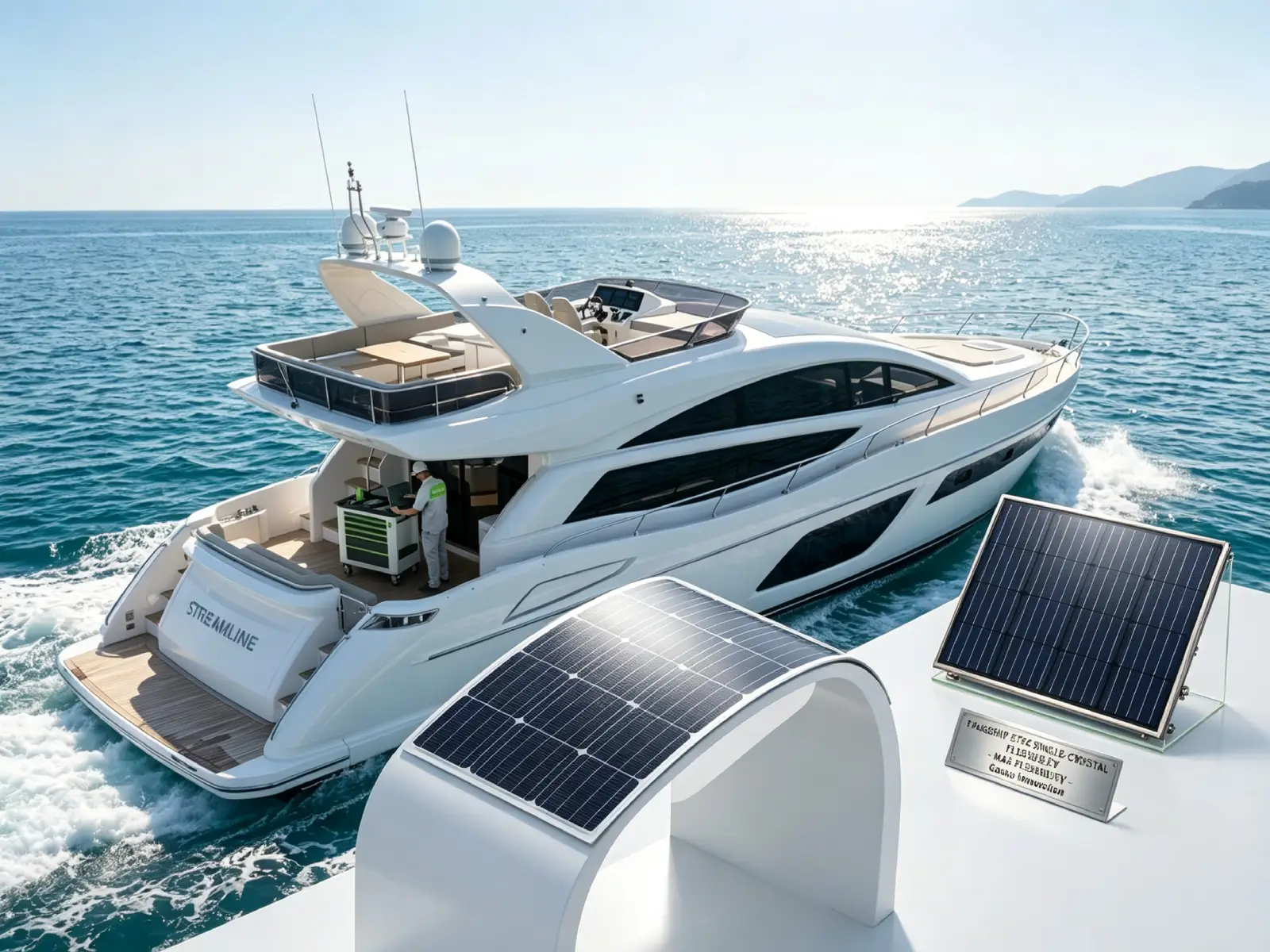
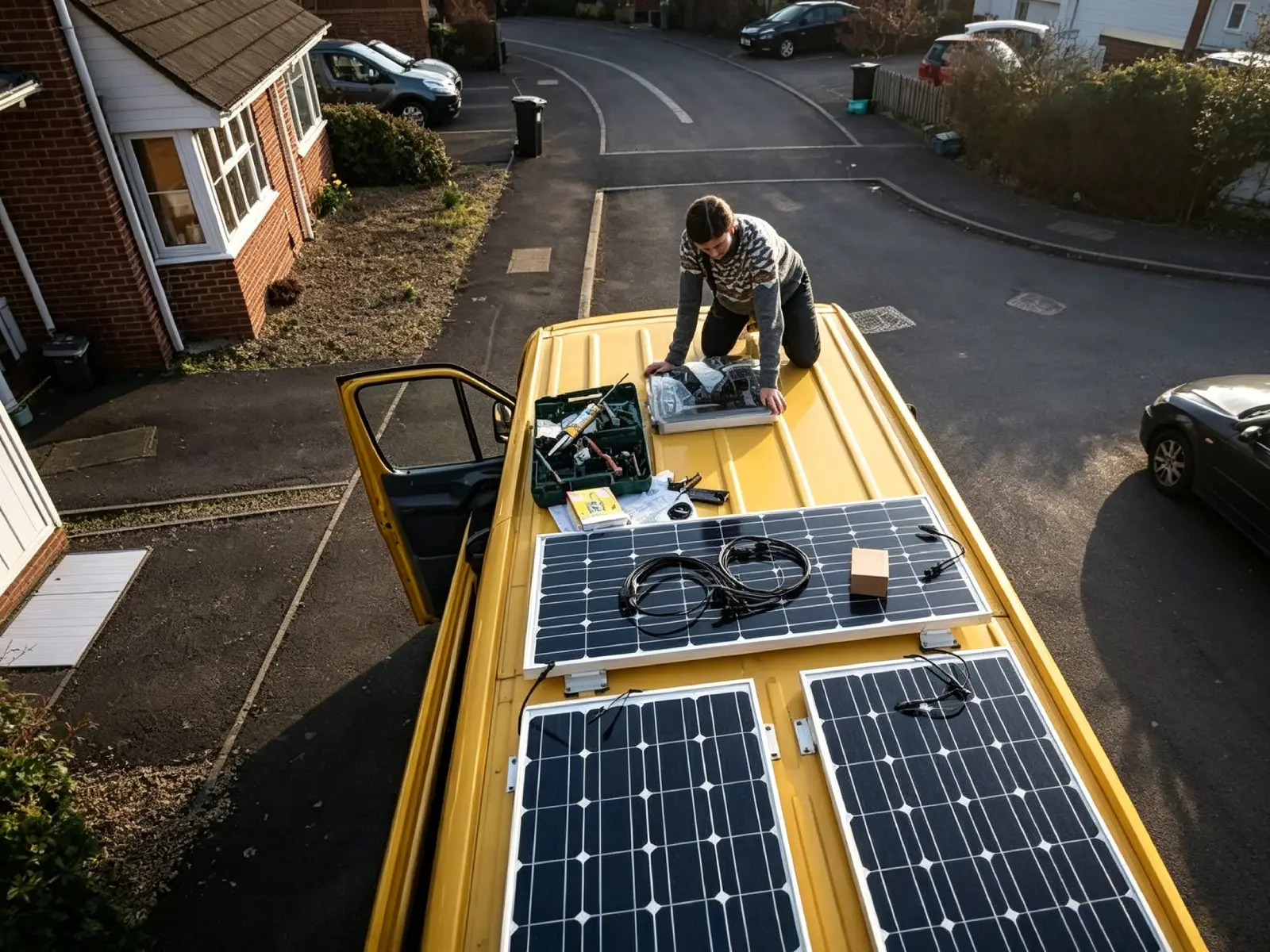
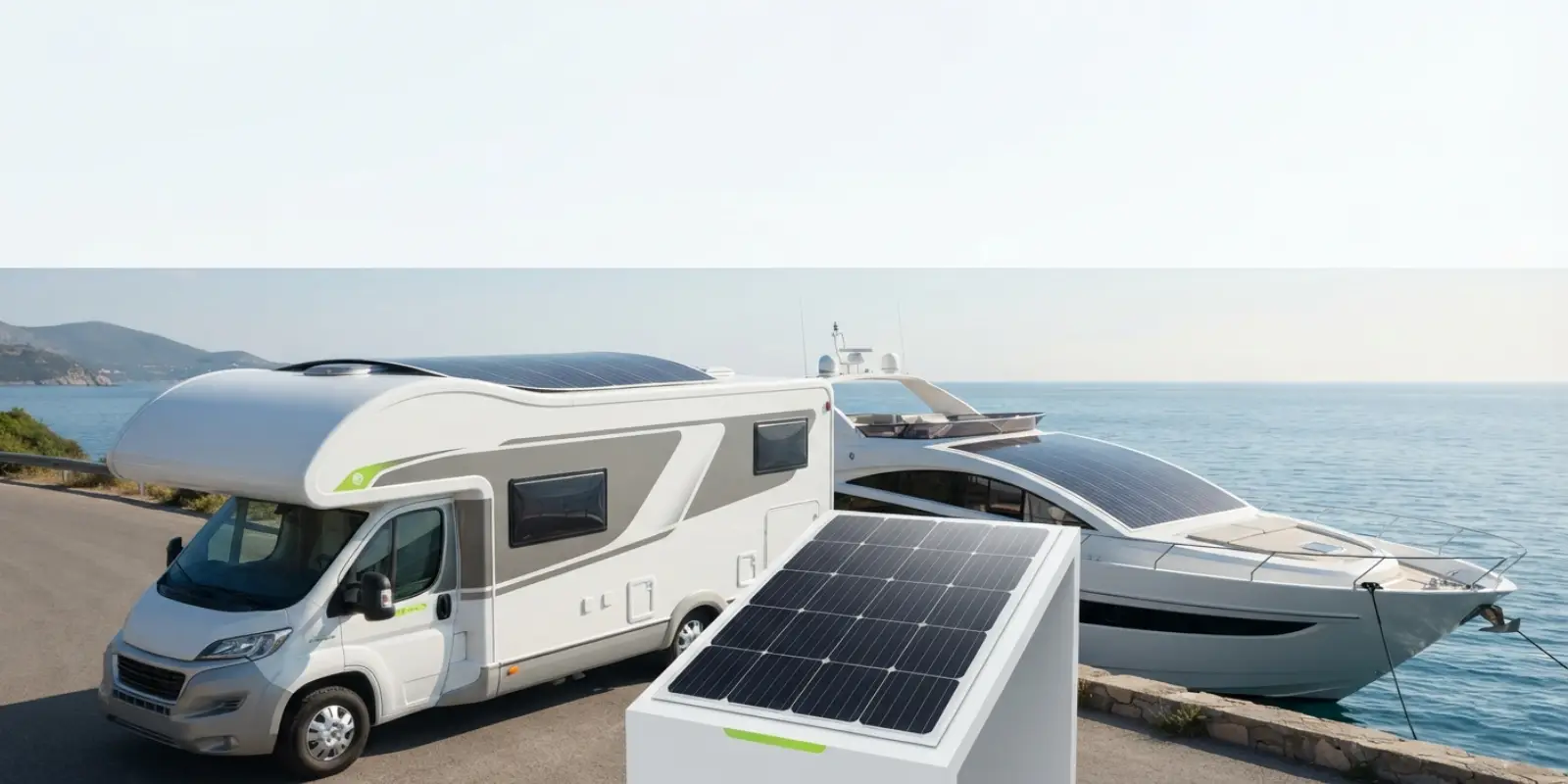
gaotuFinding a trustworthy Flexible Solar Panel Supplier in China is critical for B2B buyers looking for high‑performance photovoltaic products. Global market demand for flexible solar panels has reached an all‑time high. From RV owners and marine vessel manufacturers to commercial developers retrofitting low‑load curved roofs, businesses worldwide are embracing the substantial advantages of flexible photovoltaic (PV) products. Even so, identifying reliable partners amid China’s huge manufacturing landscape can be challenging.
China supplies over 80 % of the world’s solar supply chain, yet product quality varies widely. Sourcing low‑grade flexible panels frequently results in rapid power degradation, micro‑cracks and surface yellowing within just a few months.
This complete sourcing guide outlines core technical evaluation criteria, explains how to audit Chinese manufacturers, and demonstrates how next‑generation technical innovations are reshaping industry benchmarks.
1. Why Source Flexible Solar Panels from China?
Understanding the macro‑economic landscape helps buyers gain a critical edge when selecting a Chinese flexible solar panel supplier.
Complete Industrial Chain & Outstanding Cost Advantages
China operates the world’s most fully integrated PV supply chain. Every stage — from polysilicon purification and wafer cutting, through premium polymer encapsulation such as ETFE and EVA, to automated junction‑box assembly — is concentrated domestically. This industrial clustering lowers logistics expenses, shortens lead times, and delivers economies of scale unmatched by any other country.
Fast‑Paced Technology Iteration
Chinese solar manufacturers are global leaders in upgrading from legacy technologies to state‑of‑the‑art cell architectures. Suppliers no longer produce only conventional rigid panels; they integrate high‑performance N‑type TOPCon, HJT and shingled‑cell technologies into flexible modules, enabling overseas buyers to obtain products with superior power output per unit area.
2. Core Technical Criteria for Evaluating Chinese Flexible Solar Panel Manufacturers
Never base purchasing decisions purely on price‑per‑watt. For flexible PV products, mechanical design and material science directly determine service life.
| Technical Parameter | Premium Quality Standard | Low‑End Risk Standard |
|---|---|---|
| Surface Polymer Material | ETFE (UV‑resistant, self‑cleaning) | PET (yellowing and cracking within 1 year) |
| Cell Type | N‑type monocrystalline / bifacial | Polycrystalline / recycled cells |
| Static Bending Radius | Safe specification: ≥30 cm | Tight bends below 20 cm, high micro‑crack risk |
| Weight Characteristic | Ultra‑lightweight design | Heavy backsheet with rigid interlayers |
Surface Material: ETFE versus PET
The surface layer protects solar cells against harsh outdoor conditions.
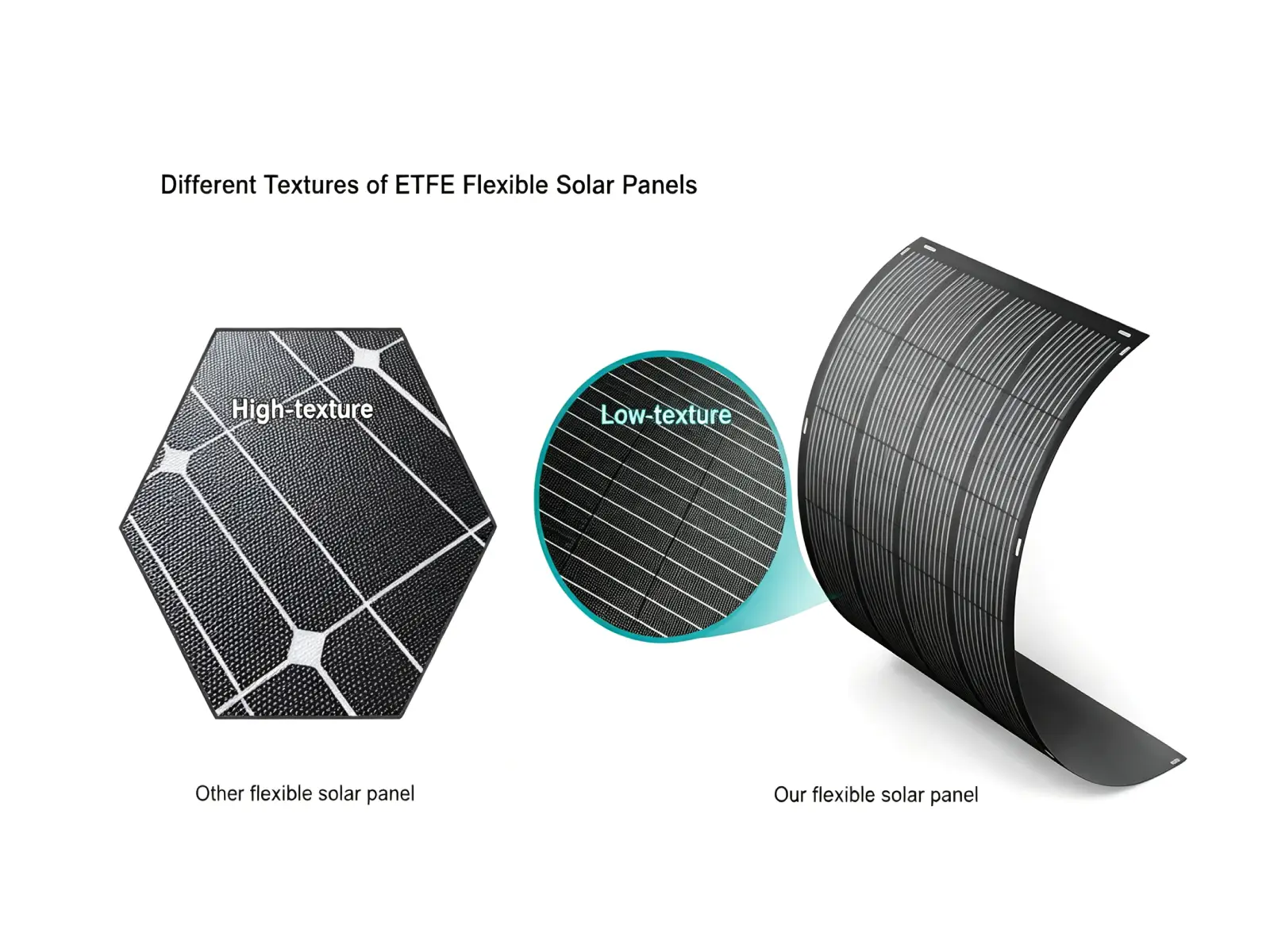
- PET (Polyethylene Terephthalate): Widely adopted by low‑cost suppliers. PET ages rapidly under strong UV radiation, turning yellow and brittle within 1‑2 years and suffering severe transmittance loss.
- ETFE (Ethylene‑Tetrafluoroethylene): Premium industry standard. ETFE delivers excellent UV resistance and thermal stability. Its textured self‑cleaning surface captures additional diffused ambient light. Always confirm your supplier uses genuine high‑grade ETFE.
To deep dive into the chemical reliability and weathering test data of these polymers, read our technical analysis: [ETFE vs. PET Flexible Solar Panels: Which is Better for Commercial Sourcing?]
Cell Type & Conversion Efficiency: Monocrystalline Takes the Lead
Avoid polycrystalline or thin‑film products, which compromise energy yield. High‑quality flexible panels must adopt high‑efficiency monocrystalline solar cells.
Although CIGS thin‑film modules offer extreme flexibility, their photoelectric conversion efficiency can drop by up to 40 % compared with monocrystalline cells. Generating equal wattage therefore requires double the installation area.
Mechanical Stress Considerations: Understanding Static Bending Radius
Flexible does not mean infinitely rollable. Always confirm the certified static bending radius with suppliers; this is a non‑negotiable metric.
Industry gold standard: a static bending radius ≥30 cm balances intact cell structure and curved‑surface adaptability.
If crystalline‑silicon panels are forced into tighter bends (radius <20 cm), invisible micro‑cracks form inside silicon cells. Within 6‑12 months these micro‑cracks develop into hot‑spots, triggering local overheating and severe power degradation.
3. Solving Industry Pain Points: Ultra‑Lightweight plus Bifacial Technology
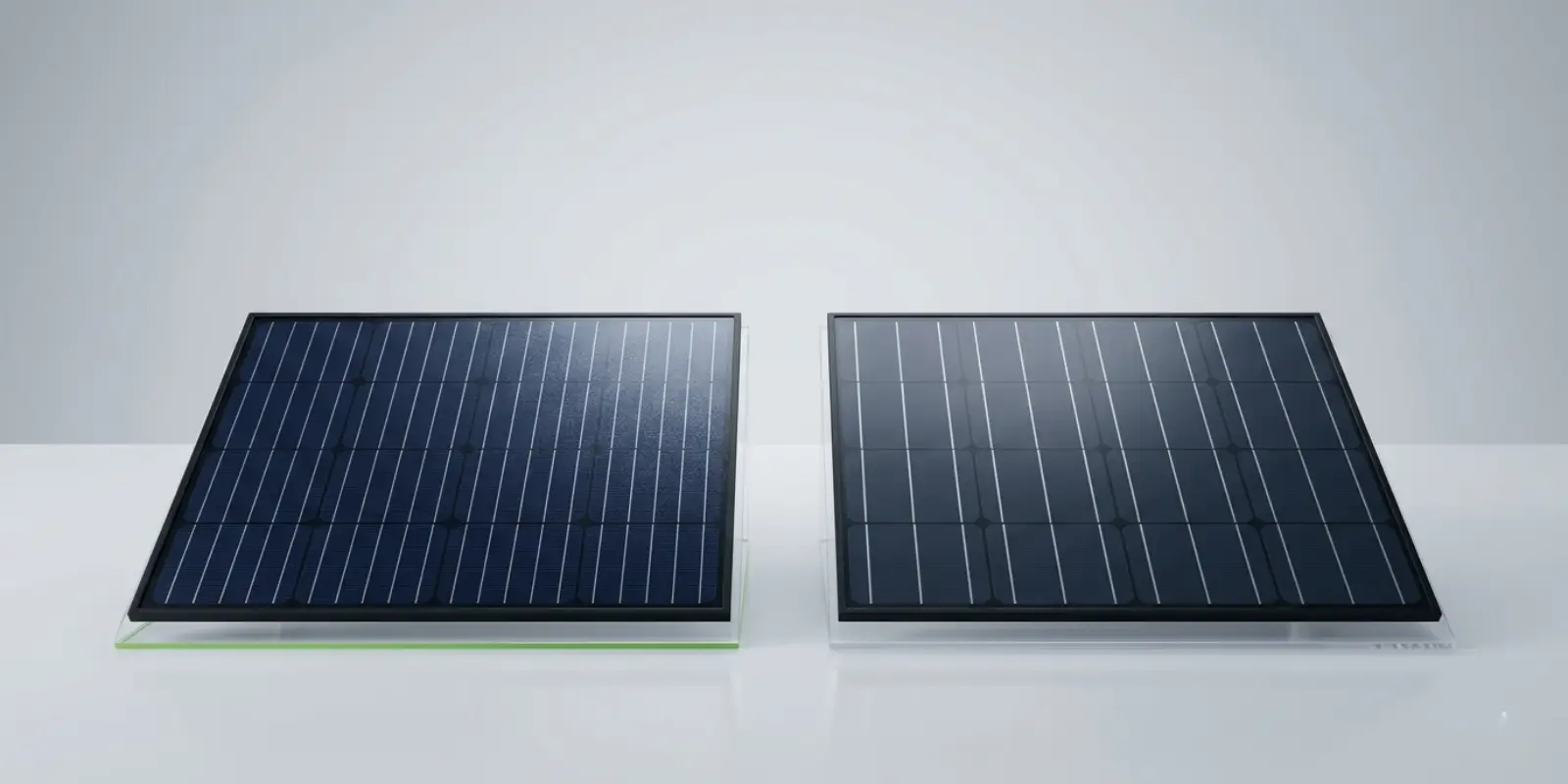
Traditional single‑sided flexible solar panels mostly use opaque heavy polymer or fiberglass backsheets, weighing 2.5‑3 kg per 100 W. For weight‑sensitive applications such as lightweight yachts, teardrop trailers and load‑restricted building roofs, excessive weight creates substantial burdens.
A disruptive new product for B2B solar markets is the ultra‑lightweight bifacial flexible solar panel.
☀️ Direct Sunlight from Front Side ☀️
↓ ↓ ↓
┌───────────────────────────────┐
│     ETFE Top Protective Layer  │
├───────────────────────────────┤
│ 🔋 Monocrystalline Solar Cells 🔋 │ ← Static Bending Radius ≥30 cm
├───────────────────────────────┤
│  High‑Transmittance ETFE Rear Layer │
└───────────────────────────────┘
↑ ↑ ↑
☀️ Reflected Albedo Light ☀️
Heavy opaque backsheets are replaced with military‑grade high‑transmittance ETFE on both sides, delivering two key breakthroughs:
- Significant Weight Reduction: Removal of heavy interlayers cuts total weight by up to 60 %. One technician can complete installation using adhesive mounting alone.
- Dual‑Sided Power Generation: The rear side captures reflected albedo light bouncing off white RV roofs, light‑coloured marine decks or water surfaces. On identical footprint, energy gain reaches 15‑25 % versus conventional single‑sided panels.
4. Distinguishing Real Manufacturers from Trading Companies
When contacting suppliers via platforms such as Alibaba and Made‑in‑China, apply the screening workflow below to filter out middlemen posing as original factories.
- Verify the Business Licence: Request the Chinese business licence and examine its business scope closely.
Entries limited to “wholesale”, “trading” or “import & export” indicate intermediaries. Look for terms meaning “production, manufacturing or processing” to confirm in‑house manufacturing capacity.
- Request Production & On‑Site Testing Footage: Authentic factories own complete automated equipment. Ask for live‑shop‑floor video or third‑party verified recordings covering automatic laser slicing machines, vacuum lamination systems and — critically — EL (Electroluminescence) test stations. If they cannot provide evidence of EL testing for pre‑shipment micro‑crack detection, do not sign contracts.
- Assess OEM / ODM Capability: Trading companies primarily sell ready‑made stock items. If you request custom layouts, special‑voltage outputs or repositioned junction boxes and the supplier hesitates or charges exorbitant engineering fees, they generally lack in‑house R&D and production capacity.
5. Essential Certifications for Global Export
Top‑tier Chinese flexible solar panel suppliers must meet international safety, environmental and performance standards. Never place bulk orders without the following credentials:
- European Markets: CE and RoHS compliance are mandatory. For commercial projects, require TÜV Rheinland or TÜV SÜD certification complying with IEC 61215 (terrestrial PV module design qualification) and IEC 61730 (PV module safety qualification).
- North American Markets: Manufacturing shall comply with UL 1703 or updated UL 61730 standards for smooth customs clearance and local electrical‑code inspection approval.
- Environmental Durability: Junction boxes must achieve IP67 or IP68 ingress‑protection ratings. For marine and coastal applications, valid salt‑spray corrosion test reports are required.

6. Partner with Gaotu Innovation — Your Trusted Solar Manufacturing Ally
If you aim to build a stable high‑end supply chain and create competitive differentiation, Gaotu Innovation is a pioneer within China’s flexible PV sector. We resolve excessive weight limitations of conventional modules while maintaining high power‑generation performance.
Why B2B Buyers Select Gaotu Innovation
- Ultra‑lightweight engineering: Greatly reduces load pressure on mounting surfaces
- Advanced bifacial performance: Premium monocrystalline cells harvest light from both sides
- Mechanically validated: Certified static bending radius ≥30 cm eliminates cell micro‑cracks
- Custom OEM / ODM services: Flexible MOQ for global projects
Industry‑Leading Weight Optimisation: Our proprietary polymer‑encapsulation technology achieves ultra‑light profiles without sacrificing structural strength or electrical performance. It lowers sea‑freight costs and simplifies on‑site installation.
Improved ROI via Bifacial Technology: Equipped with premium‑grade monocrystalline cells, our panels generate power from both sides. Leveraging ambient reflected light, energy output increases by up to 25 %, delivering outstanding value for your commercial clients.
Zero‑Defect Structural Assurance: Products are designed and tested for static bending radius ≥30 cm. Dual EL testing is implemented throughout production to eliminate hot‑spot risks at source.
Whether you need full‑container bulk orders, small‑batch trial runs or custom‑engineered OEM / ODM solutions for special dimensions and voltage requirements, Gaotu Innovation provides end‑to‑end technical support from conceptual design through to final delivery.
Conclusion & Next Steps
Sourcing flexible solar panels from China should not turn into a race‑to‑the‑bottom on price. Prioritise high‑quality monocrystalline cells, validate safe bending‑radius specifications and adopt ultra‑lightweight bifacial innovations. This protects your brand reputation and maximises ROI for your end customers.
Ready to upgrade your product portfolio or obtain dedicated engineering quotations for your commercial projects? Contact Gaotu Innovation’s engineering team today for free technical consultation and wholesale pricing!
Related Posts
Why Solar Panels Never Reach Their Rated Wattage in Daily Use
Many solar panel users run into the same issue: their 400-watt solar panel only outputs…
Can Chinese Solar Manufacturers Customize Logo and Packaging?
The short and definite answer is yes. Custom logo and packaging services have become standard…

70W Foldable Solar Table: Wire-Free Outdoor Power & Multi-Functional Furniture
End Outdoor Power Hassles — Meet Your All-in-One Solar Patio Solution Working, dining and relaxing…