

Solar Power Knowledge
From Construction to Appliance — How to Reduce Return Rates for Balcony Solar Kits
 gaotu
gaotu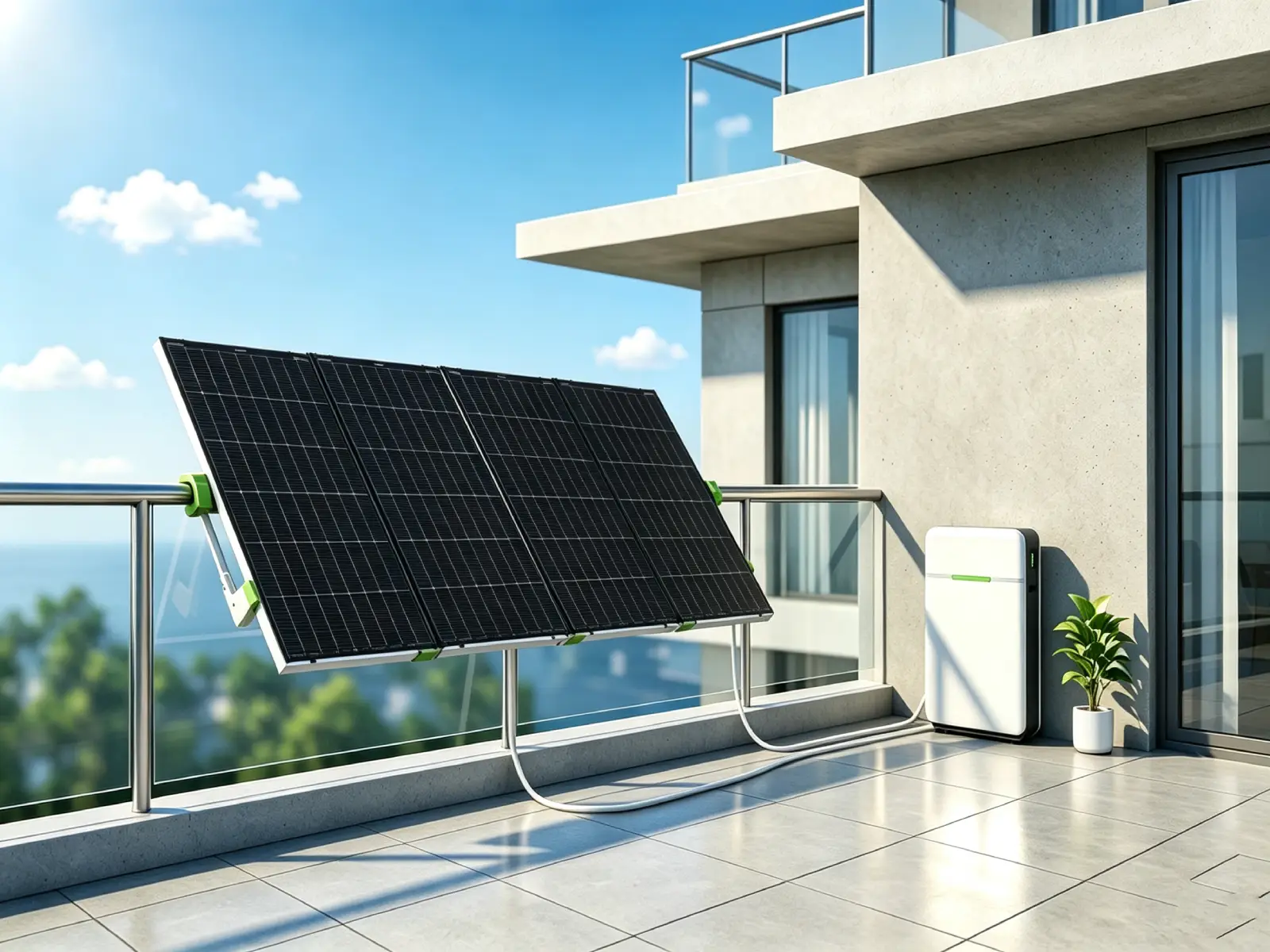
Balcony solar kit return rate is the hidden profit killer most wholesalers don’t track until it’s too late. Here’s a number that should get your attention: most returns aren’t caused by defective products.
They’re caused by the user experience. Panels that don’t fit the railing. Instructions that assume a rooftop. Apps that confuse people. Missing mounting hardware. A plug that doesn’t match the local socket.This guide is part of our balcony solar kits for wholesale series for distributors and B2B buyers.
For wholesalers, returns are the hidden profit killer. Each returned kit costs you shipping both ways, inspection labor, repackaging, and the depreciation of a now-used product. Do the math across a few hundred units and your margin evaporates.
The good news: most of these returns are preventable. Here’s how to tell whether your supplier’s kit is actually distributor-ready, or a return waiting to happen.
The Return Rate Reality
The balcony solar kit return rate is not just a logistics metric — it’s a direct reflection of how well your product was designed for real-world installation.
A balcony solar kit can be returned for one of three reasons:
-
It arrived damaged. Packaging failed in transit.
-
It doesn’t fit the installation scenario. Wrong bracket type, wrong plug, missing hardware.
-
The user can’t get it working. App doesn’t connect, inverter doesn’t produce, instructions are unclear.
Reason #1 is a logistics problem. Reasons #2 and #3 are product design problems. And they’re the ones that kill your margin.
A kit that arrives intact but fails at installation is worse than one that arrives scratched. At least the scratched one can be sold at a discount. The failed installation comes back with a frustrated customer attached.
The “Appliance Test”: Does Your Kit Pass?
The most successful balcony solar kits on the market pass what I call the Appliance Test. That means a non-technical user can unbox it, mount it, plug it in, and see it working within 30-60 minutes — without calling anyone.
Here’s the checklist. If your supplier’s kit fails any of these, expect returns.
1. Mounting Hardware That Actually Fits the Balcony
The #1 installation failure is bracket mismatch. Most balconies have railings, but railings come in different shapes and sizes: round tubes, square posts, vertical spindles, glass panels .
A generic “universal” bracket doesn’t exist. If your kit ships with only one bracket type, a significant portion of users will discover it doesn’t fit their balcony — after they’ve opened the box and cut the tape.
What to look for: A supplier that offers multiple bracket options or a clamp design that adjusts to different railing geometries. The best kits include a bracket that works on round and square rails, with pre-assembled components so users aren’t juggling twenty loose bolts .
2. Pre-Assembled Mounting Kits
Here’s a real-world problem from a distributor’s perspective: when a mounting kit arrives as a bag of 30 loose bolts, washers, and brackets, users lose parts. They install things backwards. They strip threads. They give up.
The industry is moving toward pre-assembled mounting systems. These reduce installation time and eliminate the “which bolt goes where” confusion .
What to look for: A kit where the mounting frame is largely assembled out of the box. Users should need to do minimal bolt-tightening, not hardware assembly.
3. A Truly Plug-and-Play Electrical Connection
The electrical side is where safety and simplicity collide.
In Germany, the Schuko plug is now formally accepted. In the UK, it’s BS 1363. If your kit ships with the wrong plug for the destination market, every single unit comes back. That’s not a return rate problem — that’s a shipment rejection.Wrong plug type is the fastest way to a 100% return rate. Check the balcony solar regulations in Germany and the UK to confirm the correct plug for your market.
Beyond the plug, the connection sequence needs to be foolproof. MC4 connectors are keyed, which helps. But if the inverter requires any manual configuration — setting grid parameters, connecting to a local network, enabling output — you’ve just added a failure point.
What to look for: A microinverter that works out of the box with zero configuration. Plug in the panels, plug into the wall, done. The German standard DIN VDE V 0126-95 now requires native 800W output with no software override, which means the inverter should be compliant as-shipped.
4. An App That Doesn’t Make Users Want to Throw the Inverter Out the Window
This is the silent return driver. A kit can be perfectly installed and still come back because the user can’t tell if it’s working.
The app is the user’s window into the system. If it doesn’t connect, shows confusing data, or requires account creation and firmware updates before showing anything useful, users assume the product is broken.
What to look for: Ask your supplier to demo the app live. Not screenshots. Not a PDF. A real-time demo. Watch how long it takes from unboxing to seeing power output on the phone screen. If it’s more than a few minutes, that’s a red flag.
5. Instructions Written for the Actual Installation Scenario
Rooftop solar instructions and balcony solar instructions are not the same thing. A manual that talks about “roof penetration” and “flashing” is useless for someone mounting panels on a railing.
What to look for: An installation guide that includes balcony-specific diagrams — railing clamp positions, tilt angle adjustment for railing mounting, cable routing that doesn’t create trip hazards . Bonus points if the guide is localized for the destination market, not just translated.
The Hidden Cost of a “Cheap” Kit
Here’s the trap many wholesalers fall into: sourcing on unit price alone.
A kit that costs $50 less per unit but has a 5% higher return rate is more expensive in the long run. Let’s do the math:
-
1,000 units sourced
-
$50 savings per unit = $50,000 saved
-
5% higher return rate = 50 extra returns
-
Cost per return (shipping both ways, inspection, repackaging, depreciation) = $150-200
-
Total return cost = $7,500-10,000
-
Net savings: $40,000-42,500
That still looks like savings, right? But consider this: each return also generates a negative review, a frustrated customer, and a retail partner who’s now hesitant to reorder.
The real cost isn‘t the return itself. It’s the damage to your brand and your retail relationships.
What to Ask Your Supplier Before You Commit
When evaluating a balcony solar kit for wholesale, these are the questions that separate distributor-ready products from return generators:
-
How many mounting bracket options are included? (More than one = fewer fit-related returns.)
-
Is the mounting kit pre-assembled? (If not, expect lost-parts returns.)
-
Does the inverter require any configuration before producing? (The answer should be “no.”)
-
Can you demo the app live right now? (If they hesitate, that’s your answer.)
-
Is the installation guide specific to balcony mounting? (Generic manuals = user confusion.)
-
What plug type ships with the kit for my market? (Wrong plug = 100% return rate.)
-
What’s the actual return rate from your existing distributors? (If they don‘t track this, that’s a problem.)
The Bottom Line
A balcony solar kit that passes the Appliance Test — fits common balconies, installs in under an hour, works without configuration, and shows clear feedback through an app — will have a return rate under 2%.If you’re also selling balcony solar storage systems, remember that storage adds failure points — the appliance test matters even more.
A kit that fails those tests will have a return rate that eats your margin alive.
The difference isn‘t the panel wattage. It’s the user experience design. And that’s something you can verify before you place the order.
If you‘re sourcing balcony solar kits for distribution and want to know which suppliers actually pass the Appliance Test, reach out. We don’t do retail — we work with wholesalers who care about what happens after the sale.
This guide is for B2B sourcing decisions. Return rate estimates are based on industry observations and vary by market, product configuration, and retail channel.
Related Posts
Which Type of Solar Panel Is Best for Your Project? Complete Buyer’s Guide
Solar power has become extremely popular these days. People install solar panels for home rooftops,…

Folding Solar Panel Manufacturer Recommendations (Direct Factory Supply / Customization / Bulk Wholesale)
Folding solar panel manufacturer options for bulk procurement, custom OEM/ODM and direct‑from‑factory orders are critical for…
Solar Panel Quotation Requirements: From Inquiry to Quote
Why Every Specification Impacts Solar Panel Quotations Your initial inquiry does not need to be…

Leave a Reply