

Solar Power Knowledge
Which Type of Solar Panel Is Best for Your Project? Complete Buyer’s Guide
 gaotu
gaotuSolar power has become extremely popular these days. People install solar panels for home rooftops, outdoor camping power supply, and large-scale solar farms. However, most people only know that solar panels generate electricity from sunlight but cannot tell the differences between various types or figure out which one suits their needs.
There are five mainstream solar panel types on the market. All of them rely on the same core principle — the photovoltaic effect. The huge differences in price, performance, and usage come from different materials and structures. This guide will explain everything in simple American English, including how each panel works, its advantages, disadvantages, best use cases, and ideal users.
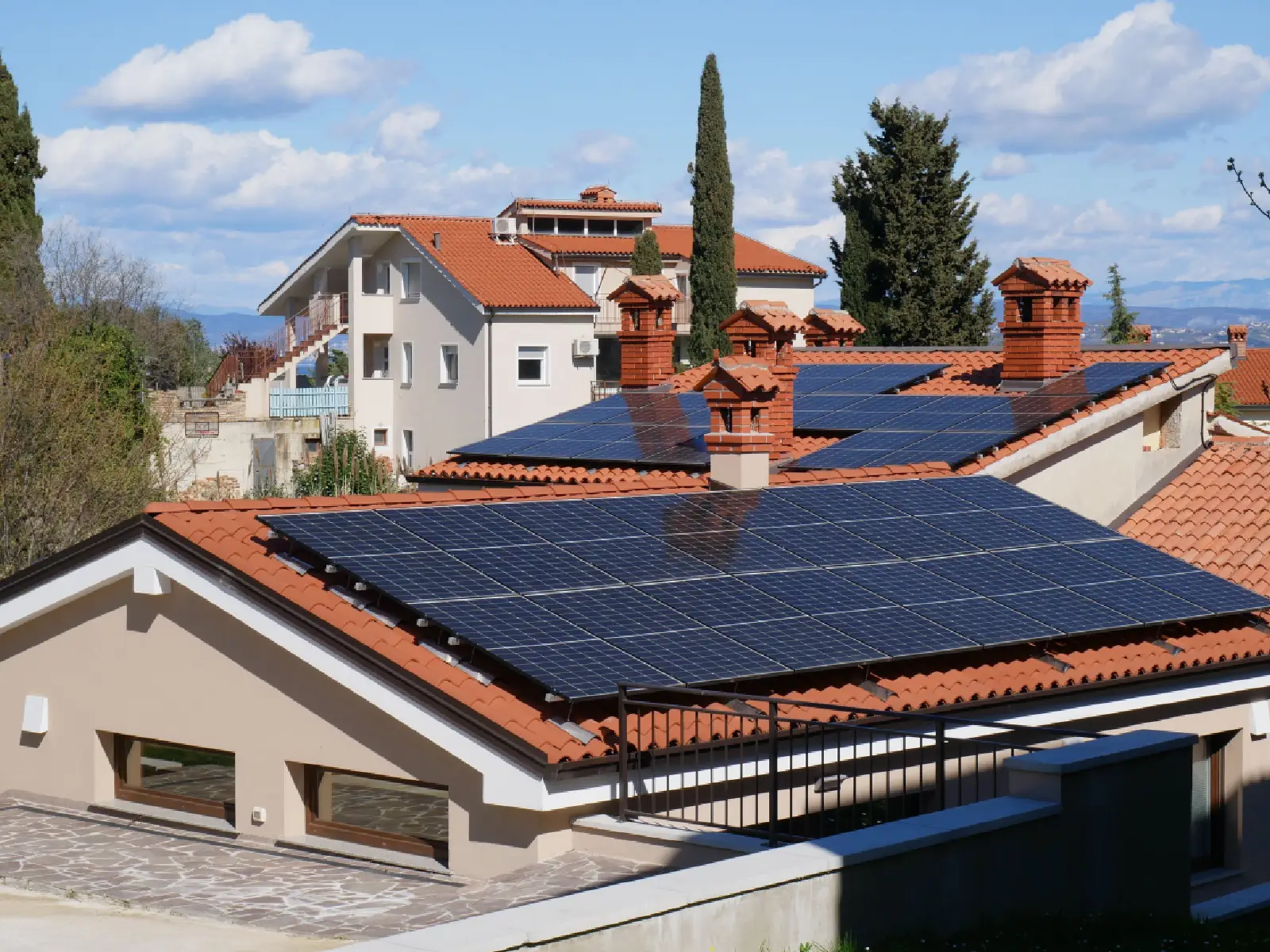
1. Monocrystalline Solar Panels: The Top Choice for Home Use
Monocrystalline solar panels are the most technologically mature and efficient option available. They are made of high-purity silicon with a uniform crystal structure. These panels have a solid black, clean appearance and are currently the most common choice for residential installation.
Working Principle: Simply put, sunlight creates electricity. When sunlight hits the panel, photons activate electrons inside the silicon material. The free electrons move in a fixed direction and produce direct current (DC). Thanks to the high-purity, uniform structure, electrons flow smoothly with very little energy loss.
Core Advantages: They offer the highest energy efficiency among all solar panels, generating the most power in the same area. They are extremely durable, resistant to sun exposure, wind, rain, and aging, and can last more than 25 years outdoors. They also maintain stable output even in high-temperature summer weather.
Main Disadvantages: High price. The complex production process and high-purity materials make them the most expensive standard solar panel. Large-scale installation requires a high overall budget.
Application Scenarios: Residential rooftops, villa rooftops, small commercial rooftops, and all small-scale power generation projects that require stable and high output within limited space.
Ideal Users: Homeowners who want long-term, worry-free solar power; users with limited installation space who want maximum power output; residents and small business owners who prioritize durability and long-term cost performance.
2. Polycrystalline Solar Panels: Budget-Friendly Option for Large Projects
Polycrystalline panels are a classic, older model. They are manufactured by melting and recasting broken silicon fragments, resulting in disordered internal crystal structures and a characteristic blue speckled surface. Their biggest feature is low cost and practicality.
Working Principle: The power generation logic is identical to monocrystalline panels. Sunlight excites electrons to produce electricity. However, the messy internal crystal structure blocks electron movement, causing more energy loss and lower efficiency.
Core Advantages: Extremely cost-effective with low manufacturing costs and stable mass production. They are sturdy and weather-resistant, able to withstand harsh outdoor conditions, making them perfect for large-scale batch installation.
Main Disadvantages: Average efficiency with lower power output per square foot compared to monocrystalline panels. They experience faster power attenuation over time and greater performance drops in high heat.
Application Scenarios: Large ground solar farms, municipal solar projects, public power generation programs, and large-area centralized power stations.
Ideal Users: Solar project investors, power companies, municipal contractors, and budget-conscious users with plenty of installation space for large-scale solar deployment.
3. Thin-Film Solar Panels: Lightweight Panels for Low-Light Environments
Unlike traditional rigid solar panels, thin-film panels have no thick silicon wafers. Instead, a thin photovoltaic coating is applied onto glass, plastic, or metal substrates, making them ultra-light and ideal for portable solar devices.
Working Principle: They still use the photovoltaic effect. The thin coating absorbs sunlight and activates electron flow. They perform far better in weak light conditions than traditional silicon panels and work well on cloudy days or during early morning and evening hours.
Core Advantages: Super lightweight, shatterproof, and highly portable. Excellent low-light performance allows power generation even in cloudy weather, extending daily power production. They also resist high-temperature power loss.
Main Disadvantages: The lowest efficiency among mainstream solar panels, requiring much larger installation areas to produce sufficient power. Shorter service life and faster aging under long-term outdoor exposure.
Application Scenarios: Portable solar chargers, small energy storage devices, building solar curtain walls, temporary outdoor power supply, and low-light auxiliary power generation.
Ideal Users: Camping, hiking, and field construction enthusiasts; users needing lightweight portable power; homeowners and contractors for building-integrated solar decoration projects.
4. Bifacial Solar Panels: Advanced Double-Sided Power Generation Panels
Bifacial solar panels are an upgraded modern design. Built with high-efficiency monocrystalline cells, they replace the traditional opaque backsheet with a transparent one, enabling sunlight absorption and power generation from both the front and rear sides.
Working Principle: The front side absorbs direct sunlight for basic power generation. The rear side captures reflected light from the ground, water surfaces, rooftops, or snow, generating extra electricity without occupying additional space.
Core Advantages: 10% to 30% higher power output than single-sided panels. They inherit monocrystalline benefits — high efficiency, long lifespan, and great stability. Their advantages are maximized in highly reflective environments.
Main Disadvantages: More expensive than standard monocrystalline panels with higher upfront costs. Heavily dependent on installation environment; dark or shaded surroundings eliminate their advantages. They also require specialized mounting brackets and precise installation angles.
Application Scenarios: Water-based solar farms, open-ground solar fields, elevated solar projects, white rooftops, and snowy areas with strong light reflection.
Ideal Users: Large solar farm operators and new energy investment companies; project owners with open, reflective sites pursuing higher power output and investment returns.
5. Flexible Solar Panels: Bendable Specialized Panels
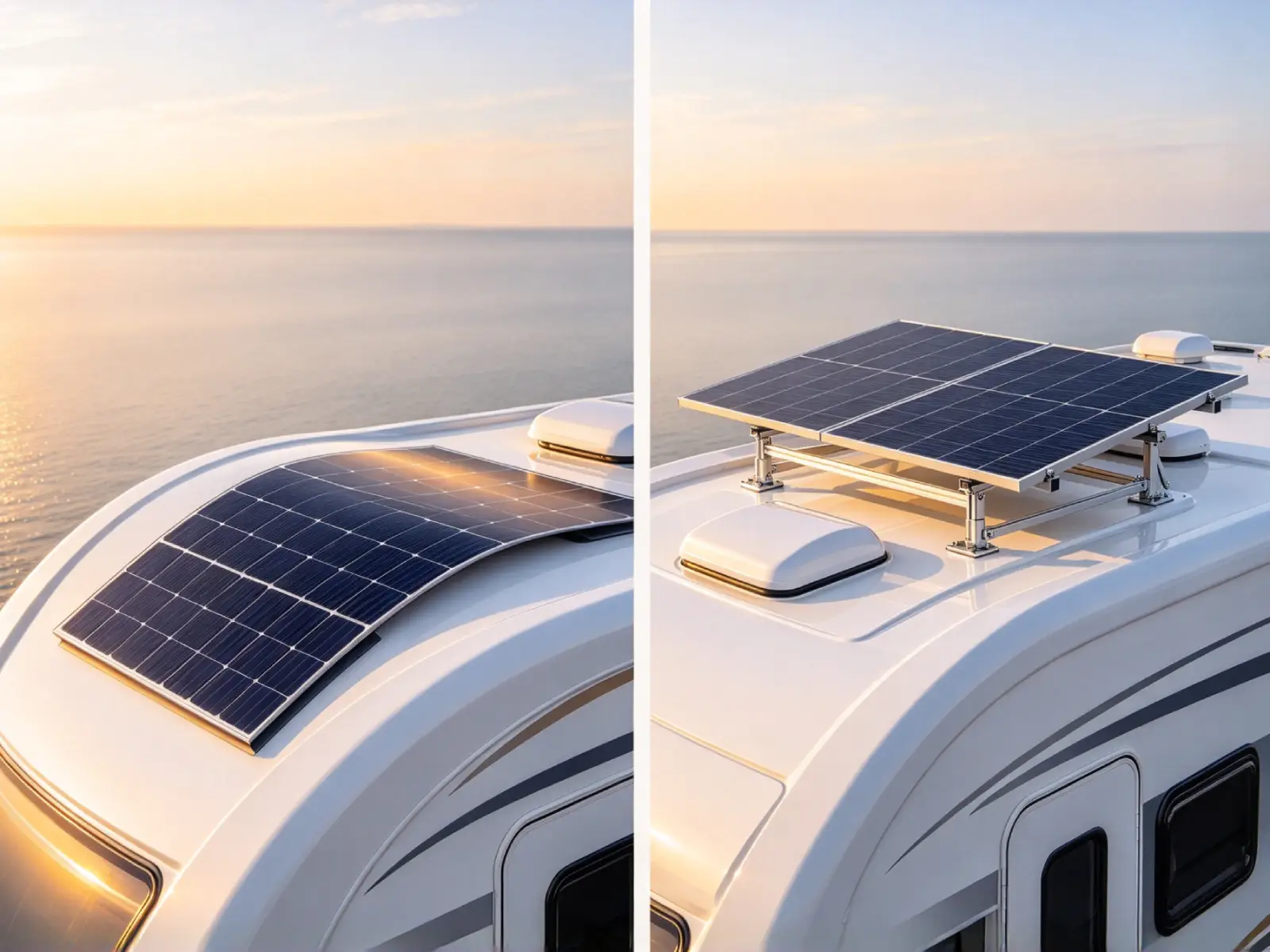
Flexible solar panels are custom-designed for special scenarios. Instead of rigid, fragile frames, they use flexible polymer substrates that can bend freely to fit curved surfaces and mobile equipment.
Working Principle: Same photovoltaic power generation logic as regular panels. The flexible structure is specially reinforced to prevent cracking or damage during repeated bending, ensuring stable performance on curved surfaces.
Core Advantages: Ultra-thin, soft, and fully bendable to fit any curved surface. Extremely lightweight with simple installation and no heavy bracket requirements, adding minimal load to buildings or devices. Shock-resistant and bend-resistant with low breakage risk.
Main Disadvantages: High cost per watt, making large-scale installation uneconomical. Some models have low efficiency and poorer long-term outdoor durability compared to rigid panels. No high-power options, making them unsuitable for large power stations.
Application Scenarios: RVs, yachts, marine power systems, solar backpacks, curved building roofs, and temporary camping power where rigid panels cannot be installed.
Ideal Users: RV and yacht modification lovers; frequent outdoor travelers needing mobile power; users undertaking curved-surface building solar renovations.
FAQ: Frequently Asked Questions for Solar Panel Beginners
Q1: For home use, should I choose monocrystalline or polycrystalline panels?
Always choose monocrystalline for homes! Residential rooftop space is usually limited. Monocrystalline panels deliver higher efficiency, slower power degradation, and better long-term reliability. Polycrystalline panels only suit large, budget-focused projects and are not cost-effective for household use.
Q2: Are bifacial solar panels worth buying? Is it a scam?
It depends on your site. Bifacial panels boost power generation by 10%–30% on open sites with reflective surfaces such as bare ground, white rooftops, water, or snow — definitely worth the upgrade. They are not worth the extra cost on dark rooftops or heavily shaded sites with poor reflection.
Q3: Flexible panel vs rigid panel — which is better?
Choose rigid panels whenever possible! Flexible panels only excel in portability and bendability for RVs, boats, and curved surfaces. They cost more, produce less power, and have shorter lifespans. Rigid monocrystalline panels outperform them in all fixed flat installation scenarios.
Q4: Can thin-film panels be used as the main home power source?
Not recommended. Although thin-film panels work well in weak light and are lightweight, their efficiency is far too low. Covering household power demand would require an impractically huge installation area. They are only suitable for portable charging, temporary power supply, and auxiliary building solar decoration.
Q5: Are more expensive solar panels always better?
No. Matching the panel type to your scenario matters more than price. High-end monocrystalline panels are ideal for homes. Affordable polycrystalline panels work best for large projects. Low-cost thin-film panels offer the best value for portable outdoor use. Buying the most expensive option blindly wastes money.
Q6: Do solar panels work on cloudy or rainy days?
Yes, but power output drops significantly. All panels perform best in direct sunlight. Thin-film panels have the best low-light performance and still generate small amounts of power on cloudy days. Monocrystalline and polycrystalline panels produce far less power in bad weather but do not stop working completely.
How Ordinary People Should Choose Solar Panels
All solar panels work based on the photovoltaic effect: sunlight activates electrons inside solar cells to produce DC power, which is then converted into usable AC power via an inverter.
No single panel type is perfect for everything — suitability depends entirely on your needs. Choose monocrystalline panels for home use with limited space and long-term reliability. Pick polycrystalline panels for budget-friendly large-scale engineering projects. Use thin-film panels for portable outdoor gear and low-light environments. Install bifacial panels for open, reflective sites to maximize power output. Apply flexible panels exclusively for curved surfaces and mobile special scenarios. Choosing based on your actual needs avoids wasted money.
Related Posts
5 Best Solar Panels Suppliers 2026
The list of 5 Best Solar Panels Suppliers 2026 selects 5 outstanding solar panel manufacturers…
Hidden Costs to Avoid When Buying Solar Panels in Bulk
Article Summary Many B2B solar buyers only compare factory FOB per-watt pricing and overlook a…
Germany’s Balcony PV Boom: Why Small 2‑3 Panel Systems Dominate the Market
It is quite typical to see just two or three solar panels scattered on…
Leave a Reply