

Solar Power Knowledge
Portable vs Plug‑in Solar Panels for Apartments & Small Homes: Which Works For You in the US, EU, UK & Canada?
 Gaotu Innovation
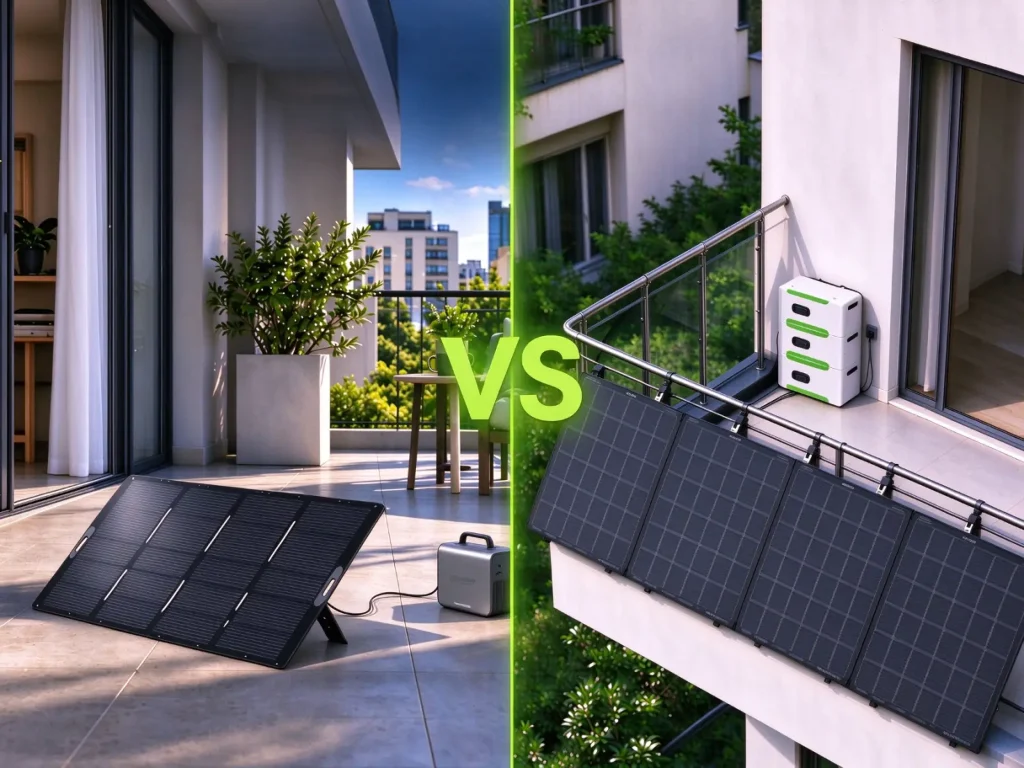
- Portable solar: Off-grid, no permit needed, easy to move, great for camping & blackout backup.
- Plug‑in balcony solar: Grid-tied, cuts electricity bills directly, must follow local registration & certification rules.
- Quick pick: Frequent movers → portable solar; long-term renters with sunny balcony & landlord approval → certified plug-in balcony kit.
What Is Portable Solar Panel?
Portable solar panels are foldable, lightweight off‑grid solar modules. They do not connect directly to your home wall outlet or utility grid. Almost always paired with a portable power station (solar generator). Power flows from panel → power station → your devices.
No permanent mounting, no wiring modification, no grid backfeed risk. You can move it between balcony, patio, campsite, RV, storage, or take it when you relocate.
Typical use: charge phones, laptops, lights, mini fridge, power station, outdoor cameras, camping gear, blackout backup.
Limitation: It will not offset your home’s grid electricity bill automatically. You manually use stored battery power. Distributors looking for custom‑built foldable units can explore our portable solar panel OEM & ODM services.
What Is Plug‑in Balcony Solar (Plug‑and‑Play Grid‑Tie Solar)?
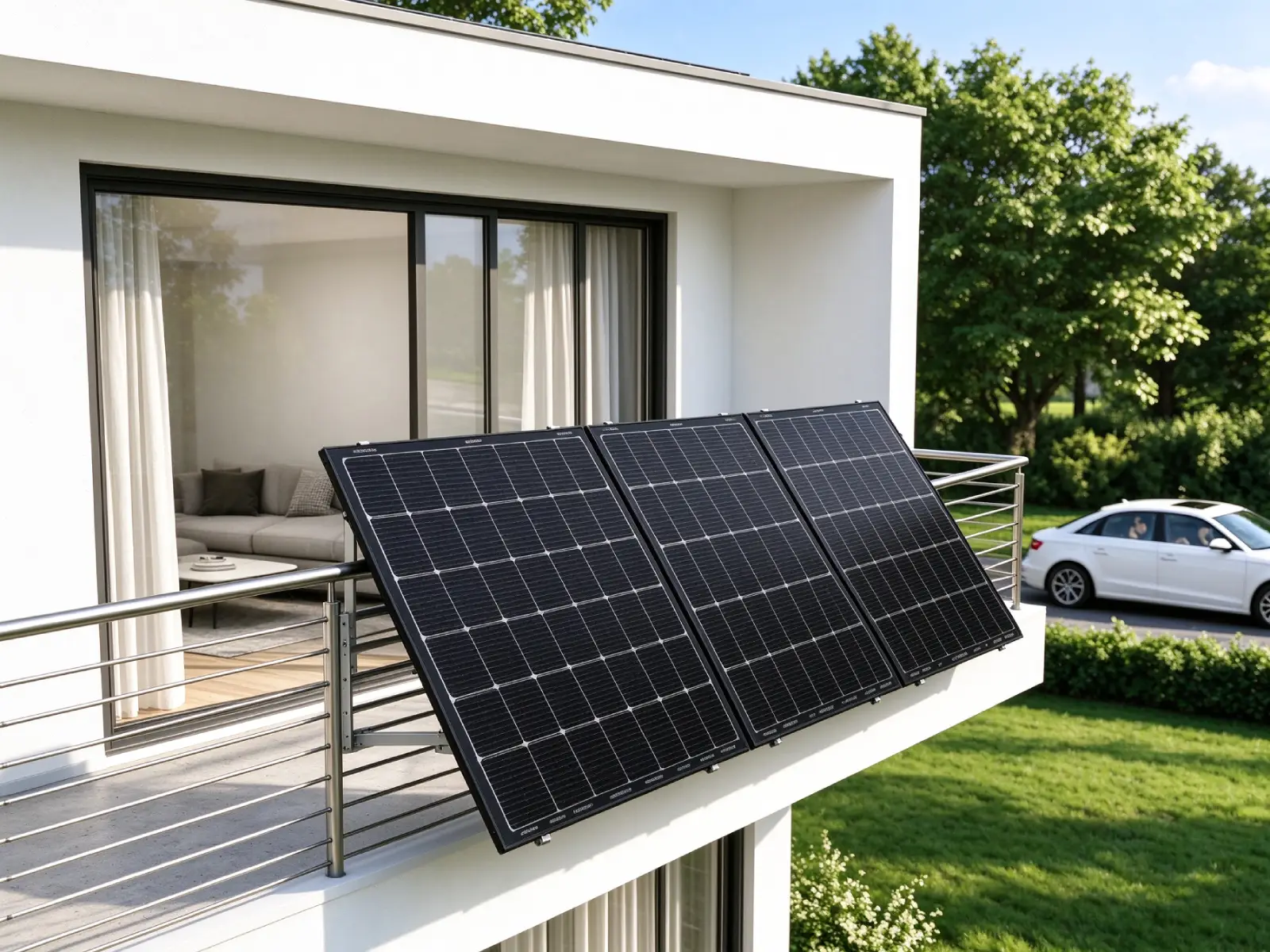
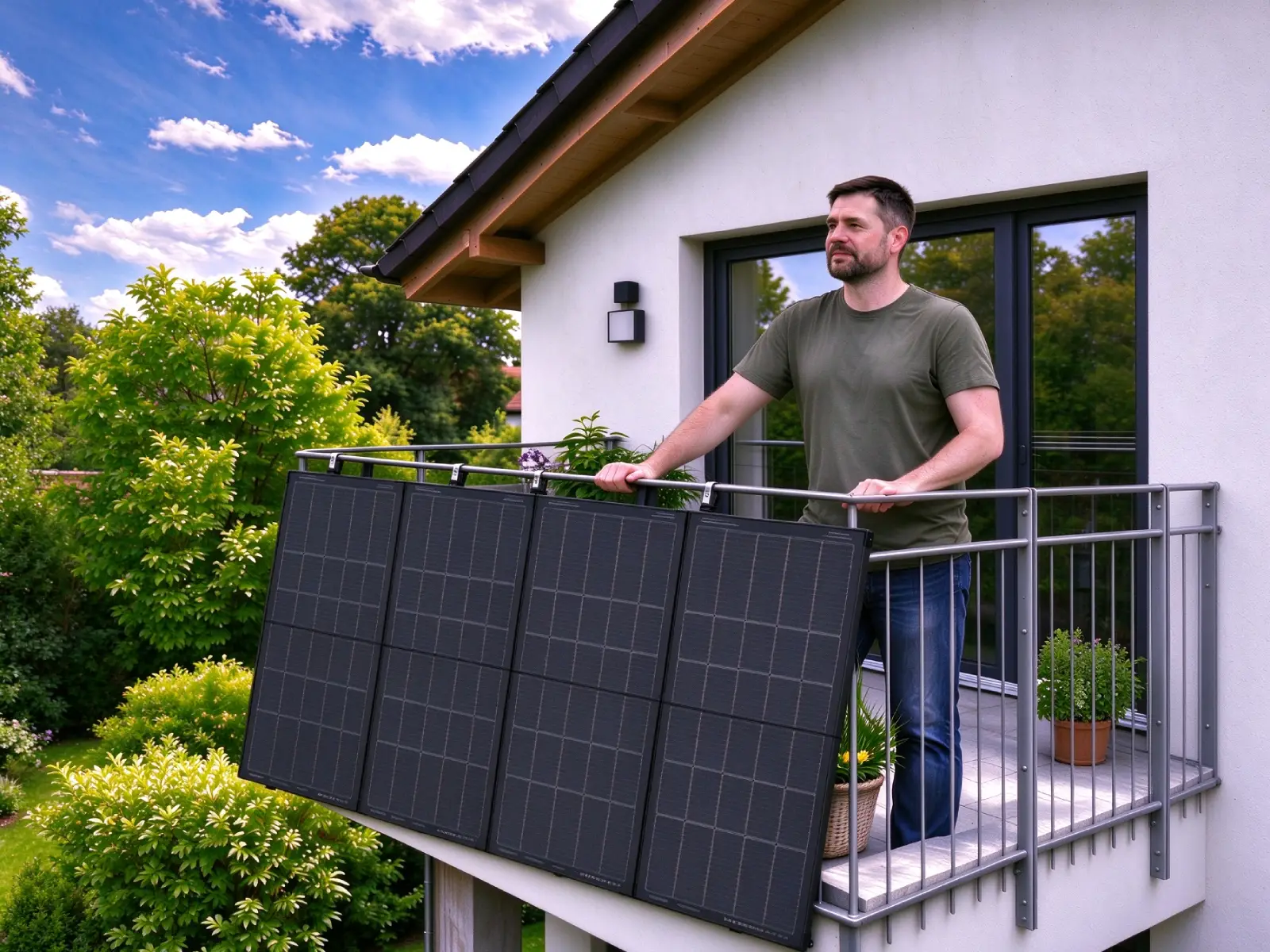
Plug‑in balcony solar kits (also known as Balkonkraftwerk in Germany) include rigid panels, a certified microinverter, mounting clamps and an AC plug. The microinverter converts DC solar power to AC and feeds it into your household circuit through a normal socket.
Power generated is consumed immediately inside your home, reducing the power you pull from the grid. This is grid‑tied solar, which triggers local electrical, utility and landlord rules.
Typical use: continuous daytime offset of home load (router, lights, TV, small appliances), lower monthly electricity bills.
Limitation: dependent on local laws, utility approval, landlord permission, certified hardware and balcony space. You cannot simply plug any uncertified panel into a socket anywhere. See our ready‑to‑ship GTPOW balcony plug‑and‑play PV system as a reference of fully compliant hardware.
Side‑by‑Side Comparison Table
| Feature | Portable Foldable Solar Panels | Plug‑in Balcony Solar Kits |
|---|---|---|
| Grid connection | Off-grid only | Grid-tied via microinverter |
| Need permit / registration | Almost never | Depends on country/state/utility |
| Landlord approval | Usually not required | Usually required by lease/building rules |
| Regional rule differences | Minimal; works globally | High (US state, DE VDE, UK, CA province) |
| Monthly bill reduction | Indirect (use stored battery power) | Direct, real-time self-consumption |
| Moving ease | Pack in bag, fast | Unclamp, disassemble, bulkier |
| Certification required | Basic IP/CE | UL (US), VDE (DE), CSA (Canada) mandatory |
| Max typical wattage | 100W–400W per foldable panel | 300W–800W (common regional legal cap) |
| Best fit | Frequent movers, emergency backup, camping | Long-term renters, fixed balcony, bill saving goal |
Regional Rules Breakdown
Important disclaimer: Regulations update often. Always confirm with your local utility, electrical authority and lease terms before buying plug‑in balcony solar. Portable off‑grid solar has far fewer restrictions across all these markets.
Germany (Balkonkraftwerk)
Germany is the most mature balcony solar market, with over one million registered plug‑in systems. The VDE standard defines safe plug‑in PV products. Most systems cap at 600W or 800W, and you must register your system in Marktstammdatenregister. You also need to notify your landlord and building management before installing railing mounts.
United States
There is no single national rule. Each state, county and utility company sets its own policy. California, New York and Texas have different requirements. Some utilities ban plug‑in microinverter systems or require interconnection approval. Hardware must carry UL certification. Portable solar paired with power stations has no utility reporting requirement in nearly all US states.
United Kingdom
Plug‑in balcony PV sits in a regulatory grey zone. BS 7671 wiring rules restrict socket‑connected grid solar. Many buyers choose portable solar + power stations to avoid compliance headaches. Always check with your building manager and electrician before considering a balcony grid‑tie kit.
Canada
Rules are provincial. Ontario, BC and Alberta each follow different electrical codes and utility interconnection policies. CSA certification is required for plug‑in kits sold locally.
Australia
State‑based network rules apply, and many distributors focus on certified balcony kits for NSW, Victoria and Queensland. For custom flexible panel projects for special‑shape balconies or mobile setups, read our custom flexible solar panels B2B sourcing guide.
Who Should Choose Portable Solar Panels?
Pick portable solar if:
- You rent and move every 6–18 months
- You travel, camp, own an RV or need blackout emergency power
- Your lease forbids any balcony mounting, clamps or grid modifications
- You live in a region where plug‑in balcony solar is restricted or hard to register
- Your priority is flexibility over cutting your monthly electric bill
It is also a great complementary add‑on: many balcony solar owners keep a foldable portable panel + power station for backup during grid outages, since most standard plug‑in balcony kits shut off when the grid fails (anti‑islanding protection).
Who Should Choose Plug‑in Balcony Solar Kits?
Pick certified plug‑in balcony solar if:
- You plan to stay in the same apartment/condo for multiple years
- You have a sunny south‑facing balcony or patio
- Your landlord and HOA approve temporary clamp mounting (no drilling)
- Your local utility allows plug‑in PV and you can complete registration
- Your main goal is reducing ongoing electricity costs
Critical safety note: Cheap uncertified plug‑in kits without VDE / UL / CSA microinverters create fire and backfeed hazards and may void home insurance.
Can You Combine Both?
Absolutely. This is a popular hybrid setup for apartment users:
- Certified plug‑in balcony kit to offset daytime home consumption and cut utility bills
- Foldable portable solar + power station for off‑grid use, outage backup and trips
This hybrid setup works well for users in Germany, many US states and Canada where balcony solar is permitted.
For Retailers & B2B Distributors
If you stock compact solar for apartment customers across North America and Europe, regional certification is your biggest buying checklist:
- US market: UL certified microinverters; educate customers on utility interconnection rules per state
- German market: VDE compliant Balkonkraftwerk, include registration guidance for Marktstammdatenregister
- UK market: focus portable solar kits to reduce compliance support burden
- Canada: CSA certification required
When sourcing, ask your supplier for test reports, safety documentation, datasheets, user manuals translated into local languages and liability guidance for end‑user compliance. Customers will ask you about legality first, before price. Submit your project details via our contact page to get a tailored wholesale quotation.
Frequently Asked Questions
Q1: Are plug‑in balcony solar panels legal in my state/country?
A: It depends. Germany has clear VDE rules; US is state/utility dependent; UK remains restricted; Canada is province‑by‑province. Portable off‑grid solar panels have almost no legal barriers in these markets.
Q2: Can plug‑in balcony solar work during a power outage?
A: Standard grid‑tie plug‑in kits shut down automatically due to anti‑islanding safety protection. To get backup power, add a battery power station or hybrid system.
Q3: Do I need landlord permission for balcony solar?
A: Portable solar you set on the floor usually does not. Plug‑in balcony kits with railing clamps almost always require landlord or HOA approval, even without drilling.
Q4: Which one saves more money on electricity bills?
A: A properly registered, sun‑exposed plug‑in balcony kit delivers direct ongoing bill savings. Portable solar only saves money if you use its stored battery power instead of grid power.
Q5: Can I take plug‑in balcony solar with me when I move?
A: Yes, most use non‑drilling clamps, you can disassemble and move it. It takes more effort than folding portable panels.
Final Verdict
Portable solar = flexible, low‑risk, border‑friendly, emergency & travel power. Plug‑in balcony solar = fixed‑location bill savings, but locked into local electrical and utility regulations.
If you are unsure about your local rules or landlord policy, start with portable solar. If your region allows balcony PV and you have stable housing, a certified plug‑in kit delivers the best long‑term value.
Related Posts
Solar Panel and Portable Power Station Compatibility Guide
Core Overview: Most issues of incompatibility, charging failure, slow charging, and equipment burnout between solar…
Options For Solar Power For Your RV?
The biggest appeal of RV travel lies in its total freedom to hit the road…

How to Turn Any Outdoor Space into an Off-Grid Power Station – A Practical Guide to the GTPOW 126W Solar Shade Umbrella
At first glance, it looks like a premium backyard shade canopy: 240cm diameter, heavy-duty Oxford…
Leave a Reply