

Solar Power Knowledge
How to Compare Portable & Flexible Solar Panel Quotes From Different OEM‑ODM Suppliers
 Gaotu Innovation
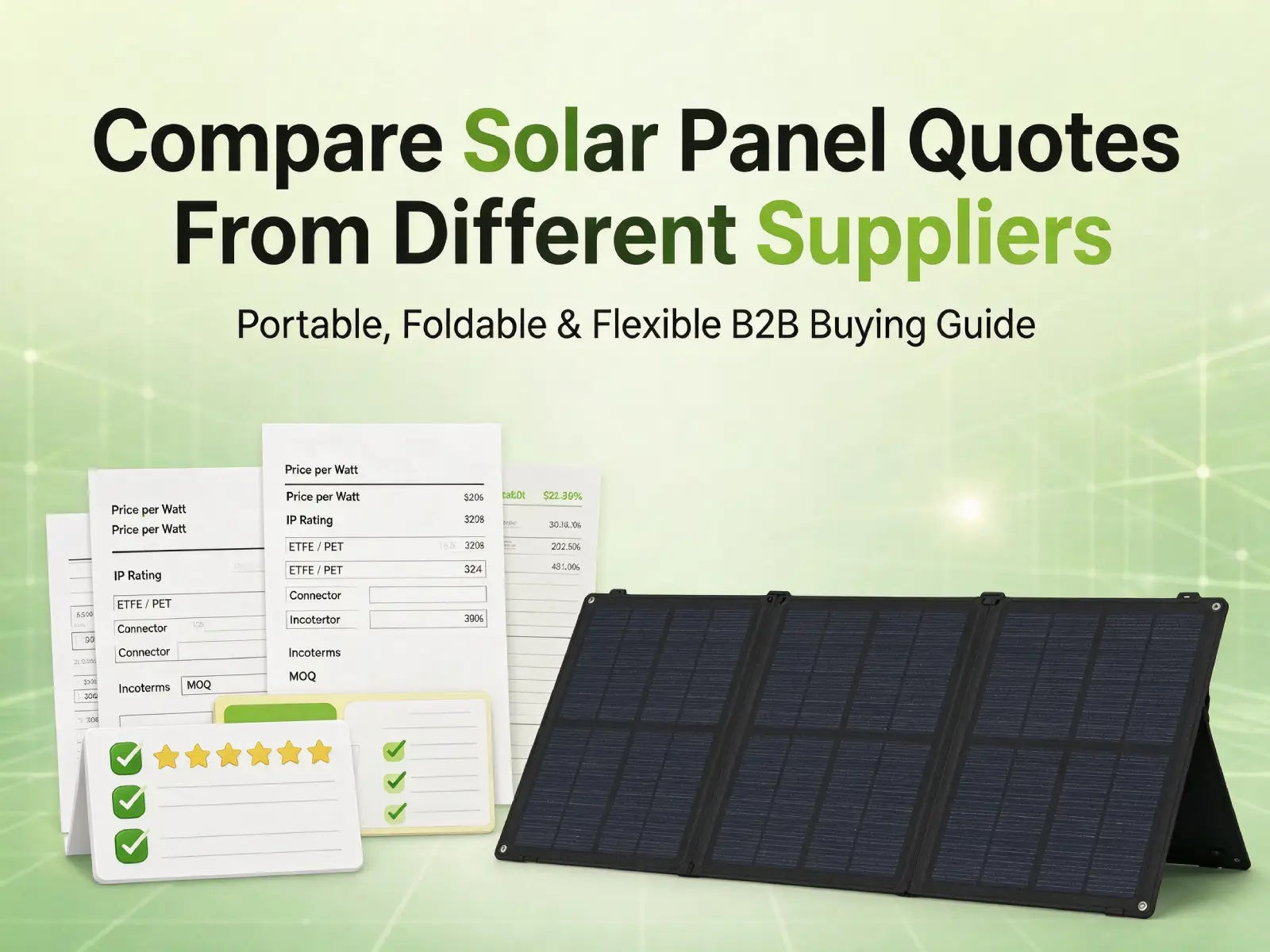
Comparing quotations for portable, foldable and flexible solar panels is far more than picking the lowest per‑watt price. For B2B distributors, white‑label brands, importers and OEM/ODM project buyers, two supplier quotes with identical wattage can deliver completely different finished products, compliance documents and total landed costs.
Many buyers fall into the trap of treating every portable solar offer as equivalent. Foldable and flexible solar products vary heavily in surface lamination material, cell grade, waterproof rating, cable‑connector layout, private‑label capability and supporting documentation. Before ranking suppliers by unit price, confirm you are evaluating matching product scope, customization work, certification coverage and delivery conditions.
This practical guide walks you through fair quote comparison specifically for portable outdoor solar panels used for camping, RV, marine monitoring and off‑grid wholesale markets.
Key Takeaways
- Always compare quotes against one unified technical requirement brief; never compare per‑watt price if material, IP rating, connector or documentation differs.
- Break down all costs: base panel price, custom tooling, sample fees, testing, private‑label packaging, freight, insurance and import duties, to calculate real landed cost.
- Verify certificates and test reports map to your exact quoted model, not generic company‑level certification logos.
- Validate sample‑approval workflow, mass‑production consistency and material change‑control rules before placing large‑volume OEM orders.
- Treat MOQ, sample lead‑time, bulk production schedule, warranty clauses and payment terms as mandatory commercial items written formally inside quotations.
Quick RFQ Checklist Before Sending Inquiry
- Prepare unified spec sheet for all suppliers
- Confirm target market compliance requirement
- Decide MOQ, sample budget and lead time expectation
- List custom requirements: logo, packaging, connector, ETFE/PET
- Lock Incoterm and destination port upfront
If you need professional manufacturing support, explore our portable‑flexible solar panel OEM‑ODM service.
Why Quote Comparison Matters for Portable & Flexible Solar RFQs
At Gaotu Innovation’s internal 2025‑2026 B2B inquiry statistics, portable and flexible solar‑related inquiries show clear sourcing pain‑points. Among thousands of RFQ tickets received from global distributors and OEM partners:
- Price, MOQ & lead‑time inquiries: 872 support tickets
- Certification, compliance & import document requests: 641 support tickets
- OEM / ODM & private‑label customization requests: 408 support tickets
- Foldable‑panel sample, packaging and after‑sales questions: 346 support tickets
These real‑world observations show most B2B buyers are not simply chasing the cheapest price. Buyers need to verify whether the supplier can deliver matching hardware, correct compliance paperwork, custom branding support and predictable delivery before committing to samples or bulk orders. Global solar‑PV market growth continues to drive rising demand for reliable wholesale solar panel bulk supply solutions, according to IEA Solar‑PV report.
Note: These figures reflect Gaotu internal customer inquiry data, not public keyword search volume.
| Observed inquiry theme | Support tickets | Implication for quote comparison |
|---|---|---|
| Price / MOQ / Lead‑Time | 872 | Commercial terms must be explicit; vague lead‑time numbers often hide tooling or sample delays. |
| Certification & Compliance | 641 | Generic CE or IEC logos cannot guarantee your specific portable panel passes import inspection. |
| OEM / ODM / Private‑Label | 408 | Custom logo, fabric packaging, cable‑exit position and ETFE/PET material will shift quotation cost. |
| Sample & Bulk Distribution | 346 | Wholesale buyers need clear sample‑to‑mass‑production consistency rules. |
What Must a Complete Portable Solar Panel Quote Include?
A usable quotation should let any member of your purchasing, quality or sales team fully understand exactly what you are buying.
For rigid standard solar modules, a simple datasheet may suffice. For foldable portable and flexible solar panels, extra technical details are critical, as small design changes create very different end‑products.
Every qualified quote needs at minimum:
- Exact product model / project reference number
- Rated power, STC electrical parameters(Voc, Isc, Vmp, Imp)
- Solar cell grade & conversion efficiency
- Surface material: ETFE or PET (directly impacts UV‑resistance and outdoor lifespan)
- Waterproof rating: IP65 / IP67 / IP68
- Dimensions, weight, fold design or bending radius(for flexible types)
- Cable length, cable exit location, connector model(MC4, Anderson, USB‑C etc.)
- Packaging specification: neutral box, private‑label carton, pallet requirements
- Trade Incoterms & named delivery location
- Quotation validity period
Two foldable panels with same wattage are NOT equal offers, if they differ in ETFE vs PET lamination, IP rating, cell efficiency or connector configuration.
Supplier Tip for RFQ: If you only send wattage and quantity to manufacturers, your returned quotes will not be comparable. For custom portable solar projects, your request should include use‑case, dimension constraints, IP requirement, branding needs and target‑market compliance rules.
Build a Level Playing Field: Standardize Your RFQ Input for Every Supplier
Send identical requirement documents to all short‑listed factories. This prevents low‑priced quotations from appearing attractive by quietly omitting requirements other suppliers include.
| Requirement Area | Information you need to standardize | Business impact |
|---|---|---|
| Application scenario | Camping, RV, marine, security monitoring, travel backpack, off‑grid retail | Operating environment defines waterproof, anti‑salt‑mist and mechanical durability specs |
| Panel format | Foldable multi‑fold, ultra‑flexible, solar‑backpack integrated design | Determines weight, packaging volume and production tooling cost |
| Electrical specs | Target wattage, working voltage, required ports & connectors | Must match your power‑station or end‑device system |
| Construction material | Cell efficiency target, ETFE / PET front sheet, fabric material, IP grade | ETFE material raises cost but extends outdoor service life |
| Mechanical details | Weight limit, folded size, cable‑exit direction, bending limits | Critical for portable consumer‑oriented solar goods |
| Documentation list | Datasheet, test reports, CE / FCC / RoHS / IEC certificates, user manual, carton marking labels | Mandatory for customs clearance and retail resale |
| Commercial scope | Order quantity, sample requirement, private‑label / white‑label, trade term, destination port | These variables directly calculate your true landed procurement cost |
Unpack Hidden Costs: Which Items Are In‑Scope vs Optional?
Many low‑looking portable solar quotes exclude key items and treat them as extra‑cost add‑ons. Ask every supplier to separate these line‑items clearly in quotations:
- Base foldable / flexible solar unit price
- Custom mould / tooling one‑time charges
- Sample & prototype testing fees
- Compliance test or certification‑update expenses
- Private‑label service: logo printing, custom cartons, sticker labels
- Spare connectors, replacement cables and accessory kits
- Packing material, export palletization
- Ocean / air freight, insurance, import duties and local destination delivery
- Payment schedule and quotation expiry date
Not every project will trigger all these charges, but transparent line‑items expose hidden gaps. A quote with higher unit price may actually represent better total value when it includes private‑label packaging and compliance documentation your market requires.
Is Price‑Per‑Watt Reliable for Portable & Flexible Solar Panels?
Price‑per‑watt works as a rough screening metric only if all baseline conditions match. You cannot rank foldable solar products purely by dollars‑per‑watt.
Before comparing per‑watt cost confirm all suppliers align on:
- STC rated‑power testing standards
- Solar‑cell efficiency grade
- ETFE or PET surface lamination
- IP waterproof rating
- Cable length, connector type, fold‑structure design
- Packaging & Incoterm delivery basis
- Full set of matching certification documents
Example scenario: Two suppliers quote a 100 W foldable solar panel. Supplier A uses high‑grade ETFE, IP67 rating and monocrystalline bifacial cells. Supplier B uses cheaper PET surface and lower IP65 rating. Even though wattage matches, product lifespan and retail market suitability differ greatly, so direct per‑watt comparison is misleading.
Verify Certificates Match Your Quoted Portable Solar Model
A generic “CE certified” statement or a logo screenshot on a brochure does not guarantee compliance for your exact portable solar product.
Portable and flexible solar panels need multiple overlapping compliance documents:
- IEC 61215: PV module design qualification
- IEC 61730‑1 / IEC 61730‑2: PV module safety construction & testing
- CE‑EMC, FCC for electronic‑portable products sold into EU & North‑America markets
- RoHS for hazardous‑substance restrictions
When reviewing quotations, request these five pieces of evidence for every certificate:
- Full certificate or formal test‑report reference number
- Exact product‑model and construction revision covered by the report
- Issuing‑laboratory name and accreditation information
- Any usage‑limitations, exclusions or special test‑conditions
- Clear statement whether material change (ETFE/PET swap, new connector, revised dimension) requires re‑testing and re‑certification.
Important note: Factory ISO‑quality‑system certification (such as IEC 62941) proves manufacturing process management, it does not mean every custom portable‑solar model automatically carries product safety certification.
For step‑by‑step preparation before sending RFQ, check our B2B buyer checklist for portable‑flexible solar OEM wholesale.
From Sample Approval to Mass Production: Avoid Product Drift
For OEM / private‑label portable solar orders, your approved sample acts as the official reference benchmark for mass‑produced batches. Many B2B buyers face unpleasant surprises: approved sample performs well, but bulk‑shipped goods shift material, cable layout or fabric quality without advance notice.
When evaluating quotations, ask each supplier to document these points:
- What dimensions, electrical performance and visual features get formally recorded in sample‑approval records?
- How will cable‑exit position, connector model, printed logo and custom‑packaging be formally signed‑off?
- What is the formal process if raw‑material or component changes are needed post‑sample‑approval?
- What compensation or correction procedures apply when mass‑production deviates from signed‑off sample?
- What batch‑level QC inspection records can be provided with each shipment?
Clear documented sample‑change‑control workflow is often more valuable than a marginally lower unit‑price for custom portable solar projects. If you work on non‑standard designs, read our custom flexible solar panels sourcing guide. You can cross‑reference factory profiles via ENF‑Solar PV manufacturing database.
Decoding Lead‑Time for Foldable & Flexible Solar Projects
The term “lead‑time” can describe completely different project stages. One supplier may only quote bulk‑production time; another includes engineering review, custom tooling and sample cycles in their timeline. Always break down the full schedule:
- Technical review & formal quotation turnaround
- Drawing and specification confirmation cycle
- Prototype sample manufacturing
- Sample testing and buyer approval
- Raw‑material procurement
- Pilot trial run (for new‑custom designs)
- Full mass‑production cycle
- Final packing, palletizing and goods dispatch
Actual timelines change based on customization complexity, order volume, component supply chain and factory production scheduling. Reject generic one‑sentence lead‑time numbers; insist on project‑phase breakdown tied directly to your portable solar requirements.
Understand Delivery Terms & Real Landed‑Cost Risk
Incoterms 2020 rules (EXW, FOB Shenzhen, CIF, DAP, DDP etc.) allocate different costs and risk‑transfer points between buyer and manufacturer. You cannot directly compare a CIF quote side‑by‑side against a DDP quote.
For every quotation, explicitly confirm:
- Who manages export customs clearance
- Who pays for main‑carriage ocean or air freight
- Whether cargo insurance is included and what coverage‑level applies
- Exact physical point where risk transfers from supplier to buyer
- Who takes responsibility for import‑customs filing, import duties and local last‑mile delivery
- Whether destination refers to seaport, warehouse terminal or final customer address
Best practice: build a unified landed‑cost spreadsheet for all suppliers, using identical destination and duty assumptions. This reveals true total procurement cost beyond unit product price.
Packaging, Manuals & After‑Sales for Resale‑Ready Portable Solar Goods
For distributors and white‑label brands, packaging, labelling and supporting documents are part of your sellable product, not secondary afterthoughts. Poor packaging causes high transit damage rates for thin foldable solar panels.
Check these items inside supplier quotations:
- Quantity per carton / export pallet
- Outer‑box dimension and gross‑weight
- Protective design for corners, solar‑cell surfaces, cables and connectors
- Options for custom private‑label cartons, printed stickers and bar‑codes
- Standard packing‑list and shipping‑document formats
- Print‑ready user manuals, multi‑language documentation
- Written warranty terms and formal RMA claim process
- Spare‑part and replacement policy for defective units
Practical Portable Solar Supplier Comparison Scorecard
Use this identical checklist for every quotation you evaluate. Do not score purely based on unit product price.
| Comparison Area | Core questions to answer | Evidence you need to collect |
|---|---|---|
| Technical fit | Does quoted foldable/flexible panel match application, IP‑rating, power and connector requirements? | Datasheet, dimension drawing, electrical parameter sheet |
| Customization support | Are custom logo, cable‑position, surface‑material and private‑label packaging fully included in scope? | Signed‑off specification document, quotation scope description |
| Certification compliance | Are test‑reports and certificates mapped precisely to this quoted portable‑solar model? | Full test‑reports, model‑mapping document, certificate limitations |
| Sample‑control workflow | Is there documented sample‑approval and material‑change‑control process? | Sample approval form, revision‑change SOP document |
| Production quality consistency | How does factory guarantee batch‑to‑batch quality for portable solar goods? | Pre‑shipment‑inspection plan, batch QC records sample |
| Delivery timeline | Are sample, tooling, mass‑production and dispatch phases separated clearly? | Full project‑phase schedule attached to quotation |
| Commercial terms | MOQ, payment terms, quote validity date and Incoterm delivery location clearly written? | Complete formal commercial quotation document |
| After‑sales support | Are warranty period, RMA process and spare‑part rules in writing? | Warranty policy document, after‑sales SOP |
Red Flags: Warning Signs on Portable Solar Panel Quotations
Proceed with extra caution if your supplier quotation shows any of these patterns:
- Quotation lists only wattage and unit price with zero supporting technical specification
- Shows generic certification logos but refuses to provide test‑reports linked to your exact portable‑solar model
- Product description shifts between quotation and subsequent datasheet
- Gives one single fixed lead‑time number, without separating sample, tooling and mass‑production timelines
- Markets “premium quality” or “long warranty” without written formal terms
- Fails to state clear Incoterm rule and exact named delivery location
- Avoids confirming details for cable‑exit position, connector type, private‑label packaging and carton marking
- Cannot explain how they control mass‑production consistency against your approved prototype sample
These red flags do not automatically mean the supplier delivers low‑quality goods, but they signal you need more written documentation before comparing offers.
Final Comparison Tip
Do not make buying decisions purely based on the lowest unit price. Calculate total landed cost, verify compliance validity and audit the supplier’s sample control system. A slightly higher price often brings fewer customs risks, stable quality and smoother after‑sales support for your portable solar wholesale business.
How Gaotu Innovation Supports Your Portable‑Solar Quote Review
At Gaotu Innovation (Shenzhen) New Energy Group Co., Ltd., our OEM‑ODM consultation starts with your real‑world application instead of generic product catalog numbers. Our PV engineering team reviews your requirements including panel dimension, target wattage, IP waterproof grade, cable‑connector setup, ETFE/PET material choice, private‑label branding, packaging and import‑document needs to generate a project‑specific quotation. We follow industry recommendations documented in U.S. Department of Energy solar‑technology documentation.
We provide foldable portable solar panels, ultra‑flexible PV modules and solar‑backpack OEM solutions for camping, RV, marine and global wholesale markets. Sample approval workflow, change‑control rules, MOQ, warranty and delivery terms will all be clearly defined within each formal project quotation.
FAQ
Q: Why do portable solar suppliers request so many application‑related details before quoting?
A: Use‑case defines waterproof grade, surface material, connector selection, mechanical durability and compliance documentation. A camping foldable solar panel and a marine‑monitoring flexible panel may share wattage number but need completely different bill‑of‑materials and certification scope.
Q: Can I compare portable solar panels purely by price‑per‑watt?
A: Only when cell grade, ETFE/PET material, IP rating, connector setup, packaging and certification scope are fully identical. Price‑per‑watt is a screening metric, not a complete purchasing decision standard.
Q: What information should I submit to get comparable portable solar OEM quotations?
A: Include target application scenario, required wattage & electrical specs, dimension or weight constraints, surface‑material preference (ETFE/PET), IP waterproof requirement, connector‑model, private‑label needs, target quantity, target‑market compliance requirements, packaging expectations and desired delivery destination. Drawings or reference sample photos will greatly improve quote accuracy for non‑standard custom projects.
Q: How can I check whether certificates apply to my quoted foldable‑solar product?
A: Request full test‑reports and certification documents, verify exact model name, material revision, issuing‑lab and usage‑limitations printed on the report. Any modification to dimension, surface‑film or cell layout may invalidate existing certification coverage.
Q: Why do different portable solar suppliers provide very different lead‑time numbers?
A: “Lead‑time” covers different phases across factories. Some suppliers only quote mass‑production days, while others include engineering review, custom tooling and prototype sample cycles. Always ask for phase‑by‑phase timeline breakdown for fair comparison.
Q: What points must I confirm before placing bulk OEM portable‑solar orders?
A: Confirm signed‑off technical specification & approved‑sample reference, full compliance‑document set, QC‑inspection requirements, private‑label packaging & carton‑marking, quantity, payment terms, Incoterm delivery terms, written warranty policy and material‑change‑control procedure. All MOQ, unit‑price and project‑timeline should be formalized within quotation or purchase‑order paperwork.
Final Thoughts
The most valuable portable‑solar quotation is not always the lowest‑priced one. The winning quote delivers fully‑transparent product scope, verifiable compliance evidence, predictable delivery arrangements and clear commercial responsibilities you can validate before committing capital.
Always compare apples‑to‑apples first. After aligning technical requirements across competing offers, evaluate sample‑approval process, quality‑control rules, logistics conditions and after‑sales policy. This structured approach gives distributors, importers and OEM project teams a solid foundation to select reliable portable & flexible solar manufacturing partners.
👉 get in touch with our engineering team to discuss your portable solar quotation requirements
Gaotu Innovation (Shenzhen) New Energy Group Co., Ltd.
Phone: +86 19129358309(WeChat supported)
Email: info@gt-pow.com
Address: Room 1909E, Building E, Phase II, Xinghe WORLD, Minzhi Subdistrict, Longhua District, Shenzhen, Guangdong, China
Business Hours: Monday‑Saturday, 08:30‑20:30 (GMT+8)
Related Posts
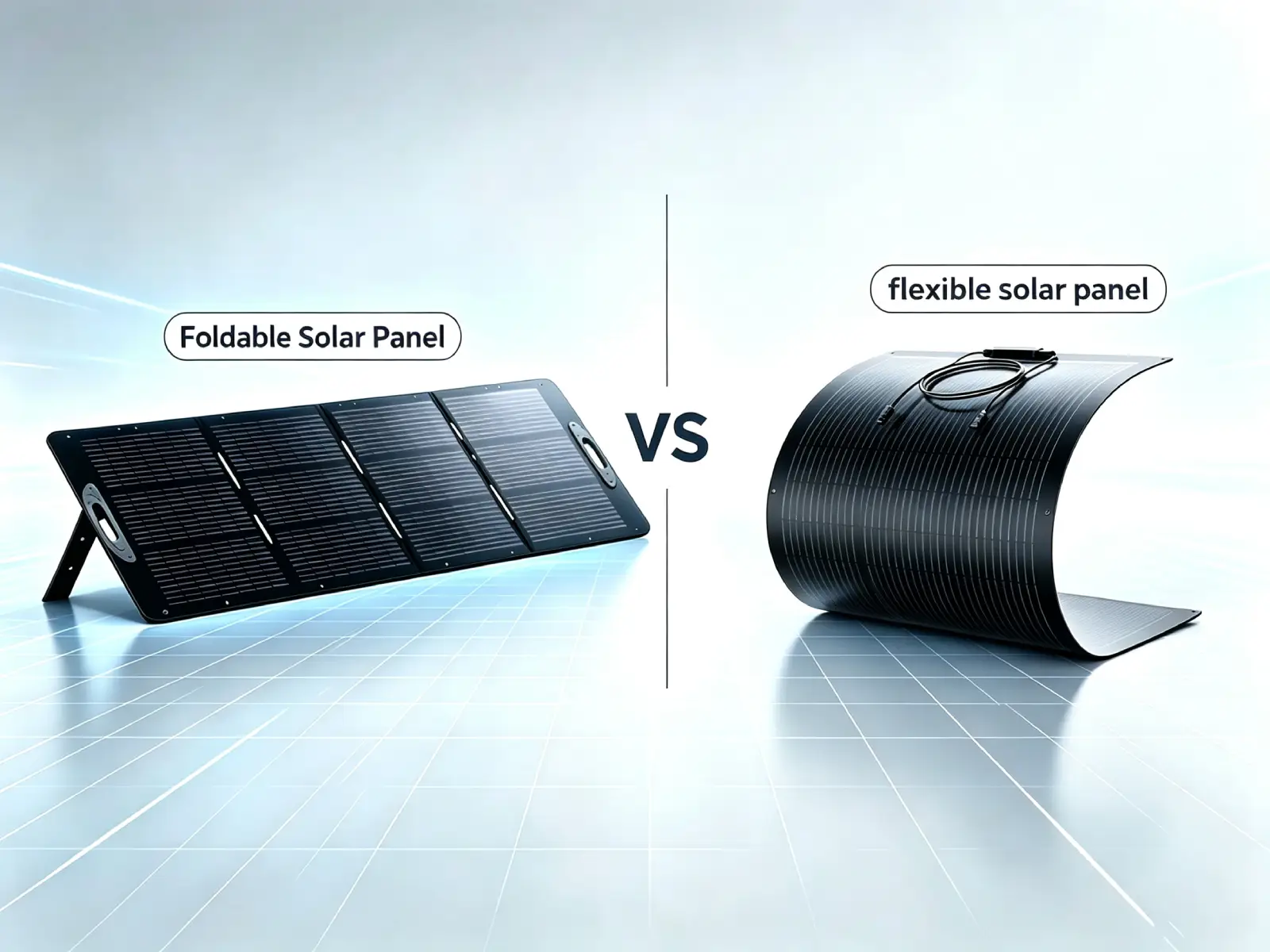
Flexible vs Foldable Portable Solar Panels: Which Fits Your Custom Project?
Executive Summary: Selecting the ideal structural form factor is the very first technical decision B2B…

The Ultimate Guide to Choosing a Flexible Solar Panel Supplier in China (2026 Sourcing Guide)
Finding a trustworthy Flexible Solar Panel Supplier in China is critical for B2B buyers looking…
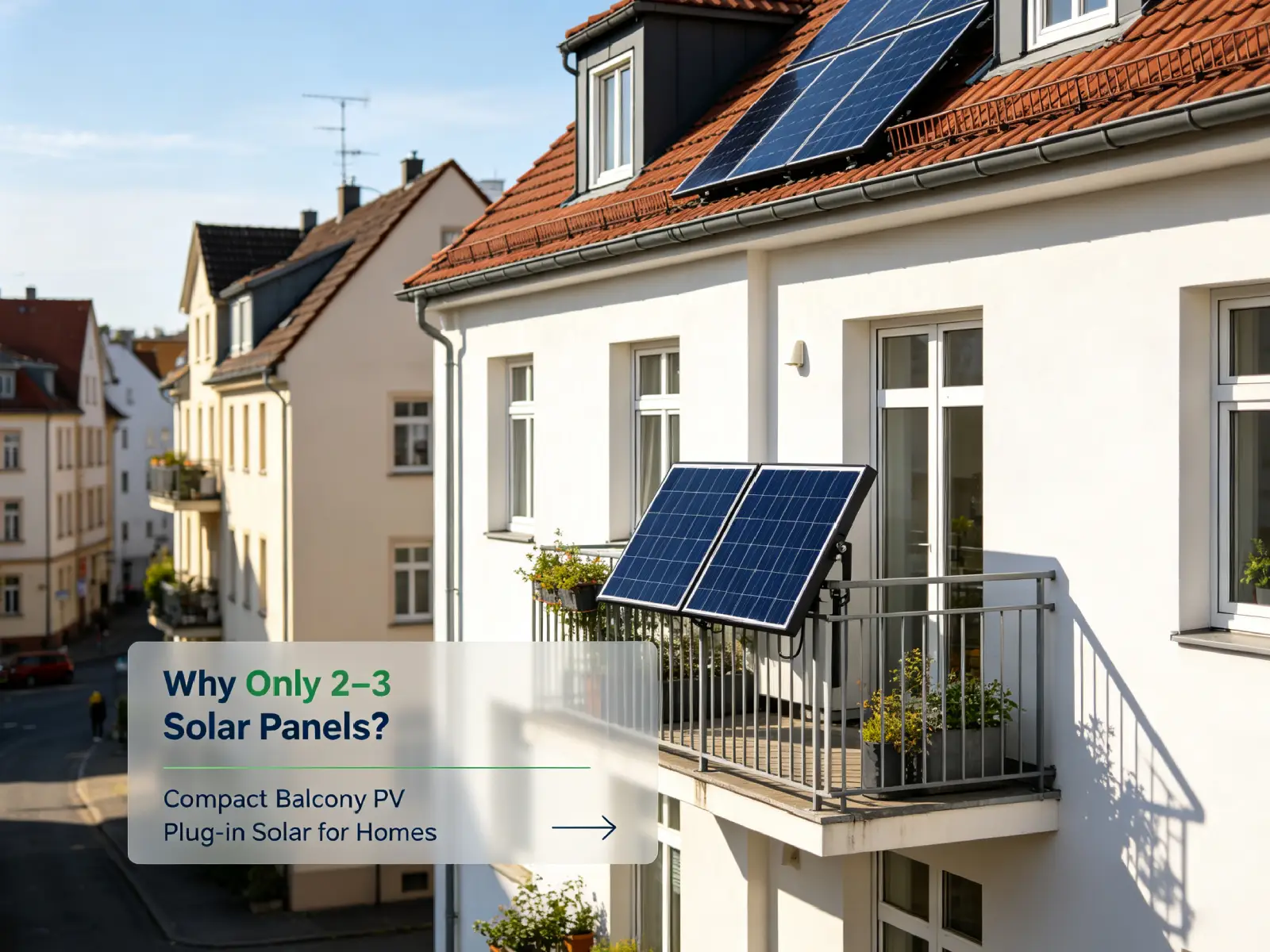
Germany’s Balcony PV Boom: Why Small 2‑3 Panel Systems Dominate the Market
It is quite typical to see just two or three solar panels scattered on…

Leave a Reply