

Solar Power Knowledge
Flexible vs Foldable Portable Solar Panels: Which Fits Your Custom Project?
 gaotu
gaotu📌 Core Engineering Snapshot
- Flexible Panels excel in permanent or semi‑permanent aerodynamic integration on irregular, curved aerodynamic surfaces where zero drilling is permitted.
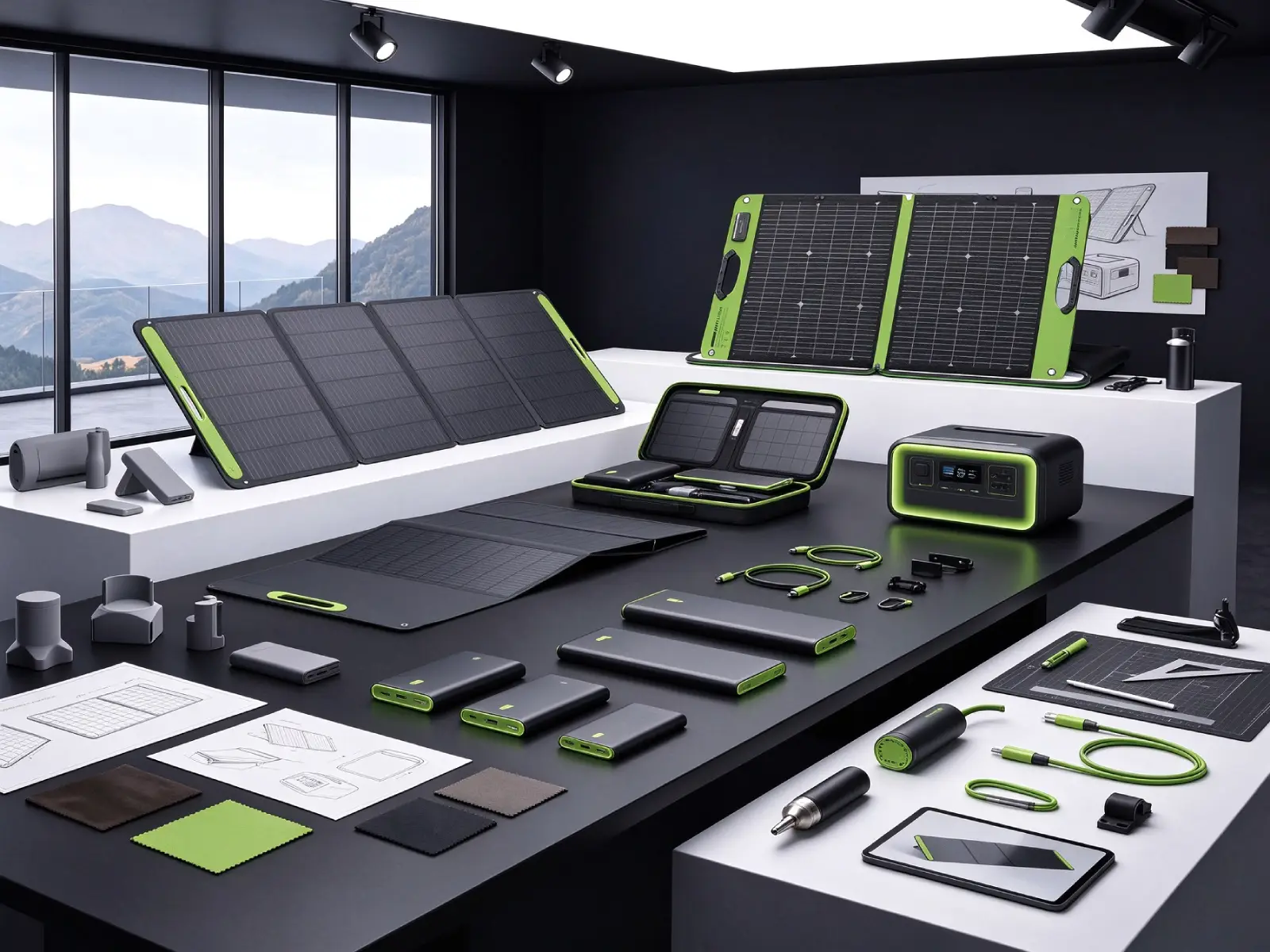
- Foldable Panels are optimized for consumer retail markets, emergency backup, and off‑grid mobility, offering integrated kickstands and heavy‑duty fabric protection.
- The Customization Key: Both form factors support tailored wattages and custom private‑label branding, but their underlying material manufacturing workflows command entirely different MOQ and tooling thresholds.
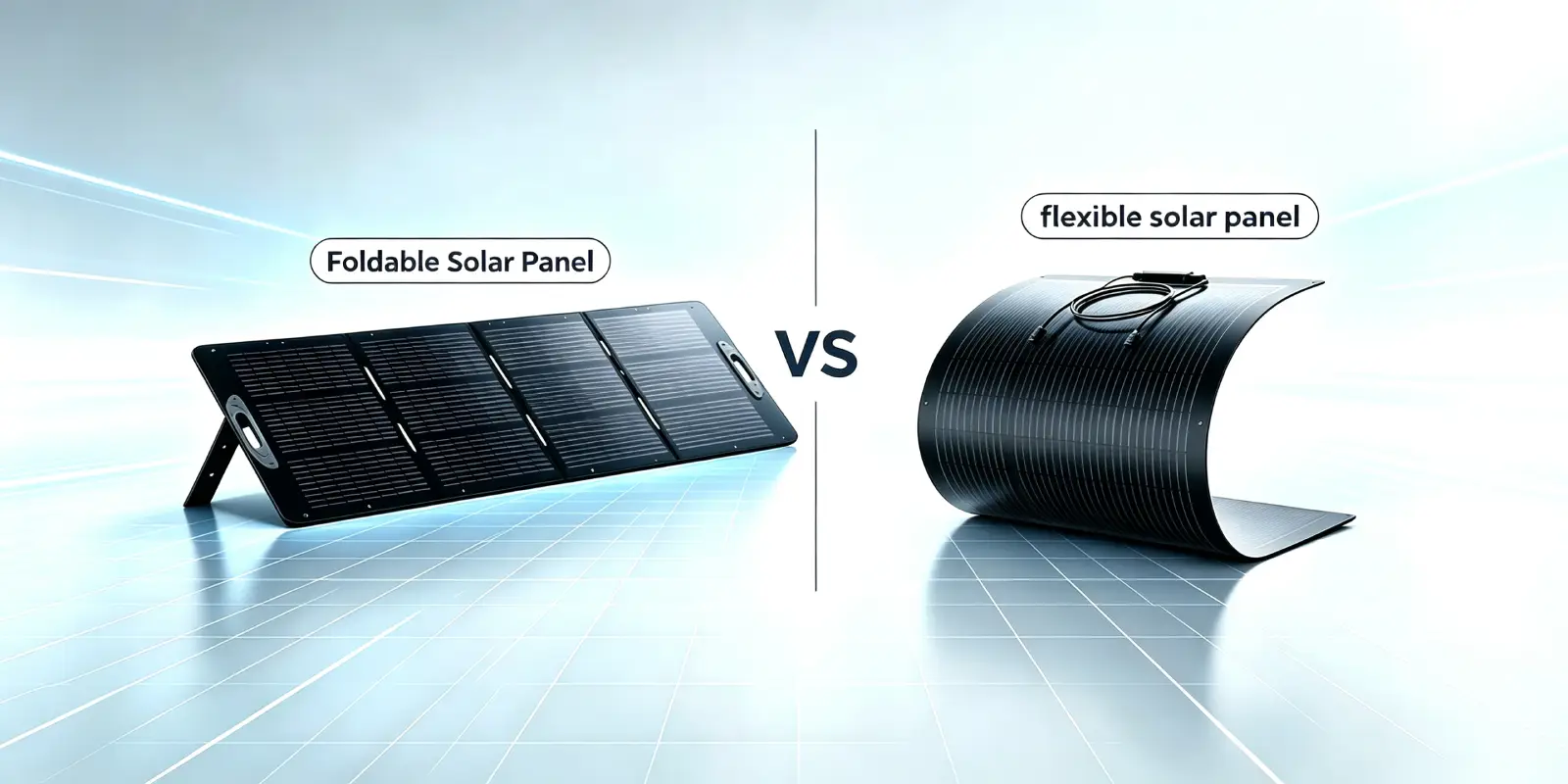
1. Flexible vs Foldable Solar Panels: Key Structural & Engineering Differences
From a manufacturing standpoint, flexible and foldable solar modules target completely distinct operational stress factors. Choosing blindly can lead to early material fatigue, structural damage, or poor market reception.
Weight and Profile Layout
Flexible solar panels utilize high‑efficiency monocrystalline cells encapsulated in thin polymer backing sheets (typically ETFE or PET), eliminating heavy glass and aluminum framing. They feature an ultra‑low profile (often less than 3mm thick) and are incredibly lightweight. Foldable solar panels, conversely, stitch individual rigid or semi‑flexible solar slices into a heavy‑duty fabric canvas (such as high‑denier Oxford cloth). While highly compact when packed away, their multi‑layered fabric assembly makes them significantly heavier during transit.
Durability and Environmental Resilience
Flexible modules are engineered to remain fixed in place, meaning they resist continuous wind shear and steady mechanical vibration when bonded to a solid backing substrate. However, they are sensitive to micro‑cracking if over‑bent past their specified radius during handling. Foldable kits are specifically built for constant human handling, setting up, tearing down, and accidental drops. The structural fabric housing acts as a shock absorber, protecting the internal cell strings from impact fracture.
2. When to Engineer Custom Flexible Solar Panels
Bespoke flexible configurations should be your primary choice if your project demands a low‑profile, permanent off‑grid installation where structural aerodynamics or strict weight limitations are non‑negotiable.
RV Roofs, Overlanding Fleets, and Campervans
Modern overland vehicles feature irregular curved rooflines crowded with rooftop tents, AC lines, and ventilation hatches. Rigid panels add aerodynamic drag, fuel costs, and require drilling that compromises vehicle warranties. A custom flexible solar panel can be cut to fit specific long, narrow roof margins and bonded directly using industrial adhesives, contouring perfectly to the vehicle profile.
Marine Decks, Yachts, and Catamarans
Yachts and commercial fishing vessels have highly constrained walkways. Traditional glass panels pose slipping hazards and structural dangers if struck by gear. Lightweight flexible panels conform tightly to yacht decks, cabin tops, or catamaran netting, distributing crew weight evenly while utilizing specialized marine‑grade anti‑corrosion wiring.
3. When to Engineer Custom Foldable Solar Kits
Foldable setups dominate the consumer lifestyle, outdoor sports retail, and temporary mobile workspace market sectors due to their plug‑and‑play architecture.
Outdoor Consumer Retail and Camping Brands
For outdoor gear resellers, a foldable kit offers a clean retail experience. They collapse down into a compact briefcase format with integrated carrying handles, making them highly attractive for retail shelving, Amazon fulfillment limits, and car trunk storage during weekend camping trips.
Mobile Field Workstations and Disaster Relief
Temporary field operations—such as remote geological surveying teams, military communications relays, or medical disaster relief zones—cannot rely on permanent mounting infrastructure. Foldable kits feature built‑in adjustable kickstands, allowing operators to deploy the array on the ground instantly and adjust angles throughout the day to track maximum solar irradiance.
4. Customization and Manufacturing Constraints (MOQ & Tooling)
Understanding factory production boundaries ensures you don’t over‑design a product that becomes financially unviable to manufacture.
Dimensional Slicing and Tooling Costs
Altering the physical width, length, or internal grid lines of a flexible panel requires modifying the structural laser cutting paths and encapsulation molds. This translates to an increased initial tooling cost and requires a higher MOQ to balance the automated line recalibration. Foldable panels offer slightly more mechanical flexibility; because they use multiple individual standard cell blocks connected in series inside a textile frame, manufacturers can often adjust the canvas layout or pouch size with lower tooling friction.
Encapsulation Materials and Layering Processes
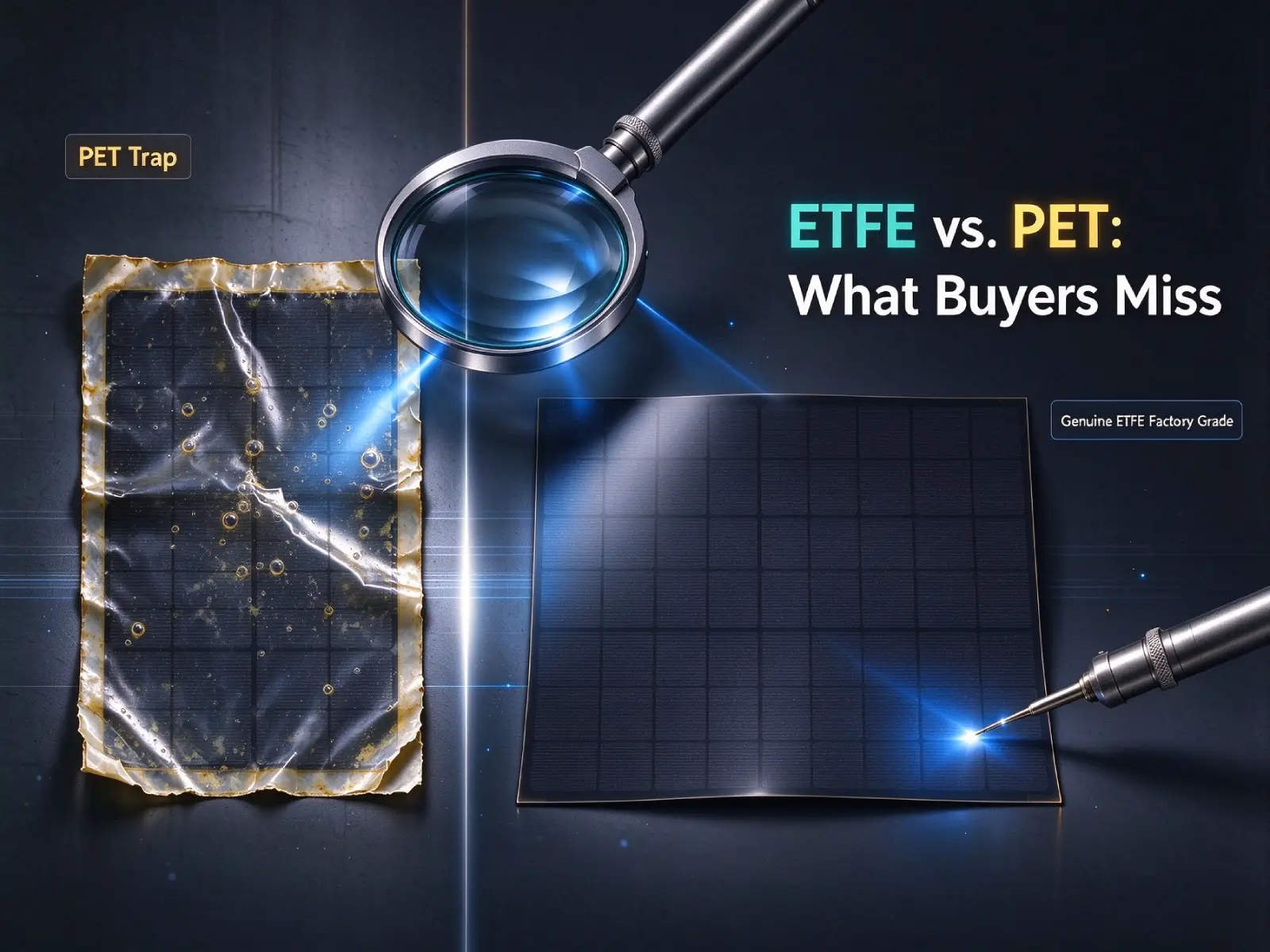
The protective top layer dictates product lifespan. While PET encapsulation reduces the initial per‑unit factory cost for low‑end retail lines, it degrades quickly under extreme solar UV heat. For heavy‑duty marine or industrial fleet contracts, specifying an upgraded ETFE surface treatment ensures chemical resistance and self‑cleaning properties, though it carries strict processing temperature minimums that influence mass production schedules.
To successfully navigate these factory constraints without risking engineering delays, check out our next tactical guide on how to order oem portable solar panels, which includes a complete sourcing checklist covering everything from prototype sign‑off to international logistics validation.
5. How to Select the Ideal Path for Your OEM Order
To finalize your engineering directive, use this direct evaluation framework: If your end‑users require hardware that integrates seamlessly onto an existing mechanical asset without modifying the asset’s structural shape, stick to a flexible path. If your target market demands high mobility, clean over‑the‑counter retail presentation, and manual deployment capability, invest your capital into a high‑quality foldable platform.
Gaotu Innovation provides upfront architectural reviews, parameter tuning, and rapid prototype sampling to eliminate procurement errors before mass line assembly. Contact our technical team today with your physical space requirements to receive an optimized engineering blueprint and direct wholesale factory pricing.
Related Posts
How to Verify a Real Solar Panel Factory in China
Most international B2B buyers, solar project contractors, and distributors share one frustrating sourcing pain point:…
Renter's Balcony Solar Installation Guide: 7 Core Rules for Safe, Compliant & Removable Setup (2026)
Quick Overview Many renters want to install balcony solar panels to save electricity bills and…
GTPOW 45W 2-in-1 Solar Charger Tote Bag: Your Ultimate Off-Grid Power Companion
Who We Are Behind every great innovation stands a company with vision. Gaotu Innovation (Shenzhen)…

Leave a Reply