

Solar Power Knowledge
Which type of solar panel is best for home use?
 gaotu
gaotuInstalling home solar panels is one of the most practical ways to cut electricity bills and live an eco-friendlier life. Still, most homeowners struggle with the same question: what type of solar panels work best for residential use?
There are four common solar panel types on the market: monocrystalline, polycrystalline, thin-film, and flexible solar panels. Their performance varies hugely. Picking the wrong one means lower power generation and wasted money.
This guide skips complicated technical jargon and boring data. It gives real, home-focused comparisons. Here is the straightforward conclusion upfront: for regular households, monocrystalline solar panels are the top choice overall — more durable, more efficient, and better at saving electricity in the long run.
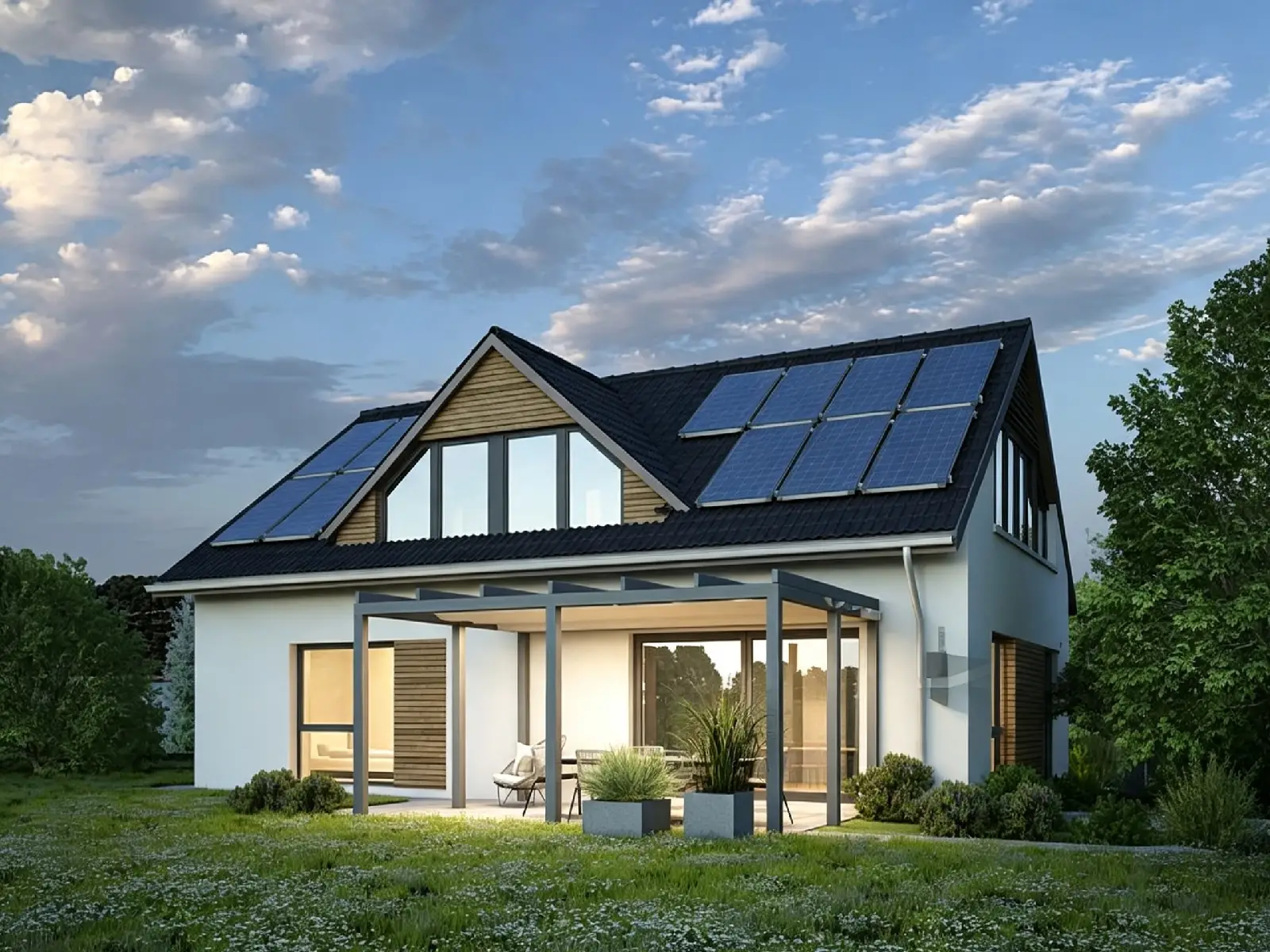
What Are the Different Types of Home Solar Panels?
Four main solar panel types are available for residential installation. However, not all are suitable for home use. Some are designed only for industrial or commercial projects.
The four categories are monocrystalline, polycrystalline, thin-film, and flexible solar panels. Below is a simple breakdown of their pros, cons, and ideal users.
Simple Comparison of 4 Solar Panel Types (For Homeowners)
1. Monocrystalline Solar Panels (Top Pick for Most Homes)
Monocrystalline panels are the mainstream option for home solar systems. They feature a solid black appearance and are used in almost all reliable residential solar setups.
Key benefits for home use: They deliver the highest power generation efficiency. They produce more electricity even with limited roof or balcony space. They work steadily on cloudy and low-sunlight days. With a lifespan of 25 to 30 years, they are long-lasting, low-failure, and nearly maintenance-free.
The only downside is a slightly higher upfront cost. However, thanks to high output, long service life, and no frequent replacements, they are the most cost-effective option in the long term.
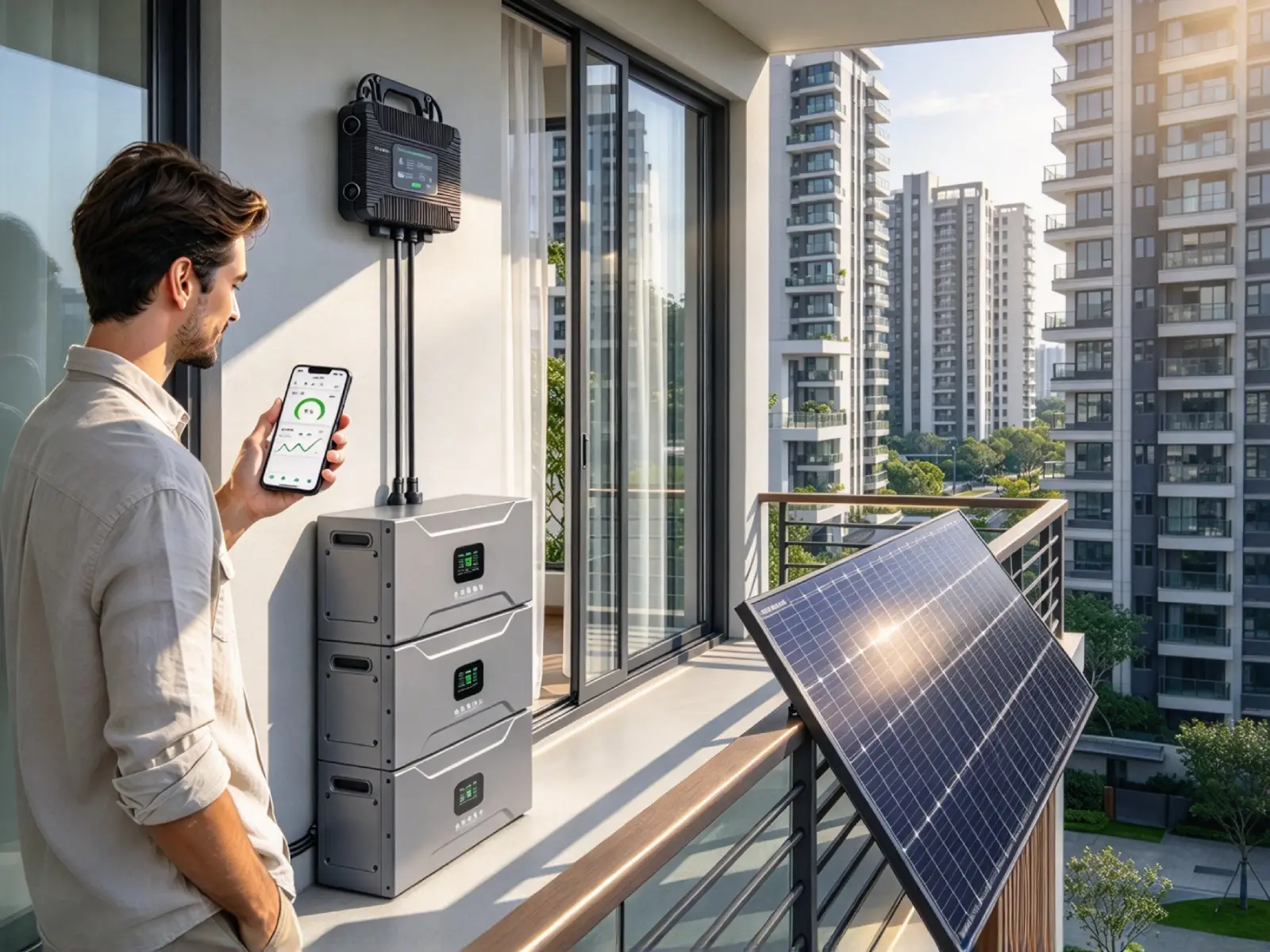
Best for: Apartments, private houses, homes with limited roof or balcony space, and homeowners who want long-term energy savings without frequent maintenance.
2. Polycrystalline Solar Panels (Budget Temporary Option)
Polycrystalline panels are an older generation solar solution with a typical blue textured look. Their biggest advantage is affordability, costing around 15% to 20% less than monocrystalline panels.
Unfortunately, they show obvious weaknesses for home use. They have lower efficiency and require more installation space to generate the same amount of power. They perform poorly on cloudy days and age faster, with a shorter lifespan of about 20 years.
Best for: Homeowners on a tight budget, properties with large roof space, and temporary solar usage. Not recommended as the primary home solar option.
3. Thin-Film Solar Panels (Not Recommended for Home Use)
Thin-film panels are the cheapest and ultra-lightweight solar option, but they are not suitable for ordinary households at all.
Their power efficiency is extremely low. You need to cover a huge area to meet basic household electricity needs. They also degrade quickly and only last about 15 years, resulting in very poor overall value.
These panels are mainly used for large construction sites, commercial power stations, and public facilities. Regular homes should avoid thin-film panels entirely.
4. Flexible Solar Panels (Special-Scenario Only, Not Necessary)
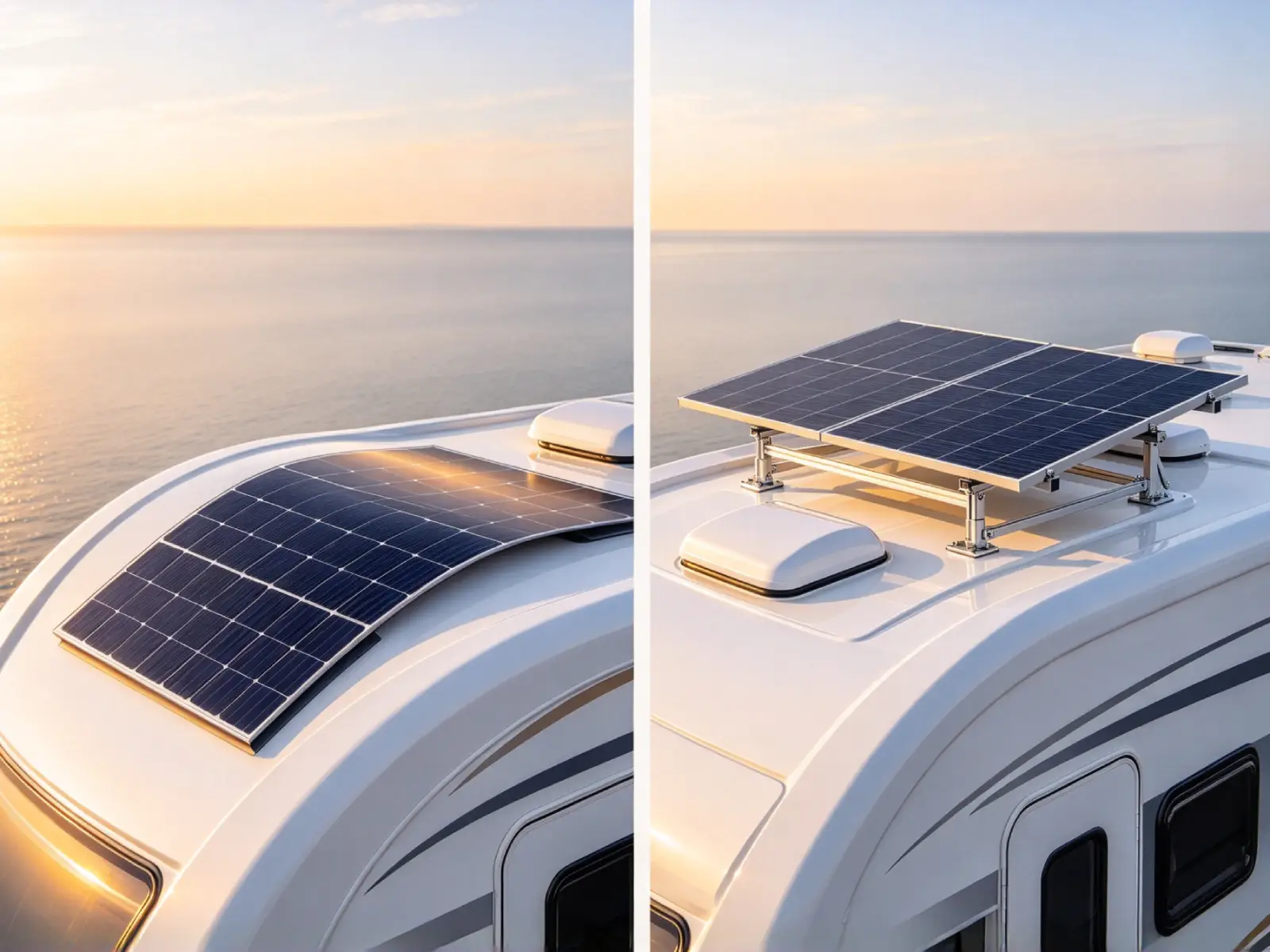
Flexible solar panels are bendable, ultra-thin, and lightweight. They can be installed on surfaces where rigid panels cannot fit, such as curved roofs, balcony railings, and RVs.
They offer flexible installation and strong adaptability to irregular surfaces. Yet they have two clear downsides: higher unit price and slightly lower efficiency than standard monocrystalline panels.
Best for: Homes with curved roofs, irregular surfaces, or only balcony railing installation space. Completely unnecessary for standard flat or sloped roofs.
5 Simple Factors to Choose Home Solar Panels
You don’t need to understand complex parameters. Just focus on these 5 practical home-use factors:
1. Installation Space Small roof or balcony → Choose monocrystalline panels for higher output in limited space. Large roof with low budget → Polycrystalline panels are acceptable.
2. Local Sunlight Conditions Cloudy or rainy areas → Monocrystalline panels perform better in weak light with stable output. Sunny areas all year round → Budget-friendly panels work fine.
3. Solar Budget Long-term savings and one-time investment → Go with monocrystalline. Temporary usage and tight budget → Choose polycrystalline.
4. Durability & Warranty Home solar is a decades-long investment. Monocrystalline panels come with longer warranty, slower power attenuation, and fewer failures, saving you plenty of maintenance costs over time.
5. Household Power Consumption High electricity usage (air conditioners, water heaters, multiple appliances) → High-efficiency monocrystalline panels are a must. Low daily power demand → Economy panels work for basic lighting and small devices.
Final Solar Panel Buying Verdict (Easy Decision)
1. Best overall for 90% of homes: Monocrystalline Solar Panels Balancing power output, lifespan, stability, and long-term value, it is the safest and most practical choice for almost all residential properties.
2. Budget alternative: Polycrystalline Solar Panels Only suitable for large rooftops and short-term usage with limited funds.
3. Special scenario choice: Flexible Solar Panels Perfect for curved or irregular roofs and balcony-only installations, but unnecessary for standard homes.
4. Avoid completely: Thin-Film Solar Panels Too space-consuming, short-lived, and uneconomical for household use.
FAQs About Home Solar Panels
Q1: Which solar panel type is best for home use?
A1: Monocrystalline solar panels are the best choice for regular families. They offer stable power generation, long service life, and excellent long-term savings, ideal for rooftop and balcony home solar systems.
Q2: Are flexible solar panels worth installing at home?
A2: No need for standard roofs. Flexible panels are only useful for curved surfaces or balcony railings where rigid panels cannot be mounted.
Q3: Are polycrystalline solar panels cost-effective for homes?
A3: They save money in the short term but are poor value long-term. Due to lower efficiency and shorter lifespan, they are not recommended as the main home solar solution unless you have an extremely tight budget.
Conclusion
When choosing home solar panels, the most expensive option is not always the best. The ideal panels should fit your house, stay durable, and meet your daily power needs. For most homeowners, monocrystalline solar panels deliver the perfect balance of performance and value. It is a solid, long-term investment that brings stable power supply and consistent electricity savings for years.
Related Posts

How to Import Solar Panels from China Safely: Compliance and Risk Mitigation Guide
Article Abstract Buying wholesale solar panels direct from Chinese factories delivers major cost advantages, yet…
How Much Is Portable Solar Panel Bulk Price? Complete 2026 Factory Wholesale Cost Guide
How Much Is Portable Solar Panel Bulk Price? if you’re an overseas distributor, RV brand,…
Your Commercial Roof Condition Is the Hidden Cost Nobody Warns You About
You’ve finally decided to put solar on your warehouse. You spent months comparing module…
Leave a Reply