

Solar Power Knowledge
Renter’s Balcony Solar Installation Guide: 7 Core Rules for Safe, Compliant & Removable Setup (2026)
 gaotu
gaotuQuick Overview
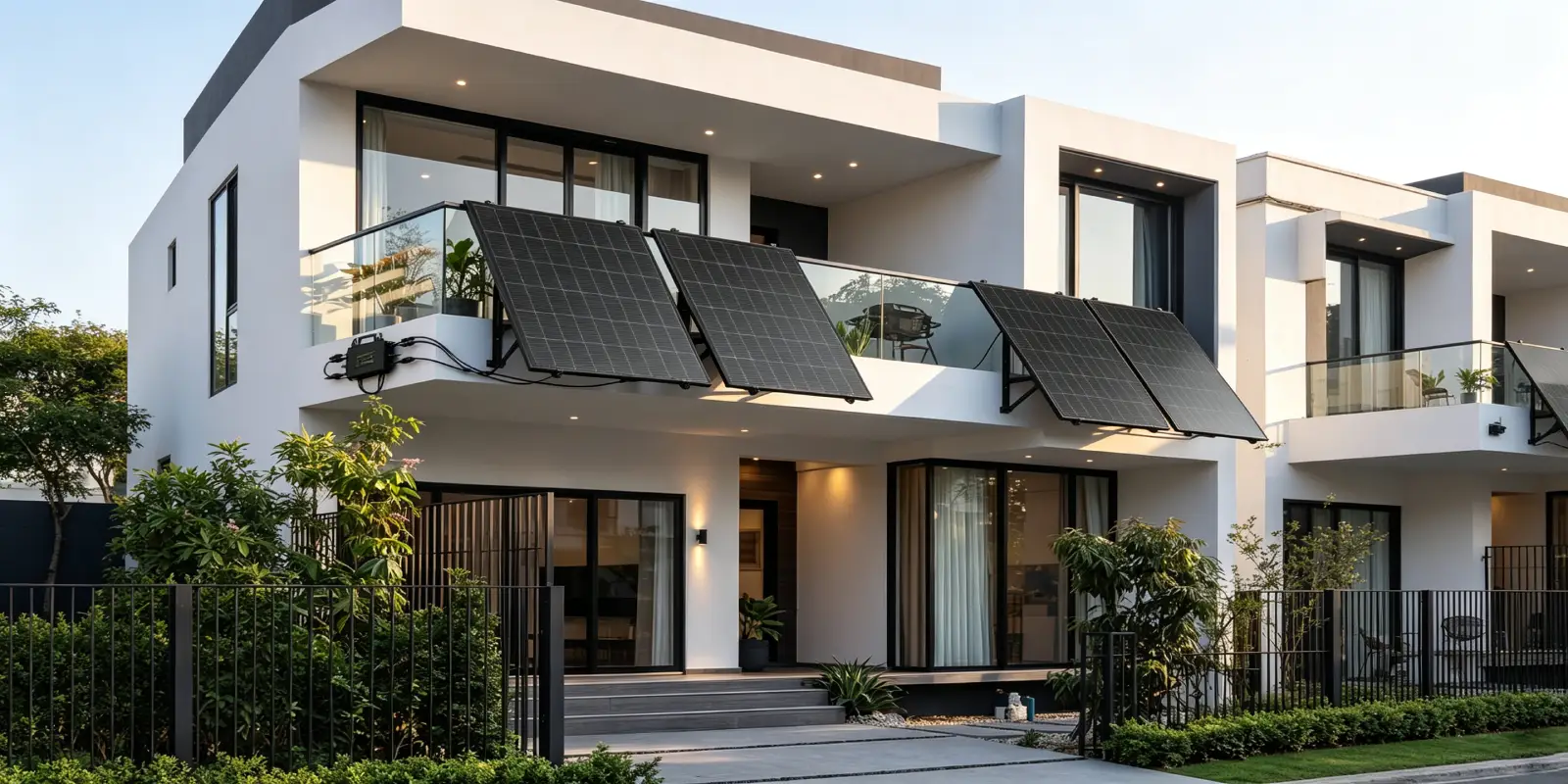
Many renters want to install balcony solar panels to save electricity bills and secure backup power, yet most end up facing issues: property management bans, non‑removable setups, or potential safety hazards. It is critical to understand that balcony photovoltaic systems cannot be installed the same way as rooftop solar systems — this is the top reason why most rental solar panel installations fail. For renters choosing a balcony solar system, three priorities stand above power output: removability, safety, and compliance. For solar vendors and distributors, the ideal balcony solar power equipment for renters features drill‑free installation, zero wall damage, reliable safety, and hassle‑free after‑sales service, perfectly fitting the flexible lifestyle of renters. As long as you comply with community regulations, rental agreements, and local electricity codes, balcony solar systems are completely legal and safe to use.
What This Article Covers
The market offers a wide variety of balcony solar power devices, which differ greatly in installation difficulty, risk level, and applicable scenarios. Some suit long‑term residency for daily power savings, while others are designed for frequent movers. Choosing the right renter‑friendly solar equipment requires a clear understanding of product differences. This beginner‑friendly guide breaks down the 5 mainstream balcony solar systems, the key differences between balcony solar and rooftop solar, and 7 essential pre‑installation checks for renters. It also provides solar sellers and distributors with standardized balcony solar product implementation standards to avoid after‑sales disputes and compliance risks.
5 Mainstream Balcony Solar Systems: A Complete Comparison
| System Type | Working Principle | Best For |
|---|---|---|
| Drill‑Free Balcony Solar Kit | Fixed to balcony railings or floors via clamps and counterweight brackets without drilling or structural modifications. Paired with a micro‑inverter for plug‑and‑play use, it is currently the most popular rental solar solution. | Long‑term renters with sunny balconies and communities that prohibit wall renovations. It is the most cost‑effective balcony solar power equipment for apartments. |
| Portable Solar Panel + Power Station | Portable solar panels charge the power station independently with no connection to household circuits, enabling fully off‑grid operation with zero modifications and zero risks. | Short‑term renters, frequent movers, and users who want zero‑renovation, low‑risk green power solutions for removable balcony solar applications. |
| Plug‑and‑Play Grid‑Tied Micro Solar System | Certified micro‑inverters plug directly into household outlets. Balcony solar power generation offsets grid electricity consumption, delivering tangible electricity bill savings. | Apartment residents in regions permitting plug‑in grid‑tied solar, seeking long‑term and stable power savings with reliable balcony solar systems. |
| Balcony Solar + Battery Energy Storage System | Balcony solar panels generate power during the day, with excess energy stored in batteries for nighttime use and emergency backup during power outages. | Residents in high‑electricity‑cost areas or regions with frequent power outages, needing continuous power for phones, routers, lights, and other small devices. A versatile renter solar equipment for daily savings and emergency use. |
| Community Shared Solar | Requires no personal solar photovoltaic equipment or self‑installation. Users subscribe to community centralized solar projects to enjoy green energy savings. | Renters with shaded balconies, limited installation space, or those who prefer hassle‑free balcony solar solutions without equipment maintenance. |
Who This Guide Is For
This guide helps both individual renters and solar wholesalers avoid pitfalls and successfully implement balcony solar projects:
Apartment Renters & Household Users: Answers core questions: Can renters legally install balcony solar panels? Is drilling required? Can the system be moved when relocating? Is it safe and cost‑effective? It helps you avoid unnecessary losses from improper rental solar solution purchases and installations.
Solar Brands, Retailers & Distributors: Provides standardized balcony solar product R&D, installation, risk control, and after‑sales guidelines. It supports the development of compliant, marketable and low‑maintenance renter‑specific solar equipment for the global rental market.
Balcony Solar vs. Rooftop Solar: Not the Same Technology
A common misconception is that balcony solar photovoltaic systems are just miniaturized rooftop solar setups. This is a critical error. The two differ fundamentally in installation logic, risk factors, and application purposes — the biggest pitfall for new balcony solar power system users.
| Comparison Dimension | Rooftop Solar | Balcony Solar |
|---|---|---|
| Authorization & Control | Fully owner‑controlled with independent installation rights | Restricted by landlords, property management, and homeowner associations; rental solar installation requires multi‑party approval |
| Installation Nature | Permanent fixed installation as building infrastructure | Detachable temporary setup with zero property damage, a dedicated removable photovoltaic system for renters |
| Power Generation Scale | High power output covering full‑house electricity demand | Low‑power system for partial electricity offset, optimized for small‑space balcony solar power generation |
| Approval Requirements | Formal construction and grid interconnection filing mandatory | Only compliant with rental contracts and local electricity codes; drill‑free balcony solar has minimal approval barriers |
| Installation Location | Building roof structures | Balcony railings and floors with no structural renovations, tailored for apartment balcony solar installation scenarios |
| Core Design Priority | Long‑term power generation stability and structural durability | Easy assembly/disassembly, safety, and zero damage, catering to core renter balcony solar demands |
| Operation Mode | Professional on‑site installation and commissioning | Self‑service installation with user manuals; portable balcony solar requires no professional skills |
7 Essential Pre‑Installation Checks for Renter Solar
A successful, trouble‑free balcony solar installation depends not on equipment price or power rating, but on thorough pre‑checks. Complete these 7 inspections before purchasing balcony solar equipment to avoid wasted money and potential hazards.
| Inspection Item | User‑Friendly Inspection Standards |
|---|---|
| Sunlight Condition Check | South, southeast, or southwest‑facing balconies with a minimum of 4 hours of direct sunlight daily are ideal. Balconies permanently shaded by buildings or trees yield extremely low balcony solar power generation and are not recommended for any solar photovoltaic equipment installation. |
| Shading Hazard Check | Even partial shading can drastically reduce solar panel output. Install panels away from ceilings, walls, and protruding structures to ensure full sunlight exposure and maximize balcony solar efficiency. |
| Installation Safety Check | Test balcony railing stability and floor load‑bearing capacity before installation. High‑floor balconies require strict wind and fall prevention measures. Never drill holes to damage walls or railings; prioritize drill‑free balcony solar solutions. |
| Compliance & Permission Check | Review your rental agreement and consult property management to confirm permission for external solar equipment and plug‑in solar setups. Strict communities require written approval to prevent renter balcony solar removal orders post‑installation. |
| Electrical Safety Check | Plug‑in balcony solar systems must use independent GFCI‑protected outlets; never use power strips or extension cords. Verify local grid interconnection rules to avoid illegal wiring and ensure electrical safety. |
| Indoor Storage Check | Store solar power stations and batteries in dry, well‑ventilated indoor areas, away from humidity and high temperatures. This prevents overheating hazards and extends the service life of balcony solar equipment. |
| Mobility Adaptation Check | Frequent movers must choose fully detachable, tool‑free, reusable removable balcony solar devices. Avoid fixed modified setups that cannot be relocated. |
Pros & Cons of 5 Solar Solutions: Choose Without Regrets
High‑power or expensive equipment is not always better. Select a balcony solar solution based on your residency duration and power needs for maximum cost performance and personalized rental power scenarios.
| Solution Type | Ideal Users | Core Advantages | Limitations |
|---|---|---|---|
| Drill‑Free Balcony Solar Kit | Long‑term renters with sunny balconies | Utilizes idle balcony space with stable balcony solar power generation and moderate pricing, ranking as the most popular renter solar solution | Requires railing load‑bearing and wind resistance checks; manual solar panel angle adjustment needed |
| Portable Solar Panel + Power Station | Short‑term renters and frequent movers | Zero renovation, zero compliance risk, easy disassembly and portability, a premium removable solar device for flexible rental lifestyles | Limited power output; unable to support high‑wattage appliances such as air conditioners and water heaters, only for small household devices |
| Plug‑and‑Play Grid‑Tied Solar System | Long‑term residents in policy‑compliant regions seeking stable power savings | Directly offsets grid electricity bills with visible balcony solar energy savings and excellent long‑term cost performance | Regional policy variations exist; strict compliance and electrical inspection standards apply pre‑installation |
| Solar + Battery Energy Storage System | Users in outage‑prone areas or needing nighttime power supply | Stores excess solar power for nighttime use and emergency backup, enabling peak‑shaving power savings with dual functionality | Higher overall balcony solar system cost with multiple components requiring routine maintenance |
| Community Shared Solar | Renters with shaded balconies or no installation space | No self‑installation or maintenance required; subscription‑based access with zero safety risks and ultimate convenience | No equipment ownership; no emergency power supply capability with low usage flexibility |
High‑Rise Balcony Installation & Wind Resistance Safety Guidelines
High‑rise buildings face strong wind forces, making loose or fallen balcony solar equipment the top safety hazard. Follow these critical rules when installing balcony solar panels to mitigate risks:
• Prioritize clamp‑style drill‑free brackets that cause zero damage to railings and walls for trouble‑free lease termination, the optimal balcony solar installation method for renters
• Use lightweight solar panels for railing mounting to avoid structural loosening; use floor counterweight fixation for heavy equipment to meet high‑rise load standards
• Avoid flat installation, which creates maximum wind resistance and increases blow‑over risks; install panels at an inclined or vertical angle to secure balcony solar stability
• Add secondary safety rope fixation for floors 8 and above to completely eliminate falling hazards in high‑rise scenarios
• Reserve drainage gaps under equipment to prevent water accumulation, corrosion, and extra weight, extending balcony solar equipment lifespan
• Keep installation areas clear of walkways and fire exits to comply with fire safety codes for legal solar power equipment operation
Electrical Safety & Certification Standards (Simplified Guide)
Although balcony solar photovoltaic systems seem simple, non‑standard wiring and uncertified equipment can lead to short circuits, electric shocks, and fire hazards. Adhere to these safety bottom lines for secure household solar operation:
| Safety Inspection Dimension | Simplified Risk Explanation |
|---|---|
| Grid‑Tied vs. Off‑Grid | Grid‑tied balcony solar carries higher risks and strict local code compliance; portable off‑grid solar requires no household circuit connection, offering the safest option for renters |
| Outlet & Circuit Compatibility | Only use independent grounded GFCI outlets. Power strip daisy‑chaining and long extension cords easily cause short circuits and damage solar power generation systems |
| Equipment Certification Requirements | Micro‑inverters must feature UL 1741 anti‑islanding protection; brackets require UL 3700 wind and tensile resistance certification for safe and compliant balcony solar products |
| Cable Protection Standards | Outdoor cables need waterproof and anti‑aging treatment with tidy placement to avoid extrusion damage, tripping hazards, and electric leakage for stable power generation |
| Battery Placement Rules | Batteries must avoid direct sunlight and enclosed charging. Store in ventilated dry areas to prevent thermal runaway and fire risks for safe solar energy storage equipment operation |
| Professional Testing Advice | Consult a professional electrician for circuit and policy verification before installing balcony solar panels to avoid blind operation |
Grid‑Tied vs. Off‑Grid Portable Solar: Key Differences
Most users select the wrong balcony solar equipment due to confusion between these two modes. Master this comparison to choose the perfect solar device for rental scenarios:
| Core Differences | Plug‑and‑Play Grid‑Tied Solar | Portable Solar + Power Station |
|---|---|---|
| Circuit Connection Mode | Connects directly to household grid for bidirectional power exchange and grid‑tied balcony solar power generation | Fully independent off‑grid design with no household circuit connection for standalone solar energy storage power supply |
| Policy Restrictions | Strictly regulated by regional power grid policies; grid‑tied balcony solar systems are not permitted in all areas | Minimal restrictions; compliant with general fire and rental rules with wider renter off‑grid solar adaptability |
| Power Savings Effect | Real‑time grid electricity offset delivers the most direct and obvious balcony solar power savings | Only powers individual devices with no grid bill offset, serving purely as emergency backup power |
| Power Outage Backup | Non‑functional during most power outages with no emergency power capability | Provides emergency power for phones, lights, and routers with high practicality as household solar equipment |
| Suitable Users | Long‑term residents pursuing stable power savings in policy‑compliant regions | Frequent movers, risk‑averse users, and those needing emergency backup power |
Power Rating Selection Guide: Matching Devices to Usage Scenarios
Balcony solar systems are auxiliary power solutions and cannot support full‑house high‑wattage appliances. Select specifications rationally to avoid waste and pitfalls based on your actual power demand:
| Usage Scenario | Power Consumption Features | Recommended Configuration |
|---|---|---|
| Daily power for phones, routers, computers and small devices | Low and stable power consumption with no high‑power demand | 300W‑400W portable solar panel + medium‑sized power station for daily small‑device power supply |
| Indoor lighting and daily emergency backup | Short‑duration power demand focusing on backup functionality for household emergencies | 400W balcony solar kit + basic battery storage for dual lighting and emergency power support |
| Standby power for medium devices such as refrigerators | 24‑hour continuous power consumption requiring high supply stability | 600W system + large‑capacity battery + professional inverter for stable medium‑device operation |
| Daily electricity bill reduction | Long‑term solar power generation for grid offset and cost optimization | 400W‑600W plug‑and‑play grid‑tied balcony solar system for optimal long‑term cost performance |
| Off‑peak nighttime power usage | Daytime energy storage for high‑cost nighttime grid power replacement | Balcony solar + large‑capacity energy storage system for efficient peak‑shaving power savings |
9 Common Renter Solar Mistakes to Avoid
Most balcony solar failures stem from cognitive errors rather than defective solar equipment. Steer clear of these common pitfalls:
1. Blindly purchasing balcony solar equipment without evaluating balcony sunlight and shading conditions
2. Assuming all balconies support solar photovoltaic installation while ignoring high‑rise wind resistance and railing load limits
3. Installing renter solar systems without landlord or property approval, leading to mandatory removal and financial loss
4. Using low‑quality cables and extension cords, creating electric leakage and fire hazards
5. Believing plug‑in balcony solar is universally legal without researching regional policy differences
6. Overestimating low‑power solar equipment performance and expecting balcony solar panels to power entire households
7. Mismatched combinations of solar panels, batteries, and inverters causing system malfunction
8. Purchasing fixed balcony solar products incompatible with relocation needs, resulting in total abandonment upon moving
9. Choosing uncertified low‑cost solar devices with no official manuals or after‑sales support
Solar Vendor Standards: Balcony Solar Product Implementation Guidelines
Balcony solar systems require scenario‑based design rather than simple hardware assembly. Marketable, low‑maintenance, and high‑reputation renter balcony solar products must follow standardized configurations for global market adaptation:
| Mandatory Product Configuration | Implementation Value & Risk Control |
|---|---|
| Clear Product Positioning | Clearly distinguish grid‑tied, off‑grid, and energy storage models to avoid false promotion and customer misguidance, accurately matching balcony solar user demands |
| Lightweight Standardized Design | Compatible with most apartment balcony and railing sizes, reducing balcony solar installation difficulty and logistics costs for mass production and global distribution |
| Complete Drill‑Free Installation Tutorial | Define compatible and incompatible balcony types with standardized installation and wind protection procedures to reduce user DIY solar installation errors |
| Comprehensive Safety Specifications | Clearly specify circuit adaptation, cable routing, and battery usage prohibitions to eliminate balcony solar safety hazards at the source |
| Regional Compliance Documentation | Adapt to regional electricity policies and compliance standards, helping distributors and end users quickly launch balcony solar projects and avoid regulatory risks |
| Simplified Packaging & Graphic Manuals | Visual step‑by‑step guides enable beginner‑friendly self‑installation of balcony solar kits and reduce after‑sales consultation pressure |
| Complete After‑Sales & Spare Parts System | Equip full‑range spare parts and standardized FAQ support to efficiently resolve balcony solar operational issues and enhance brand reputation |
Mandatory Information for Product Detail Pages
Cover all pre‑sales user questions on product pages to reduce consultation volume and after‑sales disputes, while optimizing Google SEO keyword matching and search ranking performance:
• Clarify renter compatibility, full disassembly capability, and relocatable features to highlight removable balcony solar attributes
• Clearly state grid‑tied/off‑grid attributes and applicable electrical environments to distinguish two core balcony solar system types
• Explain landlord and property approval requirements to answer rental solar installation compliance questions
• Specify emergency power output capability and compatible device ranges to define solar energy storage application scenarios
• List applicable balcony types, railing specifications, and sunlight requirements to clarify balcony solar adaptation conditions
• Describe equipment operating status and power generation changes under shaded conditions to truthfully present sunlight impact on solar power generation
• Provide complete packing lists and inapplicable scenarios to define solar equipment usage boundaries
• Display official safety certifications and full after‑sales coverage to highlight compliant balcony solar product advantages
FAQ
| Question | Answer |
|---|---|
| 1. Is it legal for renters to install balcony solar systems? | Yes, legality depends on equipment type and local regulations. Portable off‑grid balcony solar features universal low‑risk compatibility; plug‑in grid‑tied balcony solar panels are restricted by regional policies, community rules, and rental agreements, requiring prior compliance verification. |
| 2. Is balcony solar just a mini version of rooftop solar? | Absolutely not. Rooftop solar is permanent building infrastructure focused on long‑term high‑power generation, while renter balcony solar prioritizes movability, zero damage, and low risk for flexible rental scenarios with entirely distinct design logic and use cases. |
| 3. Do balcony solar systems require batteries? | No. Grid‑tied systems operate normally without batteries for power savings; batteries are optional accessories only for users needing nighttime power or outage backup as customized solar energy storage equipment. |
| 4. Are plug‑in balcony solar systems safe? | Systems with certified hardware and standard wiring are completely safe. Uncertified inverters and irregular wiring are the main safety hazards. Follow standard balcony solar system installation specifications for secure operation. |
| 5. What are the core standards for balcony solar products? | Core standards are renter‑centric: drill‑free installation, lightweight portability, full safety certification, clear scenario positioning, and comprehensive after‑sales service, creating market‑competitive balcony solar solutions for global users. |
Conclusion
It is critical to recognize that balcony solar systems are not simplified rooftop solar variants, but independent new energy products tailored exclusively for apartment and rental scenarios. For individual renters, prioritize safety, compliance, and practicality over high power output or appearance when choosing balcony solar panels. Verify your balcony conditions and community rules before purchasing to avoid unnecessary costs. For solar industry merchants, core competitiveness in the balcony solar market lies not in parameter competition, but in scenario‑based safety design, removable solutions, and reliable after‑sales support. Only user‑centric and risk‑controlled balcony solar products can sustain market recognition.
About Us
Related Posts

RV Solar Panel Selection Guide: How to Pick the Right Panels for Your RV
Key Takeaways: Ultimate RV Solar Panel Buying Guide Picking RV solar panels isn’t just about…
How to Verify a Real Solar Panel Factory in China
Most international B2B buyers, solar project contractors, and distributors share one frustrating sourcing pain point:…
Renter's Balcony Solar Installation Guide: 7 Core Rules for Safe, Compliant & Removable Setup (2026)
Quick Overview Many renters want to install balcony solar panels to save electricity bills and…
Leave a Reply