

Solar Power Knowledge
Balcony Solar Storage Systems — The Wholesale Opportunity You Shouldn‘t Sleep On
 gaotu
gaotu
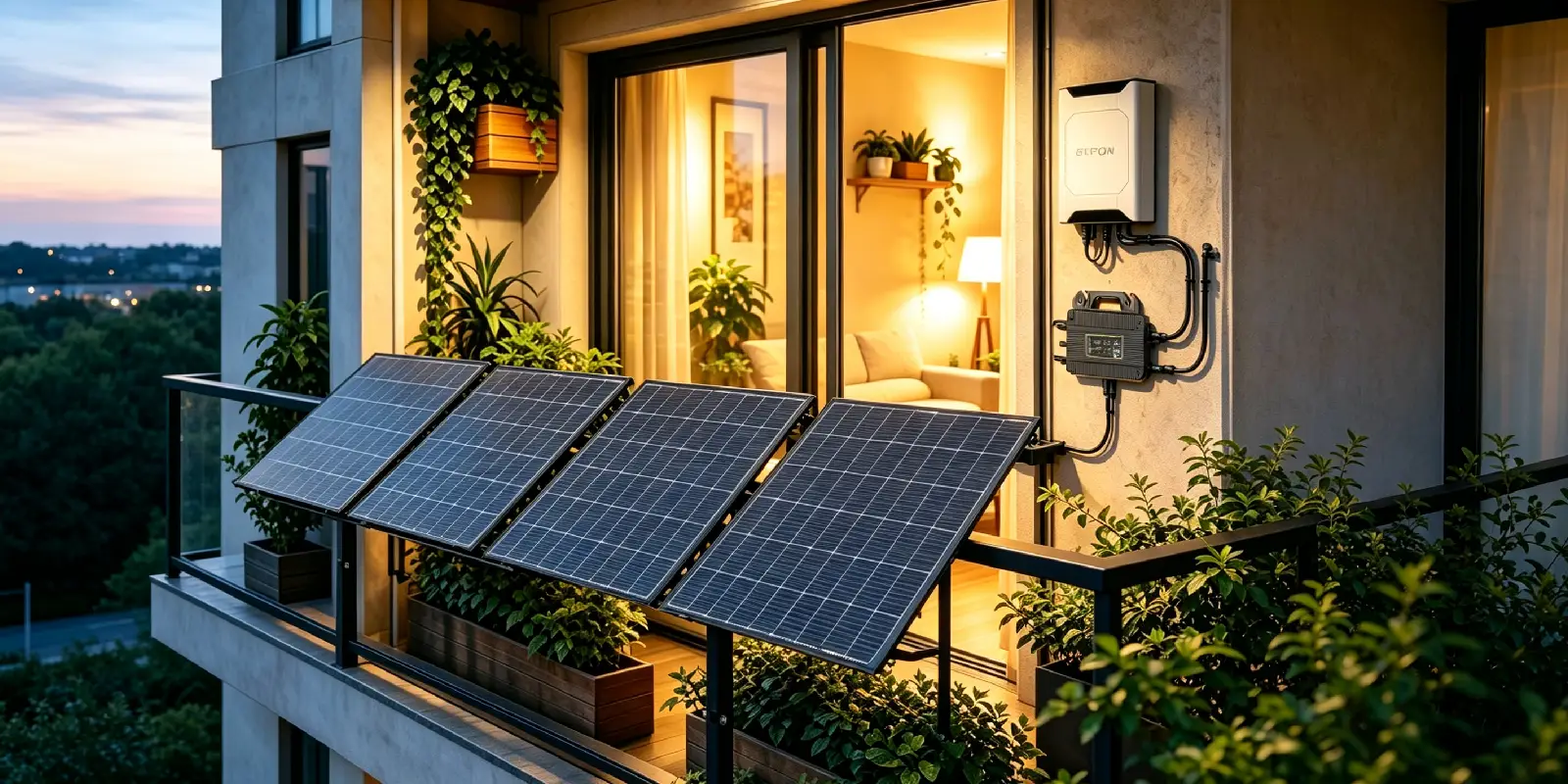
Balcony Solar Storage Systems are the fastest-growing slice of the category — if you’re still only selling pure-generation balcony solar kits, you’re missing out.
In 2026, balcony solar + storage is no longer a niche experiment. The data is blunt: roughly 90% of users add storage at the same time they install their balcony solar system, not later. Storage has shifted from “optional accessory” to “standard configuration.” If you’re new to the category, start with our balcony solar kits wholesale guide before diving into storage.
What does this mean for you? Your product mix needs a rethink.
Why Storage Suddenly Matters So Much
The logic is simple: pure-generation balcony solar has a fundamental flaw — solar panels don’t work at night.
But households peak in the evening. Without storage, the power you generate either gets sold cheap to the grid or wasted. Users install solar but barely save anything. Repeat purchases and word-of-mouth never get off the ground.
Add storage, and the equation flips. Daytime solar charges the battery; evening discharge powers the home. A system with 900W of panels plus a 1.6kWh battery pays back in roughly 4.13 years. Traditional home storage? 8+ years.
For your retail partners, this is a shelf-ready selling point: “Payback in 4 years, installed in 10 minutes, no electrician needed.”
The Numbers Speak for Themselves
A few figures worth noting:
Market size: The global plug-in balcony energy storage market is projected to grow from $4.65 billion in 2025 to $18.15 billion by 2032, a CAGR of 21.9%.
Installation growth: Germany alone added roughly 213,000 balcony solar systems in the first half of 2026 — a record.
User behavior: 90% of new installs include storage. It’s not a “maybe later” option anymore.
Adoption rate: Balcony storage’s share of total home storage installations in Germany jumped from 2% in 2023 to 28% in 2025. In the Netherlands, it hit 54% in Q1 2026.
This isn’t a market that “might grow.” It’s already exploding.
What an All-in-One System Actually Looks Like
Mainstream all-in-one units today typically have this configuration:
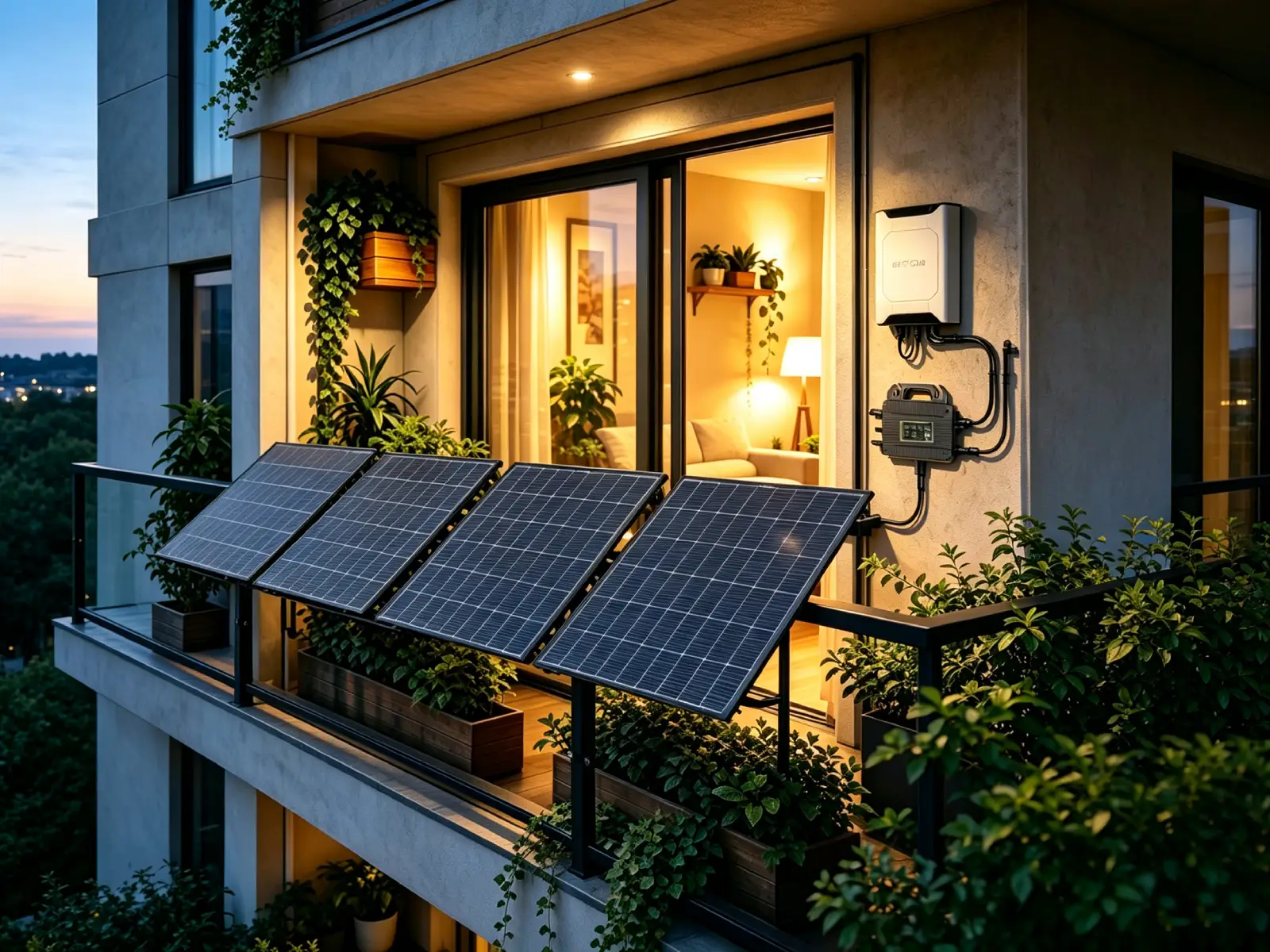
Integrated design: Inverter, battery, and BMS all packed into one box or cabinet. About the size of a suitcase — users just place it against a wall and they’re done.
Plug-and-play: Standard plug connects to the grid; panels connect via MC4 connectors. No professional electrician needed — users DIY it in about 10 minutes.
Capacity range: Mainstream units run 2kWh to 4kWh, with modular expansion. Some products stack up to 10kWh+.
Battery type: Mostly LFP (lithium iron phosphate), with 6,000–10,000 cycle life and 5–10 year warranties.
Smart management: WiFi and app monitoring. Some support dynamic tariff strategies — charge when power is cheap, discharge when it’s expensive, letting users arbitrage.
Certifications: CE, RoHS, UN38.3, IEC are baseline. For Germany, VDE is the hard gate.
Pitfalls Wholesalers Need to Watch
First, bigger battery capacity isn’t always better.
Germany has a rule: battery systems under 2kWh don’t require extra recycling compliance. Above that, compliance costs go up. That’s why many manufacturers deliberately cap single battery modules around 2kWh and let users expand by stacking. Read that logic when you select products.
Second, inverter power needs to match.
Built-in inverters in all-in-one units are typically 800W, matching Germany and UK grid limits. If users want more power, they either pay for an upgrade or accept throttling. Check this spec carefully when sourcing.
Third, software breaks more often than hardware.
The core experience of an all-in-one is the app and energy management system. An unstable app, inaccurate data, or buggy firmware updates — end-user complaints land directly on your brand. When evaluating suppliers, make them demo the app live. Don‘t just read the spec sheet.
Fourth, certifications are market-specific.
A single CE mark doesn’t travel everywhere. Germany looks at VDE. The UK looks at the Interim Product Specification. The US is another framework entirely. If your supplier says “we have CE, it sells globally,” they’re brushing you off.Before you bundle storage into your UK SKU, check the balcony solar regulations in Germany and the UK — battery storage is excluded from the UK’s first phase.
Questions to Ask Your Supplier
-
What are the real battery cycle life test results? Don‘t just take the 6,000-cycle claim — ask for third-party test reports.
-
Is the app self-developed or white-labeled? Self-developed usually iterates faster and responds quicker when issues arise.
-
Does the warranty cover just the battery, or the whole unit? Inverter failures in all-in-one units are actually more common than battery failures.
-
Which markets do your certifications cover? Make them list the specific standards for your target markets.
-
MOQ and customization flexibility? Can they print your brand? Modify packaging? Localize the manual?
The Bottom Line in Plain English
Balcony solar storage systems are a category wholesalers should seriously evaluate in 2026. They turn solar from a “power generation device” into a “home appliance” — low installation barrier, short payback, easier repeat purchases and word-of-mouth.
But don’t source on price alone. All-in-one systems are deeply integrated hardware-software products. App experience, certification compliance, and warranty terms are what determine whether end users leave you bad reviews.Storage adds hardware, which means more failure points — keep your balcony solar kit return rate low by vetting the app and warranty terms before you commit.
If you’re considering adding a balcony storage line, or already sell one but want to optimize your supplier selection, reach out. We don‘t do retail — we only serve wholesalers and distributors.
Related Posts

Renter's Balcony Solar Installation Guide: 7 Core Rules for Safe, Compliant & Removable Setup (2026)
Quick Overview Many renters want to install balcony solar panels to save electricity bills and…
Portable Solar Panel Wholesale | OEM Bulk Supply for RV
Portable solar panel wholesale demand is surging rapidly across North America, Europe, Southeast Asia, and…
Can Solar Panels of Different Wattages Be Mixed?
Many homeowners and off-grid solar users face a common dilemma: their existing solar panels are…
Leave a Reply